Trees By The Canal — History & Facts
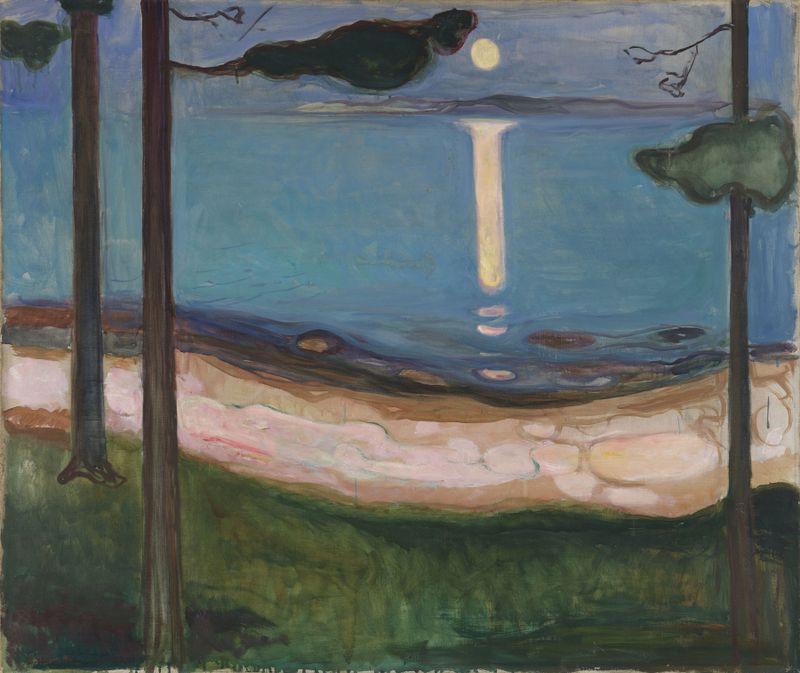
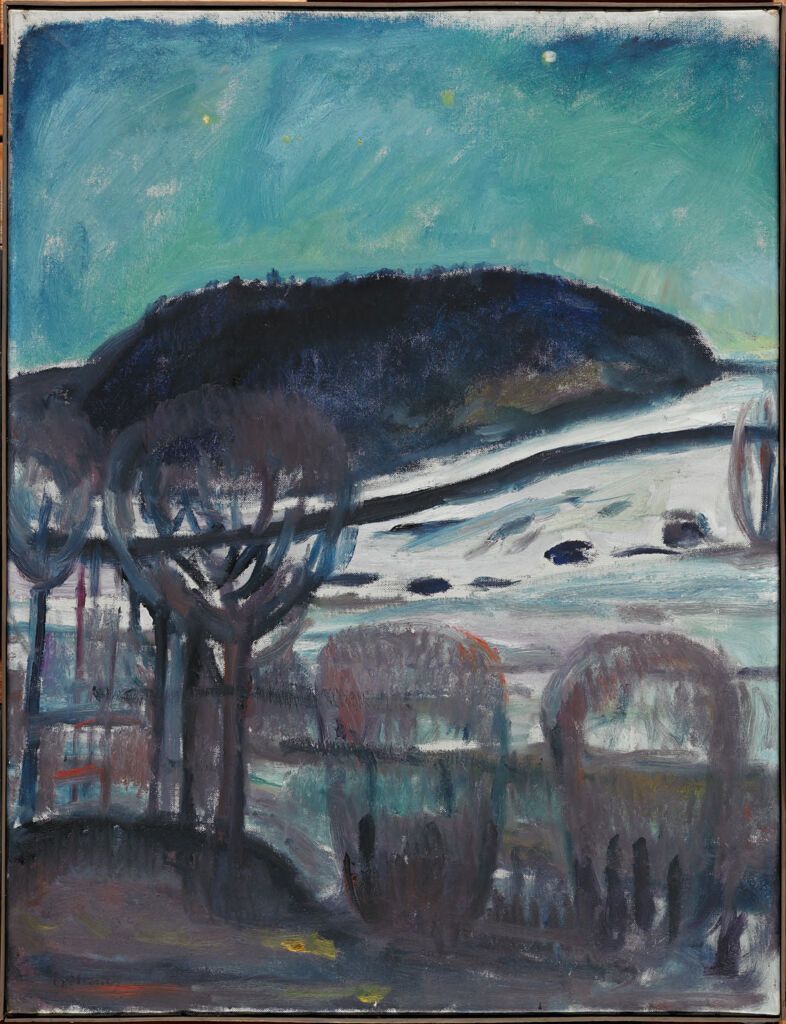
Could beauty survive in a century of chaos? In Edvard Munch's Trees By The Canal, the tension between serenity and turmoil is palpable, echoing the struggles of the human spirit against the backdrop of a changing world. Look to the center where the tall, dark trees stand sentinel, their twisted branches reaching skyward. The muted greens and ochres of the foliage contrast starkly with the deep blue of the canal, while the dappled light plays across the water's surface, creating a shimmering pathway that draws the eye. Notice how the brushstrokes convey a sense of urgency, as if the trees breathe with unspoken stories, silently bearing witness to the passage of time. Delve deeper, and you'll uncover layers of meaning embedded in the composition.
The trees, though seemingly rooted, appear to sway under an unseen weight, suggesting the madness that lurked beneath the surface of society in the early 20th century. The juxtaposition of stability—represented by the trees—and the fluidity of the canal hints at the fragility of existence, where beauty coexists with the chaos of life. The painting embodies a quiet melancholy, inviting viewers to ponder the impacts of an unstable world on the inner psyche. Created in 1908, Munch painted Trees By The Canal during a period marked by personal turmoil and a growing interest in expressing emotional depth through art.
Living in Norway, he was grappling with the legacy of Symbolism while navigating the burgeoning modernist movement. This work reflects not only his internal struggles but also the broader anxieties of a society on the brink of transformation, capturing a moment where beauty and madness intertwine.