
Trees in Jamaica, West Indies — History & Facts
Who listens when art speaks of silence? In Trees in Jamaica, West Indies, a stillness envelops the lush foliage, whispering tales of unseen betrayals nestled within the vibrant greens. Look to the left at the towering tree, its expansive canopy arching gracefully toward the sky, while delicate branches intertwine, inviting your gaze deeper into the wilderness. Notice how the light filters through the leaves, casting a mosaic of shadows on the forest floor, each hue meticulously blended to create an almost palpable rhythm of nature. The warm palette of greens and earth tones, combined with fluid brushstrokes, draws the viewer into a tranquil, yet charged atmosphere. Yet, beneath this serene surface lies a tension—the interplay between light and shadow hints at hidden depths and complexities.
The lush vegetation symbolizes both beauty and the potential for chaos, a reminder of the fragility of paradise. The juxtaposition of vibrant life against an often-ominous presence evokes feelings of nostalgia and loss, suggesting that even in nature's splendor, silence can harbor secrets. Frederic Edwin Church painted this masterpiece in 1865, during a transformative period for American landscape painting. At this time, the artist was deeply engaged in exploring the exotic and the sublime, capturing the essence of far-off lands.
The post-Civil War landscape of the United States was characterized by an artistic shift, where artists sought to express not only beauty but also complexity and emotion, reflecting the tumultuous realities of their contemporary world.
More Artworks by Frederic Edwin Church
Browse all →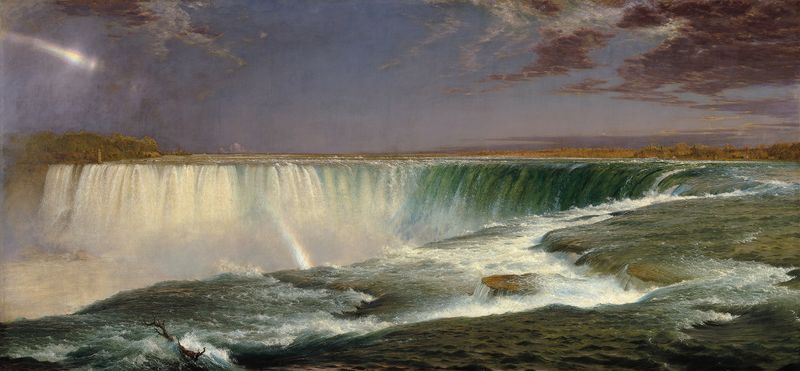
Niagara
Frederic Edwin Church
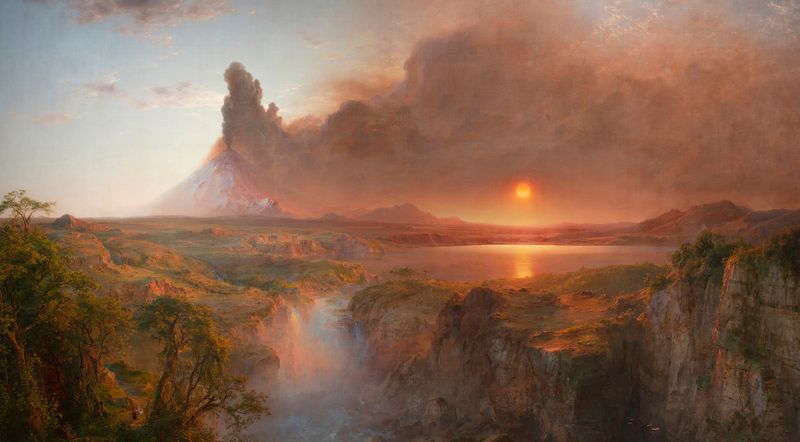
Cotopaxi
Frederic Edwin Church
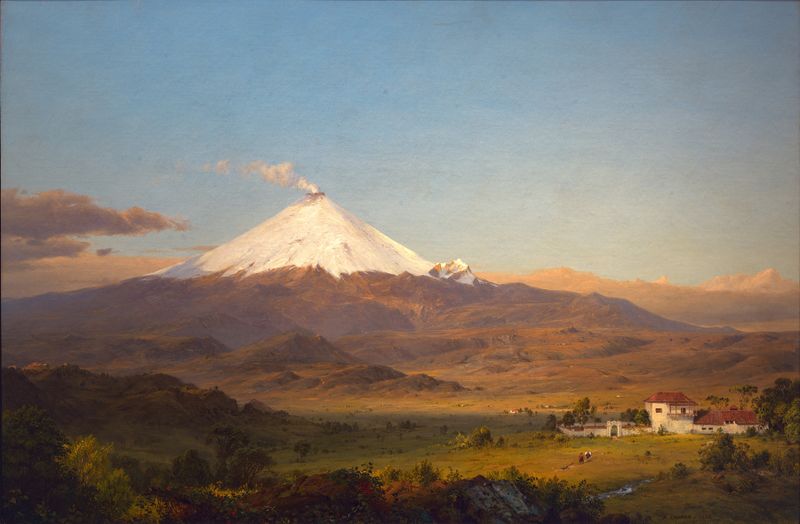
Cotopaxi
Frederic Edwin Church
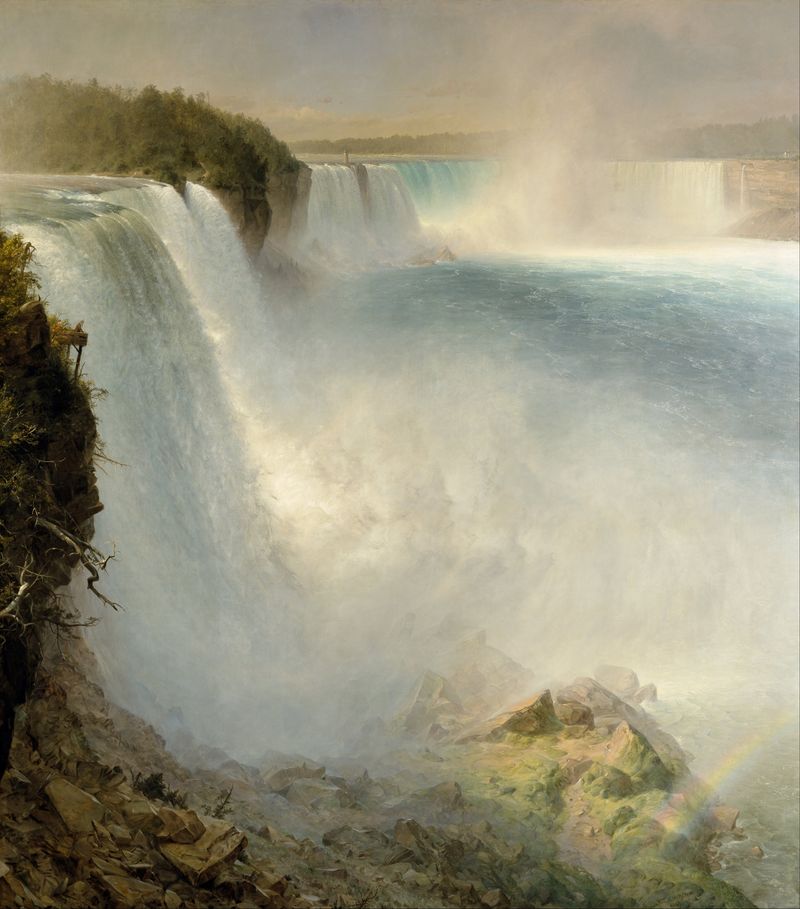
Niagara Falls, from the American Side
Frederic Edwin Church
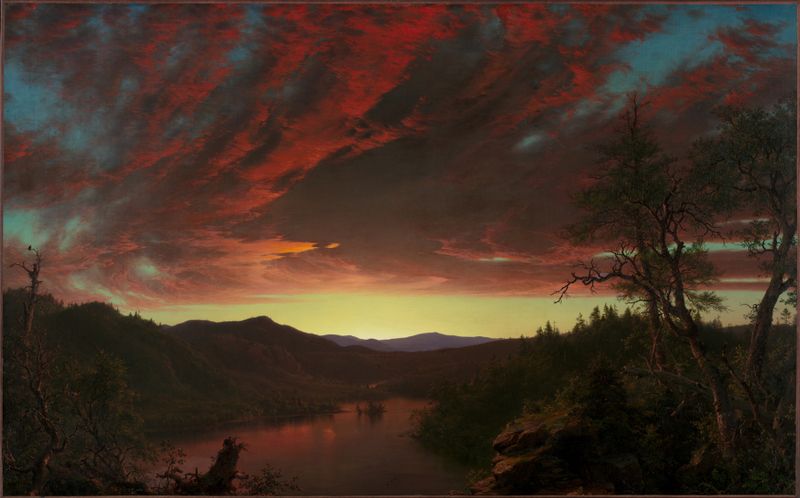
Twilight in the Wilderness
Frederic Edwin Church
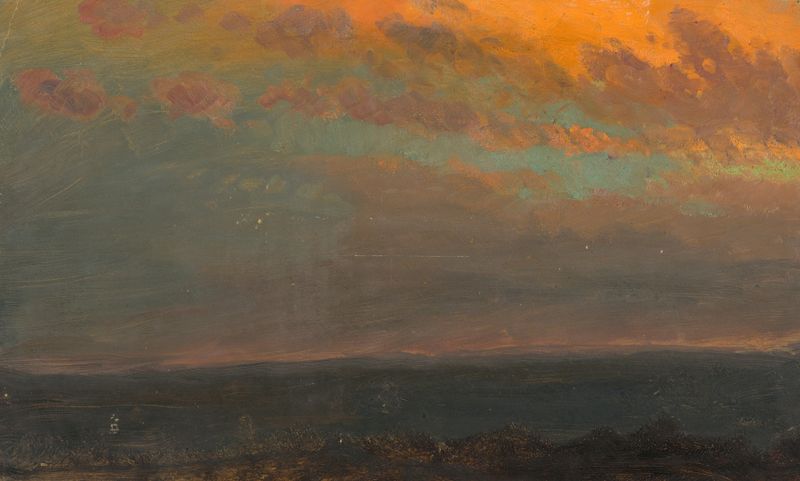
Hudson Valley at Sunset
Frederic Edwin Church
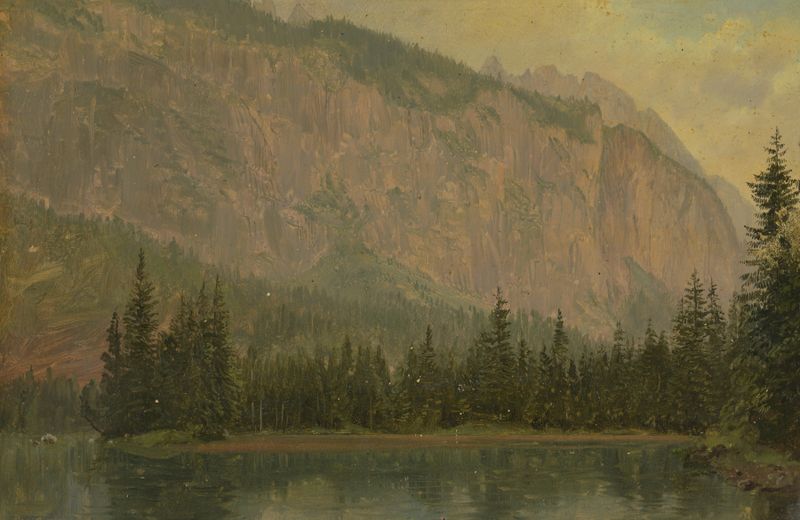
The Hintersee, near Berchtesgaden, Bavaria
Frederic Edwin Church
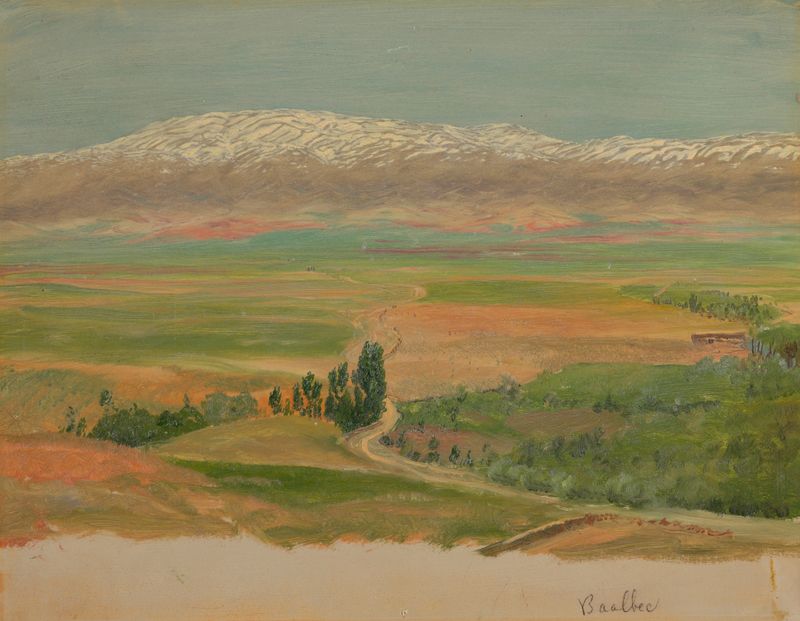
Mountains near Baalbec
Frederic Edwin Church
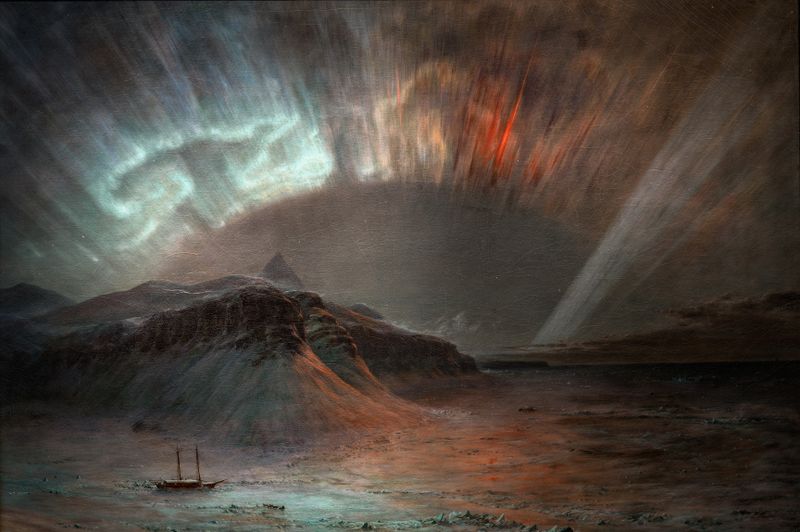
Aurora Borealis
Frederic Edwin Church
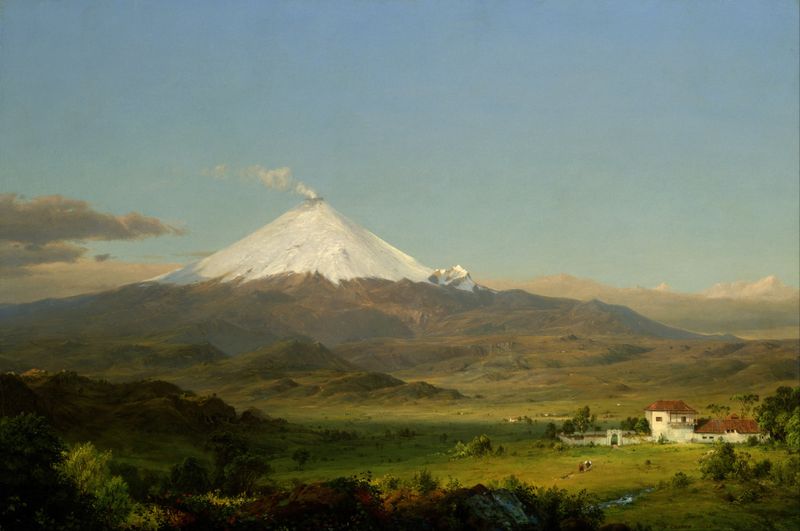
Cotopaxi
Frederic Edwin Church





