Discover insights about this artwork
Two Human Beings. The Lonely Ones — History & Facts
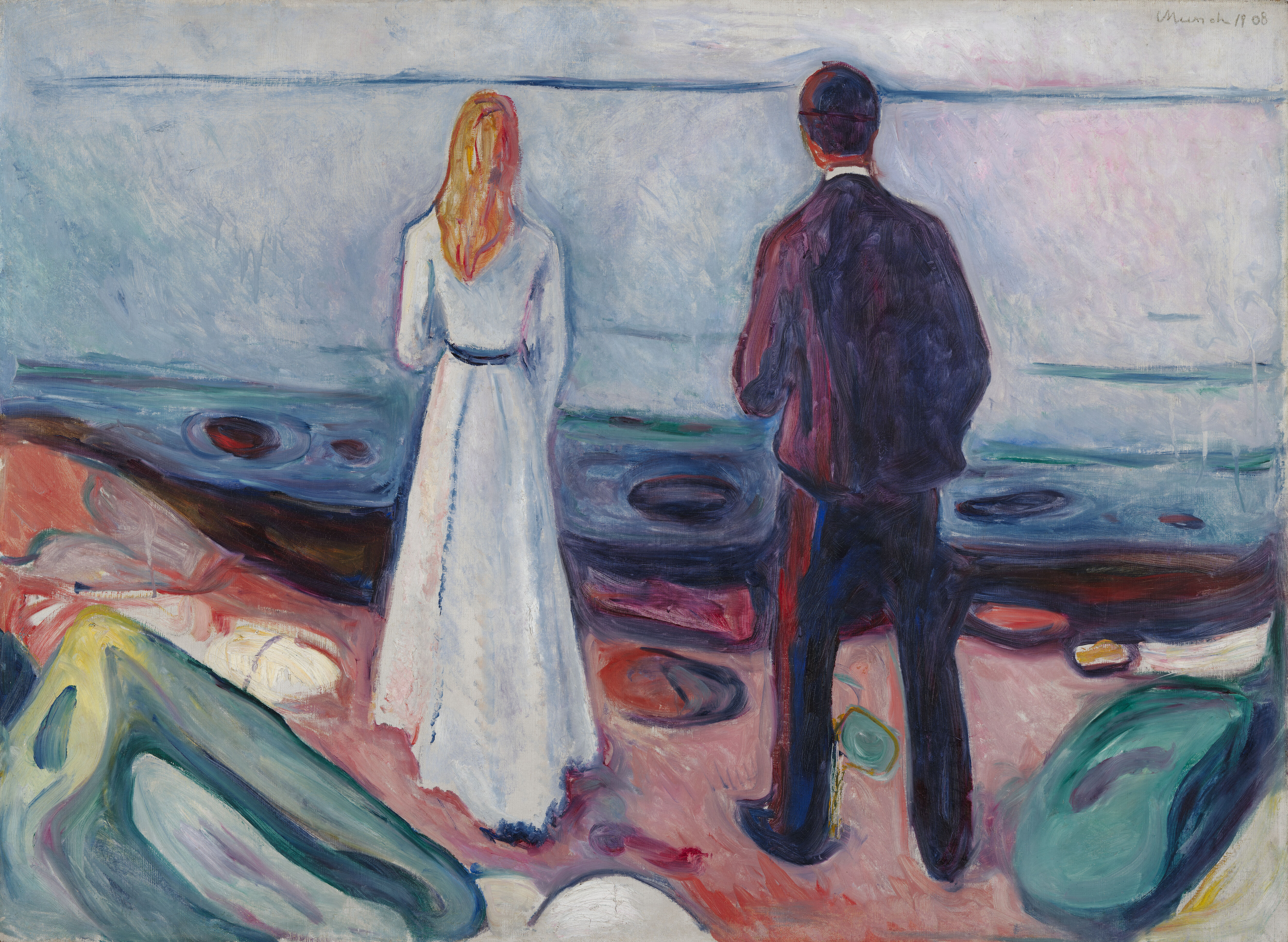
In Two Human Beings. The Lonely Ones, Edvard Munch presents two figures, a man and a woman, standing apart in a desolate landscape. The colors are muted, dominated by dark blues and grays, which enhance the feeling of isolation.
The figures appear to be lost in their thoughts, their postures conveying a sense of emotional distance. The background is abstract, suggesting a bleak environment that mirrors their inner turmoil. The painting is executed in oil on canvas, showcasing Munch's characteristic brushwork and use of color. The figures are rendered with elongated forms, a hallmark of Munch's style that emphasizes their emotional states.
The composition is simple yet powerful, drawing the viewer's eye to the separation between the two figures. This work reflects Munch's exploration of human psychology and the complexities of relationships. Edvard Munch was a key figure in the Symbolism movement, known for his exploration of themes such as love, anxiety, and existential dread. *Two Human Beings.
The Lonely Ones* was created around 1899, a period when Munch was deeply engaged with the emotional struggles of individuals. An interesting fact about this work is that it captures the essence of loneliness, a recurring theme in Munch's oeuvre, which resonates with many viewers even today.