Un moine dans une salle voûtée — History & Facts
In the quiet embrace of solitude, color transcends mere pigment to unveil profound depths of human experience, inviting us to pause and reflect. Focus on the palette that envelops this intimate scene. Look to the soft ochres and muted browns that cradle the figure of the monk, evoking a sense of warmth and stillness. Notice how the delicate interplay of light pours through the arched window, casting gentle shadows that dance across the stone walls, accentuating the reverence of the moment.
The monk, absorbed in contemplation, becomes almost a luminous focal point amid the understated hues, his presence contrasting sharply with the somber environment. Within this tranquil setting lies a tension between silence and thought, faith and introspection. The open book on the table, its pages slightly fluttering, suggests a dialogue between the written word and the spiritual journey. The minimalist composition highlights the monk’s isolation, yet also speaks to the universality of his search for meaning—a quest that resonates across time and space.
This work captures the profound solitude of spiritual reflection, inviting viewers to confront their own inner landscapes. Created in 1828, this piece emerged during a pivotal moment in François-Marius Granet's career, as he sought to blend realism with a romantic sensibility. Living in Paris, Granet was influenced by the burgeoning art movements around him, including Neoclassicism and the Romantic impulse toward emotional expression. This painting reflects not only his personal artistic evolution but also the broader cultural currents of the era, where faith and philosophical inquiry were increasingly examined through the lens of individual experience.
More Artworks by François-Marius Granet
Browse all →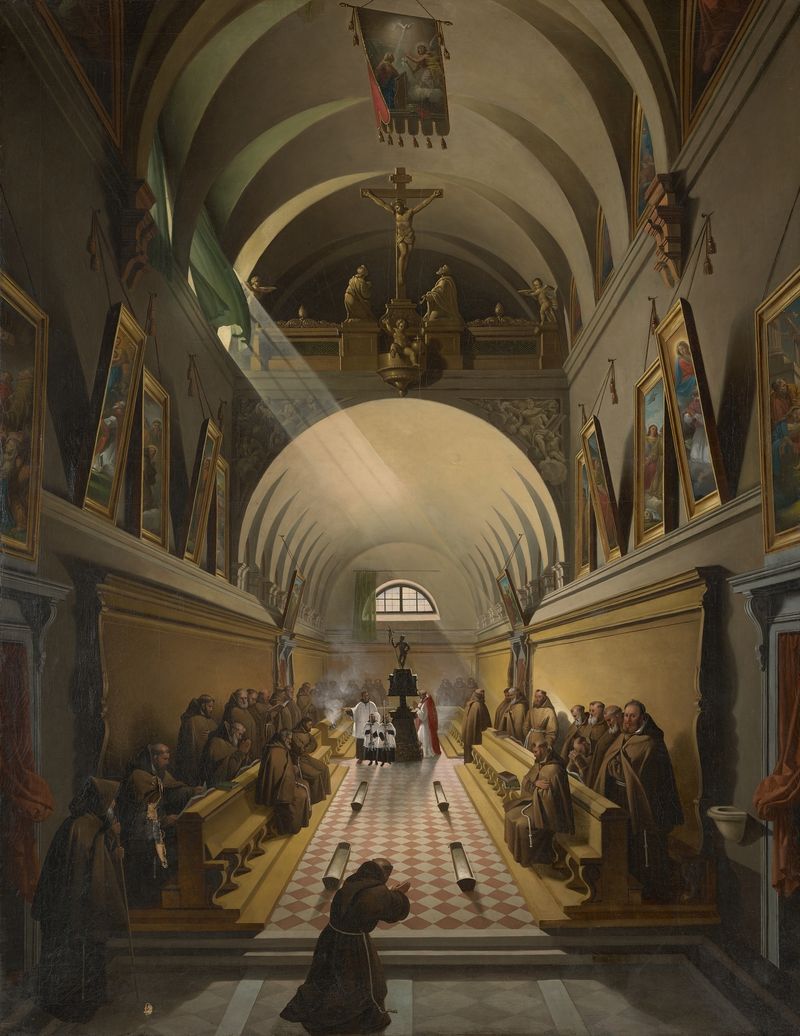
Interior of a Capuchin Convent
François-Marius Granet
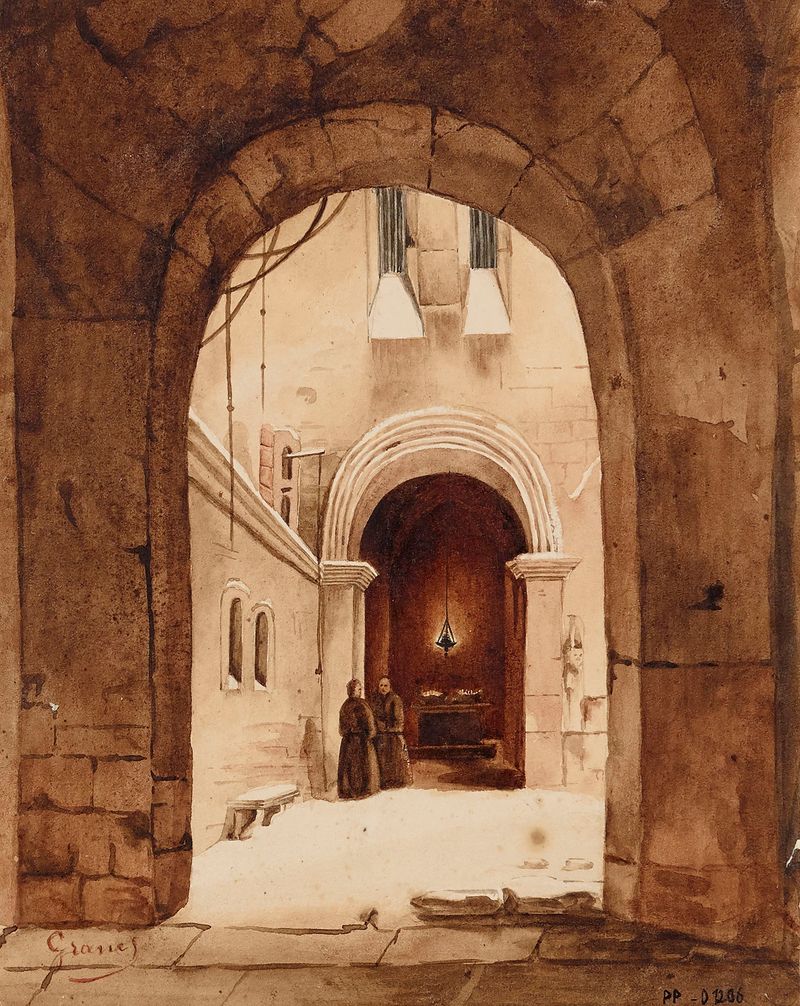
Deux ermites se promenant sous des voûtes
François-Marius Granet
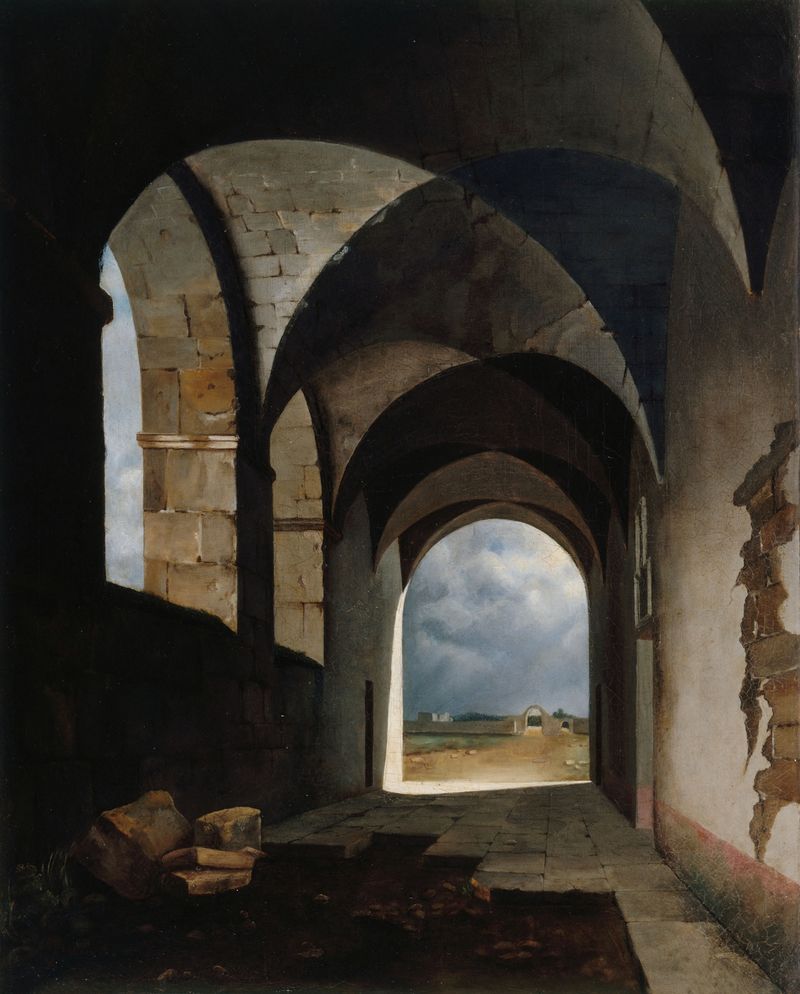
Effet de lumière dans les ruines
François-Marius Granet
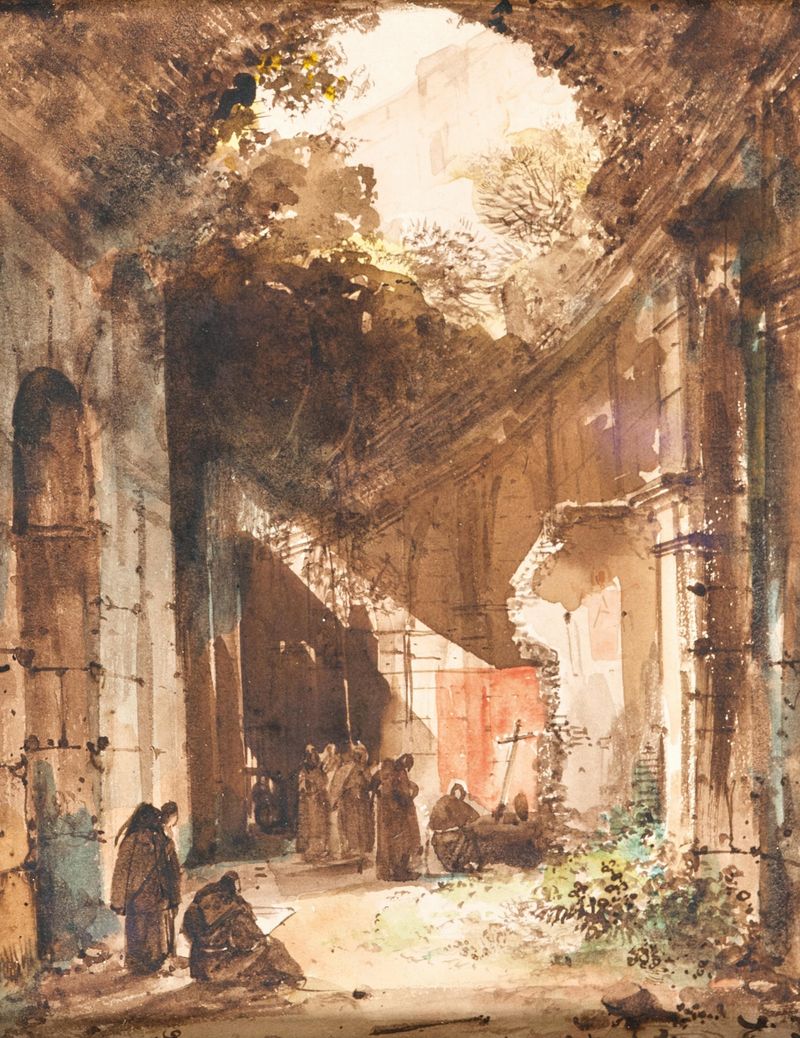
Monks in the Colosseum
François-Marius Granet
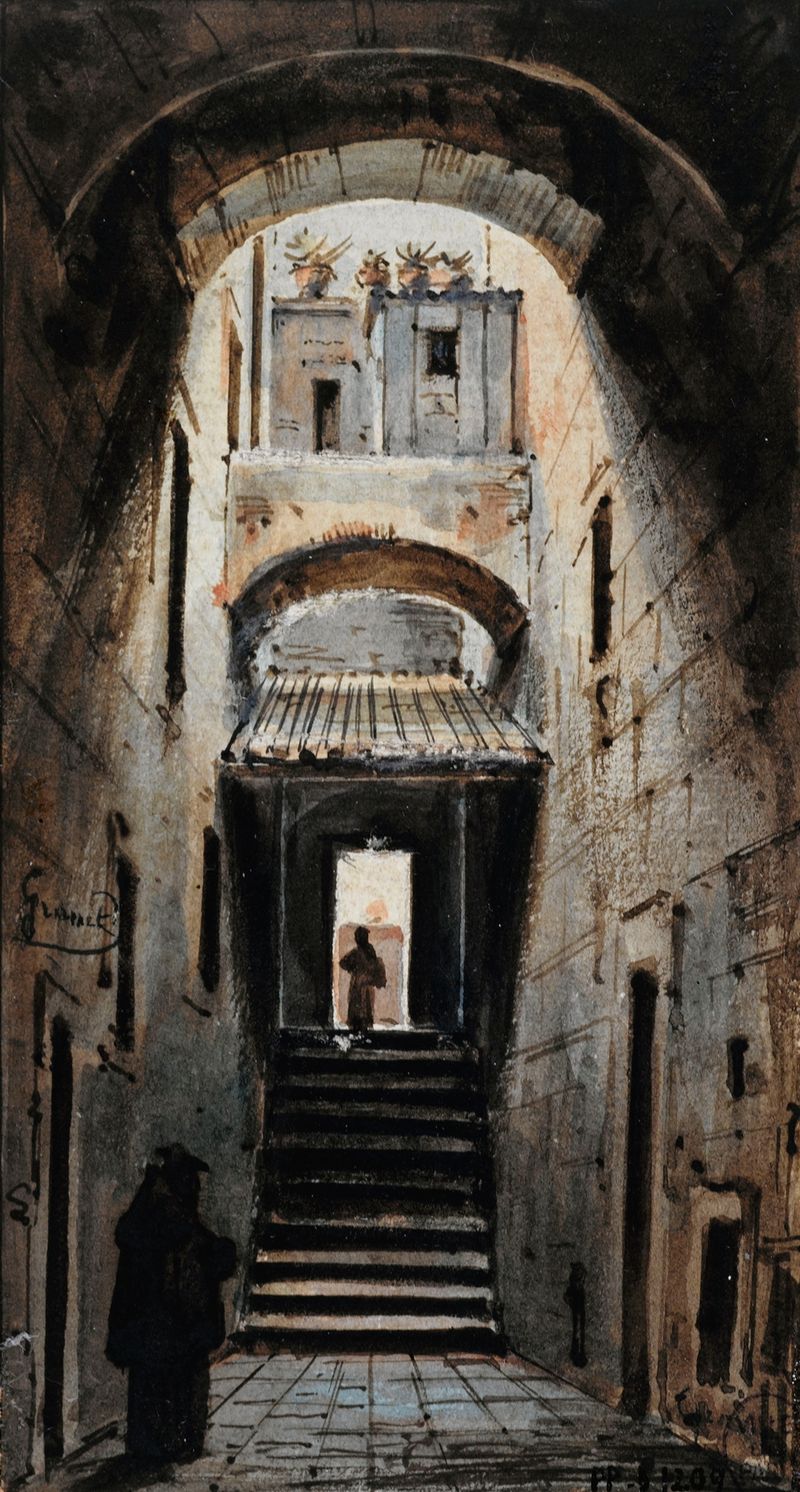
Une rue sous les voûtes
François-Marius Granet
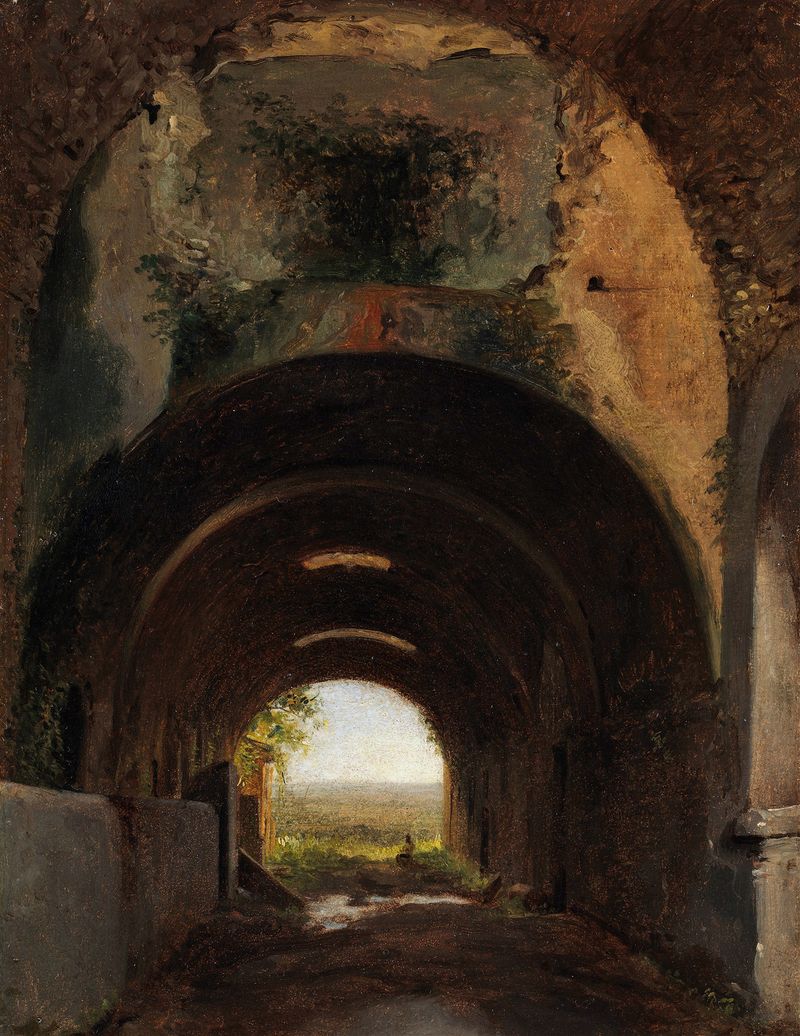
View in the Stables of the Villa of Maecenas, Tivoli
François-Marius Granet
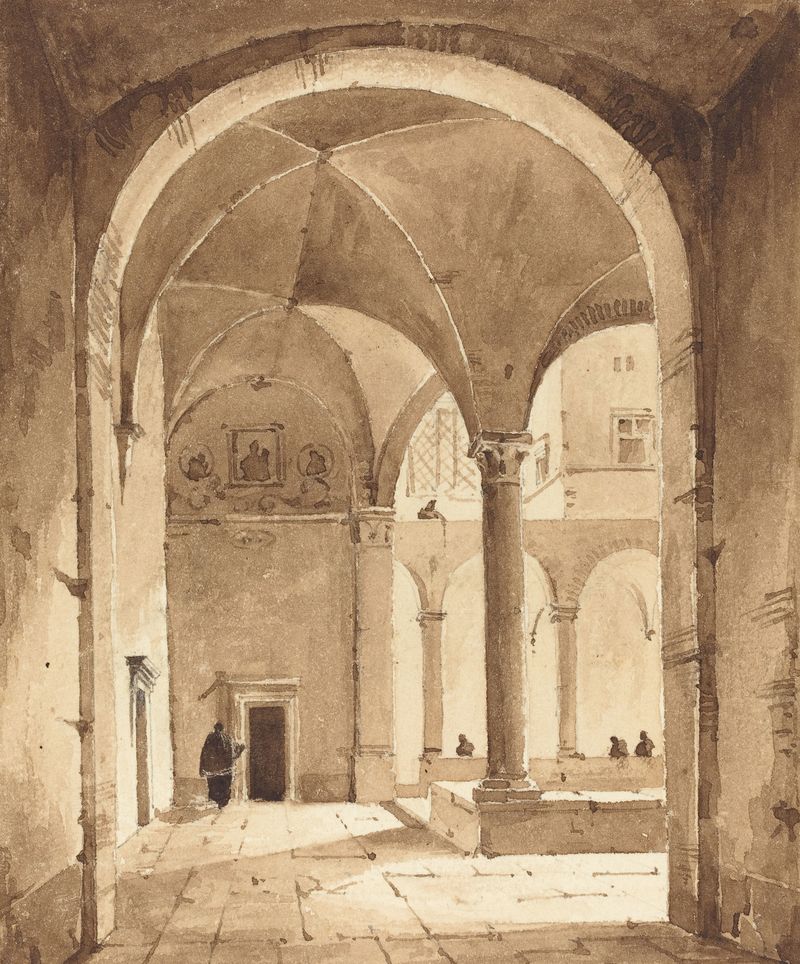
A Cloister
François-Marius Granet
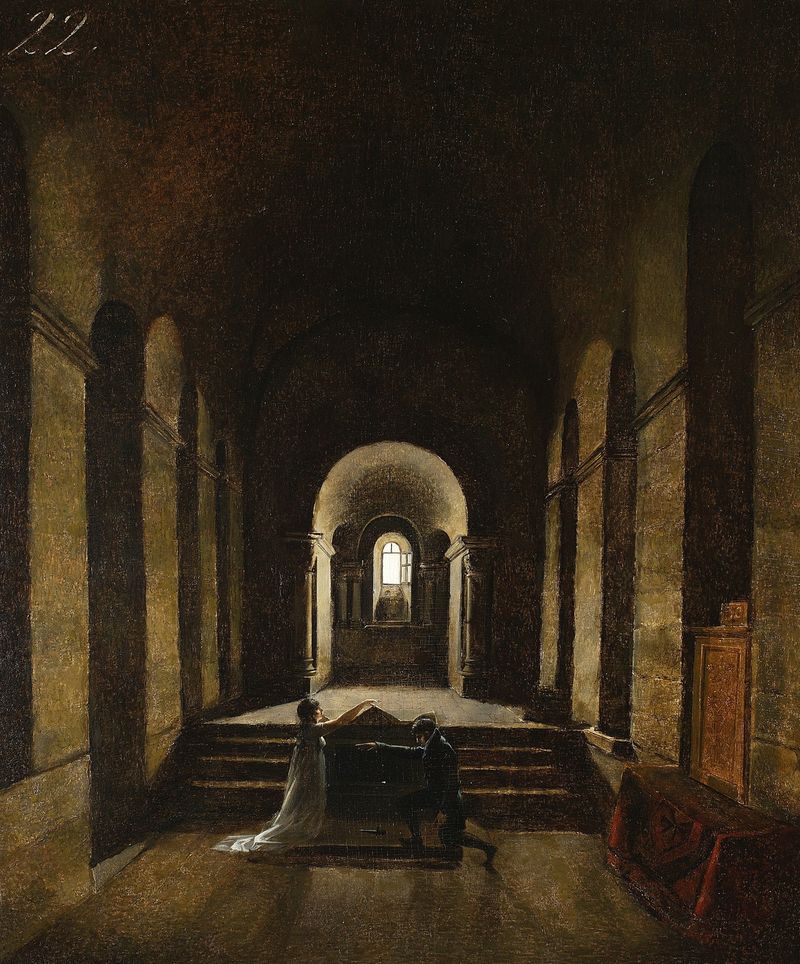
Vow (chapel interior)
François-Marius Granet
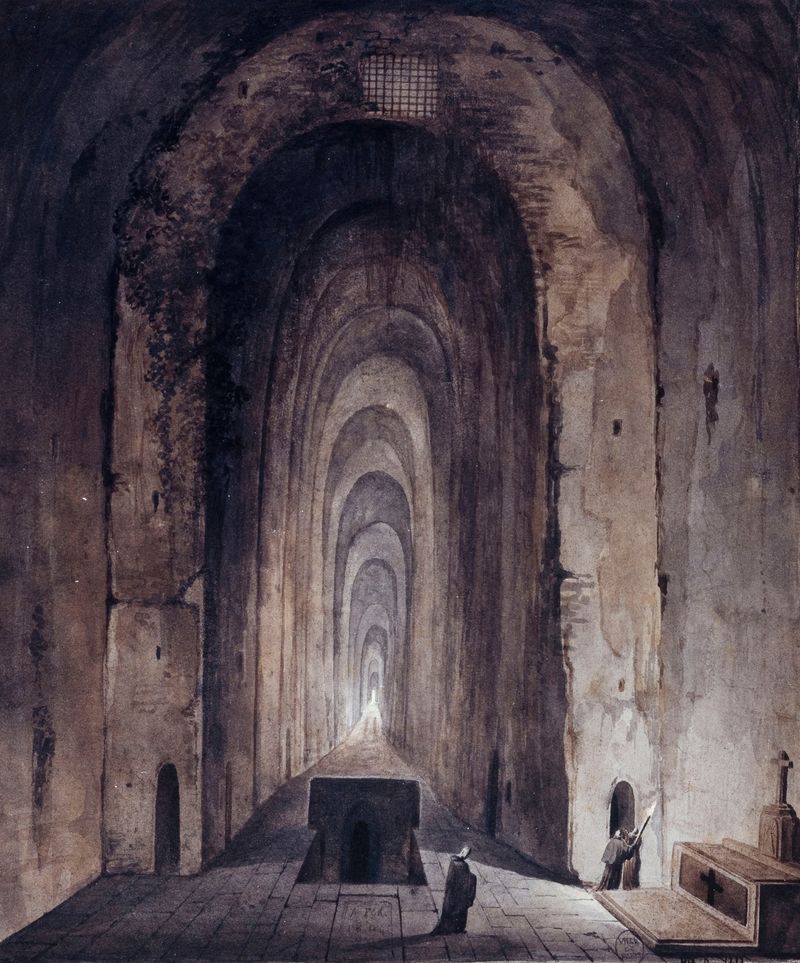
Les Catacombes de Saint-Agnès à Naples
François-Marius Granet
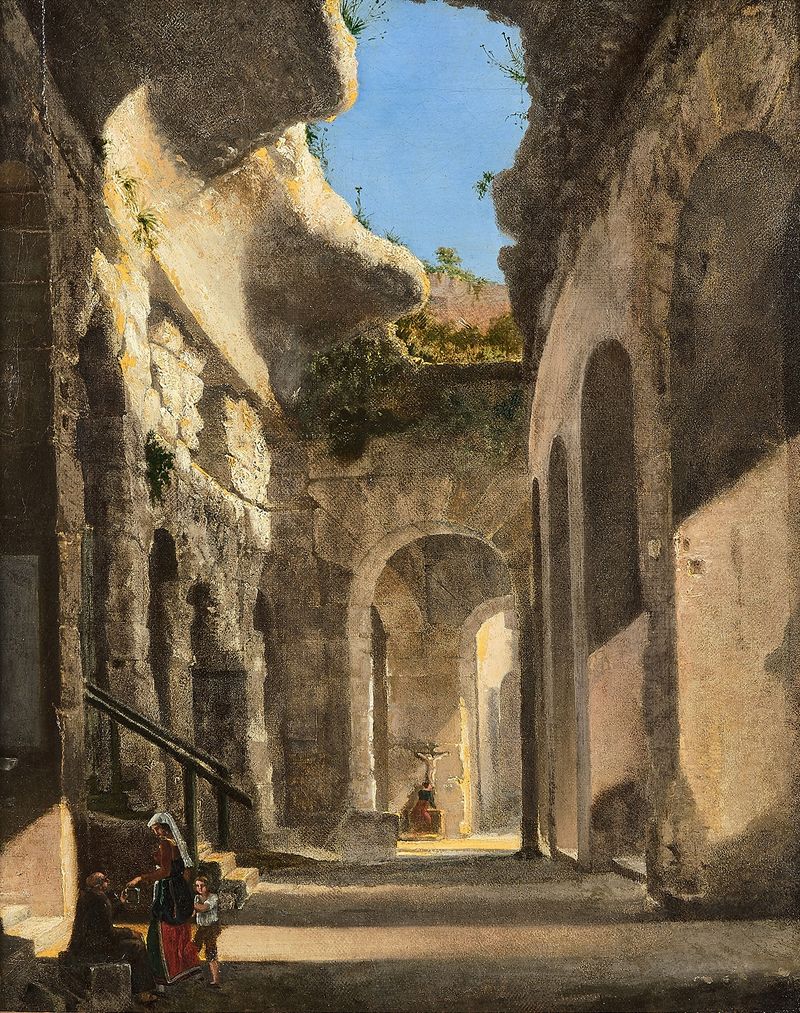
Les ruines du Colisée animées de personnages
François-Marius Granet