
Une Averse—rue Bonaparte — History & Facts
In Une Averse—rue Bonaparte, light dances through raindrops, capturing a fleeting moment where the ordinary transforms into something transcendent. The artist invites us to witness the impermanence of life as it unfolds on a bustling Paris street. Look to the foreground, where figures huddle beneath umbrellas, their silhouettes softened by the gentle wash of muted colors. Notice how the dappled light filters through the clouds, casting a subtle glow that gives life to the wet pavement.
The brushwork, though impressionistic, evokes a sense of movement, as if the scene might shift at any moment—each stroke is deliberate, yet spontaneous, drawing the viewer into the very essence of the rain-soaked atmosphere. Within this seemingly simple moment lies a profound exploration of contrast: the joy of shared humanity juxtaposed against the solitude of individual experience. The raindrops, glistening like diamonds, reflect not only light but also the myriad emotions of the passersby. The umbrellas create a visual cacophony, yet they become a unifying force, symbolizing resilience amid the unpredictable nature of life. Childe Hassam painted this work in 1887 while living in Paris, amidst the rise of the Impressionist movement.
At this time, he was deeply influenced by his surroundings and the vibrant artistic community, which shaped his approach to capturing fleeting moments. The city itself was undergoing transformation, a reflection of the changing times that echoed in the art world, marking a significant chapter in his development as an artist.
More Artworks by Childe Hassam
Browse all →
Beach at Newport
Childe Hassam

Washington Arch, Spring
Childe Hassam

Thaxter’s Garden
Childe Hassam

New England Headlands
Childe Hassam

Rocks At Appledore, Morning
Childe Hassam
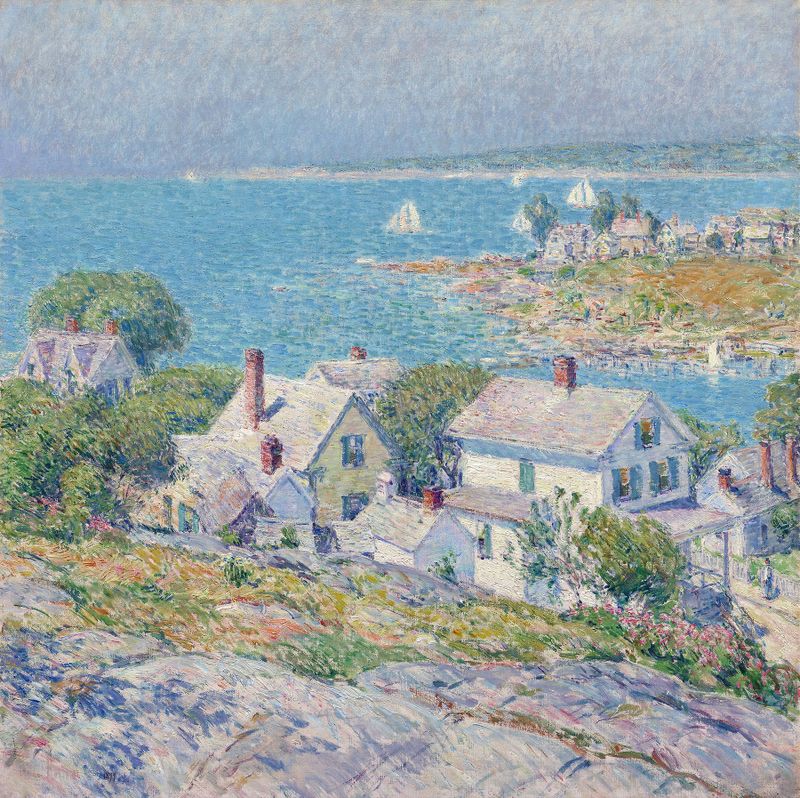
New England Headlands
Childe Hassam
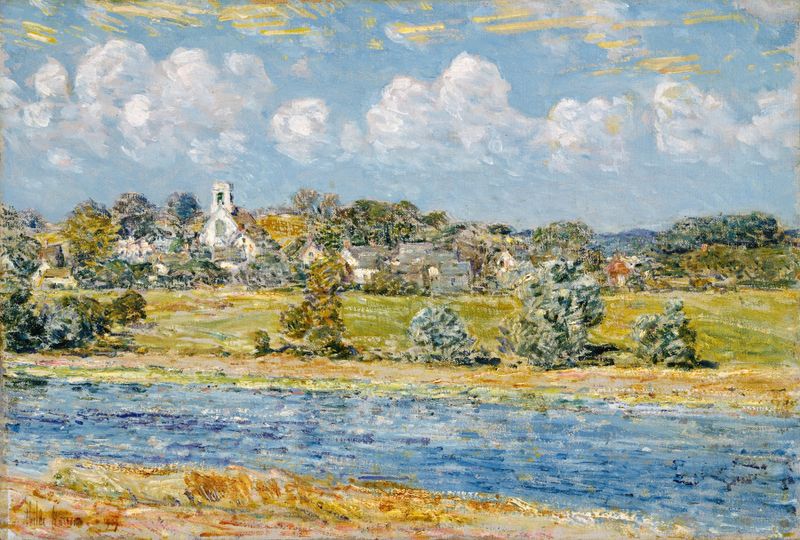
Landscape at Newfields, New Hampshire
Childe Hassam

Piazza di Spagna, Rome
Childe Hassam

The Harbor
Childe Hassam

Late Afternoon, New York, Winter
Childe Hassam





