
Une Guinguette — History & Facts
Can paint confess what words never could? Une Guinguette, a masterful glimpse into a moment, evokes nostalgia that lingers like the scent of summer rain on warm pavement. Look to the left at the vibrant red awning of the café, where light spills generously, creating a warm, inviting atmosphere. Notice how the artist employs delicate brushstrokes to depict the movement of the patrons, their laughter seemingly frozen in time yet alive with spontaneity. The soft, muted colors of the surrounding trees contrast with the lively hues of the figures, guiding your gaze through the interplay of shadow and light that captures the essence of a carefree afternoon. Within this gathering, there's an undercurrent of longing and memory.
The intimacy between the figures suggests a shared history, while the distant background hints at life beyond this moment—an unspoken reminder of the transient nature of joy. Each detail, from the fluttering leaves to the glimmering reflections on the water, resonates with the bittersweet quality of reminiscence, inviting viewers to reflect on their own experiences of connection and loss. Auguste Louis Lepère painted this work in 1886 while living in France, a time when Impressionism was flourishing and artists sought to capture the fleeting moments of daily life. As he embraced the vibrant energy of Parisian leisure culture, Lepère not only contributed to the artistic movement but also immortalized the spirit of an era, beckoning viewers to step into a world that feels both familiar and elusive.
More Artworks by Auguste Louis Lepère
Browse all →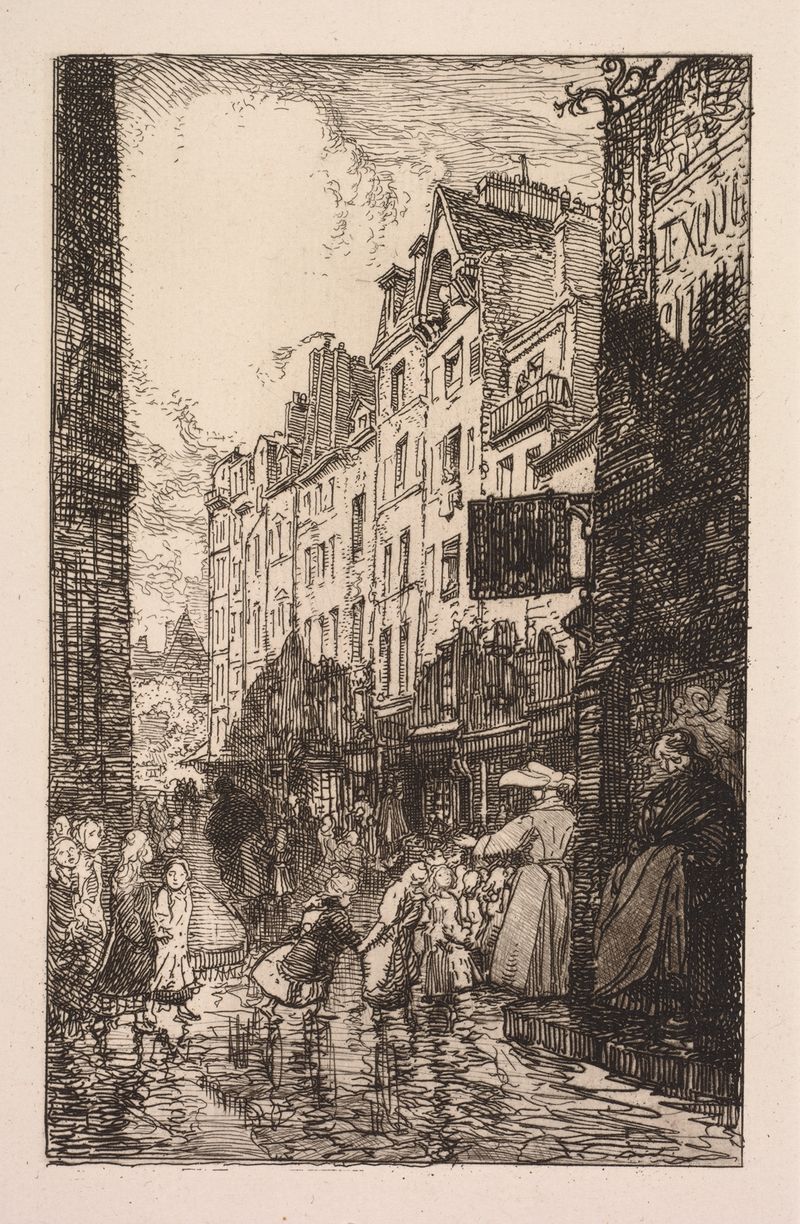
La Rue des Prêtres Saint-Séverin
Auguste Louis Lepère
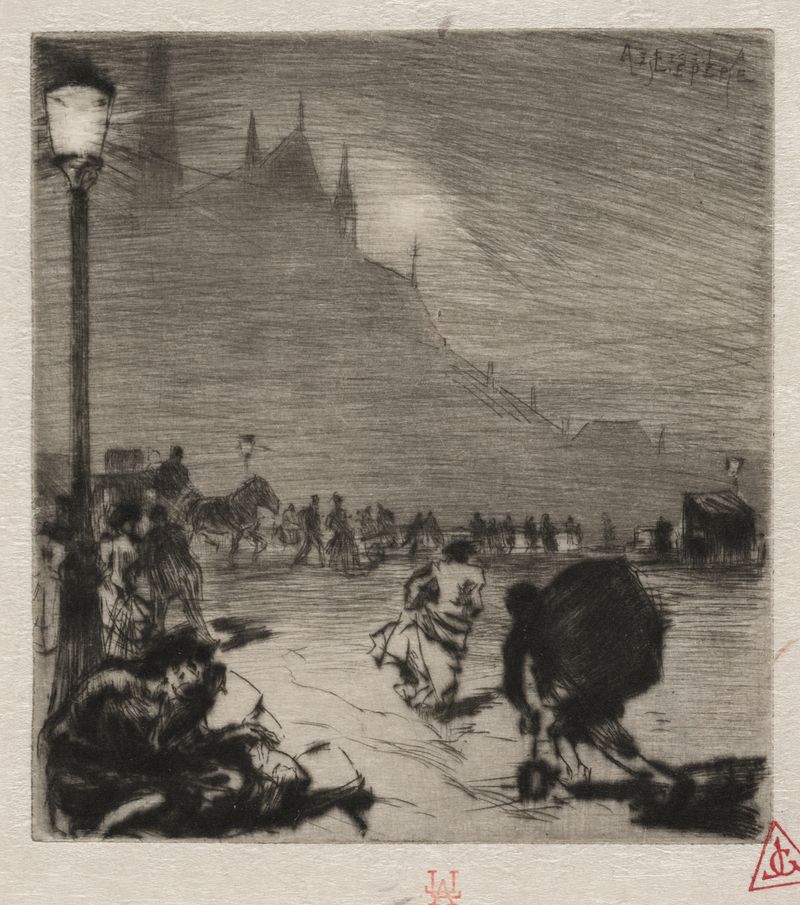
Au Coin du Pont-aux-Doubles
Auguste Louis Lepère
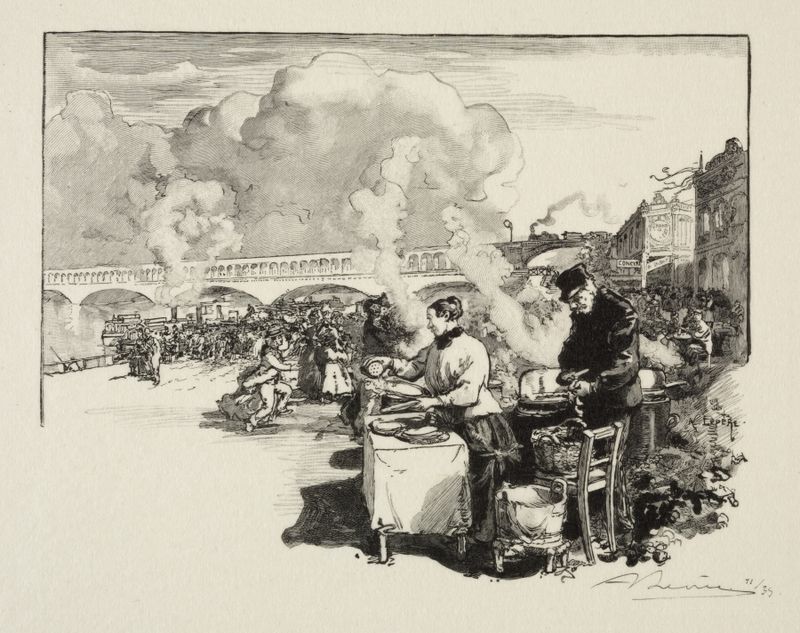
Debarcadère des bateaux-omnibus
Auguste Louis Lepère

La Seine, au quai de la Rapée
Auguste Louis Lepère
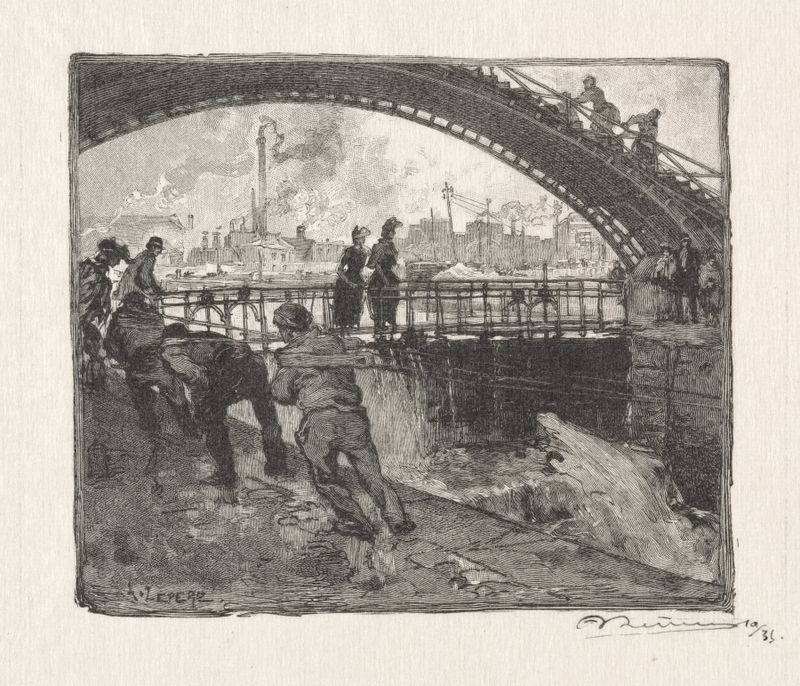
L’Ecluse du Canal St. Martin
Auguste Louis Lepère

Le Boulevard Montmartre, le Soir
Auguste Louis Lepère

Une Chasse au Mont Gérard
Auguste Louis Lepère
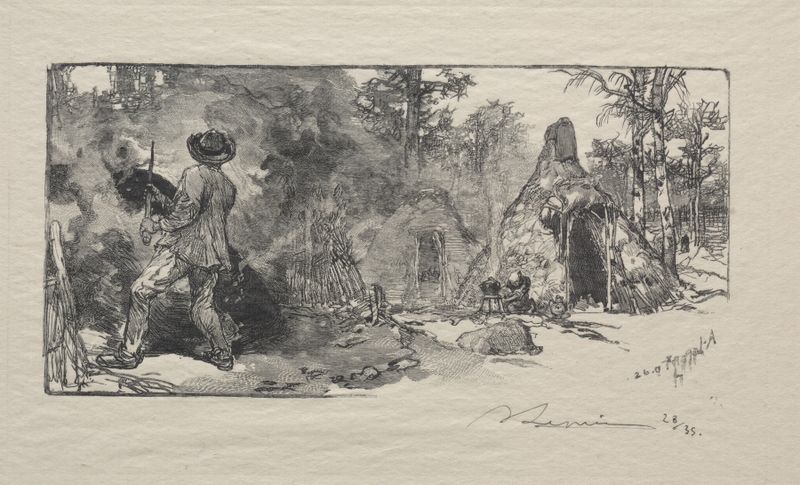
Les Charbonniere
Auguste Louis Lepère
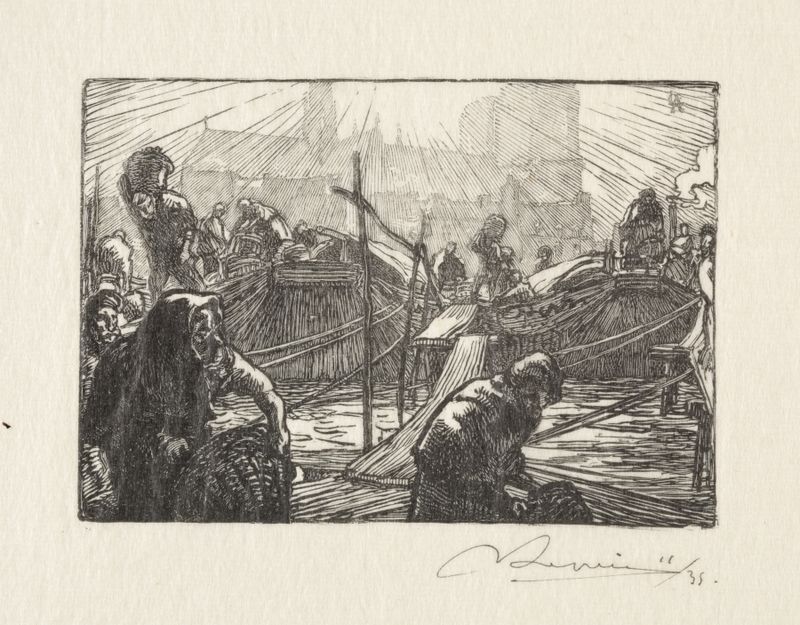
Notre Dame vue du Marché aux pommes
Auguste Louis Lepère

Le Palais des Arts Liberaux, Intèrieur
Auguste Louis Lepère





