
Uzziah, Jotham and Ahaz — History & Facts
When Michelangelo began work on the Sistine Chapel ceiling in 1508, he was not yet known as a painter but as a sculptor—yet Pope Julius II insisted he take on the vast fresco cycle. Among the many ancestors of Christ depicted along the ceiling’s borders is Uzziah, Jotham and Ahaz, a trio of kings from the Old Testament, whose presence forms part of the monumental genealogy leading to Christ. The inclusion of these lesser-known monarchs, rather than more famous biblical heroes, reflects both the papal desire to root Christ’s lineage in history and Michelangelo’s own fascination with the human condition across generations. In this fresco, Michelangelo selects a moment of generational tension and introspection.
The three figures—Uzziah, Jotham, and Ahaz—are grouped in a compact, almost sculptural arrangement, their bodies twisting away from each other yet bound by blood and fate. Uzziah, the elder, turns contemplatively, his hand raised in a gesture of troubled authority, while Jotham sits in the middle, bridging the gap between his father and son, his gaze uncertain. Ahaz, the youngest, leans forward, his posture restless, hinting at the troubled reign he would inherit.
The muted palette and heavy drapery emphasize the weight of succession and the burdens of kingship. Unlike the harmonious storytelling of Ghirlandaio’s frescoes in the Tornabuoni Chapel, Michelangelo’s approach is psychological, focusing on the silent drama within the family. The precise medium of Uzziah, Jotham and Ahaz remains debated—while the Sistine Chapel ceiling is famously fresco, technical studies suggest Michelangelo experimented with various plasters and pigments. Commissioned by Pope Julius II, the work was executed high above the chapel floor, making its details difficult to study until recent restorations.
Over the centuries, the fresco suffered from candle smoke, humidity, and misguided restorations, but careful cleaning in the late twentieth century revealed Michelangelo’s original colors and brushwork. Today, Uzziah, Jotham and Ahaz remains in situ on the Sistine Chapel ceiling, a testament to Michelangelo’s ability to infuse even the most obscure biblical figures with psychological depth and monumental presence.
More Artworks by Michelangelo

Libyan Sibyl
Michelangelo
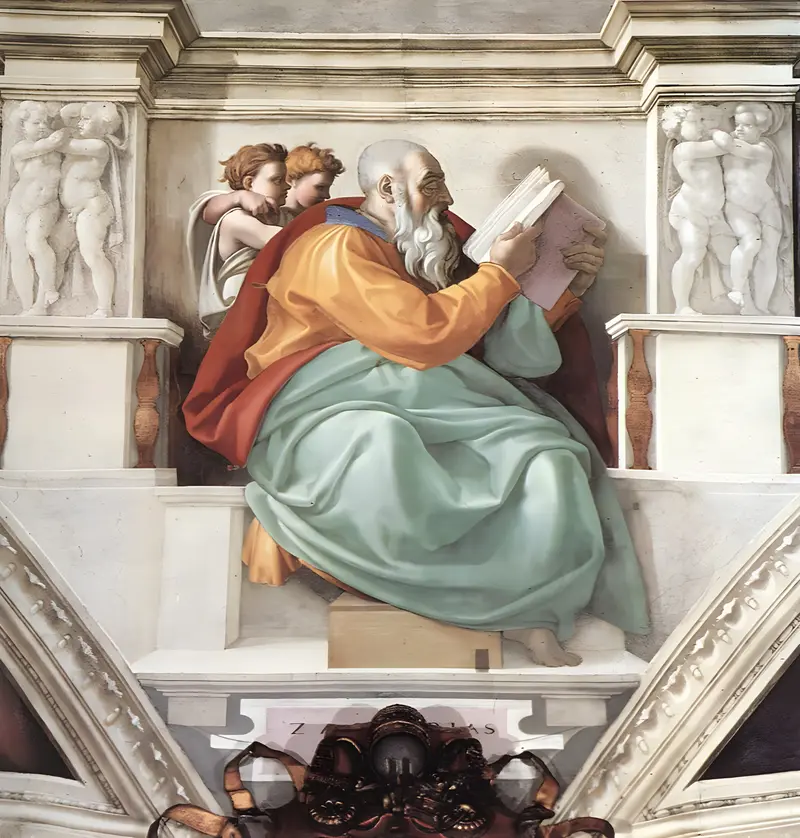
Prophet Zechariah
Michelangelo

Cumaean Sibyl
Michelangelo
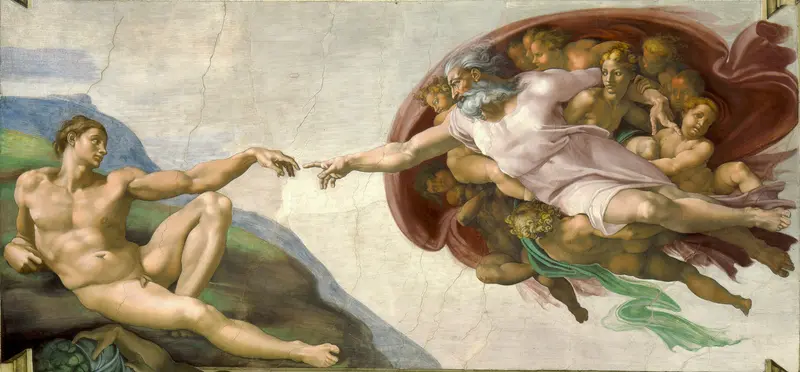
The Creation of Adam
Michelangelo
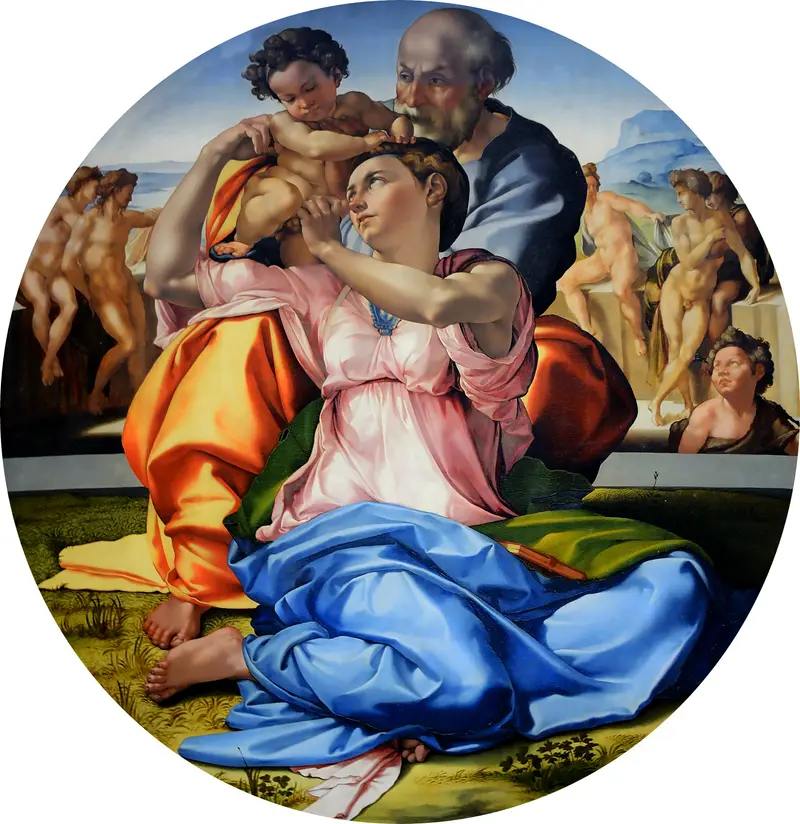
Doni Tondo
Michelangelo
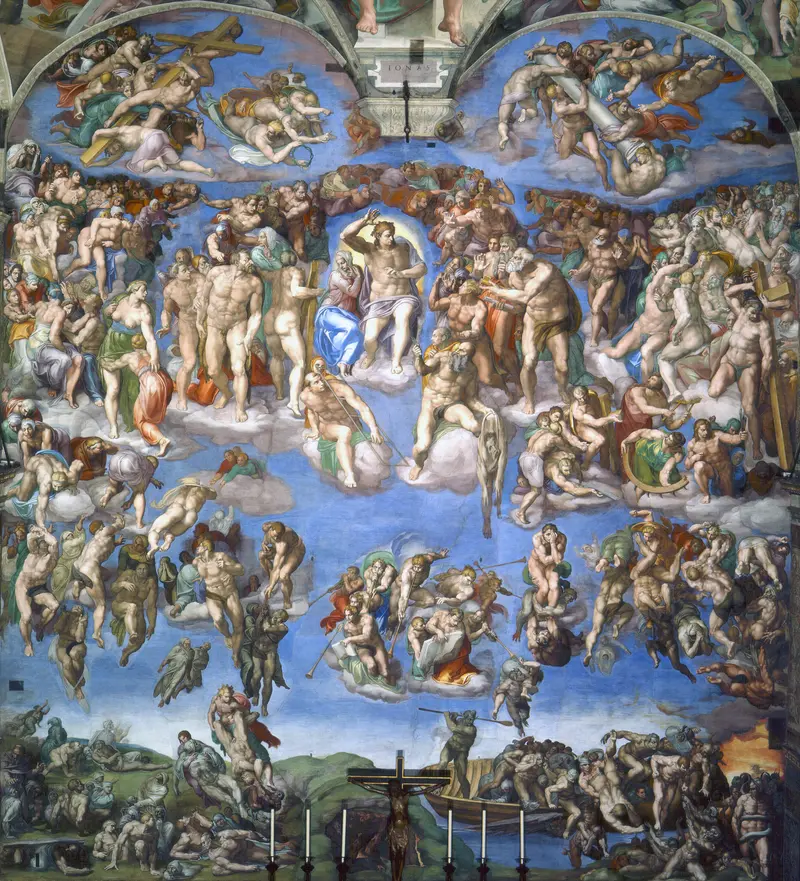
The Last Judgment
Michelangelo
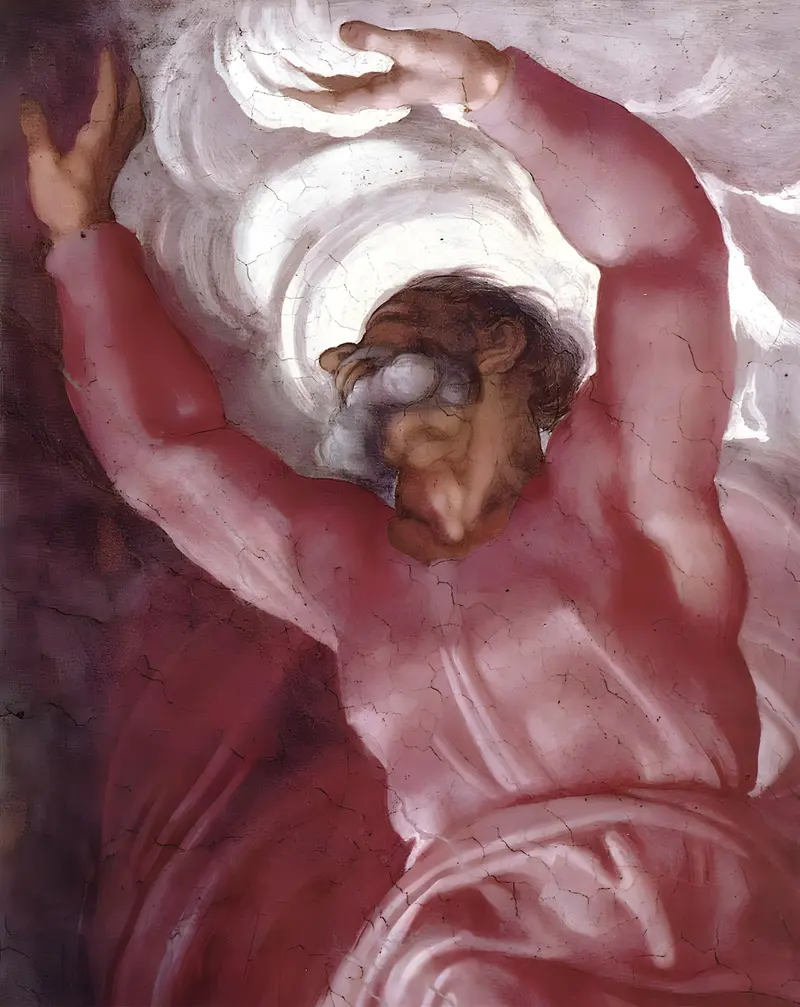
Separation of Light from Darkness
Michelangelo
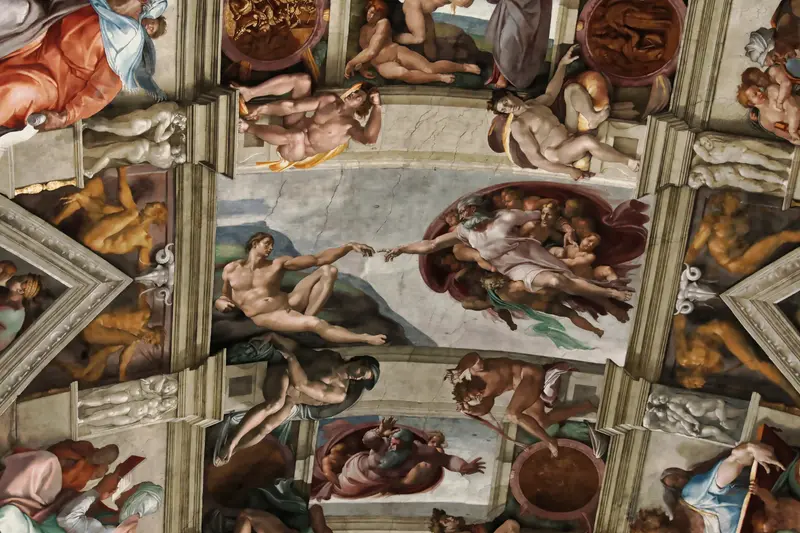
The Separation of the Earth and Waters
Michelangelo

Erythraean Sibyl
Michelangelo
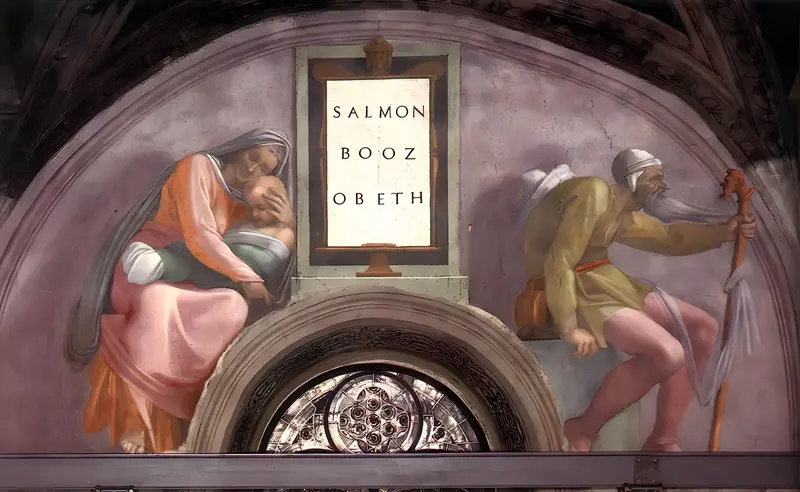
Salmon, Boaz, Obed
Michelangelo




