
Veiled Woman in Yellow — History & Facts
It is the eyes that first capture you—dark, steady, and half-shielded by the delicate veil that both reveals and conceals. The woman’s gaze is neither shy nor brazen, but something in between: a guarded confidence, as if she is aware of being seen and chooses how much of herself to show. The creamy folds of her veil catch the light, their translucence a feat of brushwork, while the yellow garment beneath hints at warmth and richness.
A jeweled band across her brow introduces a note of color and status, its reds and golds glinting against the muted background, inviting the viewer to wonder about her story, her world, and her silence. Painted in 1880 by Theodoros Ralli, Veiled Woman in Yellow belongs to a period when European artists were fascinated by the cultures of the Eastern Mediterranean, often painting imagined or observed scenes of daily life, costume, and ritual. Such works were collected by Western patrons eager for a glimpse of distant lands, and artists like Ralli—himself Greek, trained in Paris—brought a blend of academic precision and romantic curiosity to these portraits. History has kept few traces of this particular painting’s journey, but its presence in a modern collection invites us to look again, not just at the sitter’s face, but at the layers of history and imagination that shaped her image.
More Artworks by Theodoros Ralli

The Sleeping Concubine
Theodoros Ralli
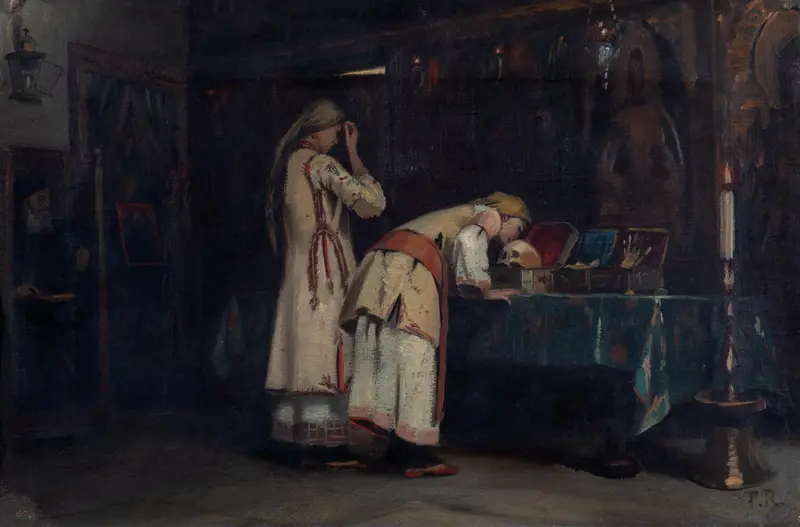
Holy Relics
Theodoros Ralli
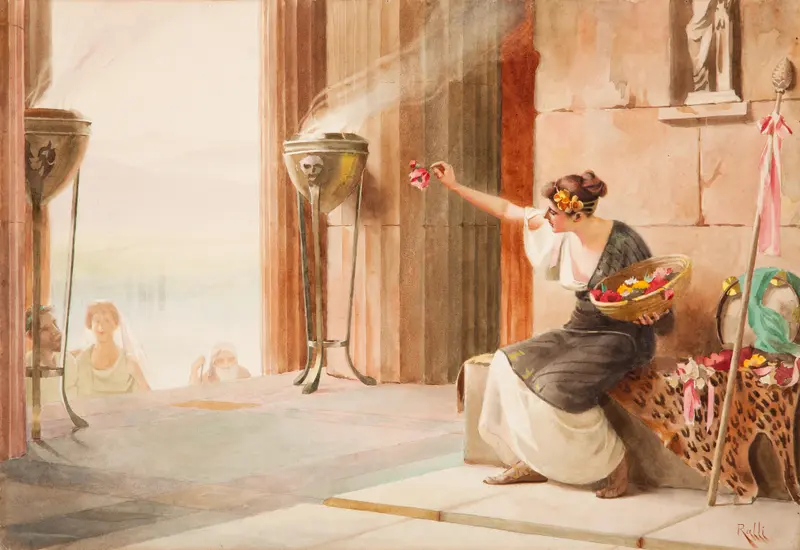
Flower Seller at the Parthenon
Theodoros Ralli
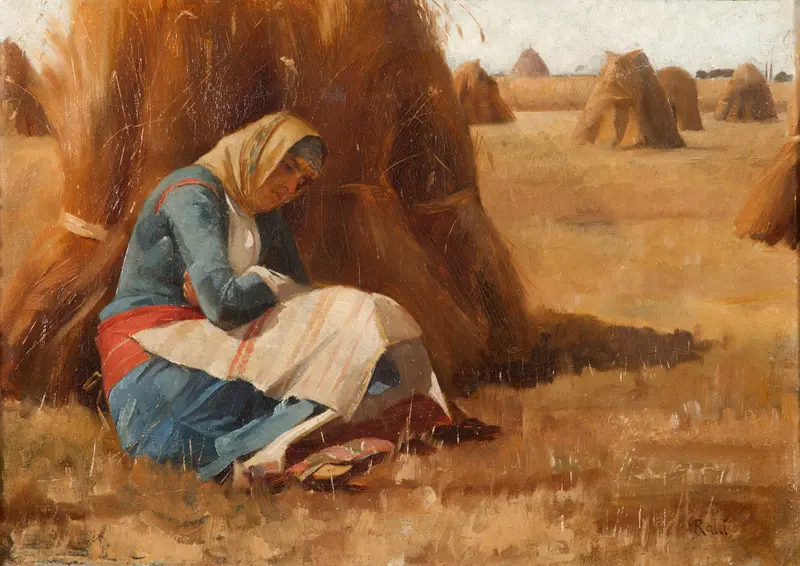
Resting by a Haystack
Theodoros Ralli
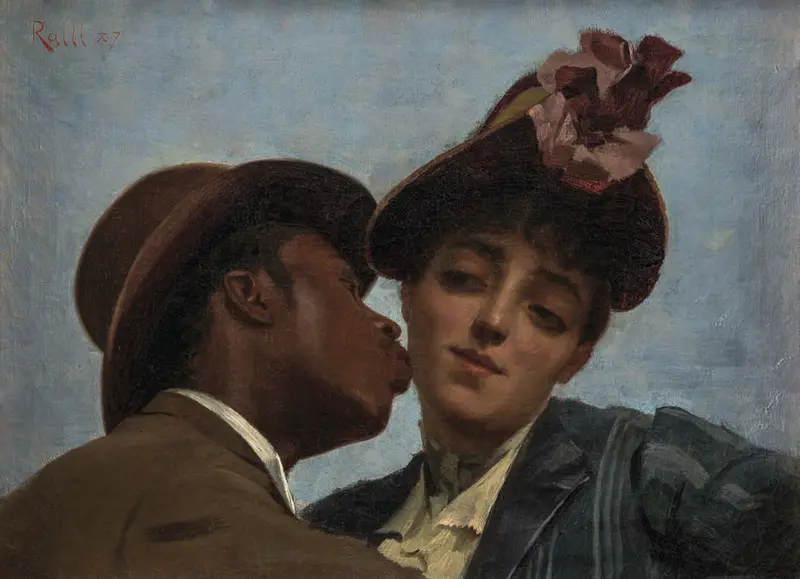
The Kiss (Ralli)
Theodoros Ralli
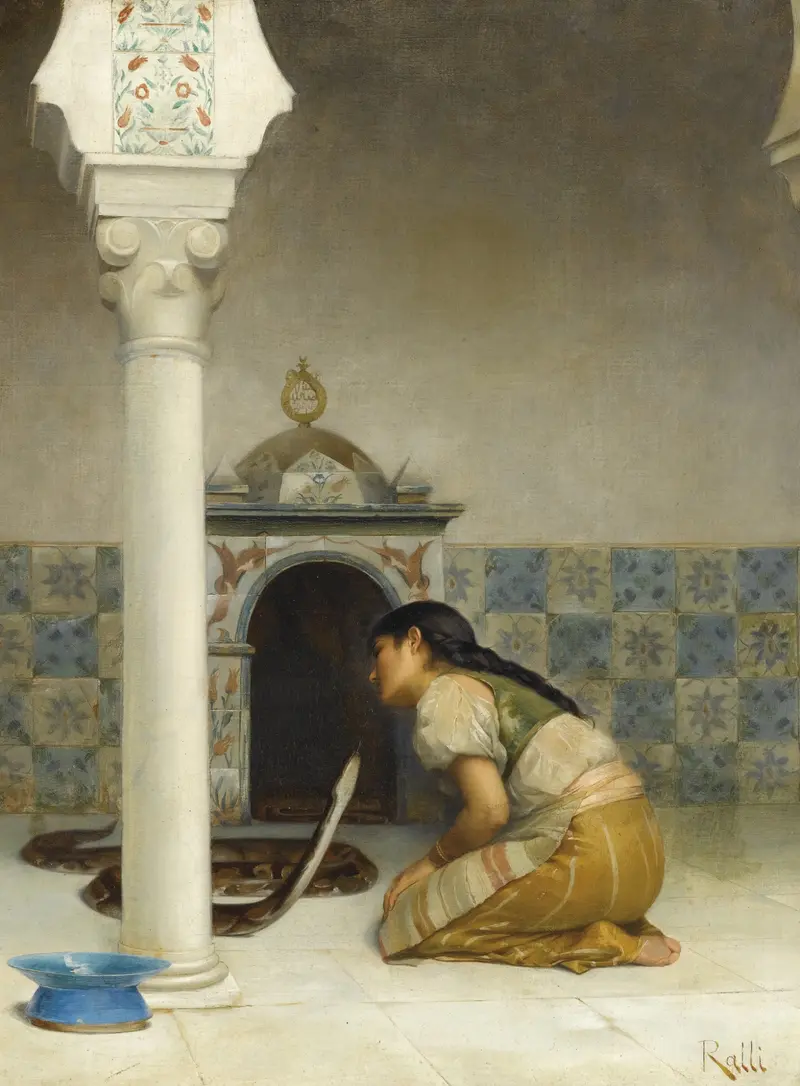
The Sacred Serpent
Theodoros Ralli
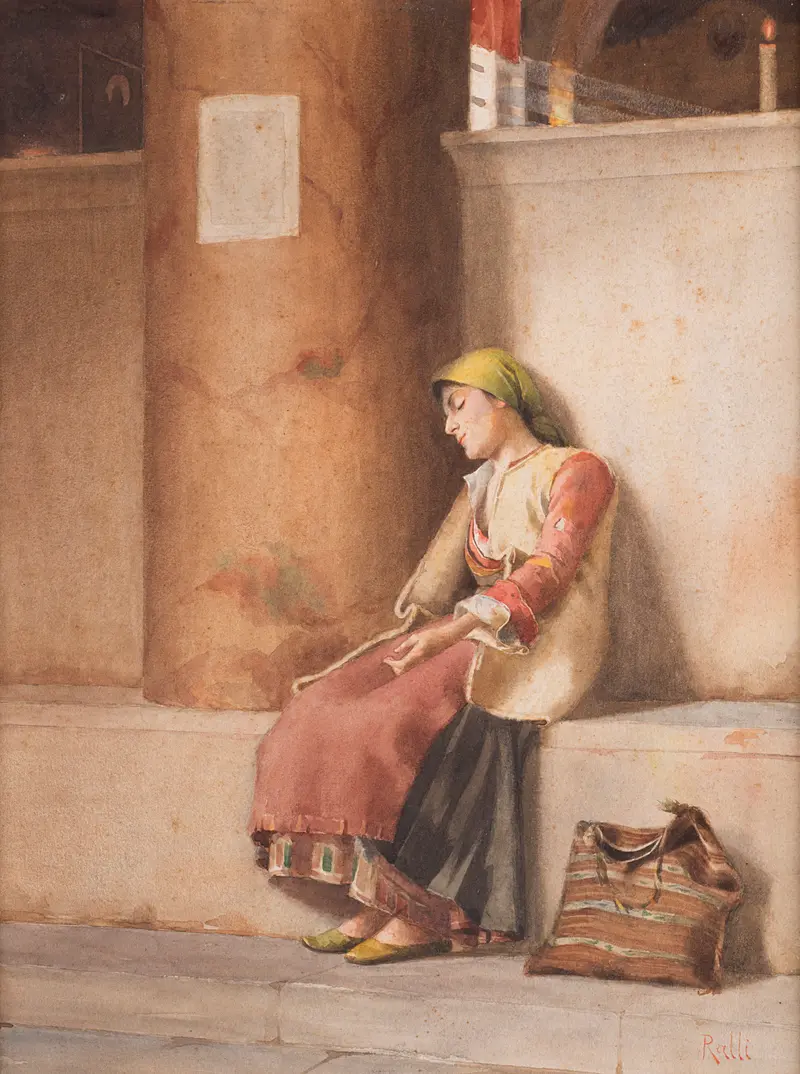
A Moment of Reflection
Theodoros Ralli
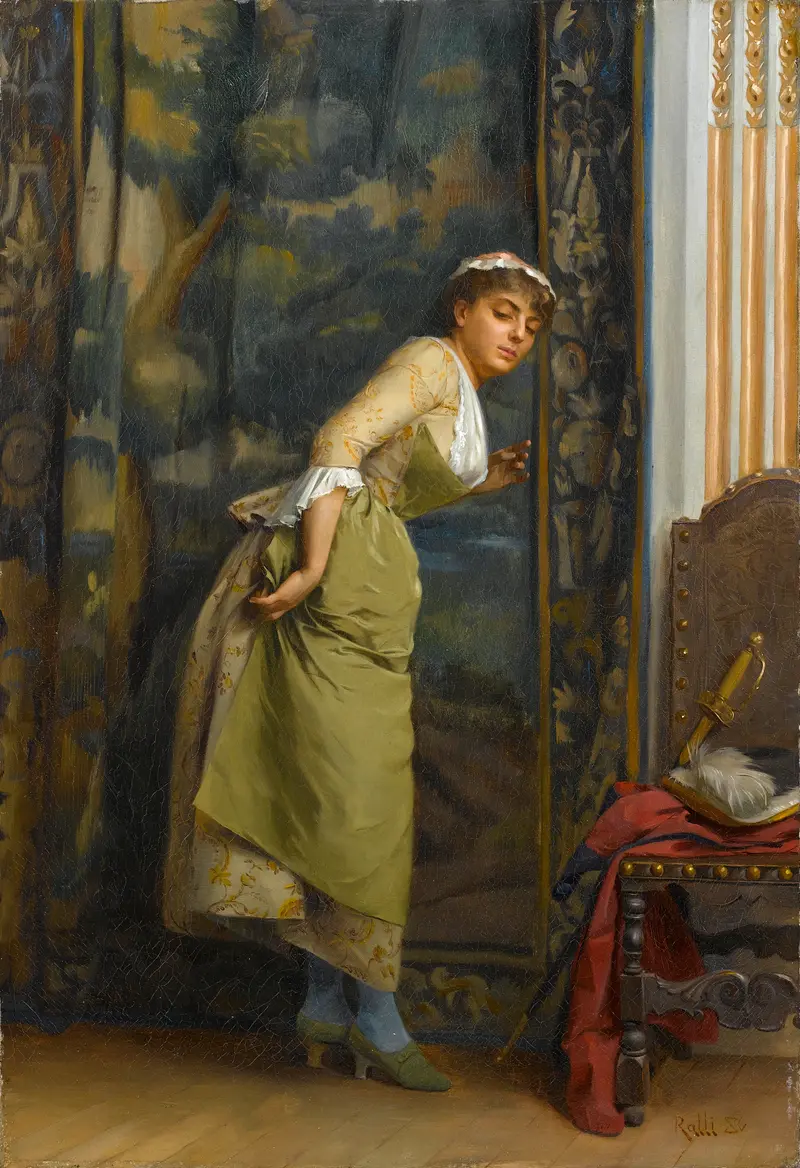
Eavesdropping (Ralli)
Theodoros Ralli
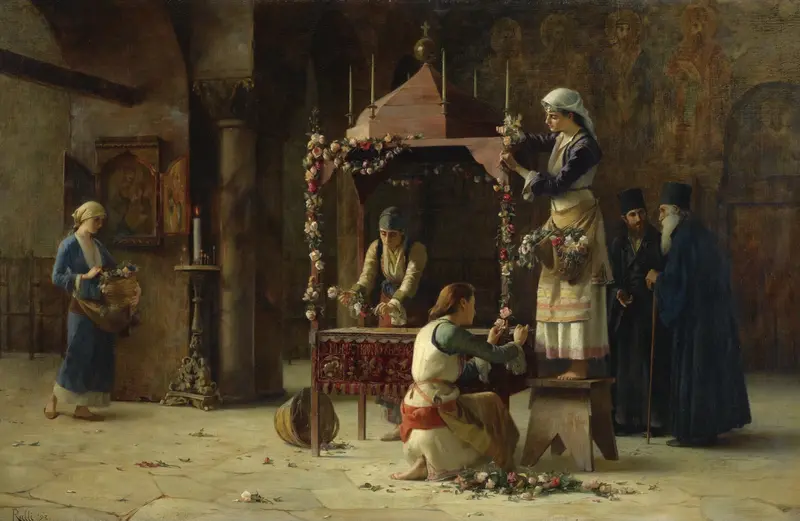
Holy Friday, Greece
Theodoros Ralli
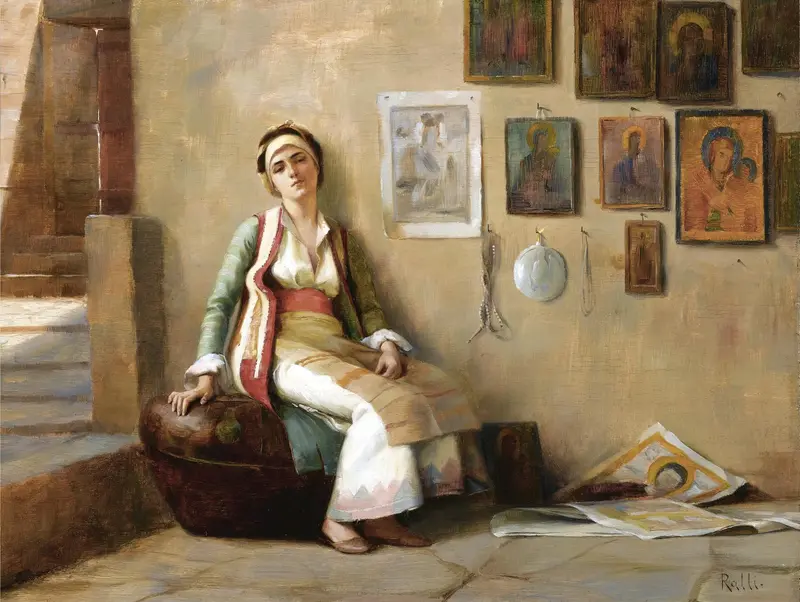
A Moment's Rest
Theodoros Ralli





