
Venice, Queen of the Adriatic, Crowning the Lion of Saint Mark — History & Facts
Few paintings capture Venice’s self-image at the height of its power as boldly as Venice, Queen of the Adriatic, Crowning the Lion of Saint Mark by Tintoretto. Created in 1597, this work was painted during the city’s last great flourish, just as its maritime dominance was beginning to wane. The painting’s subject is not a biblical or mythological tale, but a visual manifesto: Venice herself, personified as a regal woman, bestowing a crown upon the lion that symbolizes both her patron saint and her own authority.
In this period, the lion was more than a symbol—it was a political statement, appearing on coins, banners, and the very stones of the city. Tintoretto seizes the moment of coronation, freezing the instant when Venice, draped in flowing robes and surrounded by allegorical figures, places a golden crown on the head of the winged lion of Saint Mark. The lion’s paw rests on an open gospel, inscribed with the familiar “Pax tibi Marce,” signaling peace and divine favor. Light cascades from above, illuminating Venice’s face and the crown, while the background teems with clouds and hints of the city’s skyline.
The composition’s energy—swirling drapery, upward glances, and a sense of movement—recalls Tintoretto’s earlier works, but here the theatricality serves a civic purpose. Unlike Veronese’s more serene allegories, Tintoretto’s Venice is dynamic and commanding, her gesture both protective and triumphant. The exact original location and patron of this painting remain uncertain, though it likely adorned a civic or religious building in Venice, celebrating the city’s enduring myth. Over the centuries, the painting’s fate is less well documented than some of Tintoretto’s grander commissions, but its theme and date place it among his late allegorical works, when he was a celebrated figure in Venetian art.
Today, it stands as a testament to the city’s self-fashioning and to Tintoretto’s ability to blend spectacle with symbolism. The work’s bold vision and restless energy mark the twilight of the Venetian Renaissance, as both artist and city faced the dawn of a new era.
More Artworks by Tintoretto
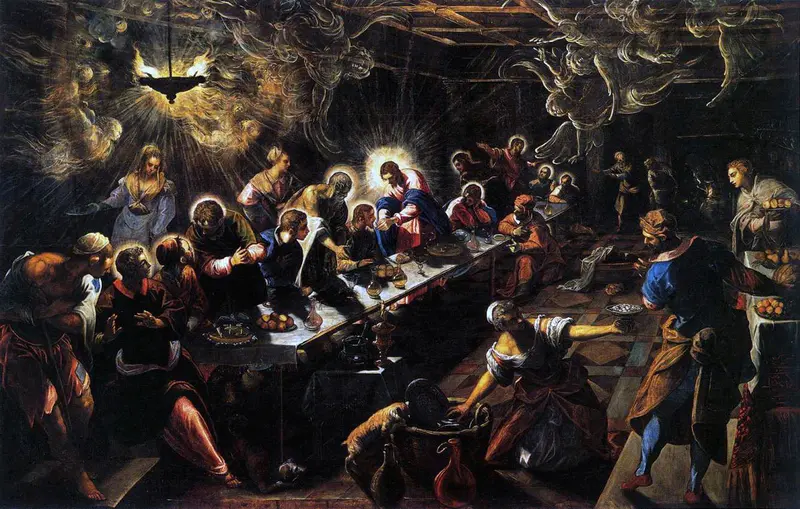
The Last Supper
Tintoretto
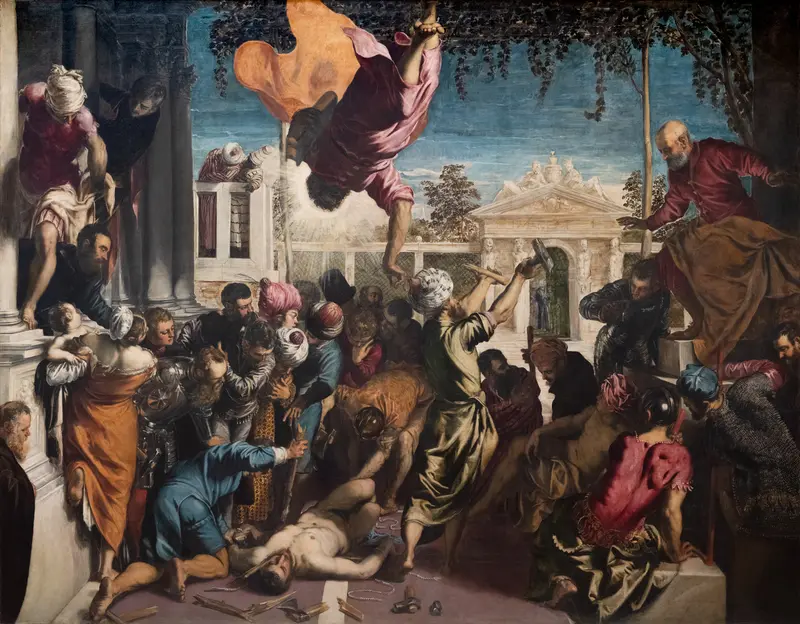
The Miracle of the Slave
Tintoretto
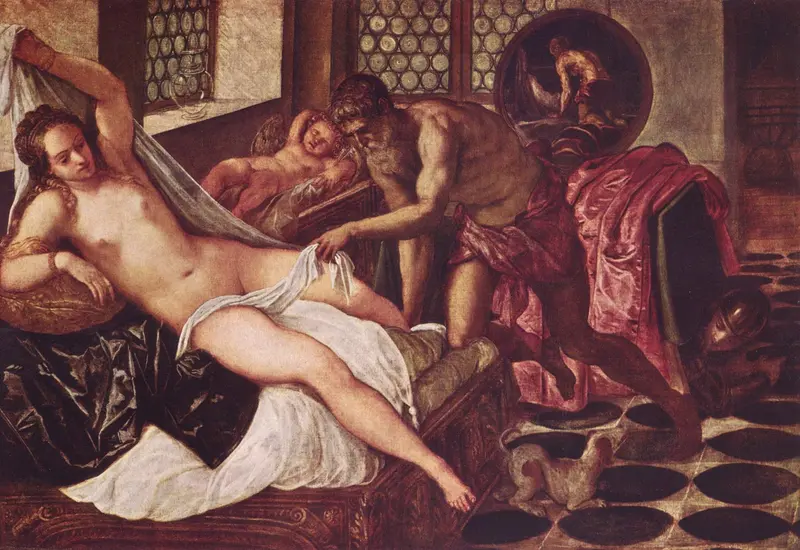
Venus and Mars Surprised by Vulcan
Tintoretto

Adoration of the Shepherds
Tintoretto
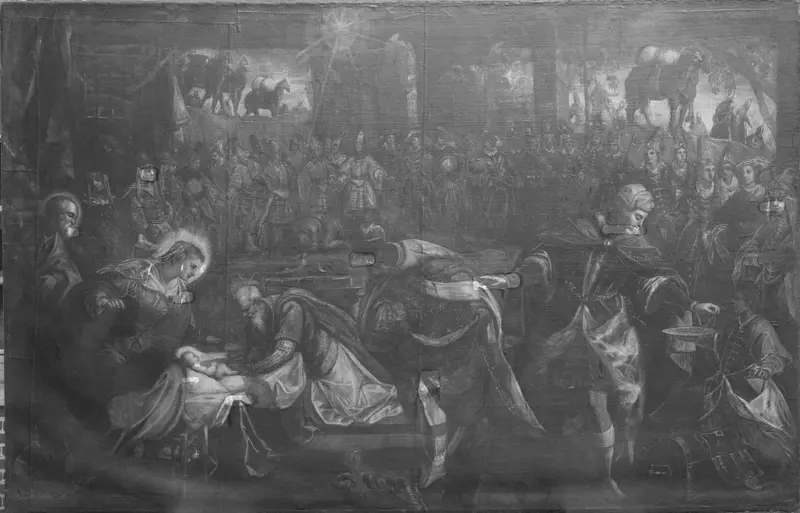
Adoration of the Magi
Tintoretto
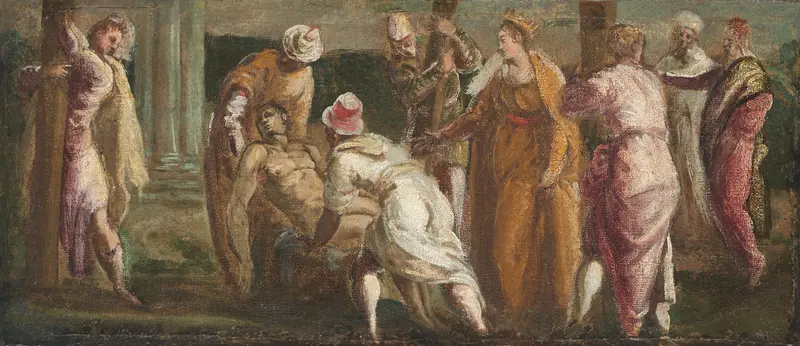
Saint Helen Testing the True Cross
Tintoretto
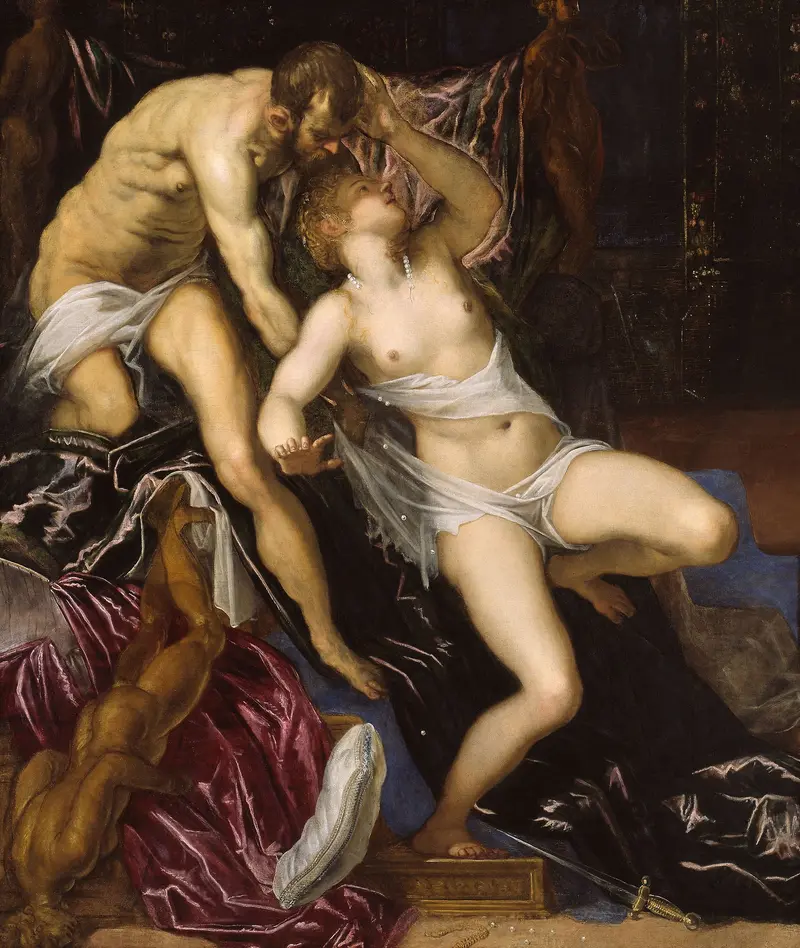
Tarquin and Lucretia
Tintoretto
Two Male Figures in Motion (verso)
Tintoretto
A Female Nude [verso]
Tintoretto
Veduta Kopra
Tintoretto





