
Vierge avec l'Enfant et le petit saint Jean — History & Facts
No one knows for certain how many versions of the Madonna and Child Sandro Botticelli painted, but Vierge avec l'Enfant et le petit saint Jean stands out for its intimate portrayal of childhood friendship and familial tenderness. Unlike grand altarpieces, this work was likely intended for private devotion, a cherished image for a Florentine home—its small scale and gentle mood suggest a personal commission rather than a public one. The painting’s precise date and original patron remain uncertain, but its style places it around 1450, at the dawn of Botticelli's career, when he was still absorbing the lessons of his teacher, Fra Filippo Lippi.
The proliferation of similar compositions by Botticelli and his workshop speaks to the popularity of this tender theme in Renaissance Florence. At the heart of the scene, the Virgin Mary cradles the infant Christ, while the young John the Baptist—identifiable by his camel-hair garment—leans in with a gesture of adoration. The moment Botticelli captures is not one of miracle or drama, but of quiet affection: the Christ Child reaches toward John, their hands nearly touching, symbolizing the bond that will unite them in their future destinies. Mary’s downcast gaze and the delicate curve of her fingers convey both maternal protection and a foreknowledge of sorrow.
The soft, golden light and the lush, idealized landscape behind them echo the gentle lyricism found in Fra Filippo Lippi’s Madonnas, yet Botticelli’s figures are more linear, their outlines crisp and rhythmic, hinting at the style that would later define his mature works. The exact provenance of Vierge avec l'Enfant et le petit saint Jean is unclear, as is often the case with early Botticelli Madonnas, which circulated widely among Florentine collectors and patrons. Over the centuries, the painting has been attributed both to Botticelli himself and, at times, to his workshop, reflecting the collaborative nature of Renaissance studios. Today, it is recognized as an early example of his devotional imagery, valued for its gentle humanity and clarity of design.
Its current home in an online gallery allows viewers around the world to appreciate a work that once hung in the quiet intimacy of a Renaissance household, bridging centuries with its enduring sense of warmth and connection.
More Artworks by Sandro Botticelli

Virgin and Child
Sandro Botticelli

Madonna and Child and the Young St John the Baptist
Sandro Botticelli

Madonna and Child with six angels and Saint John the Baptist as Child
Sandro Botticelli

Adoration of the Magi
Sandro Botticelli

Virgin and Child with the Young Saint John the Baptist
Sandro Botticelli
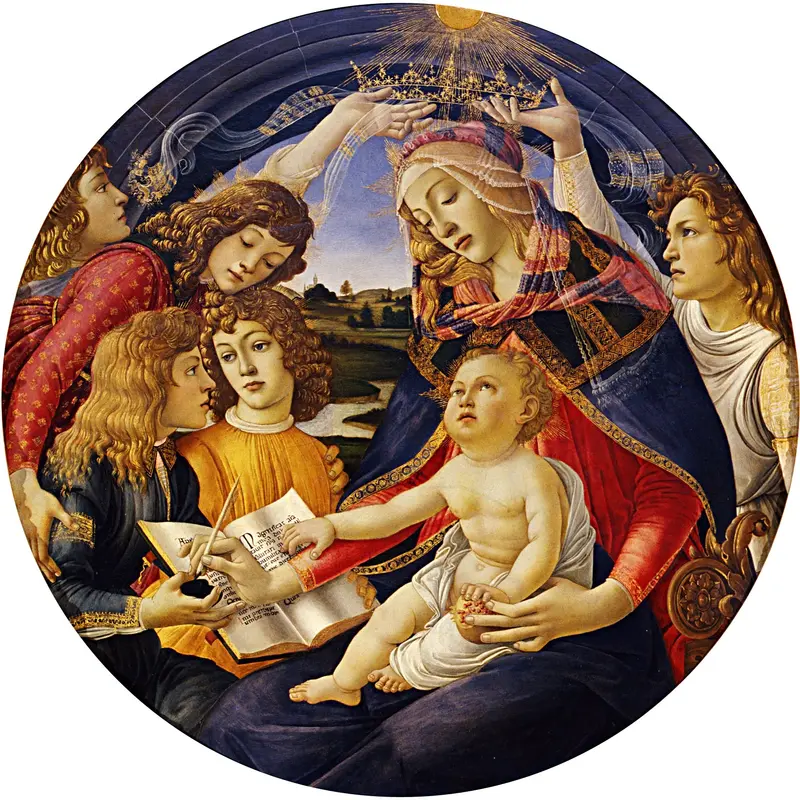
Madonna of the Magnificat
Sandro Botticelli
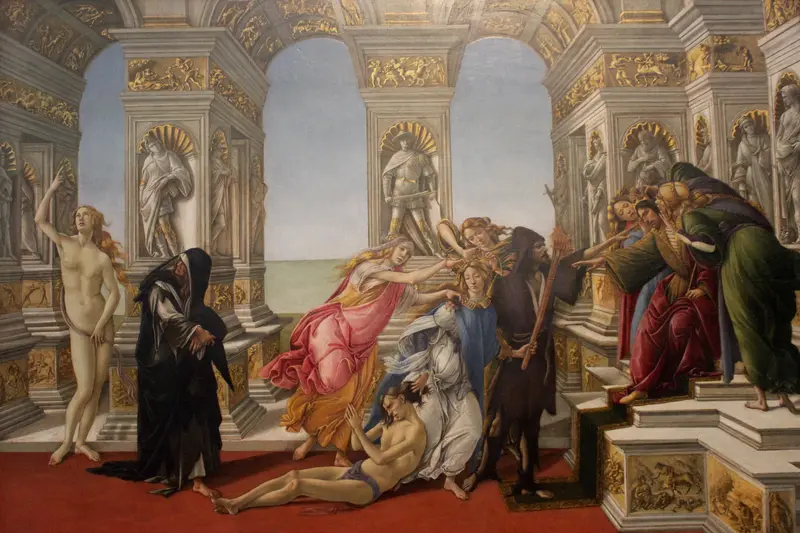
Calumny of Apelles
Sandro Botticelli

Portrait of a young man holding a roundel
Sandro Botticelli

The Trinity with Saint Mary Magdalene and Saint John the Baptist, the Archangel Raphael and Tobias
Sandro Botticelli

Idealized Portrait of a Lady (Portrait of Simonetta Vespucci as Nymph)
Sandro Botticelli





