
View in the Woods — History & Facts
What if beauty was never meant to be finished? In the quiet embrace of nature, reflection becomes a continuous journey, inviting us deeper into its essence. Look closely at the lush greenery that sprawls across the canvas, where the soft brushstrokes evoke a sense of movement—a gentle breeze rustling the leaves. Focus on the interplay of light filtering through the trees, casting dappled patterns on the forest floor. The muted palette is punctuated by subtle highlights, drawing your gaze toward a serene opening in the woods where sunlight bathes the scene in warmth.
Each stroke feels deliberate yet spontaneous, capturing the transient beauty of a moment suspended in time. The tension between light and shadow suggests a deeper narrative, one that speaks to the balance between chaos and tranquility in nature. Notice the small details: a solitary figure in the distance, perhaps a wanderer lost in thought, symbolizing human introspection amid the vastness of the wilderness. The juxtaposition of the vibrant life of the forest against the stillness of the water reflects the duality of existence—where beauty thrives in moments of both vibrancy and solitude. Painted during the mid-19th century, View in the Woods emerged from the artist’s explorations in the forested landscapes of France.
During this time, the Romantic movement was flourishing, highlighting the emotional and spiritual connections to nature. Dupré, a prominent figure in this movement, sought to convey the sublimity of the natural world as a response to industrialization, creating a dialogue between humanity and the environment that resonates in this enchanting piece.
More Artworks by Jules Dupré
Browse all →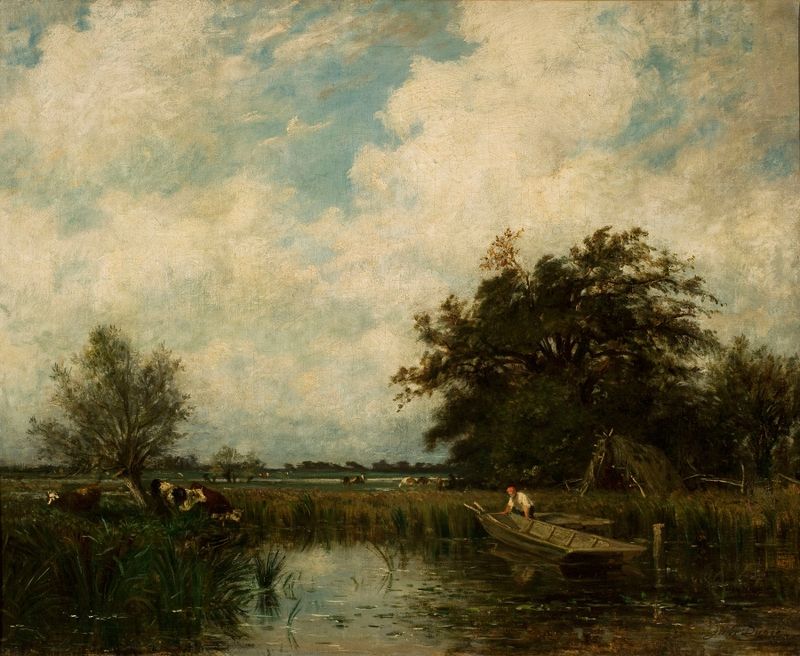
Landscape with a pond
Jules Dupré

The Cottage by the Roadside, Stormy Sky
Jules Dupré
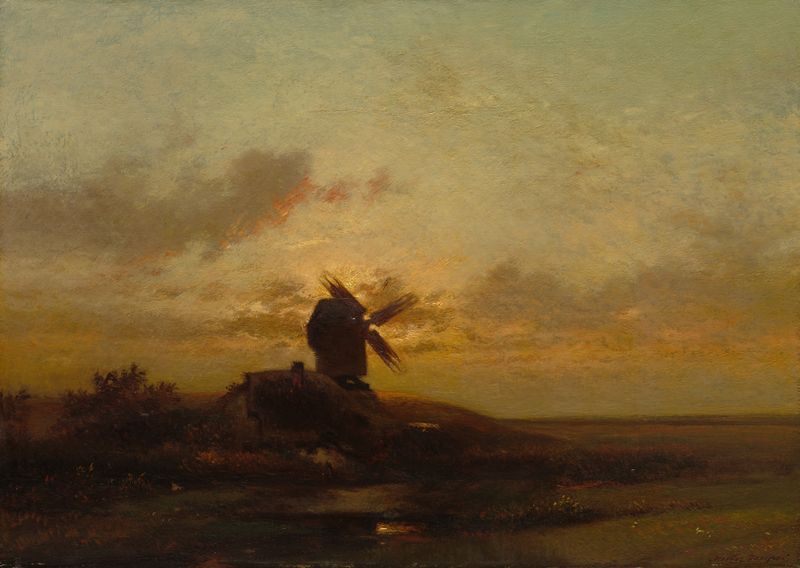
The Windmill
Jules Dupré

The Estuary Farm
Jules Dupré

Fontainebleau Oaks
Jules Dupré

Village Scene, Sunset
Jules Dupré

Barks Fleeing Before the Storm
Jules Dupré

Cows Crossing a Ford
Jules Dupré

The Old Oak
Jules Dupré

Weidelandschaft im Limousin
Jules Dupré





