
View of Cotopaxi — History & Facts
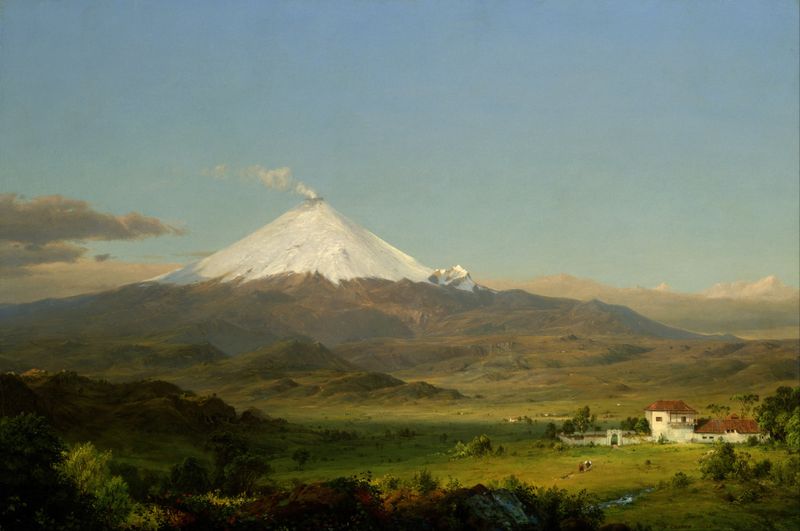
Could beauty survive in a century of chaos? In View of Cotopaxi, the viewer is invited to ponder the fragile equilibrium between nature's grandeur and the tumult of human experience. Look to the left at the majestic peak of Cotopaxi, its snow-capped summit piercing the vast blue sky, bathed in the soft golden light of a setting sun. The painter's meticulous brushstrokes create a vibrant interplay of greens and browns in the foreground, where lush vegetation thrives, contrasting sharply with the austere, powerful mountain. Notice how the clouds gather in a slow dance around the summit, evoking a sense of foreboding yet also tranquility, while the glimmers of sunlight draw your eye further into this vast landscape. This artwork reveals layers of meaning beneath its beauty.
The looming volcano symbolizes both the sublime force of nature and the unpredictability of life, suggesting that even the most serene landscapes can conceal undercurrents of chaos. The tranquility of the scene is tinged with melancholy, a reminder of the tension between humanity's desire to conquer nature and the uncontrollable power that it possesses. Small details, like the intricate foliage and the distant, hazy valleys, speak to a world teetering on the edge of sublime beauty and peril. Frederic Edwin Church created View of Cotopaxi in 1857 while based in the United States, a time marked by significant political and social upheaval.
The mid-19th century witnessed the rise of the Hudson River School, which sought to capture the American landscape's beauty and grandeur. Church, a leading figure in this movement, traveled extensively, and his experience with the exotic landscapes of South America profoundly influenced his work, bridging the gap between romanticism and realism.
More Artworks by Frederic Edwin Church
Browse all →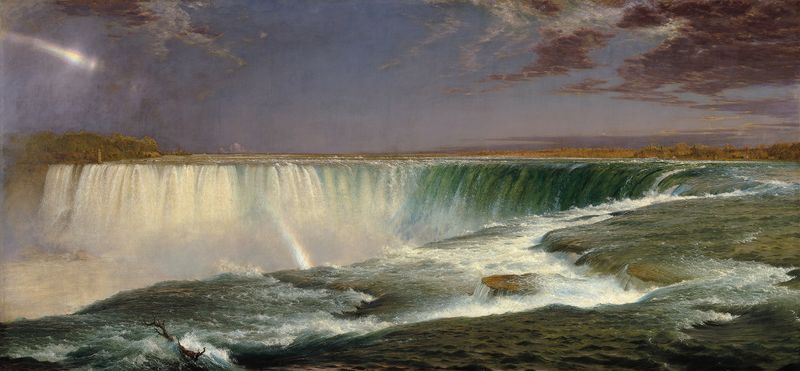
Niagara
Frederic Edwin Church
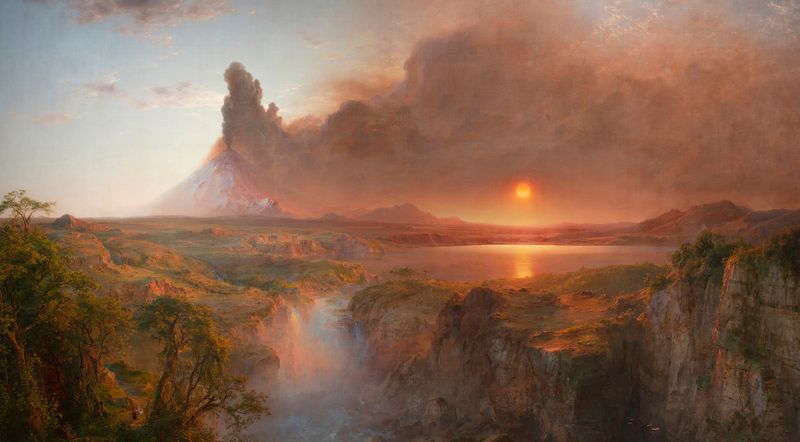
Cotopaxi
Frederic Edwin Church
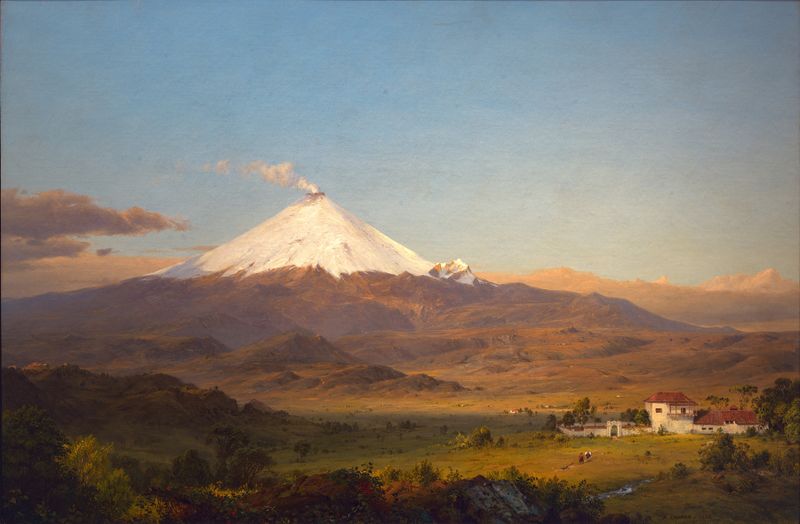
Cotopaxi
Frederic Edwin Church
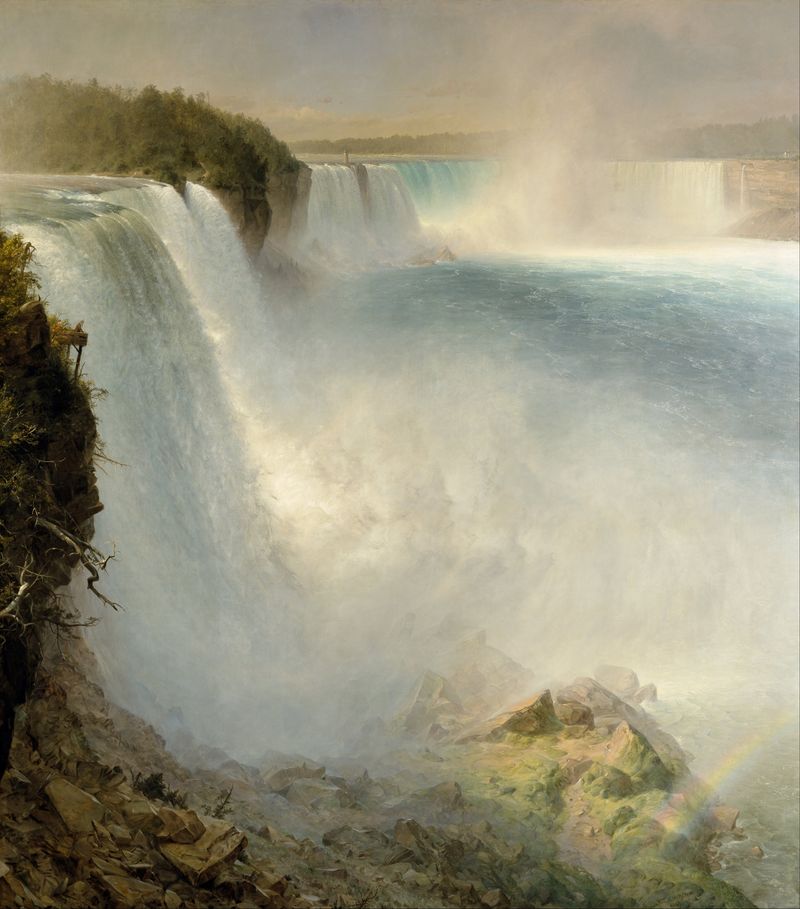
Niagara Falls, from the American Side
Frederic Edwin Church
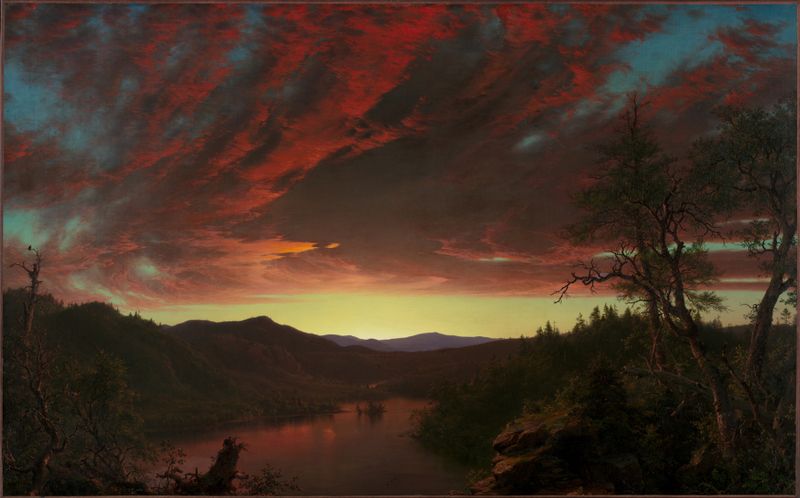
Twilight in the Wilderness
Frederic Edwin Church
Hudson Valley at Sunset
Frederic Edwin Church
The Hintersee, near Berchtesgaden, Bavaria
Frederic Edwin Church
Mountains near Baalbec
Frederic Edwin Church
Aurora Borealis
Frederic Edwin Church
Cotopaxi
Frederic Edwin Church





