
View of Madrid — History & Facts
What first draws the eye in View of Madrid by Antonio Joli is the sweep of the city’s new Royal Palace, a pale and imposing rectangle that commands the horizon with the assurance of a recent arrival. The painter has chosen his vantage from the south, just before the Puente de Segovia, so that the palace presides over a living tapestry of daily Madrid. The bridge itself is alive with movement—carriages, riders, and walkers all threading their way across the Manzanares, while the riverbanks are dotted with the famous lines of laundry, the handiwork of local washerwomen.
The light is gentle but clear, picking out the domes, towers, and campaniles that punctuate the city’s skyline, each silhouette a marker of faith or power. This is a veduta—a city portrait crafted not for the fleeting impression, but for the lasting memory. In the mid-eighteenth century, such works were prized by the nobility and the rising bourgeoisie, eager to possess not only their city but its image, captured with the precision and clarity that Italian-trained painters like Joli could deliver. Painted in 1753, this view stands at the intersection of old and new Madrid: the ancient city clustered around its churches and the bold geometry of Bourbon ambition.
The laundry drying in the sun is no mere detail; it signals the everyday life that persists beneath the gaze of royal grandeur, a reminder that the city’s pulse is set by both palace and people. The painting invites a slow gaze—watch how the light travels from the palace façade to the distant rooftops, and let your eye wander back to the bridge, where Madrid’s story is always crossing.
More Artworks by Antonio Joli

Monastery Di San Martino, Naples
Antonio Joli
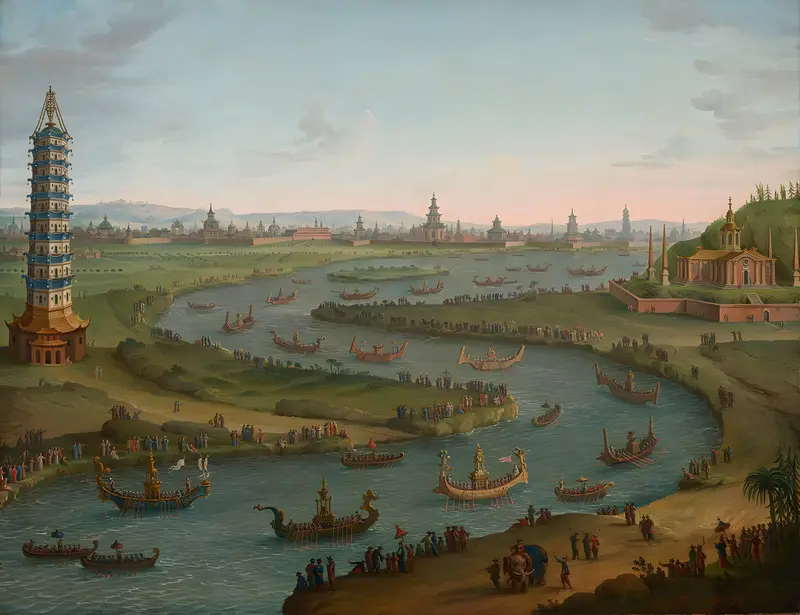
A capriccio with the French Ambassador approaching the King of Siam’s Palace in a state barge, in October
Antonio Joli
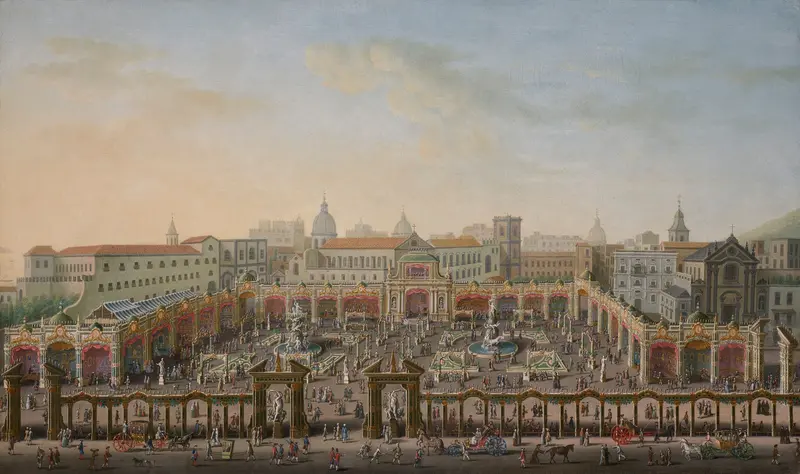
Naples, Piazza Trieste e Trento with a fair viewed from a balcony of the Palazzo Reale
Antonio Joli
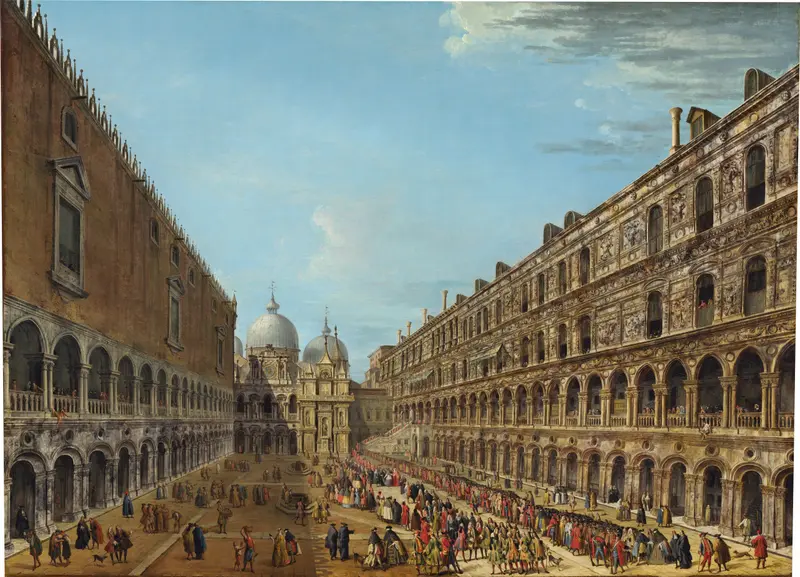
Procession in the Courtyard of the Ducal Palace,Venice
Antonio Joli
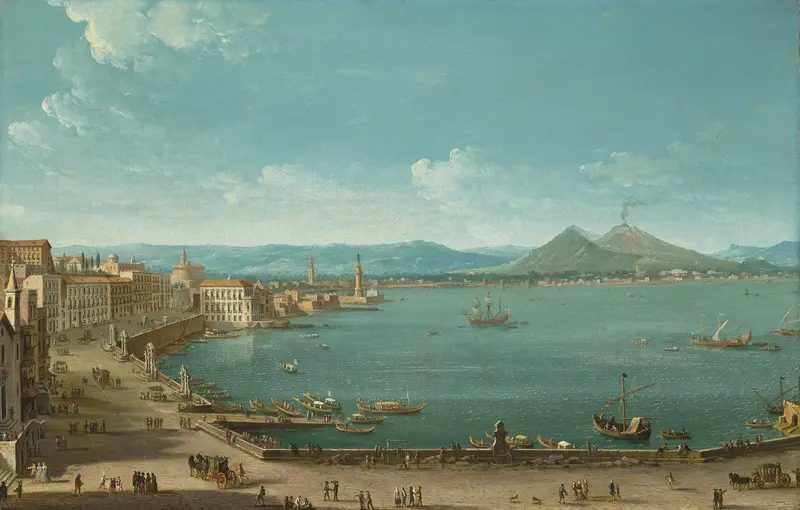
Naples with the Bay of Santa Lucia and Vesuvius beyond
Antonio Joli
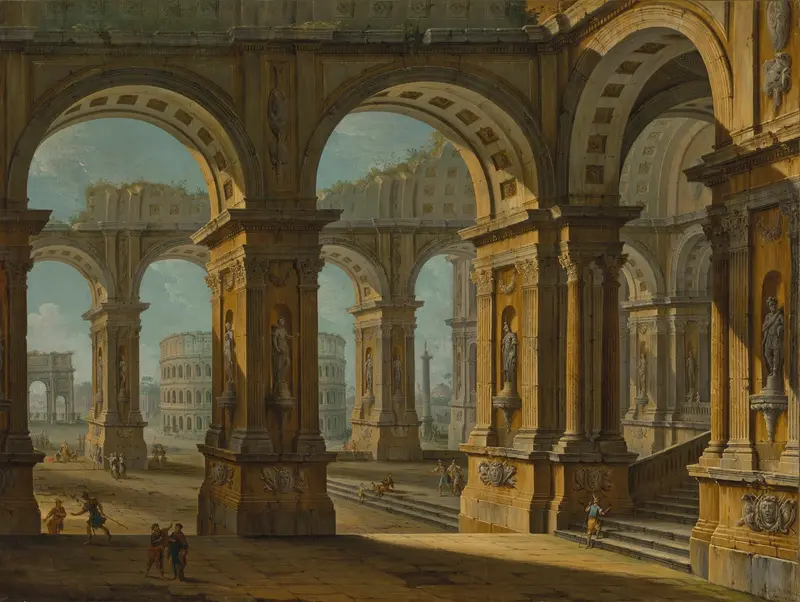
A capriccio of Rome with the Colusseum and Arch of Titus
Antonio Joli
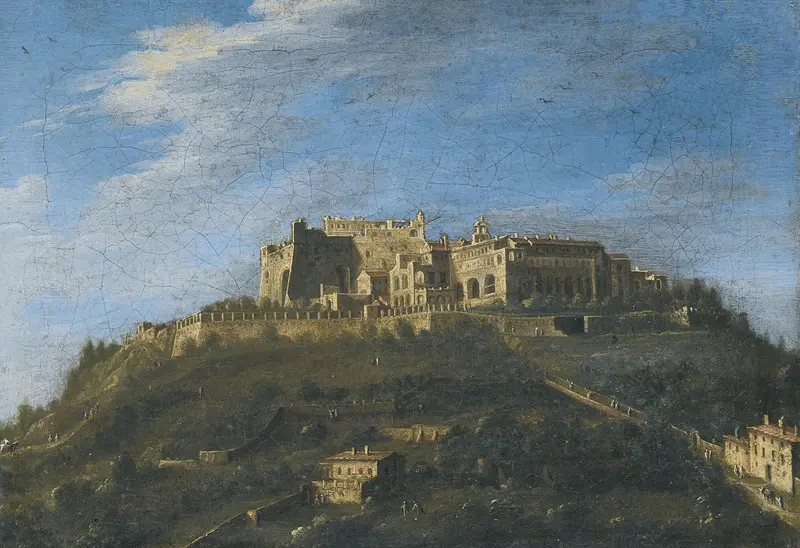
Monastery Di San Martino, Naples
Antonio Joli
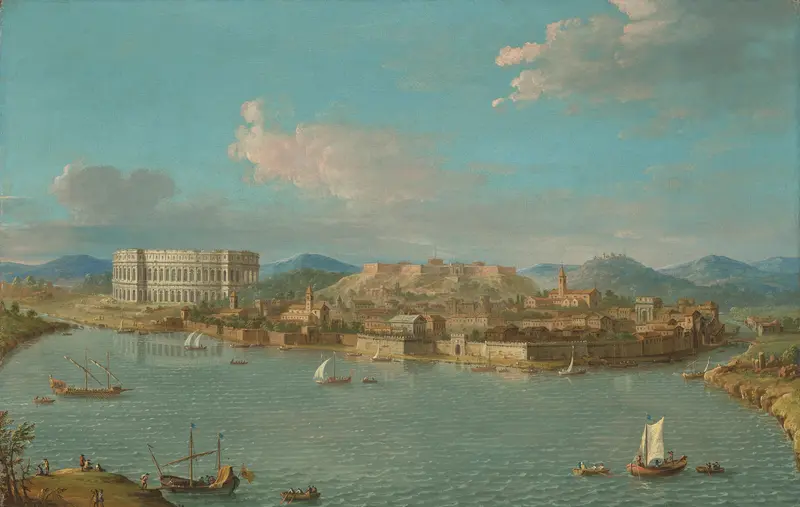
Pula, with the Pula Arena
Antonio Joli
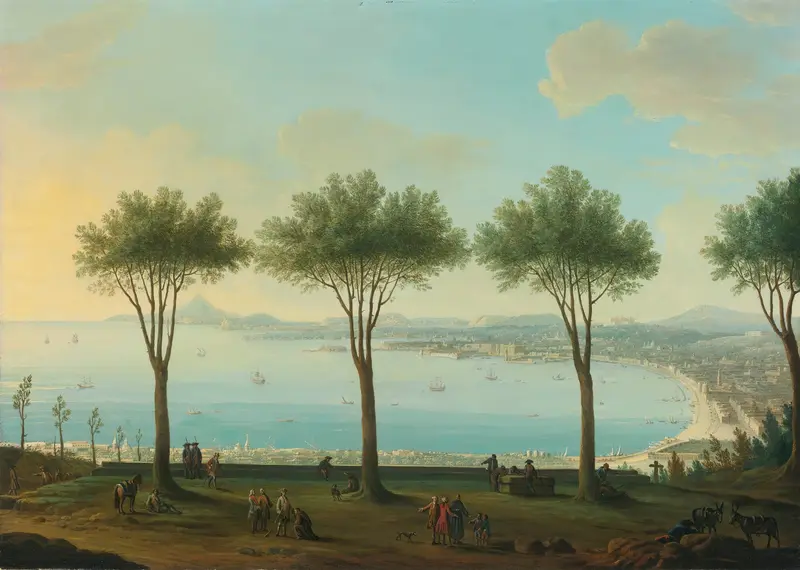
View Of The Bay Of Naples From The South (Possibly Poggioreale), Looking North With A King Of The Bourbon Family, Possibly Ferdinand Iv, In The Foreground
Antonio Joli
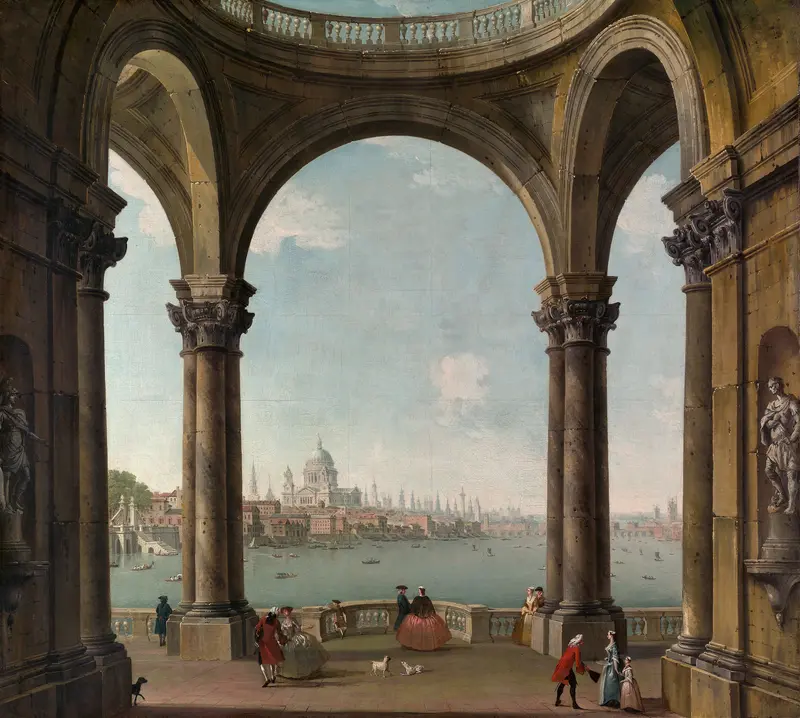
Capriccio with St. Paul’s and Old London Bridge
Antonio Joli





