
View of Marly-le-Roi from Cœur-Volant — History & Facts
A single, sunlit house stands at the edge of a gentle rise, its ornate balcony facing a sweep of golden trees and a distant village shimmering under a wide, cloudless sky. The painter draws your eye outward from the shaded foreground, where a lone figure in pale green wanders, toward the clustered rooftops and church spire that anchor the horizon. The light is restless yet soft, flickering across the ground and catching in the autumn leaves, suggesting the hush of late afternoon.
The brushwork is loose but purposeful, giving the scene a sense of movement and immediacy, as if the air itself were trembling with color. The house’s decorative trim and the careful placement of garden furniture hint at a life of quiet comfort, but the real drama is in the way the landscape opens up, inviting the viewer to step forward and lose themselves in the view. Painted in 1876, this work belongs to a moment when artists like Alfred Sisley were redefining what a landscape could be. Rather than serving as a backdrop for grand narratives or mythic tales, the countryside here becomes a subject in its own right, celebrated for its fleeting moods and shifting light.
Such paintings were rarely commissioned by grand patrons; instead, they were often made on speculation, intended for the new urban collectors who were drawn to scenes of rural leisure and modern life. The painting now resides in the Metropolitan Museum of Art, a testament to the enduring appeal of the Impressionist vision. Let your gaze linger on the play of color and shadow—the real subject is the sensation of looking itself.
More Artworks by Alfred Sisley
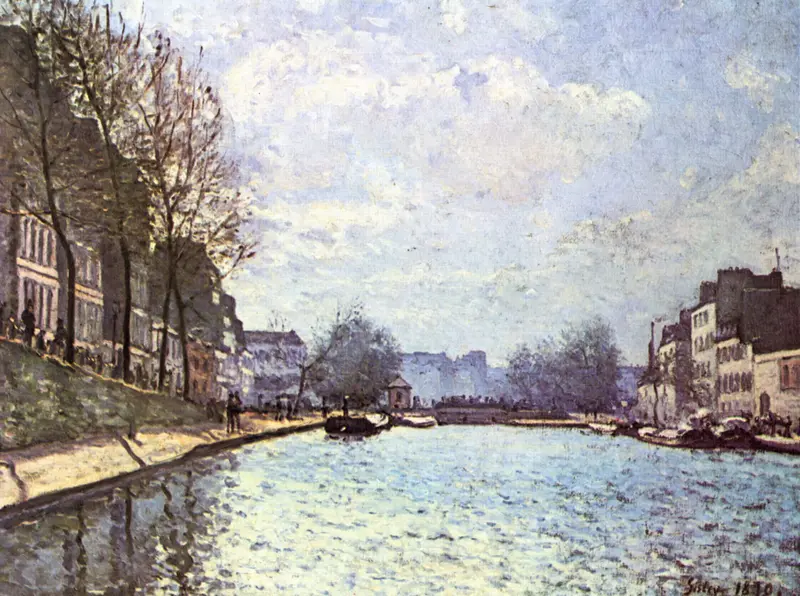
View of the Canal Saint-Martin
Alfred Sisley

Le Loing à Saint-Mammès
Alfred Sisley
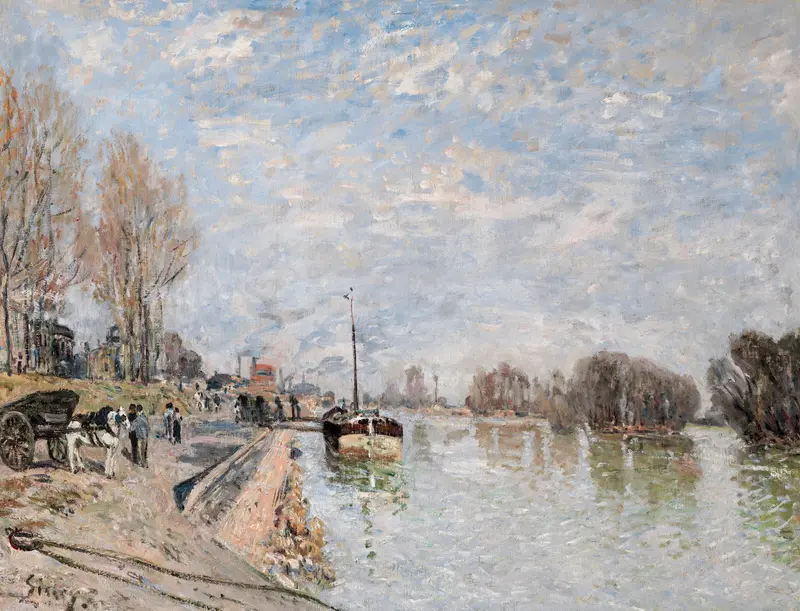
La Seine à Suresnes
Alfred Sisley
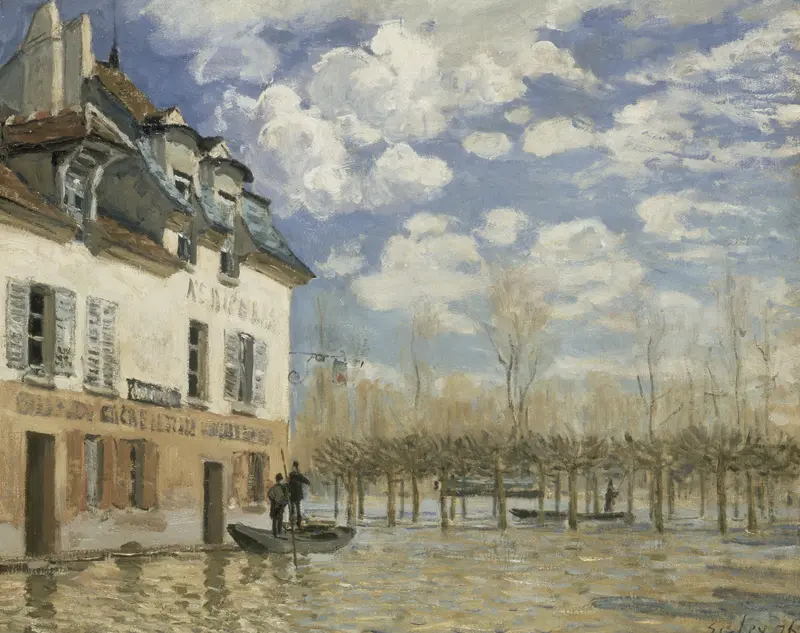
Boat in the Flood at Port Marly
Alfred Sisley
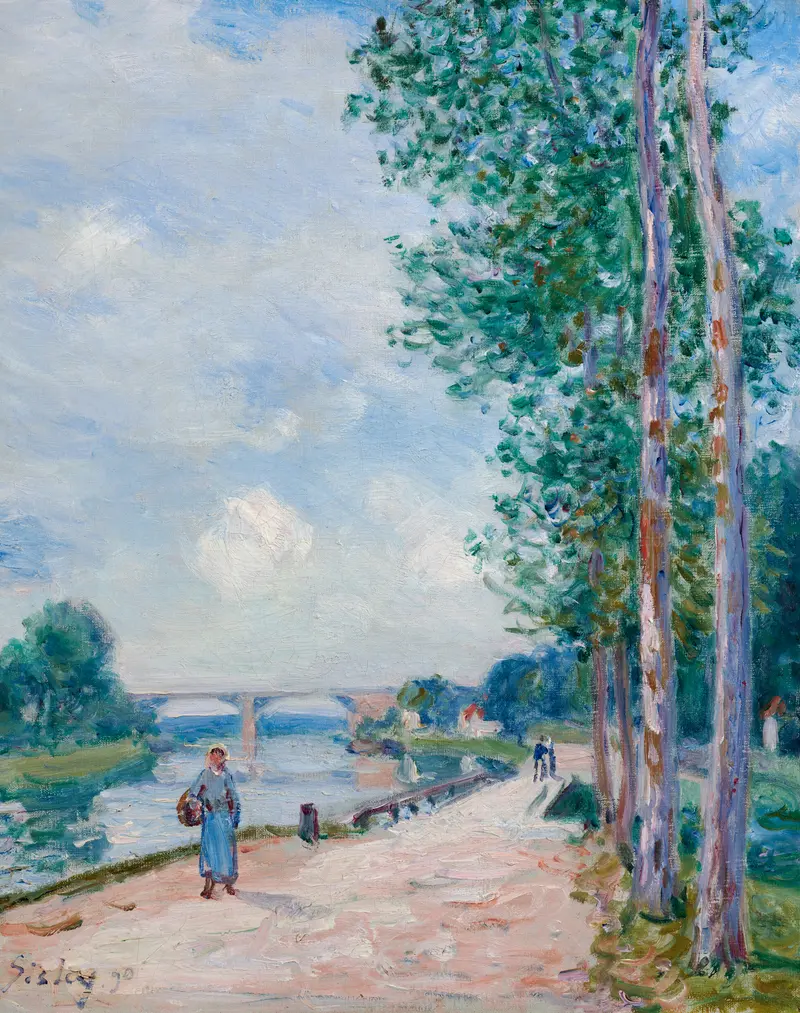
Les bords du Loing près de Moret
Alfred Sisley
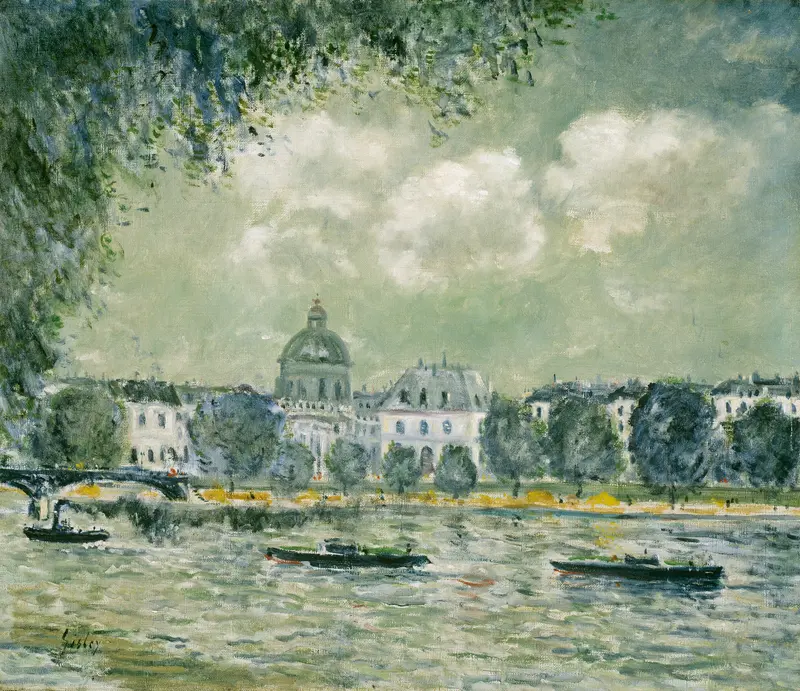
Landscape along the Seine with the Institut de France and the Pont des Arts
Alfred Sisley

Printemps au bord du Loing
Alfred Sisley
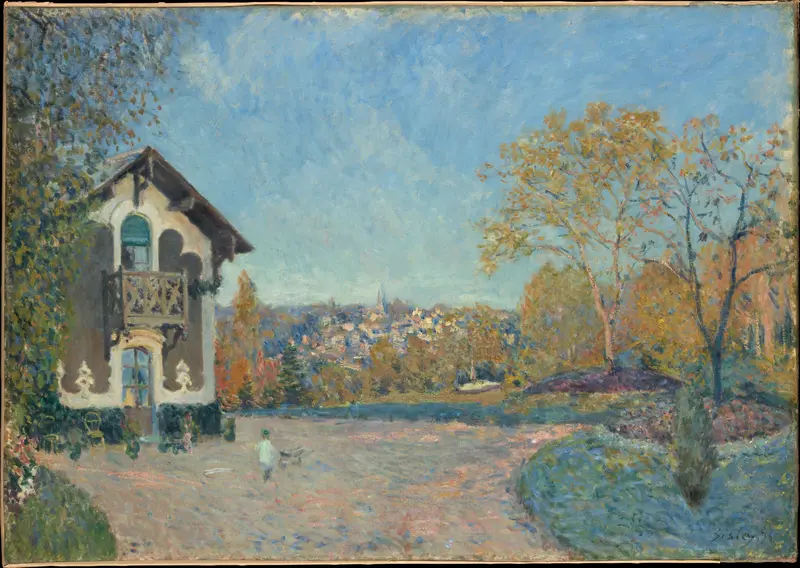
View of Marly-le-Roi from Coeur-Volant
Alfred Sisley
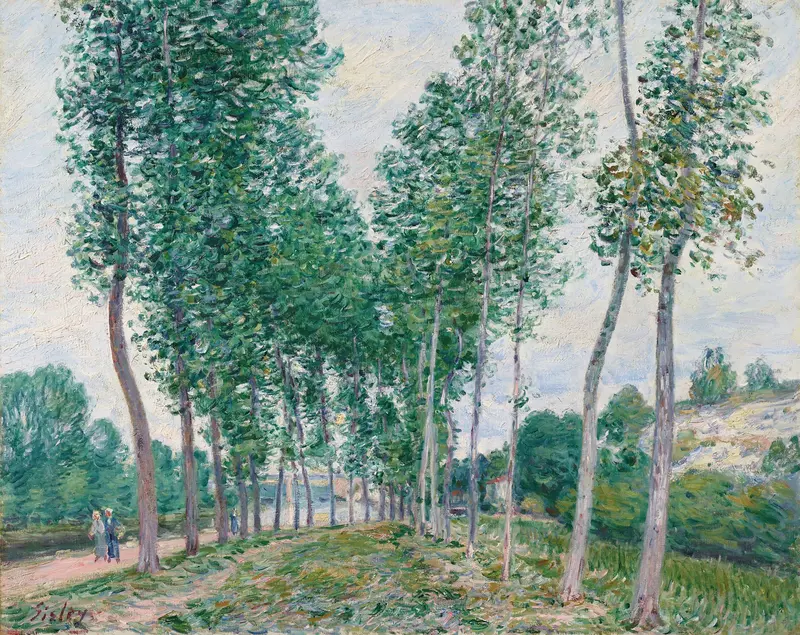
L’allée des peupliers au bord du Loing
Alfred Sisley
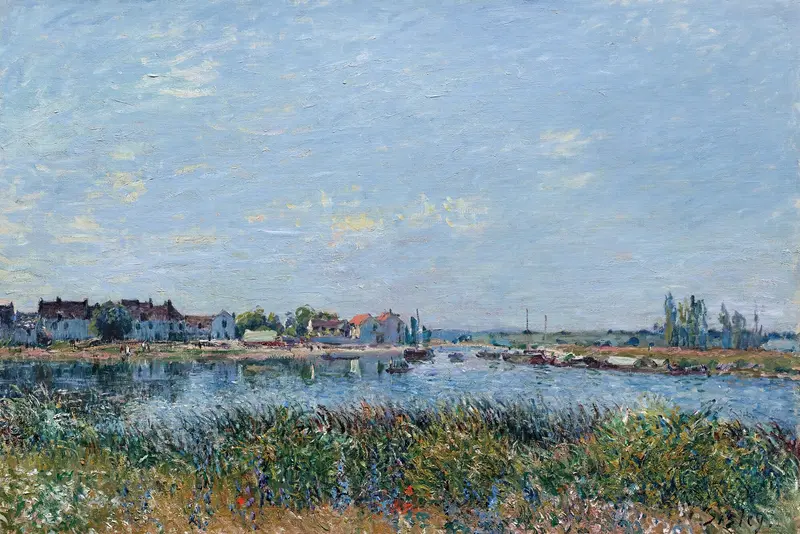
Saint-Mammès, Le Matin
Alfred Sisley
More Landscape Art

The Starry Night
Vincent van Gogh

View of Delft
Johannes Vermeer

Water Lilies
Claude Monet

The Grand Canal, Venice, looking north-west from the Ca' Corner to the Ca' Contarini degli Scrigni, with the campanile of Santa Maria della Carità
Canaletto

Windsor Castle
Canaletto

The Grand Canal looking North-East from the Palazzo Dolfin-Manin to the Rialto Bridge
Canaletto