
View of the Canadian Falls and Goat Island — History & Facts
When did color learn to lie? In Frederic Edwin Church's View of the Canadian Falls and Goat Island, the hues of nature entwine truth and illusion, inviting the gaze to question reality itself. This breathtaking panorama resonates with the profound balance between the wild, untamed forces of nature and the tranquil beauty encasing them. Look to the left at the cascading water, where the falls plunge dramatically into the abyss below. Notice how the sunlight filters through the mist, casting shimmering rainbows that dance upon the surface.
The lush greens of the surrounding foliage frame the scene, while the soft blues and whites depict the ethereal quality of the water. This masterful use of color and light isn't merely for aesthetic pleasure; it orchestrates a harmony that encapsulates both the grandeur and the fragility of the natural world. Within this composition, contrasts emerge with every glance. The raw, relentless power of the falls stands in stark juxtaposition to the serene expanse of Goat Island, suggesting a delicate balance between chaos and calm.
The intricate details—a solitary figure observing the spectacle—ground the viewer in the human experience, provoking reflection on our place within nature's overwhelming beauty. Church captures a moment where time seems suspended, evoking awe and introspection. In 1856, while painting this work in his studio in New York, Church was at the forefront of the Hudson River School movement, a group that celebrated the American landscape. The explosion of Romanticism in art was a backdrop to his life, fostering a desire to depict nature not only as it was but as it could inspire human emotion and thought.
This painting, imbued with a sense of wonder, reflects both his personal artistic journey and the evolving narrative of American art during that era.
More Artworks by Frederic Edwin Church
Browse all →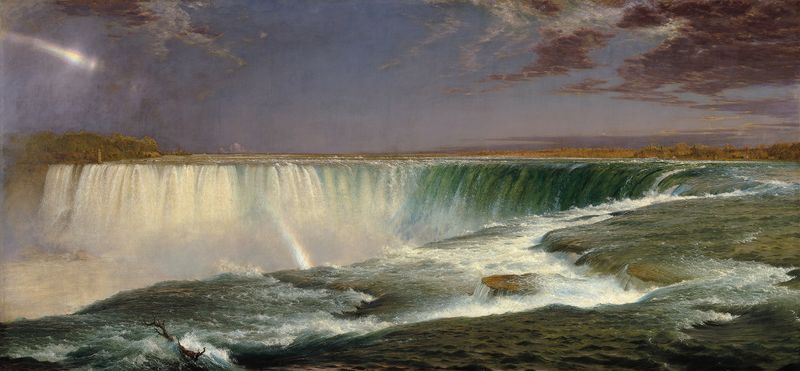
Niagara
Frederic Edwin Church
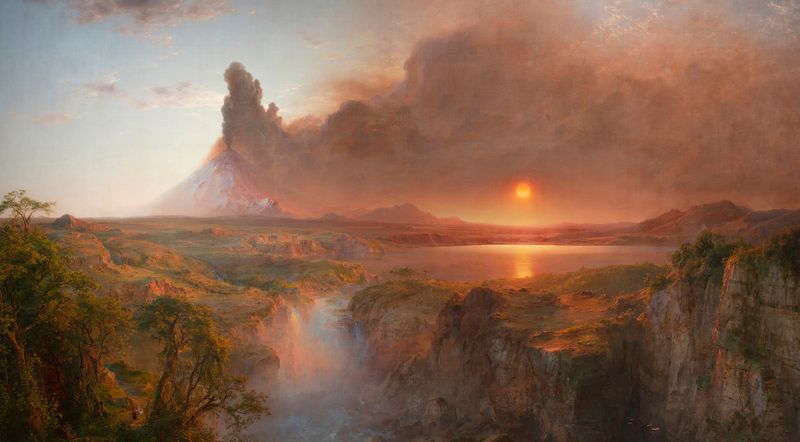
Cotopaxi
Frederic Edwin Church
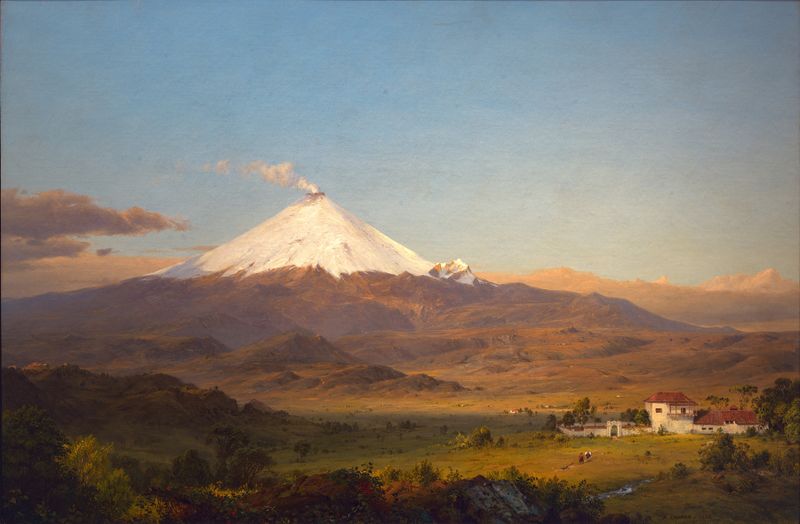
Cotopaxi
Frederic Edwin Church
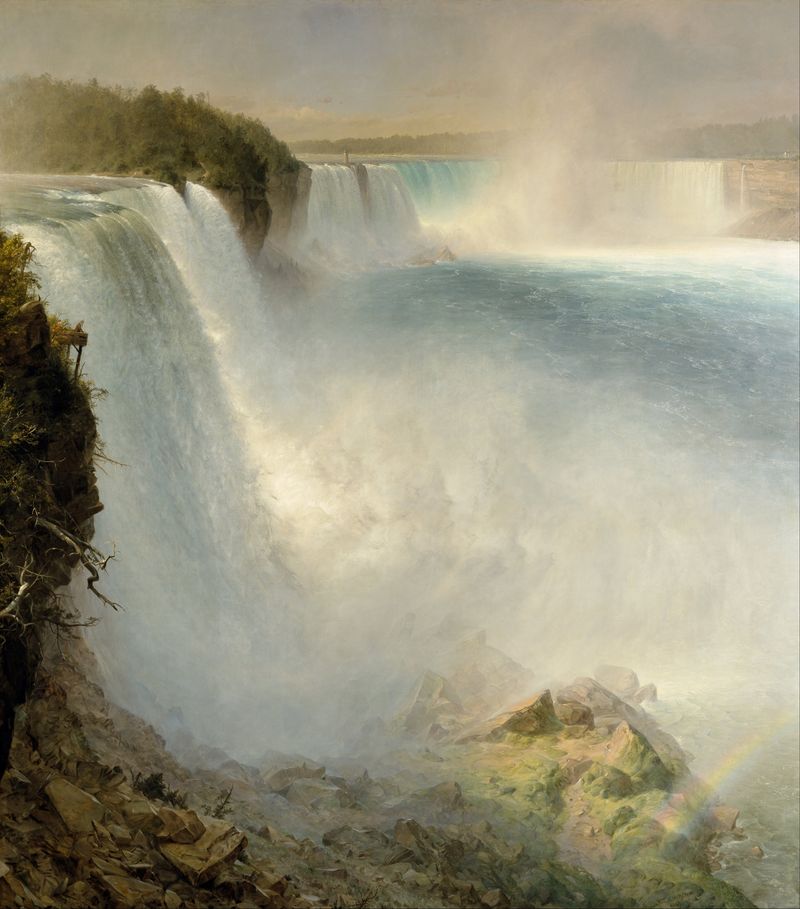
Niagara Falls, from the American Side
Frederic Edwin Church
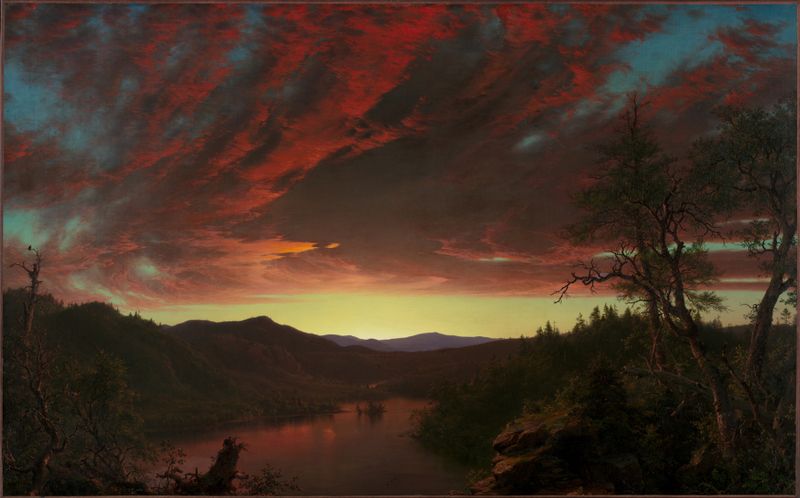
Twilight in the Wilderness
Frederic Edwin Church
Hudson Valley at Sunset
Frederic Edwin Church
The Hintersee, near Berchtesgaden, Bavaria
Frederic Edwin Church
Mountains near Baalbec
Frederic Edwin Church
Aurora Borealis
Frederic Edwin Church
Cotopaxi
Frederic Edwin Church





