
View of the Castello Caetani and the hill-town of Sermoneta, Lazio, Italy — History & Facts
Can paint confess what words never could? In View of the Castello Caetani and the hill-town of Sermoneta, Lazio, Italy, the interplay of light and shadow whispers secrets of a bygone era, inviting viewers to explore beyond the visible. Look towards the foreground, where the robust silhouette of the Castello Caetani rises defiantly against the soft, rolling hills. Notice the warm, earthy tones that wash over the landscape, contrasting with the cooler hues of the sky, creating a timeless tension. The delicate brushwork captures the essence of the Italian countryside, while the shadows play across the scene, lending depth and a sense of quiet mystery. In this painting, shadows not only define the forms of the castle and town but also evoke a sense of history and memory.
The juxtaposition of light illuminating the hill-town against the imposing darkness of the castle hints at the dualities of protection and imprisonment. The viewer senses the weight of time resting upon the stones, each shadow a reminder of the stories that have unfolded here. Edward Lear created this work in 1840 while traveling through Italy, a period marked by his fascination with landscapes and architecture. As he sought to capture the beauty of the Italian countryside, Lear was also grappling with the challenges of his own artistic voice amidst the evolving Romantic movement.
This piece reflects not only his technical skill but also the broader cultural narrative of exploration and discovery that was shaping Europe at that time.
More Artworks by Edward Lear
Browse all →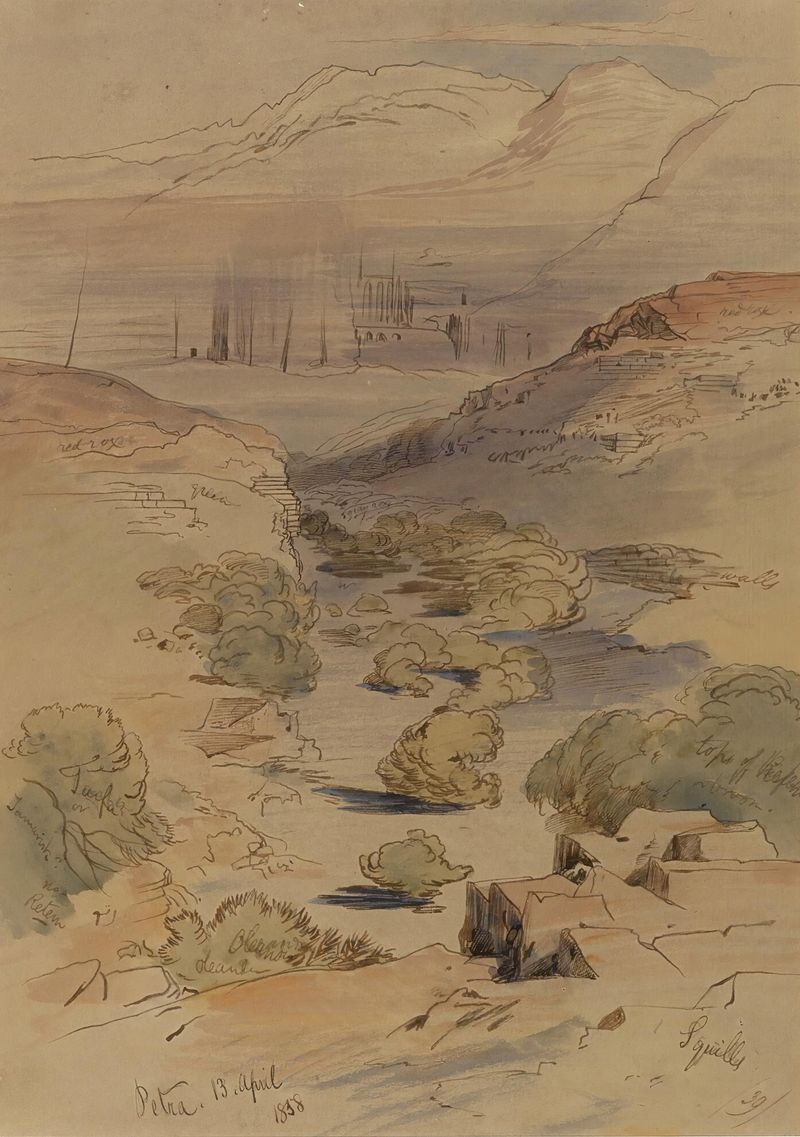
Petra
Edward Lear
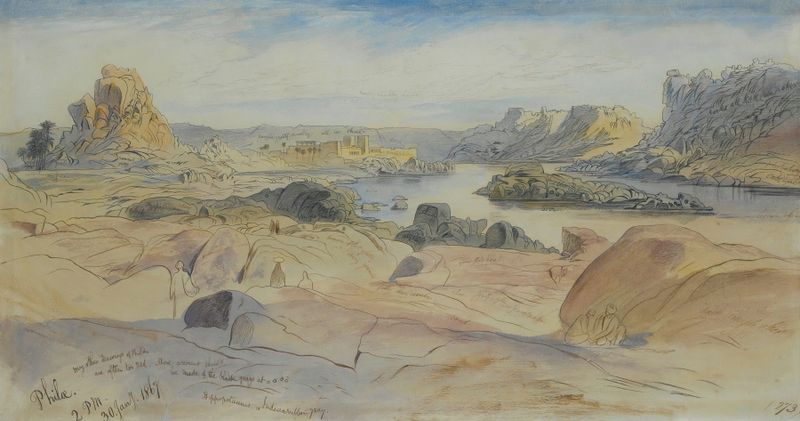
Philae, Egypt
Edward Lear
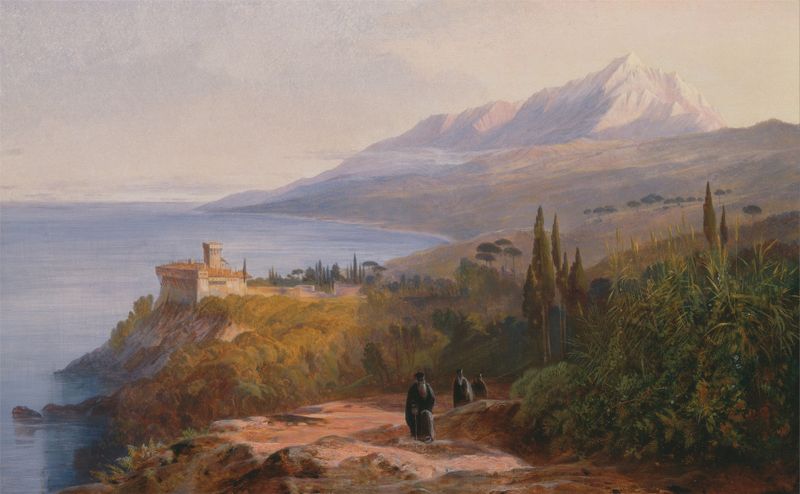
Mount Athos and the Monastery of Stavronikétes
Edward Lear
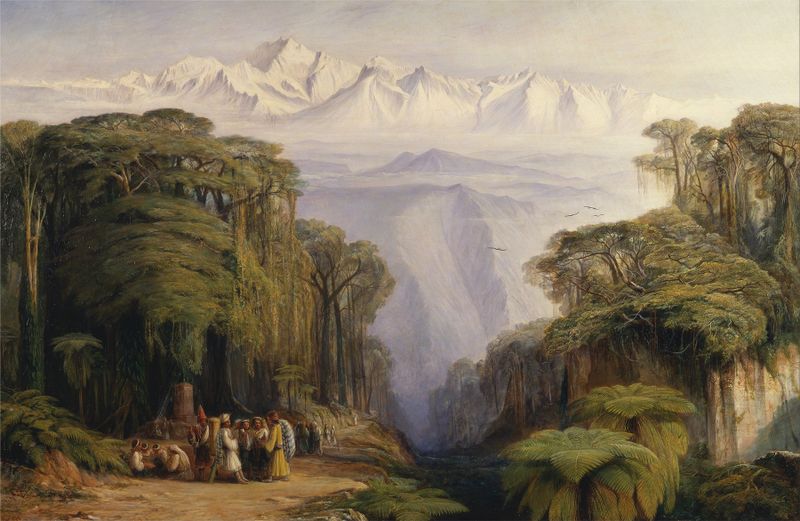
Kangchenjunga from Darjeeling
Edward Lear
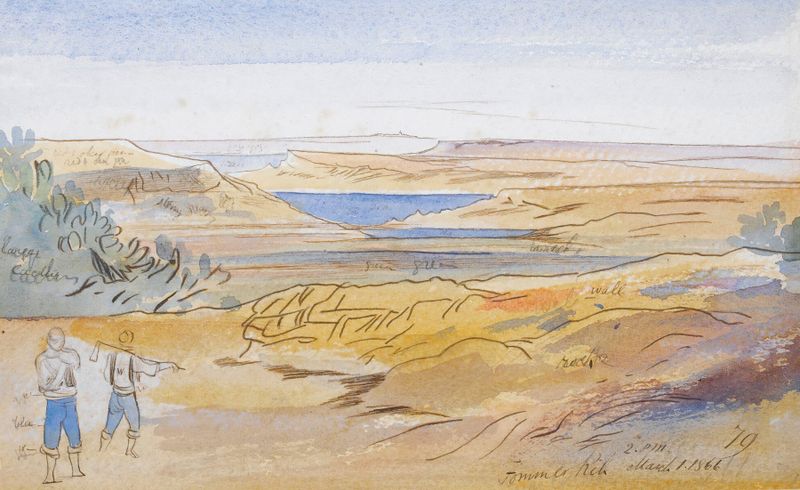
Fomm Ir-Rih, Malta
Edward Lear
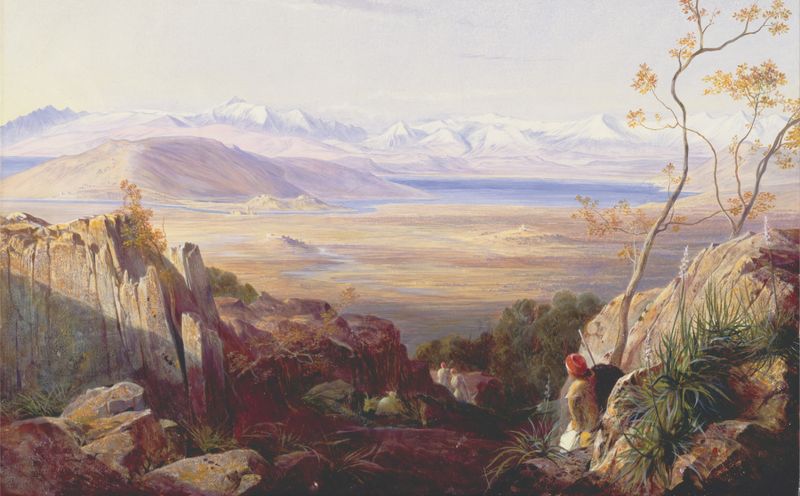
Butrinto, Albania
Edward Lear
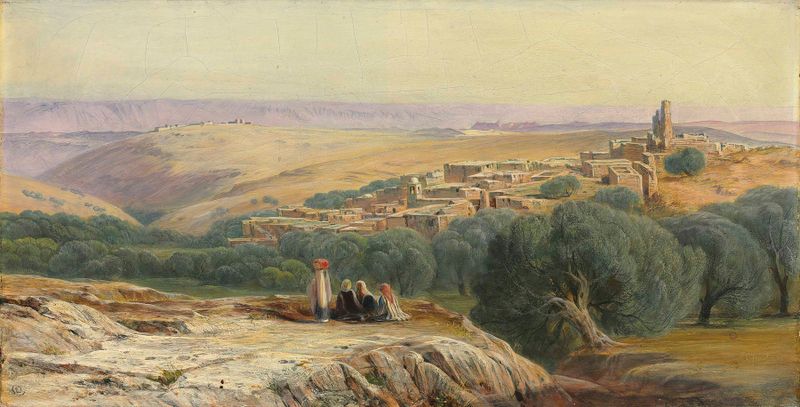
The Plains of Bethany
Edward Lear

Karnak, 9-30 pm, 22 January 1867
Edward Lear
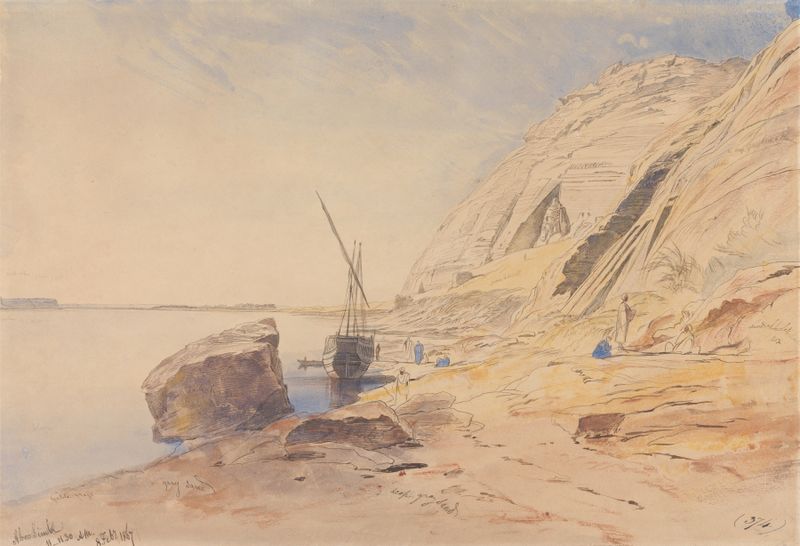
Abu Simbel, 11-11;30 am, 8 February 1867 (374)
Edward Lear

A View Of Mount Athos And The Pantokrator Monastery, Greece
Edward Lear





