
Village in Ile-de-France — History & Facts
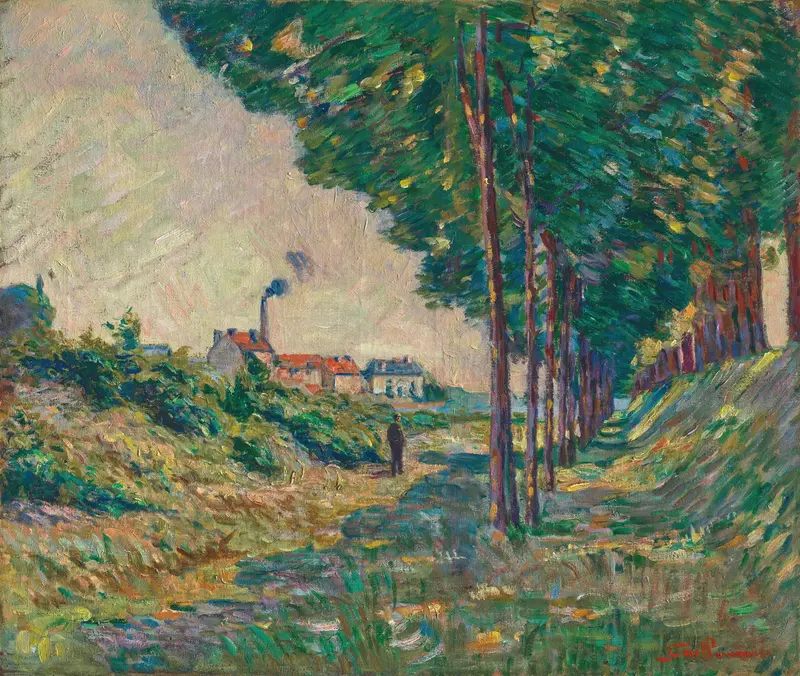
The first thing that catches the eye is the way sunlight seems to pool and scatter across the thatched rooftops, as if Armand Guillaumin has managed to trap a summer afternoon on his canvas. The winding path draws you in, inviting you to wander between cottages whose rough stone walls and tangled gardens speak of a lived-in, quietly industrious world. Each brushstroke pulses with color—greens layered into the shadows, ochres and russets warming the facades—so that the whole village feels alive with the slow rhythms of rural life.
The fences, leaning and irregular, guide the gaze deeper, hinting at both order and the gentle chaos of nature reclaiming its space. Painted around 1888, this scene belongs to an era when artists like Guillaumin, working in the orbit of Impressionism, sought to capture the fleeting moods of the French countryside. The Ile-de-France region, so often painted by his contemporaries, offered a patchwork of villages and fields that were rapidly changing as modernity crept outward from Paris. Works like this were rarely grand commissions; instead, they were intimate studies, painted for collectors who wanted a piece of the rural idyll, or for the artist's own exploration of light and color.
Now held in the Soumaya Museum, this painting stands as a record of a world on the cusp of transformation—one that still invites us to linger in its dappled shade.
More Artworks by Armand Guillaumin

La Seine À Charenton
Armand Guillaumin
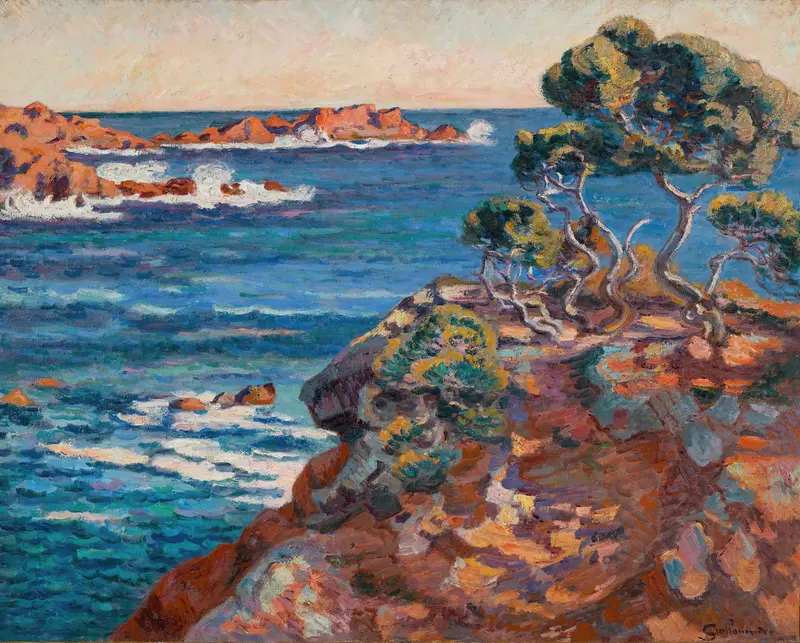
Bord De Mer À Agay
Armand Guillaumin
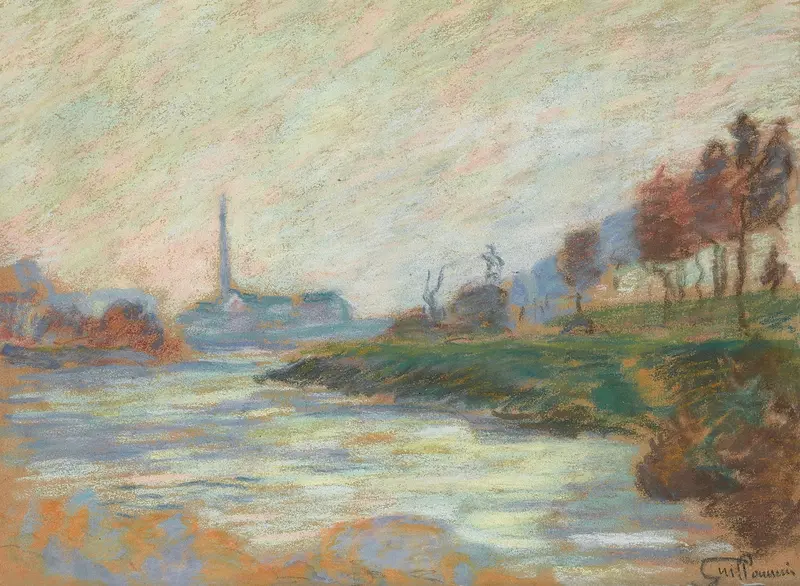
Confluent De La Marne Et De La Seine, Île De La France
Armand Guillaumin
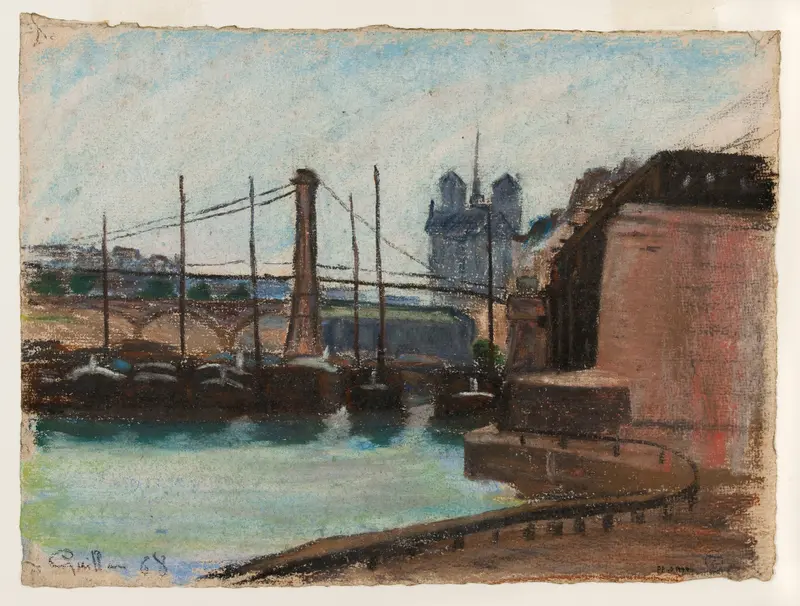
Le Pont d’Austerlitz
Armand Guillaumin
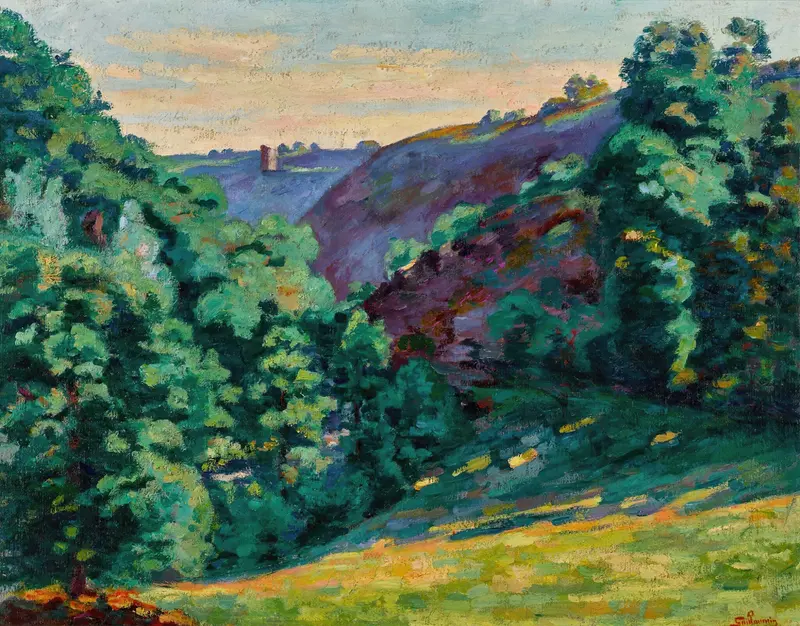
Le Ravin de la folie, vue de Chateau Crozant
Armand Guillaumin
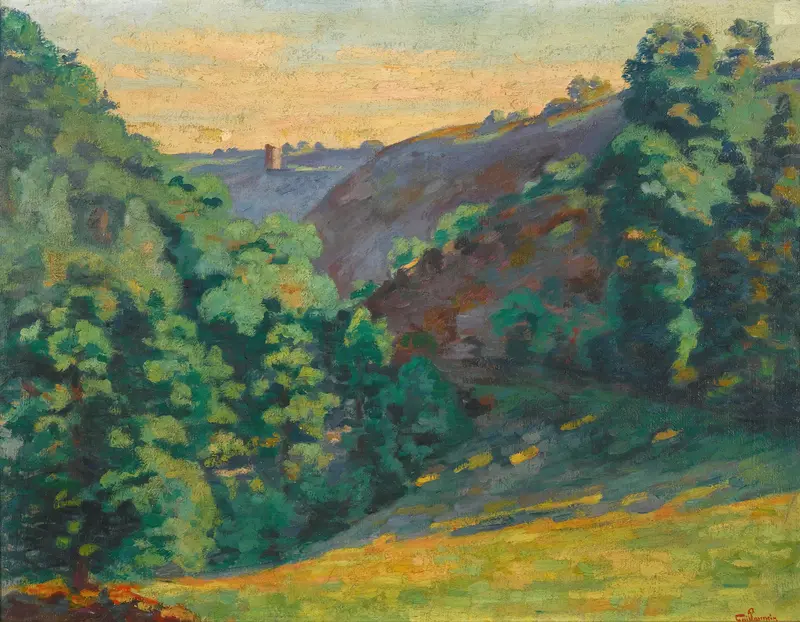
Crozant, Le Ravin De La Sedelle À La Folie
Armand Guillaumin
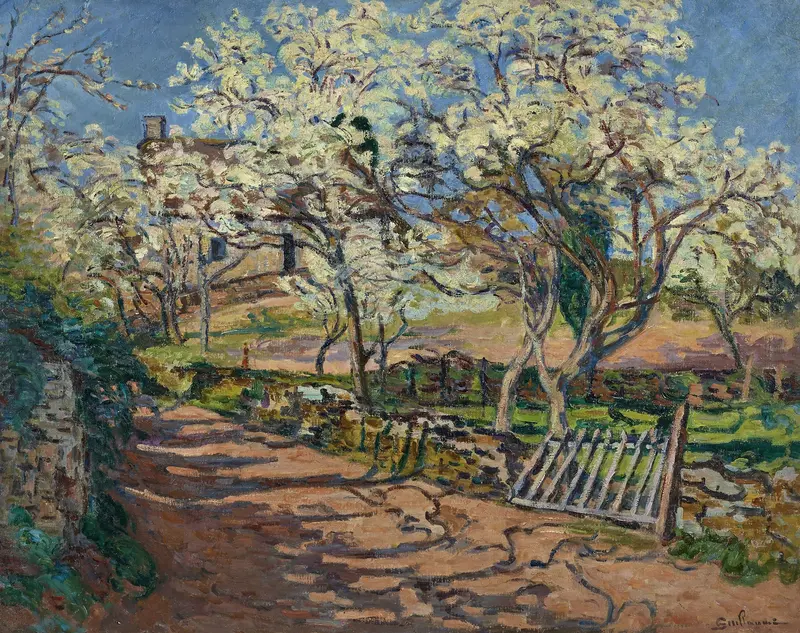
Paysage de Printemps
Armand Guillaumin
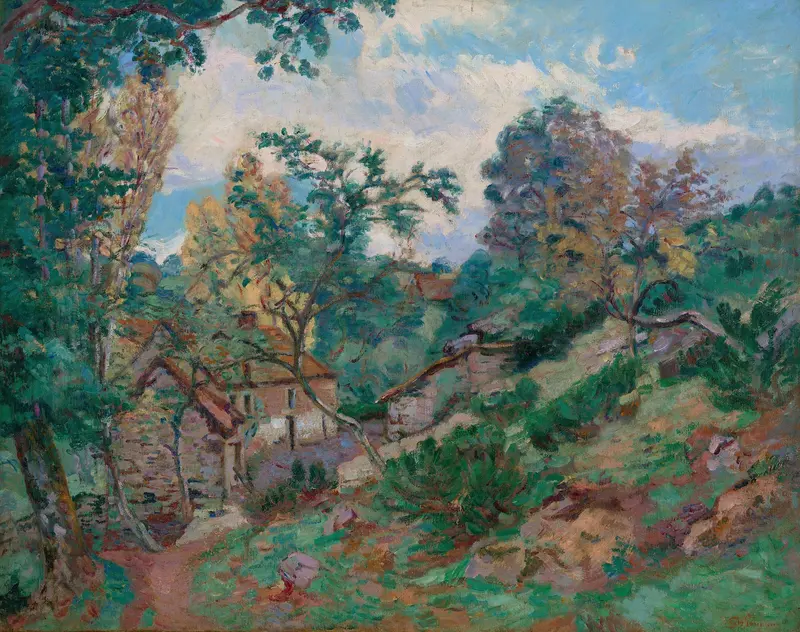
Paysage
Armand Guillaumin
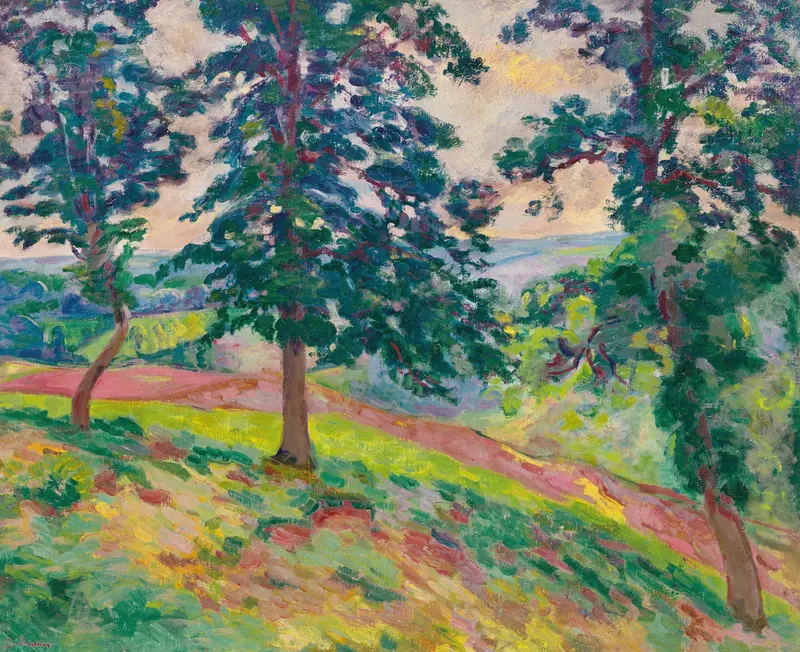
La vallée de la creuse
Armand Guillaumin
Le chemin de halage à Charenton, Ile de France
Armand Guillaumin
More Landscape Art

The Starry Night
Vincent van Gogh

View of Delft
Johannes Vermeer

Water Lilies
Claude Monet

The Grand Canal, Venice, looking north-west from the Ca' Corner to the Ca' Contarini degli Scrigni, with the campanile of Santa Maria della Carità
Canaletto

Windsor Castle
Canaletto

The Grand Canal looking North-East from the Palazzo Dolfin-Manin to the Rialto Bridge
Canaletto