Ville d’Avray, Woodland Path Bordering the Pond — History & Analysis
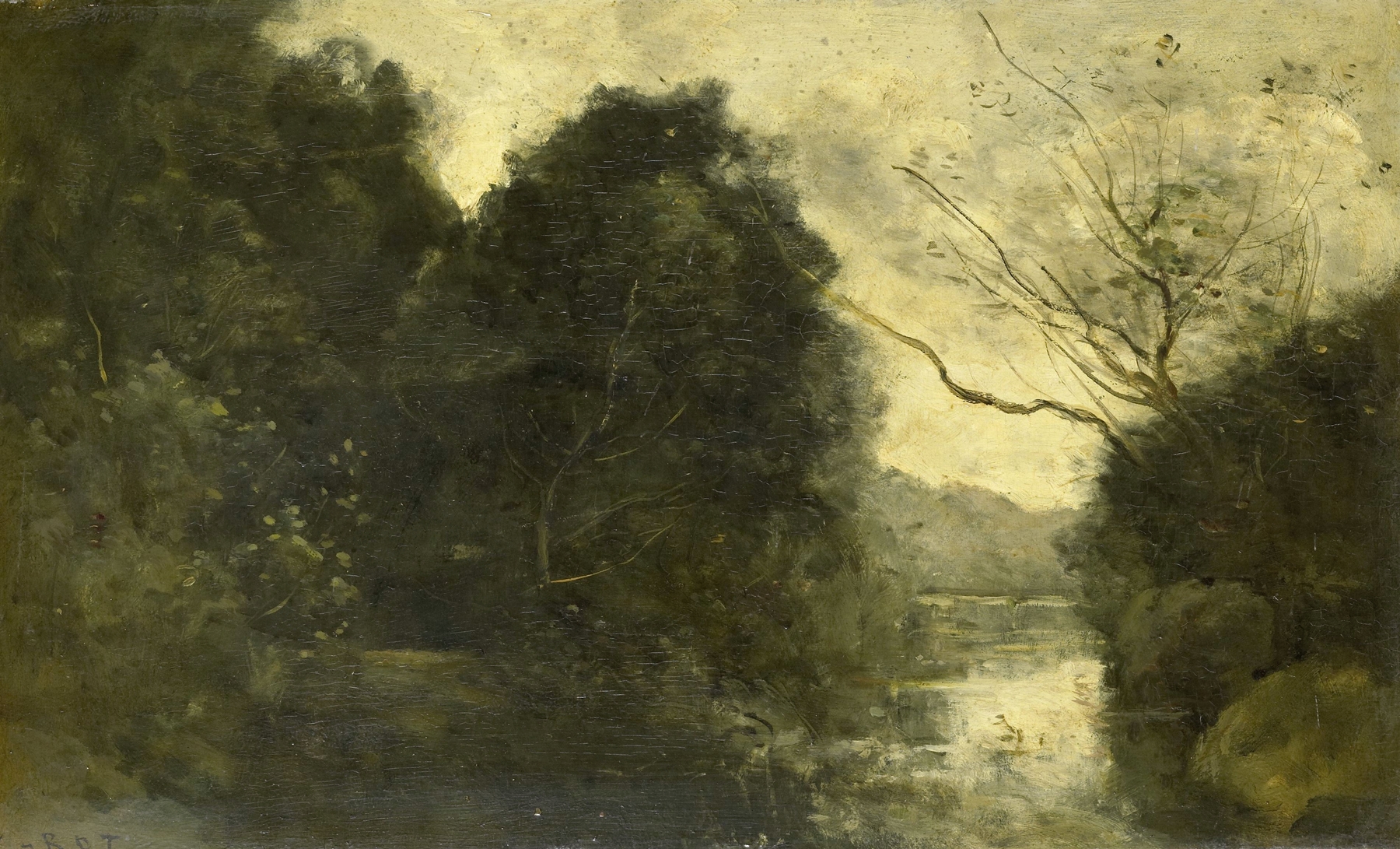
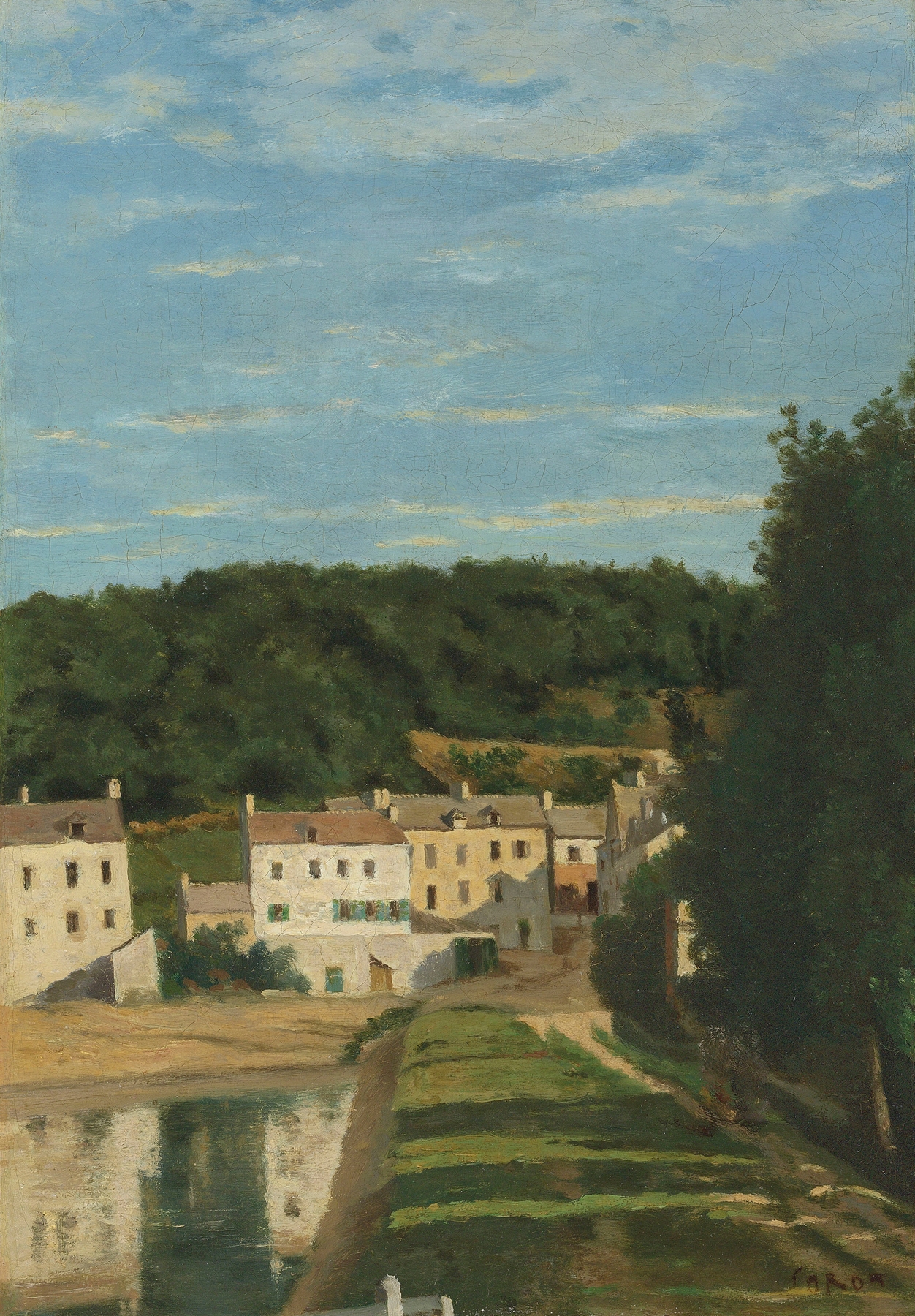
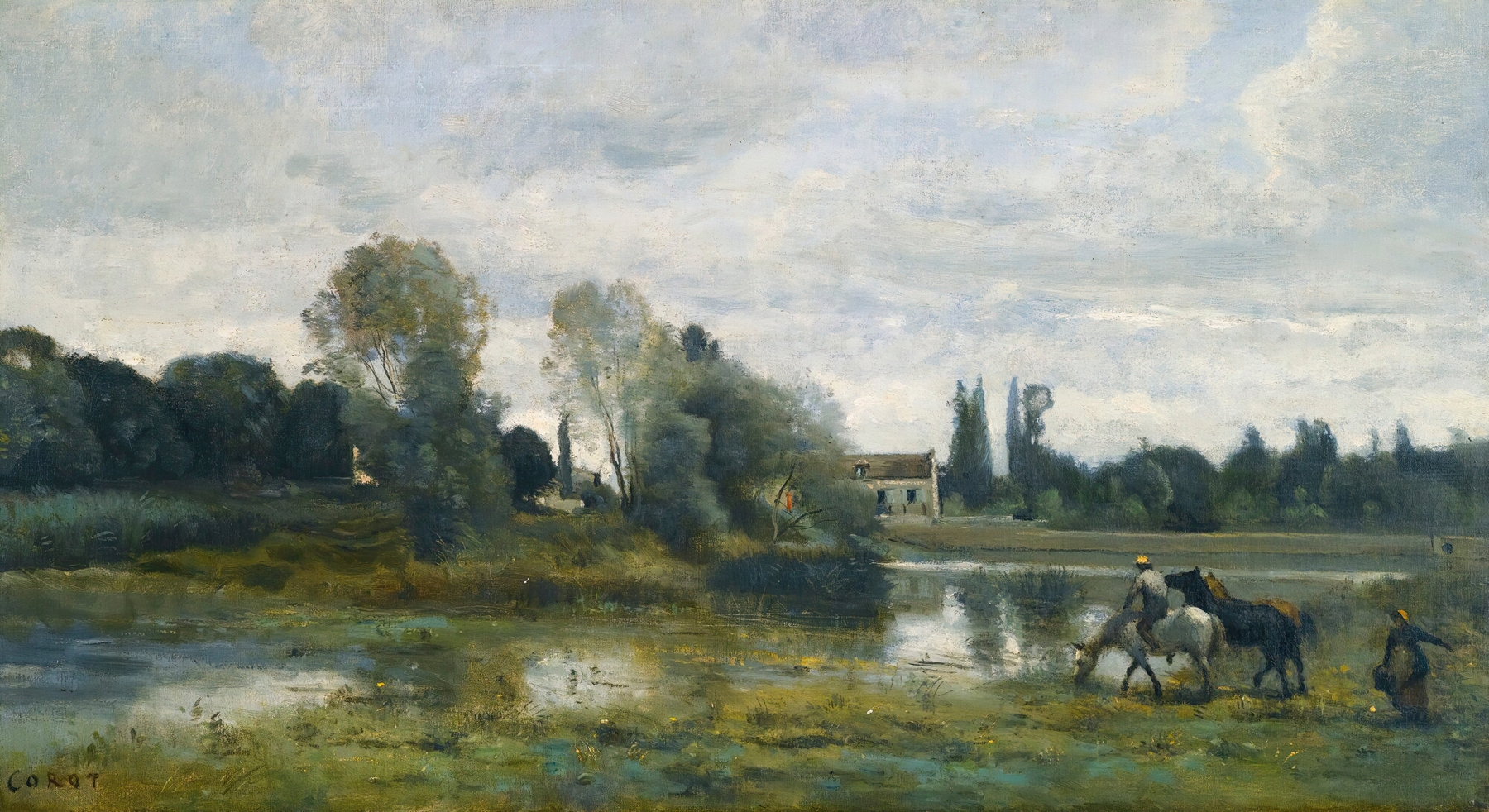
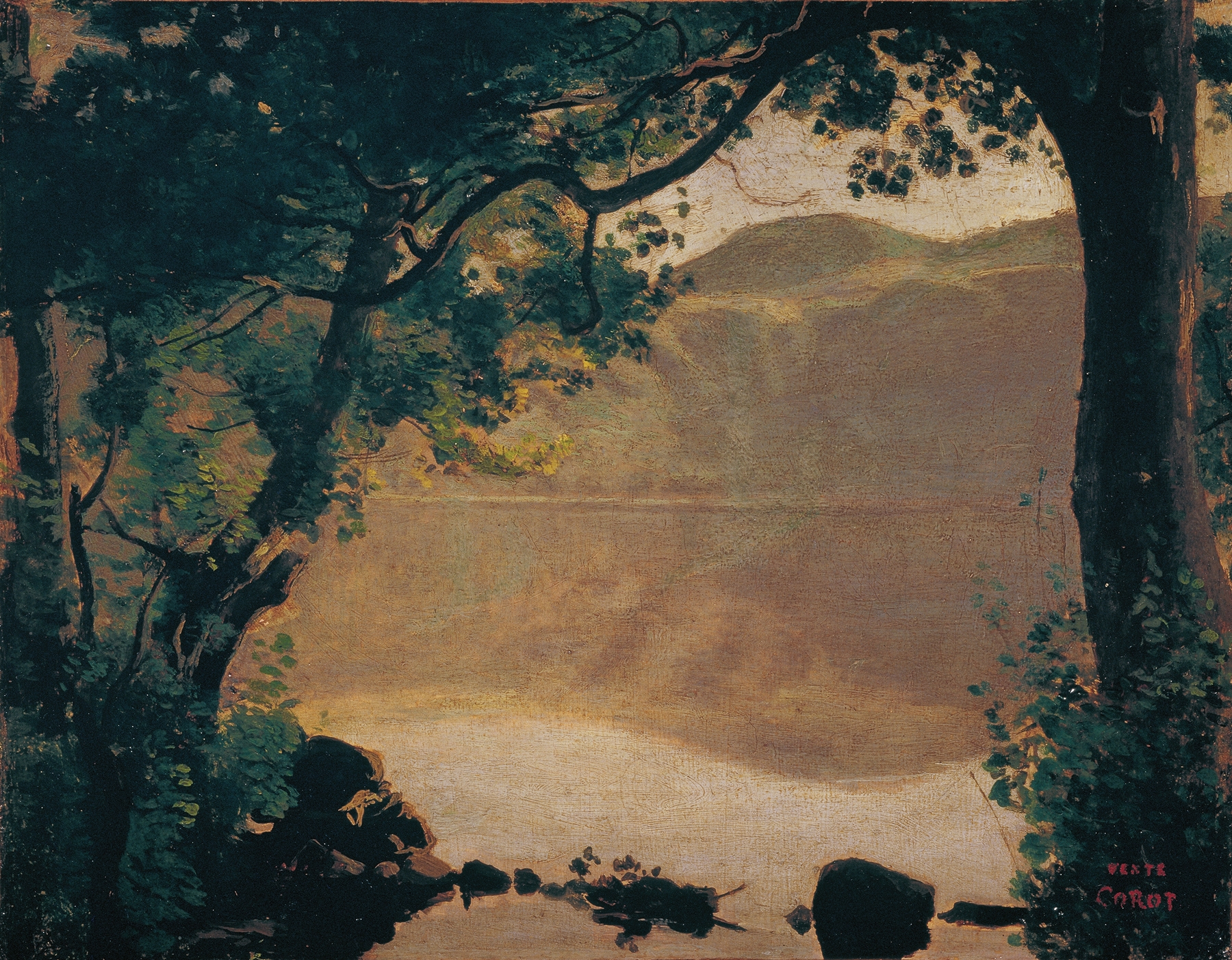
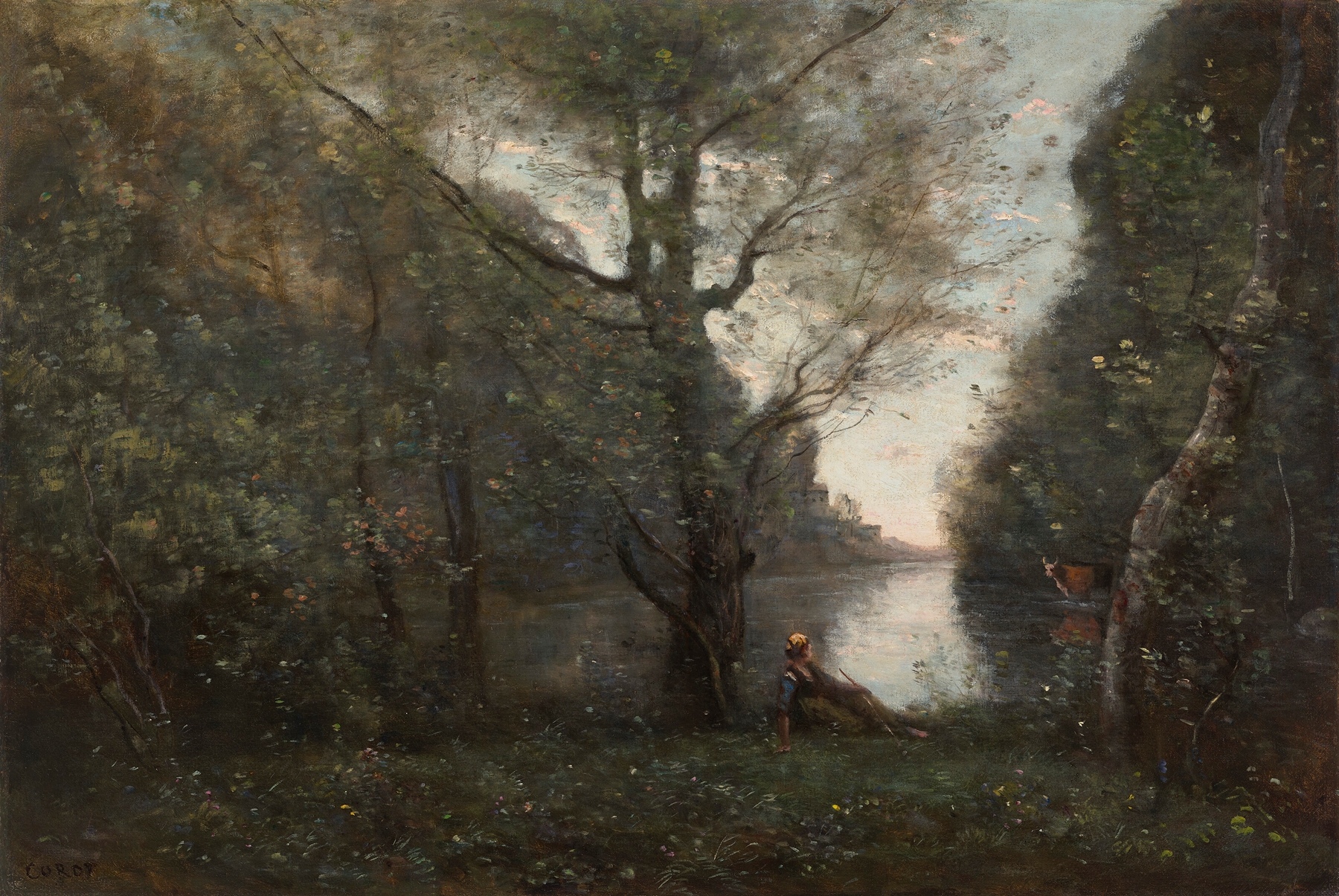
Could beauty survive in a century of chaos? Look closely at the soft greens and muted browns that weave through the composition, inviting you into the tranquil embrace of nature. Focus on the subtle play of light as it dances across the surface of the pond, illuminating the delicate reflections of trees that frame the scene like gentle whispers of serenity. The careful brushstrokes evoke a sense of softness, creating a harmonious blend of color that draws the eye along the winding path, leading you deeper into the woodland.
As you explore further, notice the contrast between the vibrant foliage and the still water. Here, the quiet solitude of the landscape speaks to the heart’s desire for rebirth amidst an ever-changing world. The figures, though faint, seem to linger on the path, embodying both presence and absence, hinting at stories untold. This duality captures a moment suspended in time, where nature thrives quietly, unbothered by the turmoil beyond its borders.
In 1872, when this piece emerged from the hand of its creator, the art world was teetering on the brink of modernity. Corot was nestled in Ville d’Avray, basking in the lush surroundings that inspired many of his works. The Impressionist movement was beginning to take shape, challenging traditional norms, yet Corot remained rooted in his own poetic vision of nature's tranquil beauty, capturing the essence of a world yearning for rebirth amidst the chaos.