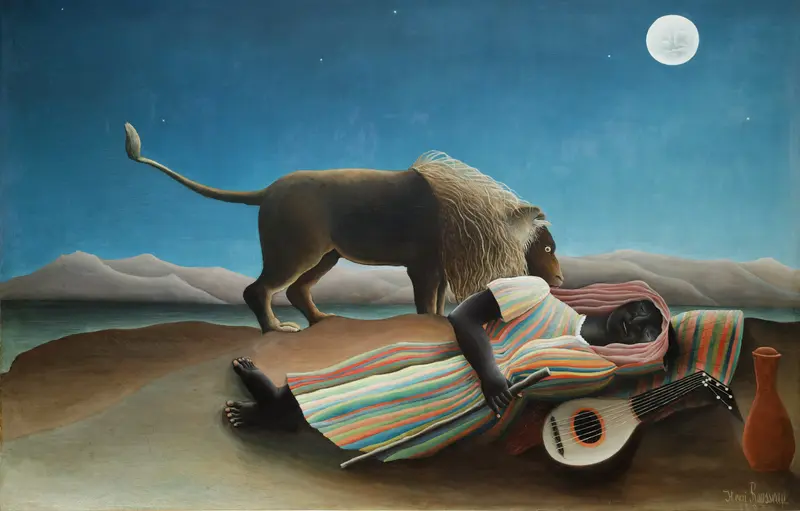
Volaverunt. (They have flown.) — History & Facts
In Volaverunt. (They have flown.), Francisco de Goya presents a haunting scene filled with dark colors and dramatic figures. The painting depicts a group of people in a moment of despair, their expressions conveying a sense of loss and urgency.
The background is shadowy, enhancing the overall feeling of foreboding. The use of deep reds and blacks creates a stark contrast that draws the viewer's attention to the figures in the foreground. The painting is executed in oil on canvas, a medium that allows for rich textures and deep colors. Goya's brushwork is expressive, with visible strokes that add to the emotional intensity of the scene.
The dimensions are approximately 100 x 150 cm, making it a sizable work that commands attention in any space. The composition is carefully arranged, guiding the viewer's eye through the chaotic yet poignant moment captured in time. Francisco de Goya was a pivotal figure in Spanish art, known for his ability to convey human emotion and social commentary. 'Volaverunt' reflects his interest in the darker aspects of human experience, particularly the themes of loss and mortality.
An interesting fact about this work is that it was created during a tumultuous period in Spain, reflecting the societal upheaval of the time. Goya's ability to capture such intense emotions has made this piece a significant work in the Romantic movement.
More Artworks by Francisco de Goya

El sueño de la razon produce moustruos (Serie Caprichos)
Francisco de Goya

Portrait of Doña María Teresa de Vallabriga y Rozas (1759-1820)
Francisco de Goya

Portrait of the Duchess of Osuna
Francisco de Goya

Queen of Spain Maria Louisa, née Bourbon-Parma
Francisco de Goya

Queen María Luisa on horseback
Francisco de Goya

Y no hai remedio
Francisco de Goya

The Immaculate Conception
Francisco de Goya

Portrait of Gaspar Melchor de Jovellanos
Francisco de Goya

Portrait of Maria Josefa of Spain
Francisco de Goya

Charles IV in his Hunting Clothes
Francisco de Goya