
Vue de l’ancienne façade de l’Hôtel-Dieu après l’incendie de1772 — History & Facts
In the hushed aftermath of destruction, remnants stand not just as ruins, but as a testament to resilience and rebirth. The charred facade whispers stories of what once was, inviting contemplation of loss and renewal. Look closely at the left side of the canvas, where light gently illuminates the weathered stones. Each shadow carved into the structures captures the ethereal dance of time, while the palette of muted grays and browns evokes an atmosphere of somber reflection.
Notice how the delicate brushwork highlights the textures of the brick and mortar, contrasting with the chaotic history that has marked these walls. Your gaze is drawn toward the charred remnants, yet the hints of greenery peeking through suggest the promise of new life amid the decay. In this haunting portrayal, the artist layers complex emotions beneath the surface. The interplay of destruction and renewal speaks to the human experience of grief and hope.
The crumbling architecture symbolizes the fragility of existence, while the emerging foliage serves as a reminder that from the ashes of despair, new beginnings can flourish. This juxtaposition invites viewers to ponder not only the past but their own journeys of transformation. Painted after the devastating fire of 1772, this work captures a pivotal moment in the life of Auguste-Sébastien Bénard. Living in an era marked by artistic revolution and social change, Bénard's response to catastrophe reflects both personal and collective experiences of loss.
The world of art was transitioning towards Neoclassicism, and his choice to depict the aftermath of destruction aligns with a growing movement to celebrate resilience and the human spirit.
More Artworks by Auguste-Sébastien Bénard
Browse all →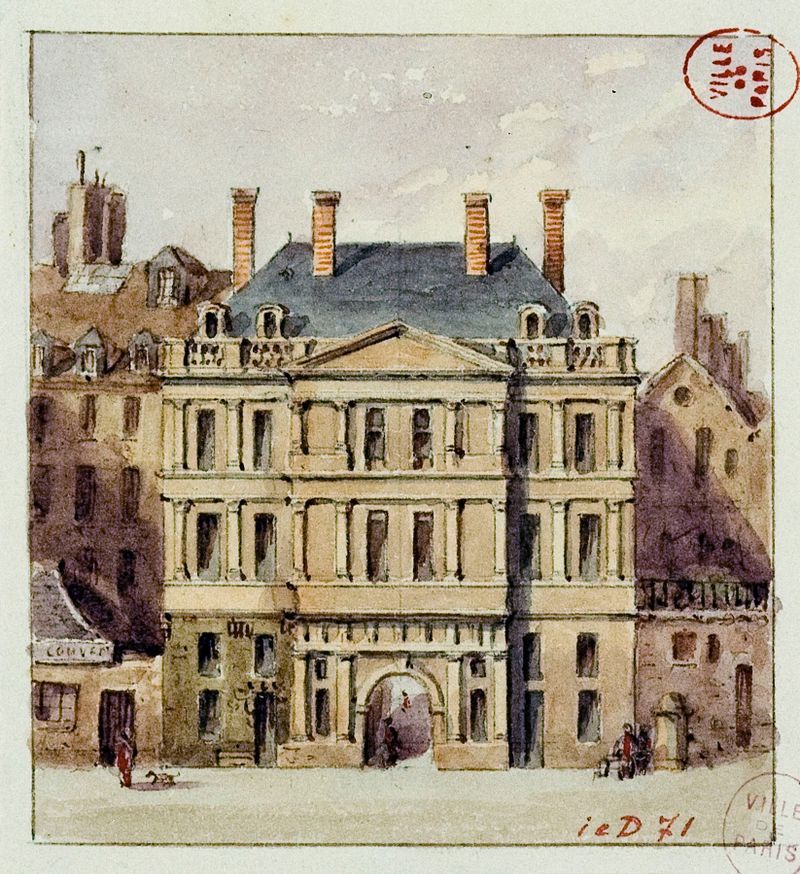
Cour de la Sainte Chapelle.
Auguste-Sébastien Bénard
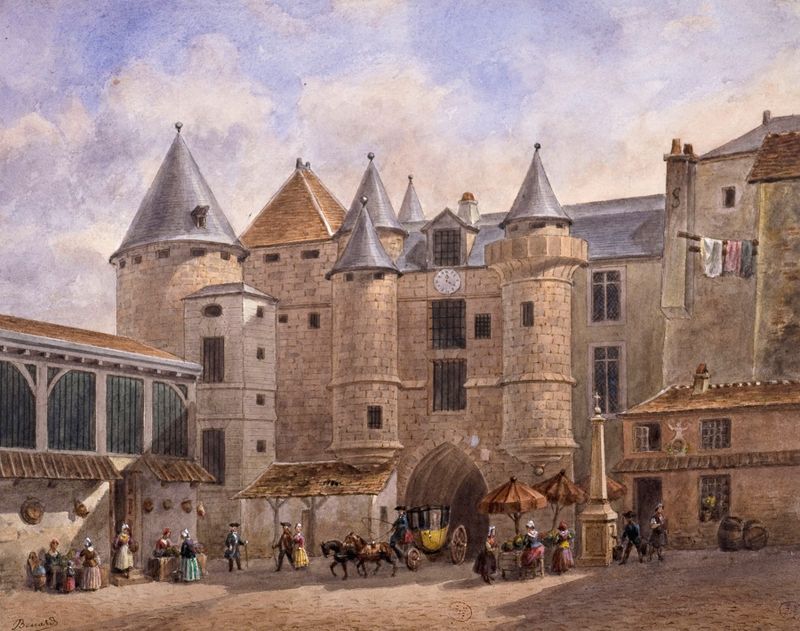
Le Grand Châtelet du XVIIIème siècle.
Auguste-Sébastien Bénard

Place de l’Hôtel de Ville.
Auguste-Sébastien Bénard

Salle souterraine du Palais de Justice.
Auguste-Sébastien Bénard

Voûtes du quai de Gesvres
Auguste-Sébastien Bénard

Monument expiatoire élevé à la mémoire du duc de Berry, à l’emplacement de l’ancien Opéra
Auguste-Sébastien Bénard
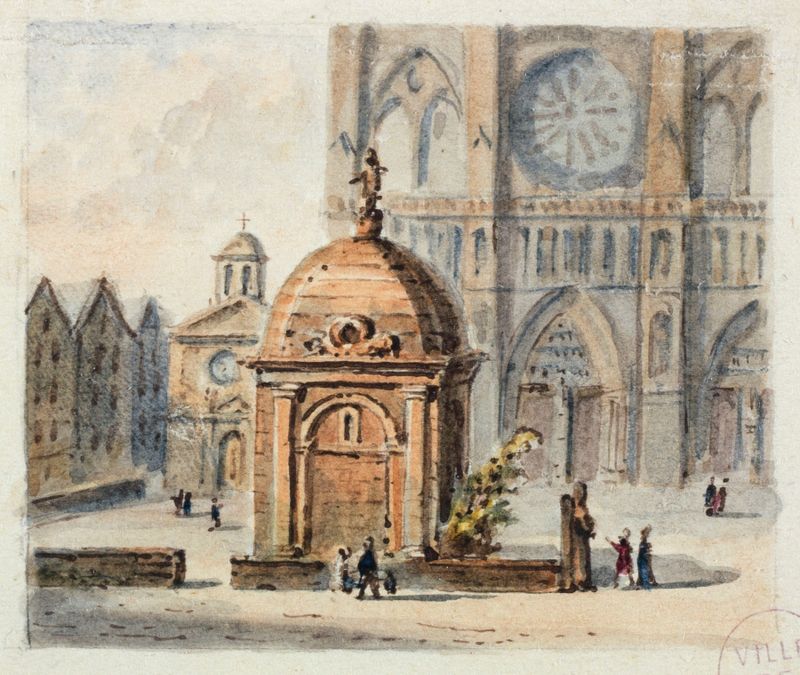
Le parvis de Notre-Dame de Paris
Auguste-Sébastien Bénard

Rue des chantres (entre le quai aux fleurs et la rue Chanoinesse).
Auguste-Sébastien Bénard

L’entrée de l’ancienne forteresse du Grand Châtelet, un jour de Carnaval
Auguste-Sébastien Bénard
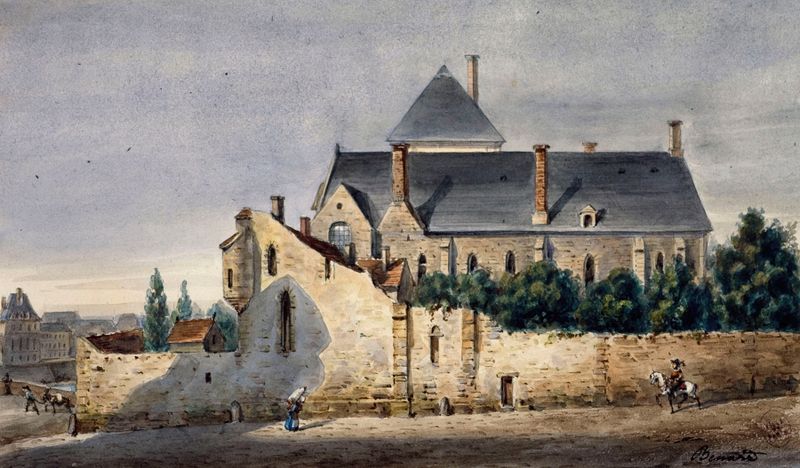
Les restes des bâtiments de l’hôtel du Petit Bourbon.
Auguste-Sébastien Bénard
More Architecture Art
Browse all →
The statue of Liberty
Frédéric Auguste Bartholdi

View of Houses in Delft, Known as ‘The Little Street’
Johannes Vermeer

View of Houses in Delft, Known as ‘The Little Street’
Johannes Vermeer

The Cathedral in Rouen. The portal, Grey Weather
Claude Monet

The yellow house
Vincent van Gogh

The Church in Auvers-sur-Oise, View from the Chevet
Vincent van Gogh