
Wanderer auf Rügen — History & Facts
What if beauty was never meant to be finished? In the quiet embrace of nature, we find an echo of the sublime, captured in stillness. Look to the left at the solitary figure stands atop a rugged cliff, the folds of his cloak fluttering gently in an unseen breeze. His gaze sweeps across the expansive landscape, where the horizon blurs into a gentle union of sea and sky. The soft palette of blues and greens invites the viewer to linger, while the textured brushstrokes create a sense of movement, as if the world beyond the canvas is alive.
The play of light on the water reflects not just the sun but a deeper, introspective moment, urging us to feel rather than just see. Delve deeper into this serene tableau, and you'll discover a rich tapestry of contrasts. The rugged cliffs symbolize the steadfastness of nature, while the soft waves below mirror the transient beauty of life. The lone figure embodies solitude, yet he is not isolated; he is part of the greater landscape, suggesting a harmonious connection between humanity and the natural world.
This tension between isolation and unity compels the viewer to reflect on their place within the vastness of creation. Jacob Philipp Hackert painted this work during the late 18th century, likely while residing in Italy, where he found inspiration from the Italian landscape and its interplay of light. The art world was shifting towards Romantic ideals during this period, prioritizing emotion and individual experience. Hackert’s dedication to capturing serene landscapes was emblematic of a broader movement, reflecting a growing fascination with nature and the sublime, marking a pivotal moment in the evolution of landscape painting.
More Artworks by Jacob Philipp Hackert
Browse all →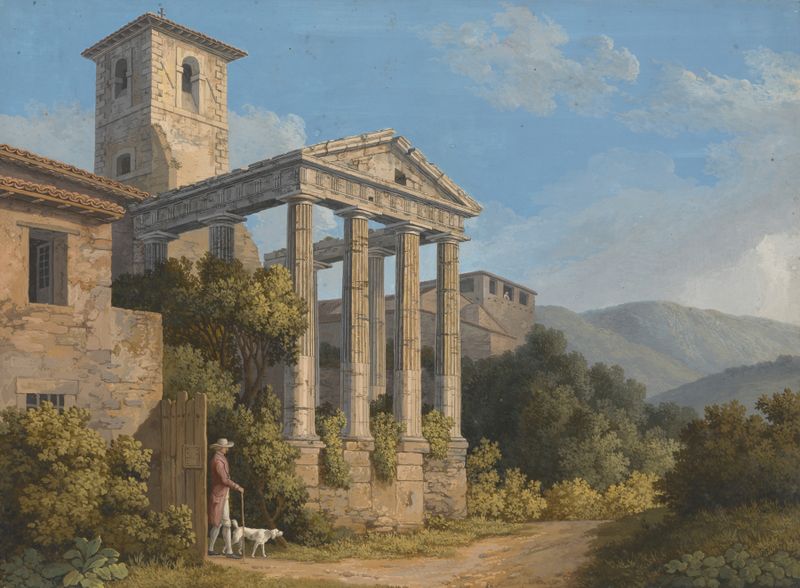
The Temple of Hercules in Cori near Velletri
Jacob Philipp Hackert
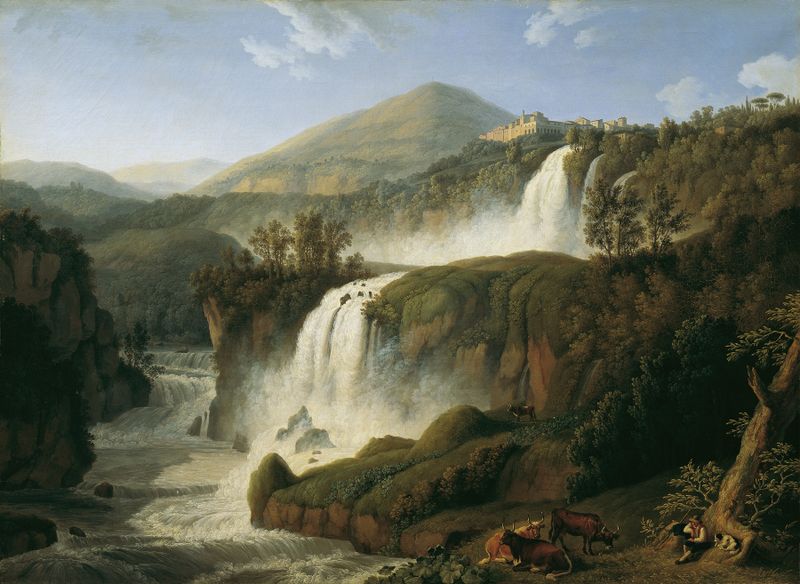
Der große Wasserfall von Tivoli bei Rom
Jacob Philipp Hackert
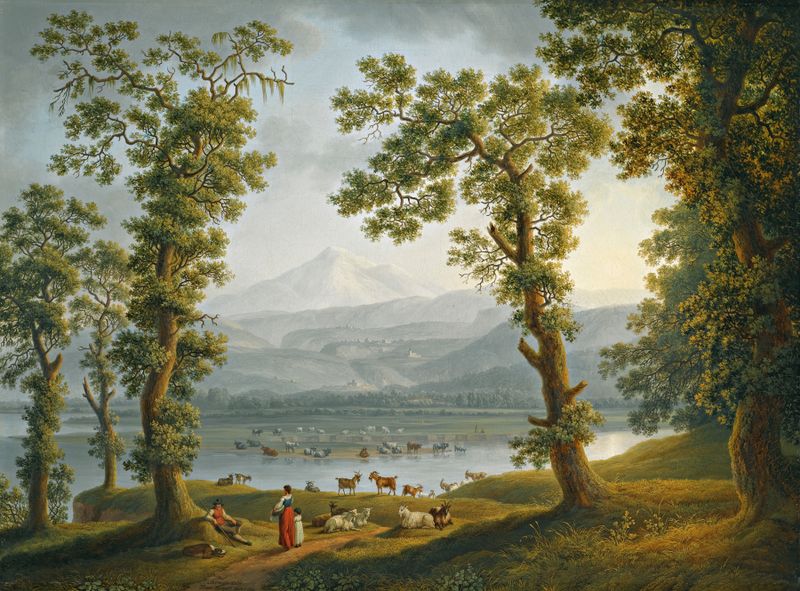
A View Across The Volturno River Towards Alife, Piedimonte Matese, And The Matese Mountains Rising Beyond
Jacob Philipp Hackert
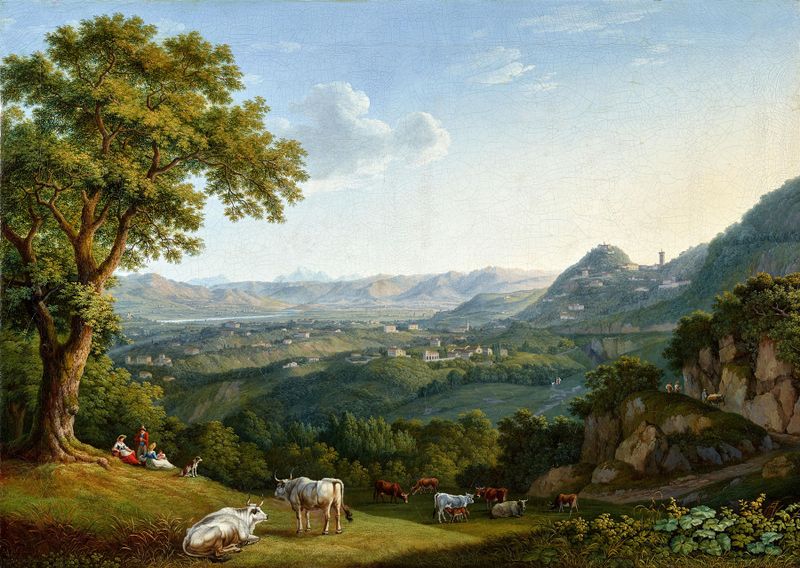
Blick auf das Arnotal und Fiesole
Jacob Philipp Hackert

A View Along The Valley Of The River Tiber Towards Poggio Mirteto, And Beyond The Sabine Mountains Lit Up By The Evening Sun
Jacob Philipp Hackert
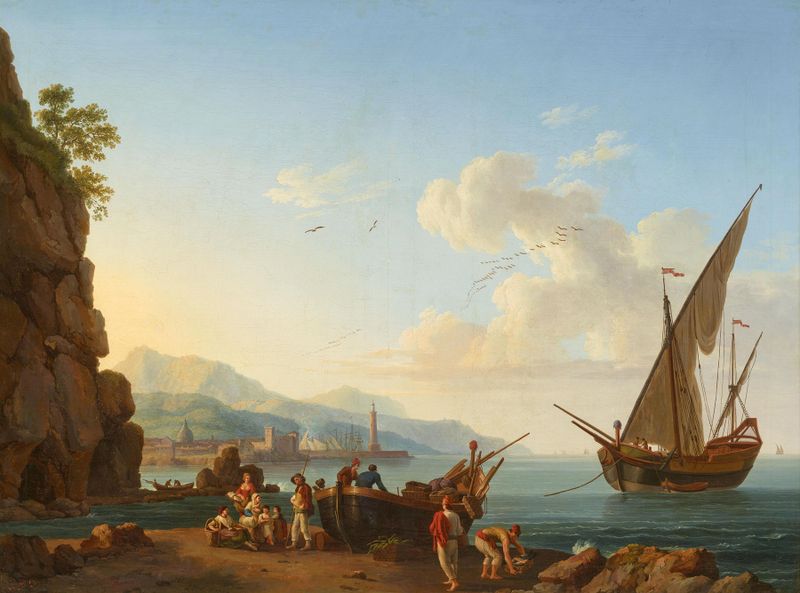
Fischer mit Boot am Strand
Jacob Philipp Hackert

Paysage
Jacob Philipp Hackert
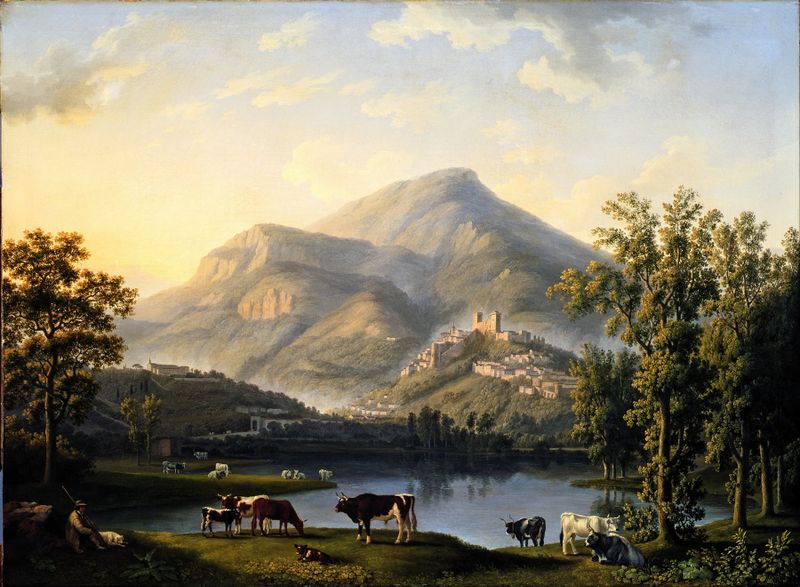
Veduta d’Itri (Landscape with a View of Itri)
Jacob Philipp Hackert
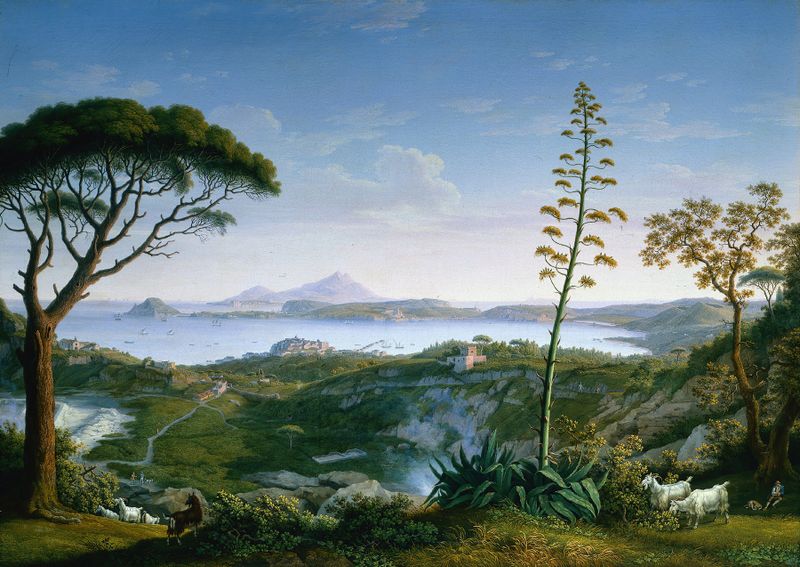
View of the Gulf of Pozzuoli from Solfatara
Jacob Philipp Hackert

View of Saint Peter’s in Rome
Jacob Philipp Hackert





