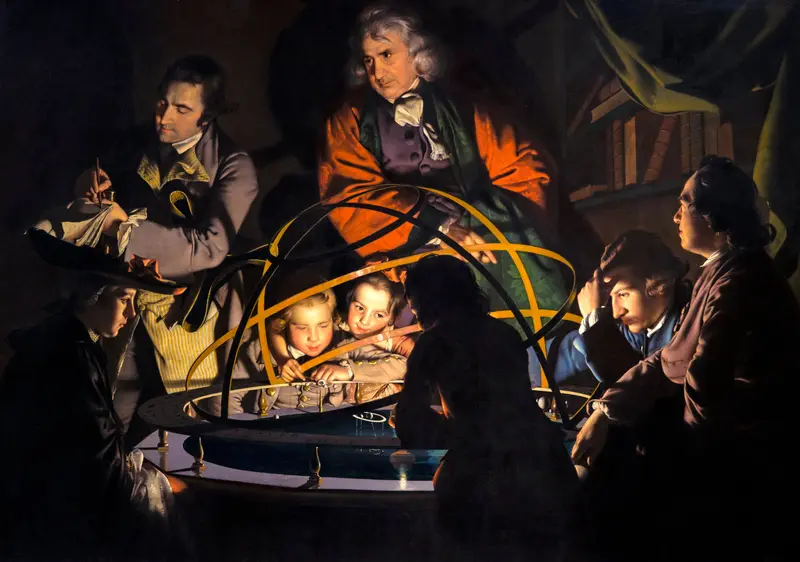
Washerwomen near the Bridge at Moret — History & Facts
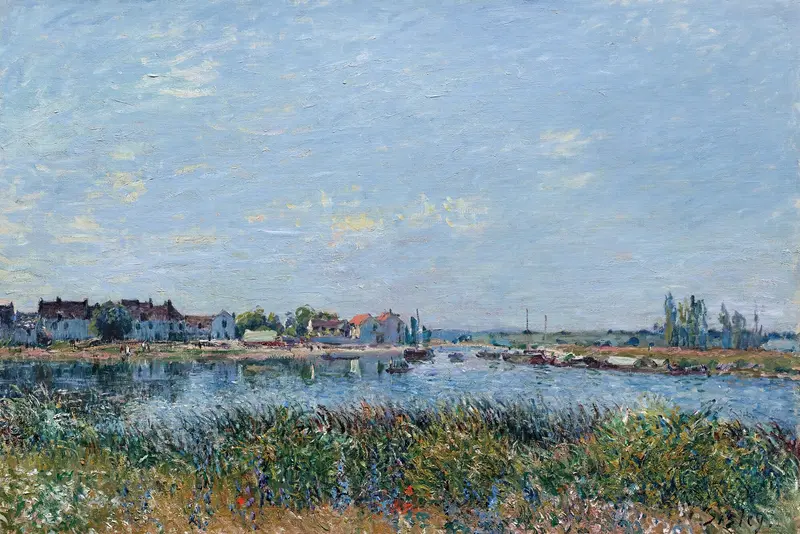
A sunlit afternoon draws your gaze first to the cluster of washerwomen bent over the riverbank, their figures animated by quick, lively strokes. The bridge arches behind them, solid and pale against the flickering greens and golds of the trees, while the water’s surface dances with reflections that dissolve the boundary between land and stream. Sisley’s brushwork here is loose but deliberate: the laundry baskets scattered in the foreground are rendered with just enough detail to anchor the scene, while the distant figures on the bridge become almost spectral, mere suggestions of life moving through the village.
The palette is warm, the light diffused, and the mood is one of quiet industry—a moment suspended between labor and leisure. Painted in 1888, this work belongs to the world of late nineteenth-century France, when artists like Alfred Sisley turned their attention to scenes of everyday rural life. Such images were rarely grand commissions; instead, they were painted for a growing middle-class audience eager for glimpses of the countryside and its rhythms. The Impressionist movement, to which Sisley is often linked, sought to capture not only the look of a place but its fleeting atmosphere, and this painting—now documented in The Yorck Project’s vast digital collection—offers just that.
History has kept few traces of the washerwomen themselves, but their world endures in these rippling brushstrokes and gentle light, inviting the viewer to linger by the water’s edge.
More Artworks by Alfred Sisley
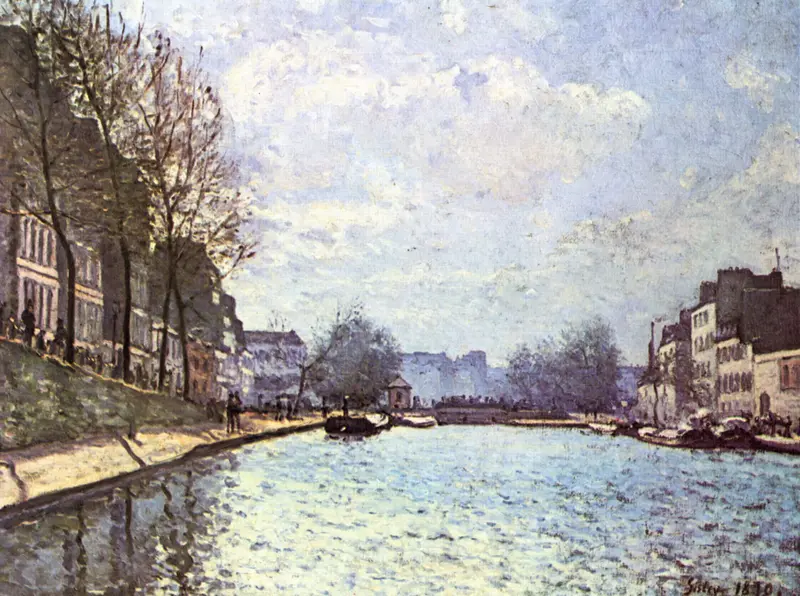
View of the Canal Saint-Martin
Alfred Sisley

Le Loing à Saint-Mammès
Alfred Sisley
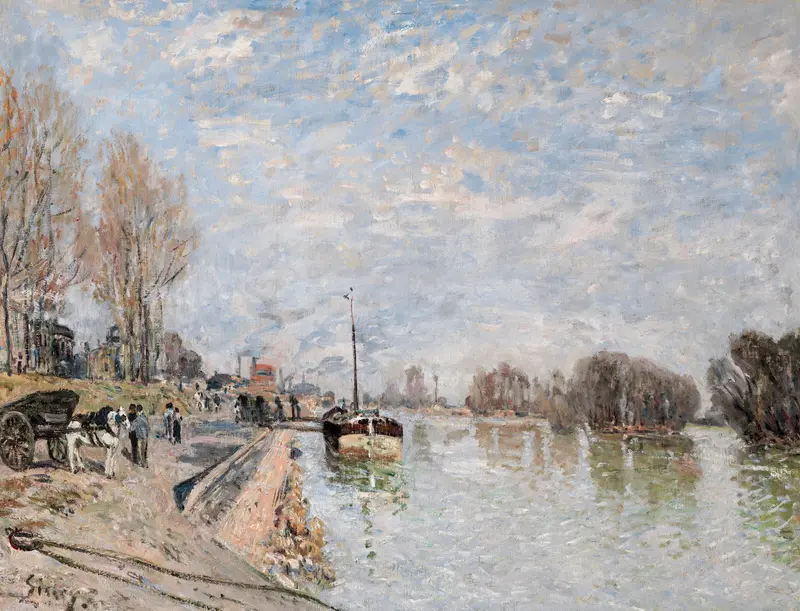
La Seine à Suresnes
Alfred Sisley
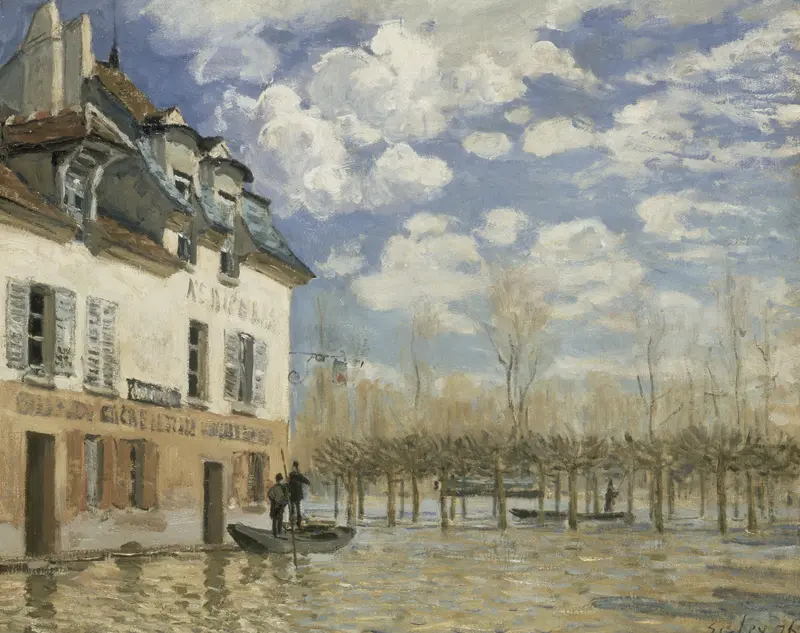
Boat in the Flood at Port Marly
Alfred Sisley
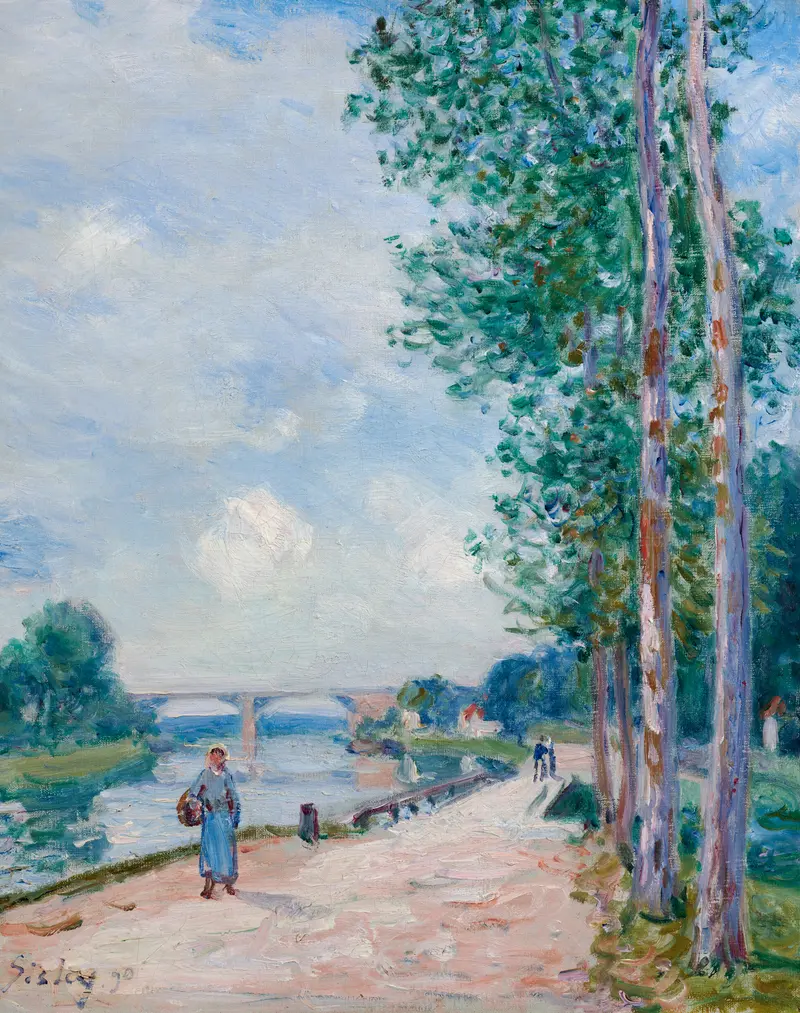
Les bords du Loing près de Moret
Alfred Sisley
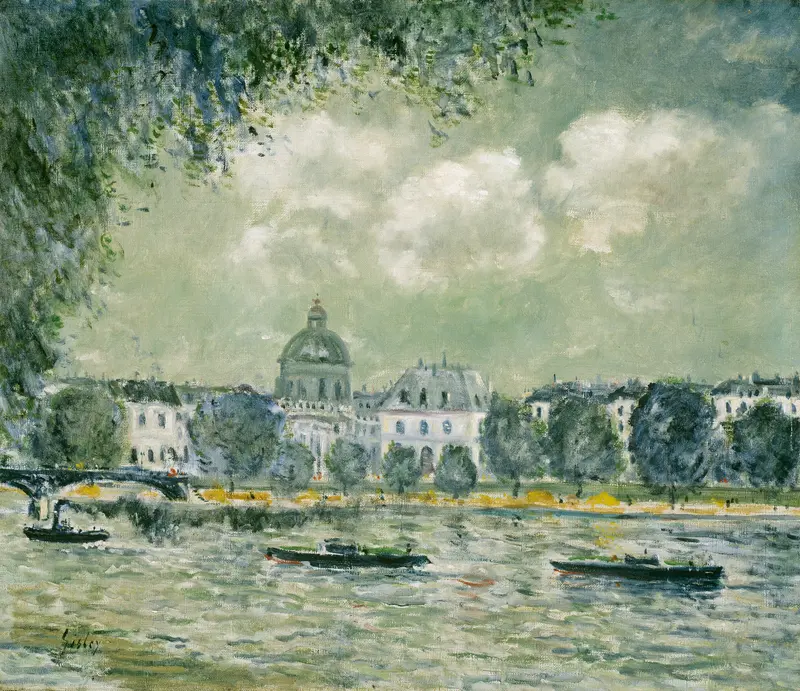
Landscape along the Seine with the Institut de France and the Pont des Arts
Alfred Sisley

Printemps au bord du Loing
Alfred Sisley
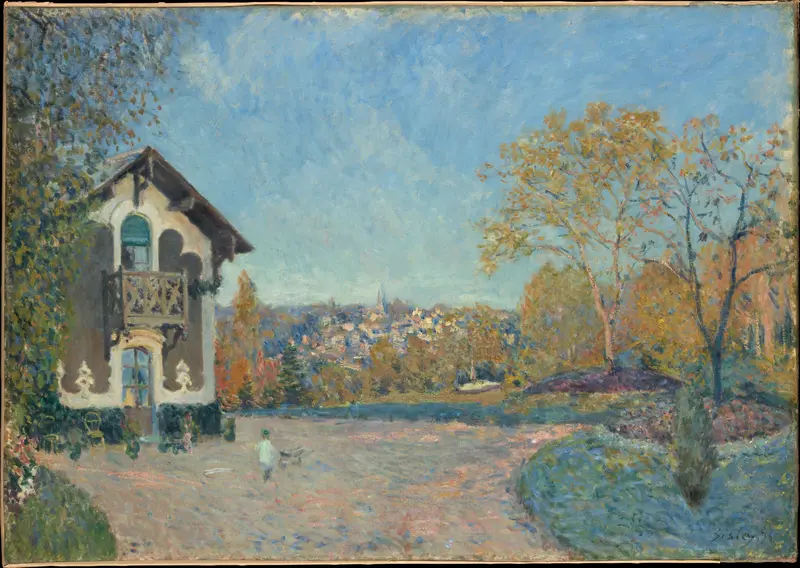
View of Marly-le-Roi from Coeur-Volant
Alfred Sisley
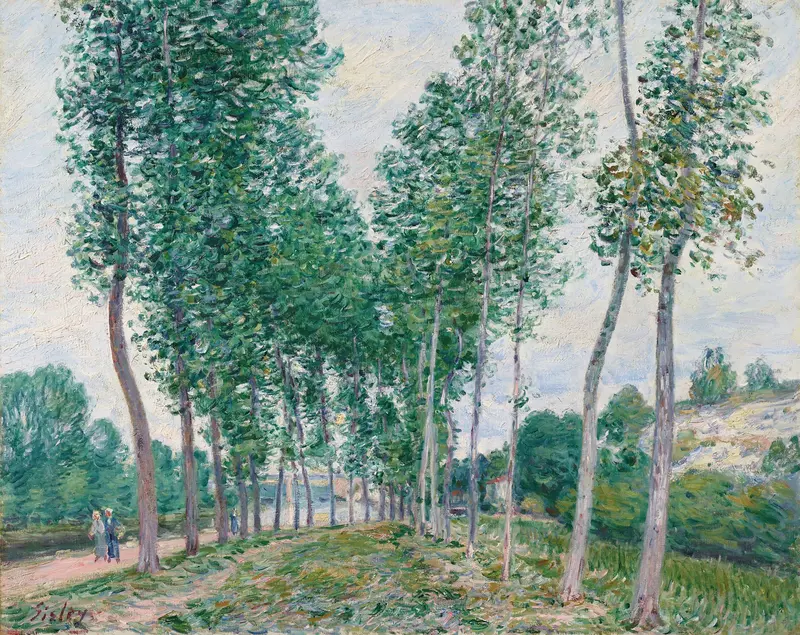
L’allée des peupliers au bord du Loing
Alfred Sisley
Saint-Mammès, Le Matin
Alfred Sisley