Watermelon Vine with Moth — History & Facts
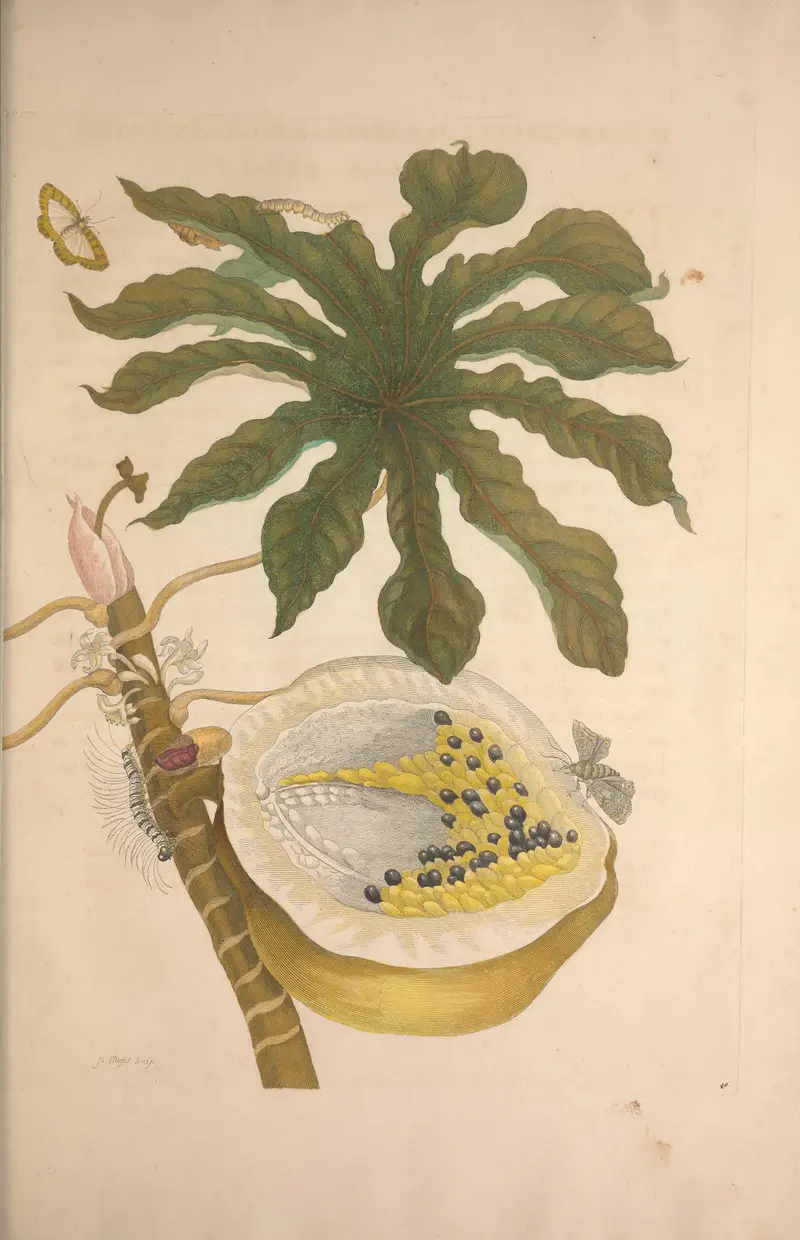
What first grips the eye in Watermelon Vine with Moth is the sense that every living thing here is caught mid-transformation—nothing is still, not even the curling tendrils. The watermelon is split open, its seeds scattered in a careful arc, as if inviting the viewer to imagine the next generation already on its way. A caterpillar, bristling with color and texture, inches along the fruit’s flesh, while a pale egg perches nearby, hinting at the cycle just begun.
The moth, poised on a leaf, seems both delicate and alert, its wings echoing the jagged edges of the vine’s foliage. Light falls evenly, flattening the scene just enough to make every detail readable, but the curling vines and the moth’s shadowed body draw the eye in looping paths across the page. This image comes from the world of early eighteenth-century scientific illustration, when artists like Maria Sibylla Merian were transforming the study of natural history by painting what they saw directly from life. Published in 1705 as part of Metamorphosis insectorum surinamensium, such works were both records and revelations: they documented the insects, plants, and metamorphoses of Suriname for a European audience hungry for knowledge of distant lands.
These illustrations were not merely decorative—they were tools for understanding, prized by collectors, scientists, and explorers alike. History has kept few traces of the individual journeys of these pages, but each one still asks the viewer to look closely, to follow the life unfolding at the edge of the familiar.
More Artworks by Maria Sibylla Merian
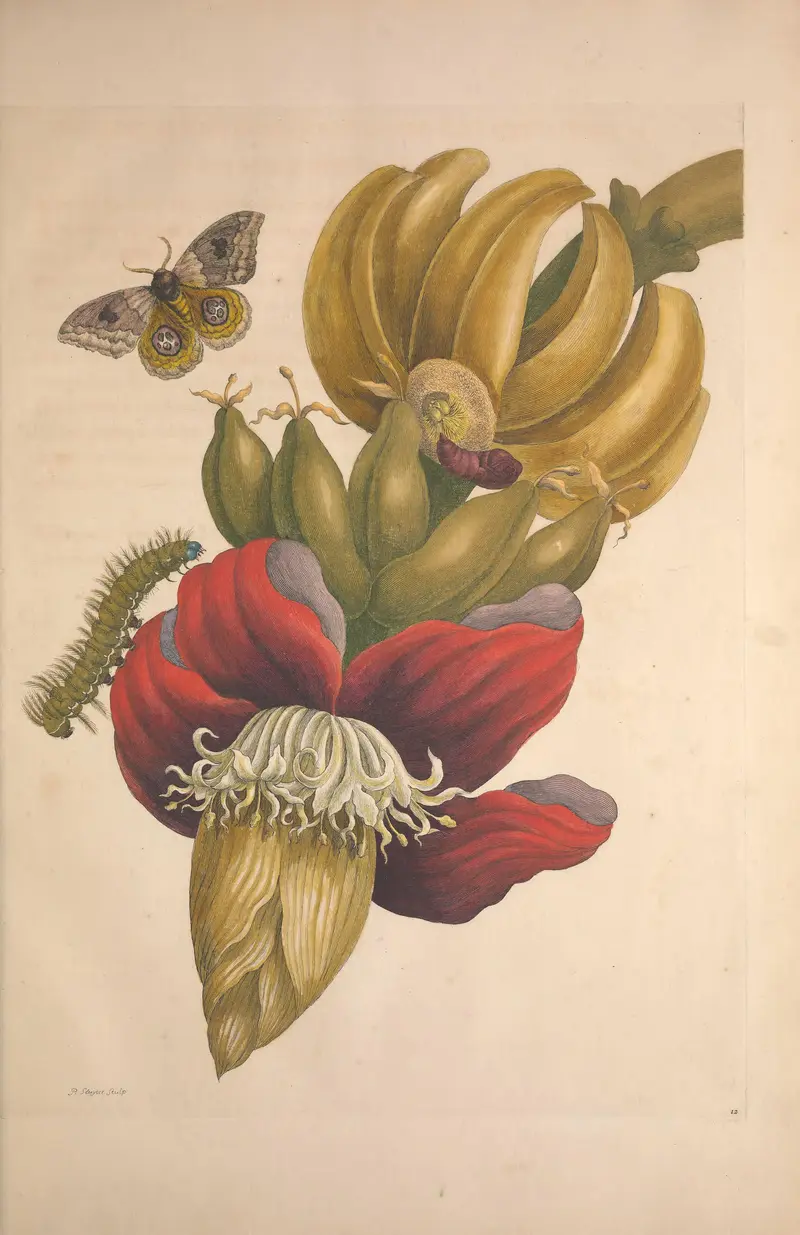
Banana with Bullseye Moth and Caterpillar
Maria Sibylla Merian
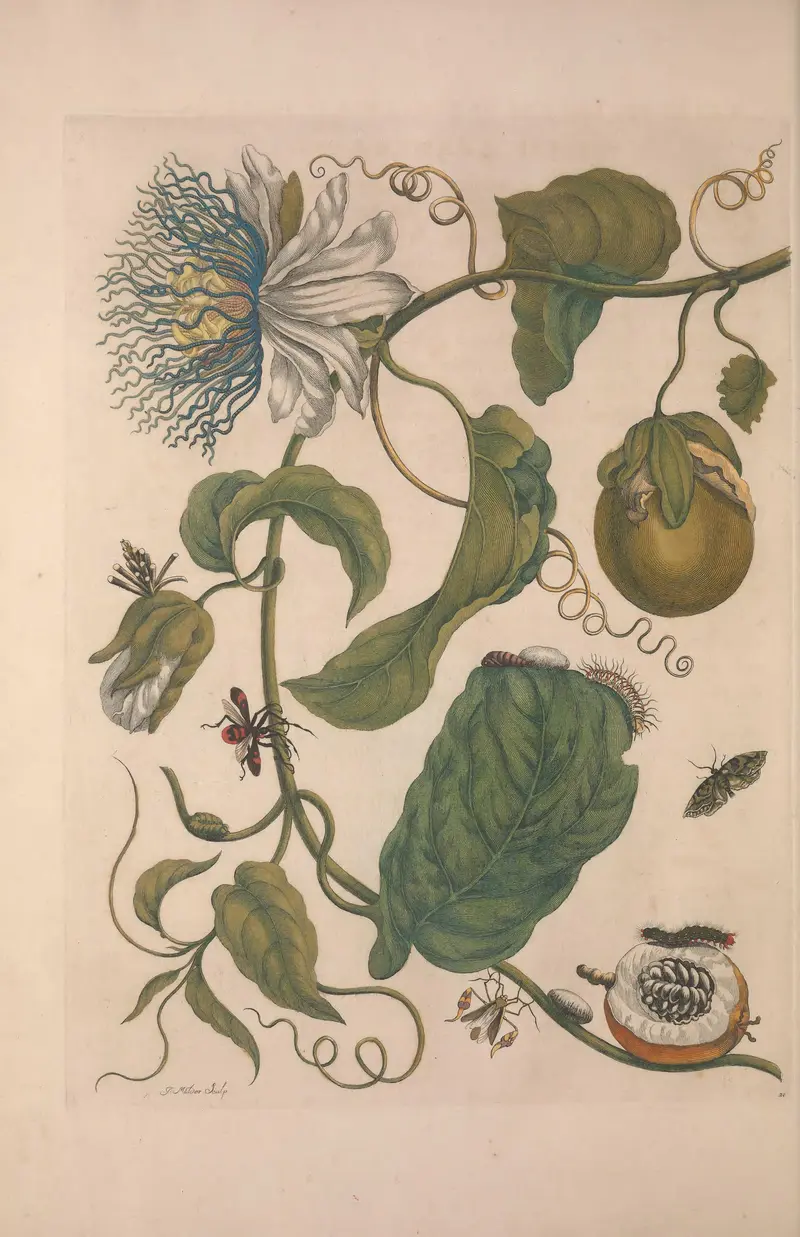
Passionflower with Caterpillars and Insects
Maria Sibylla Merian
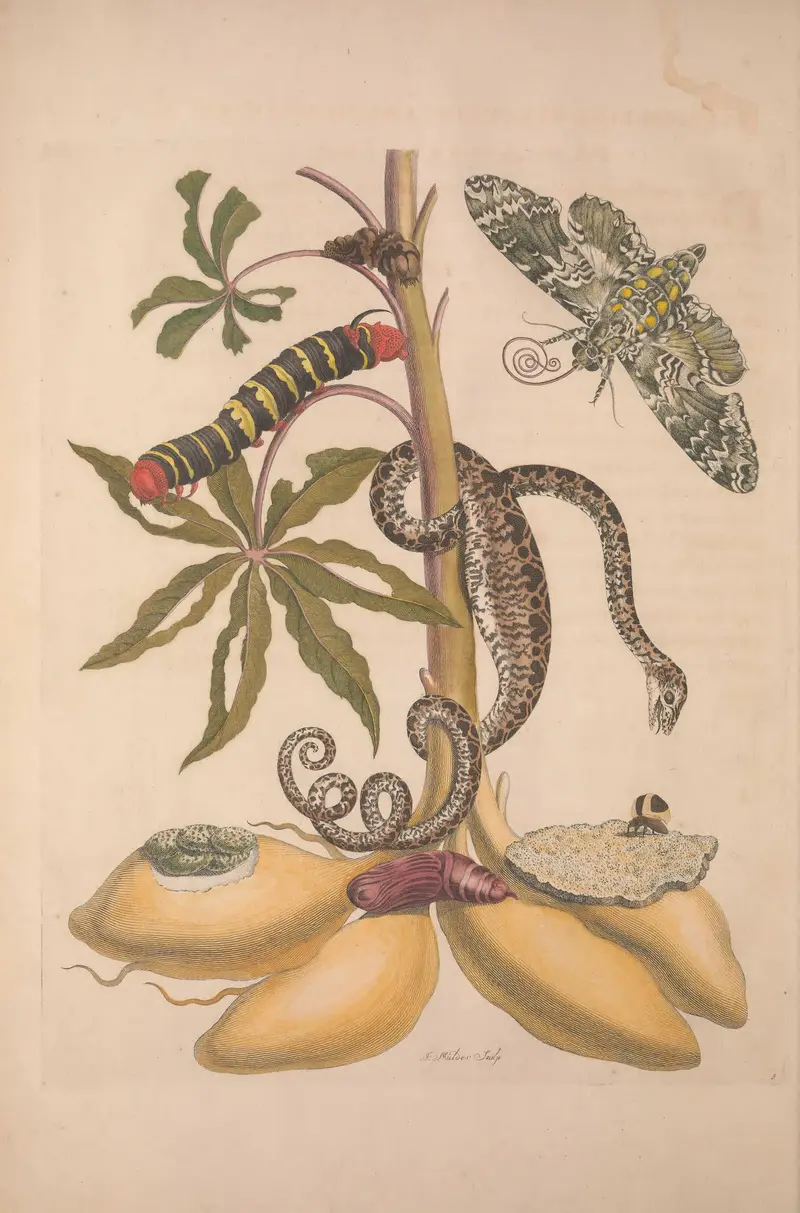
Cassava Root with Tree Boa and Sphinx Moth
Maria Sibylla Merian
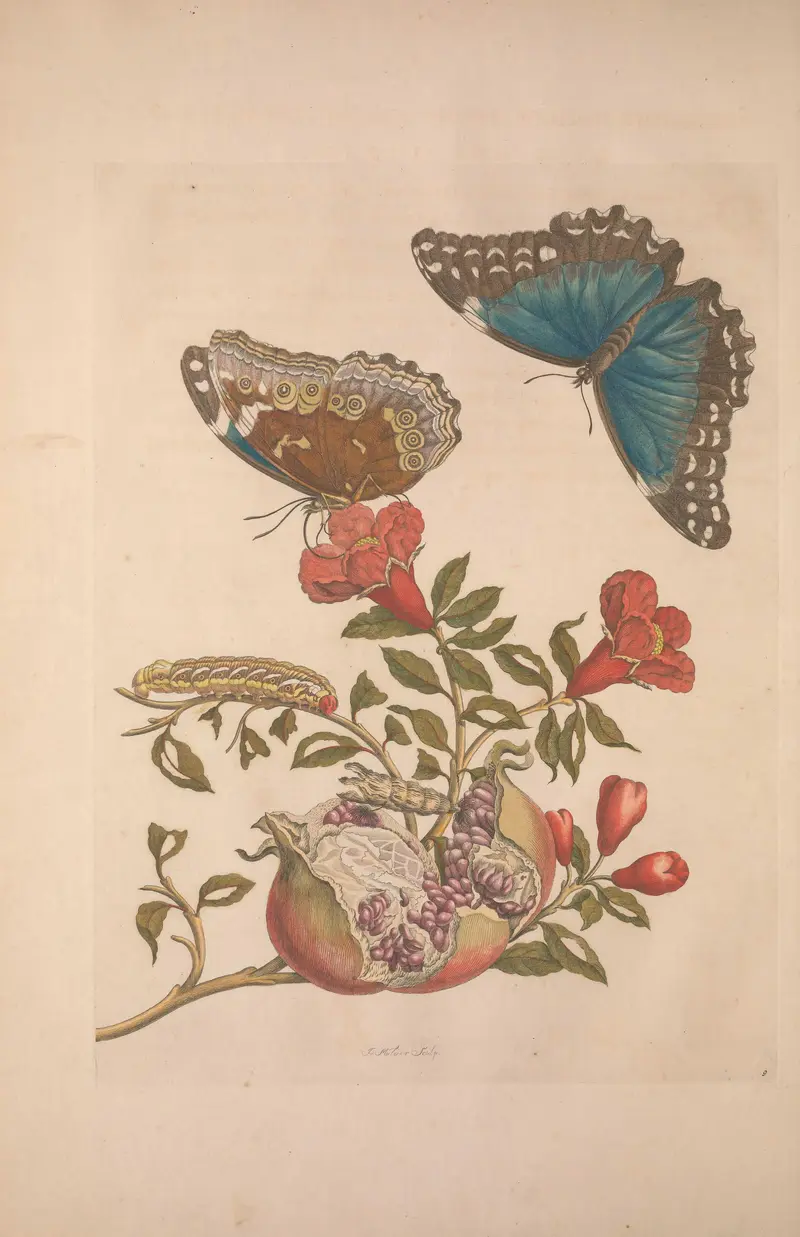
Pomegranate with Caterpillar, Pupa and Blue Butterfly
Maria Sibylla Merian
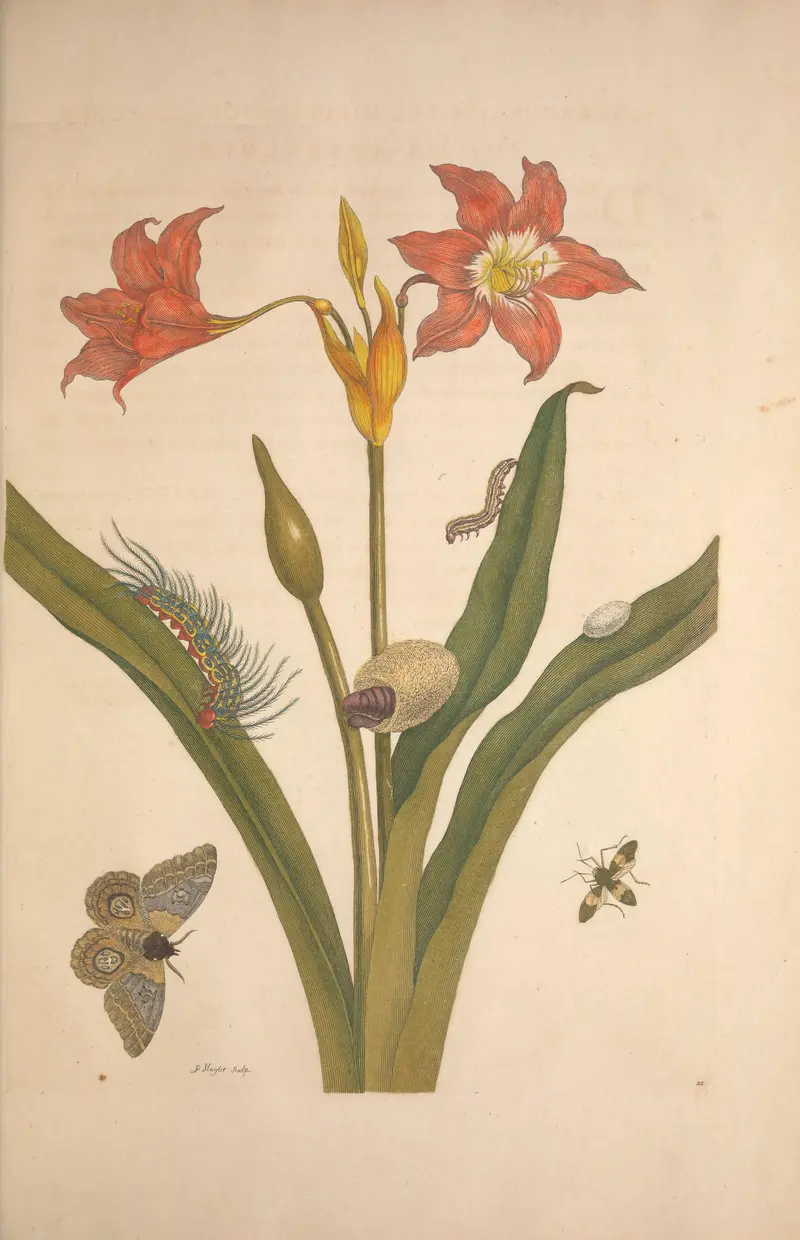
Red Amaryllis Lily with Moth and Caterpillars
Maria Sibylla Merian
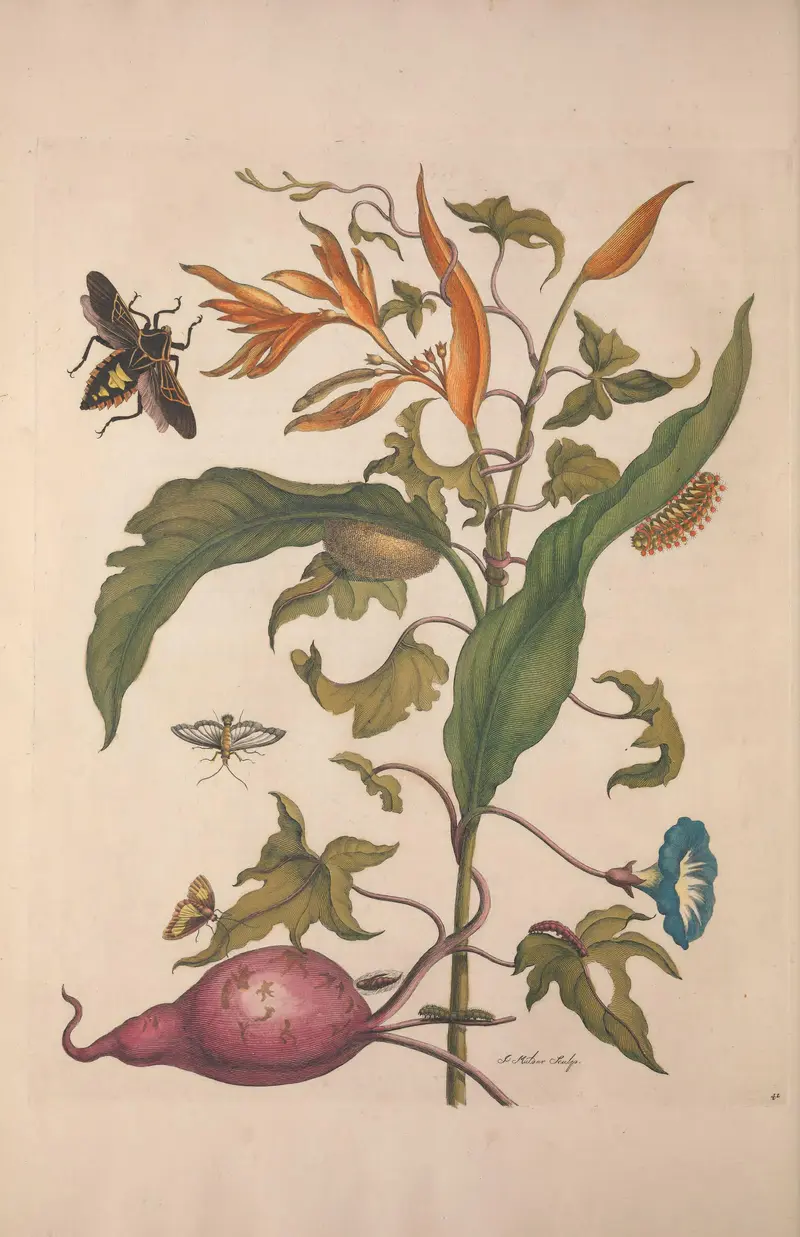
Sweet Potato with Beetle and Butterfly
Maria Sibylla Merian
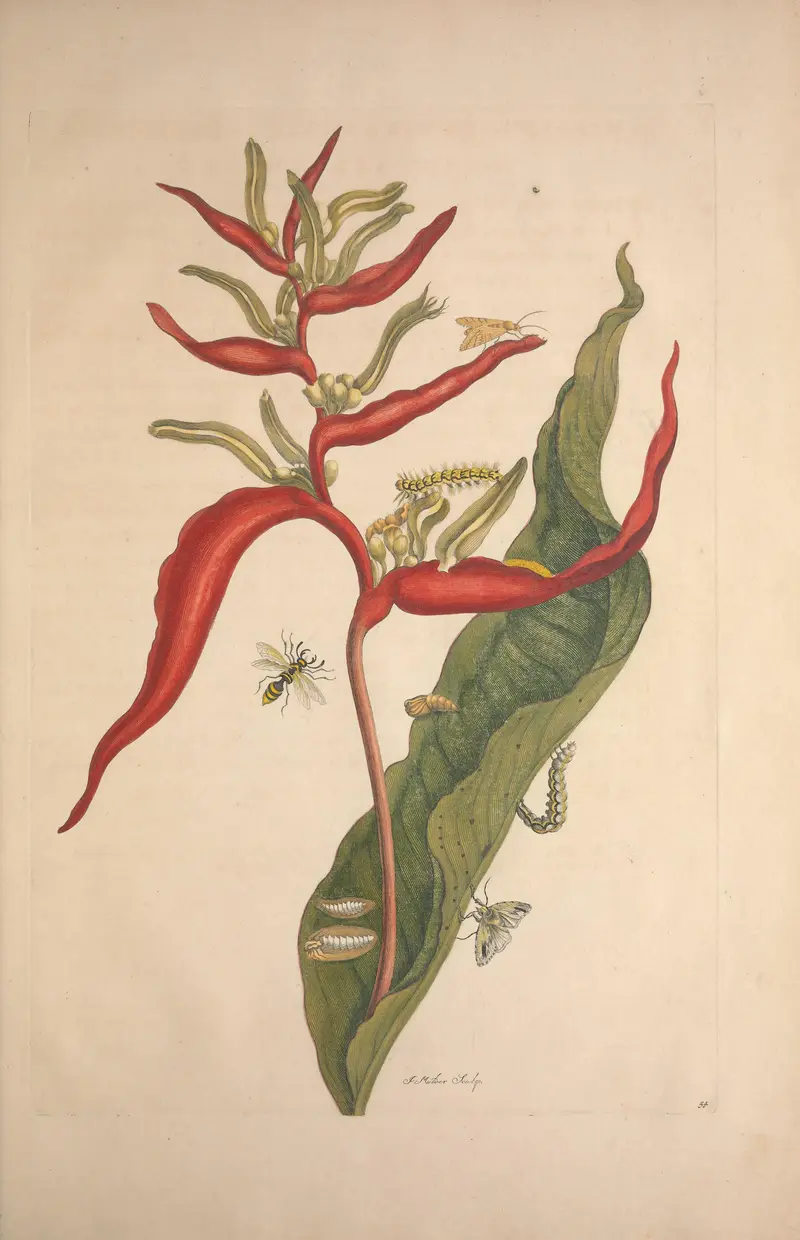
Heliconia with Moth
Maria Sibylla Merian
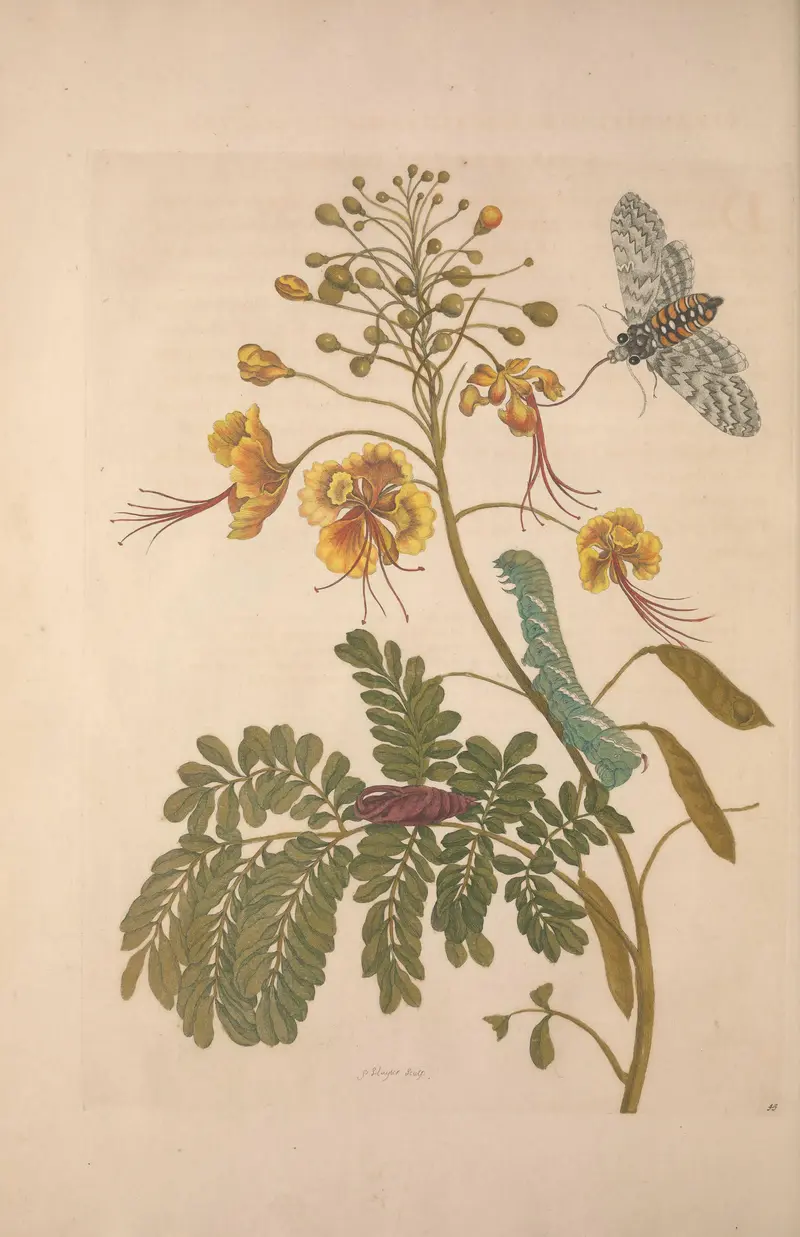
Mimosa with Moth and Caterpillar
Maria Sibylla Merian

Grapevine with Caterpillar and Moth
Maria Sibylla Merian
Papaya with Moth and Caterpillar
Maria Sibylla Merian