
Weg im Gehölz — History & Facts
Where does light end, and longing begin? In the quiet embrace of the shadows, fear lingers, weaving through the trees and haunting the air with a sense of the unknown. Focus on the narrow path that meanders through the dense foliage, a trail barely illuminated by the diffuse light filtering through the leaves. The textures of the bark contrast with the softness of the underbrush, while a haze of muted greens and grays envelops the scene, creating an atmosphere both inviting and foreboding. Each brushstroke captures the tension, as the path suggests a journey taken or a choice made, drawing the viewer in with a sense of urgency. As you take in the surrounding environment, notice how the interplay between light and shadow heightens the emotional stakes.
The vibrant greens of the foliage pulse with life, yet the encroaching darkness hints at fear's lurking presence, embodying the duality of nature as both refuge and threat. The path, though inviting, becomes a metaphor for the inner conflicts we face—a choice between courage and retreat, discovery and safety. Rudolf Höckner created Weg im Gehölz in 1910 during a period marked by significant artistic exploration and innovation. Living in Germany, he found himself influenced by the transition towards modernism, where traditional forms were being challenged.
This artwork reflects a moment of introspection amidst societal change, capturing the anxiety and complexity of the human experience as it relates to the natural world.
More Artworks by Rudolf Höckner
Browse all →
Am Stintmarkt in Lüneburg
Rudolf Höckner

Marschlandschaft mit Weidenallee und Reiter
Rudolf Höckner

Winterlandschaft mit Gehöft
Rudolf Höckner

Ansicht von Wedel
Rudolf Höckner

Bauerngehöft mit Teich
Rudolf Höckner
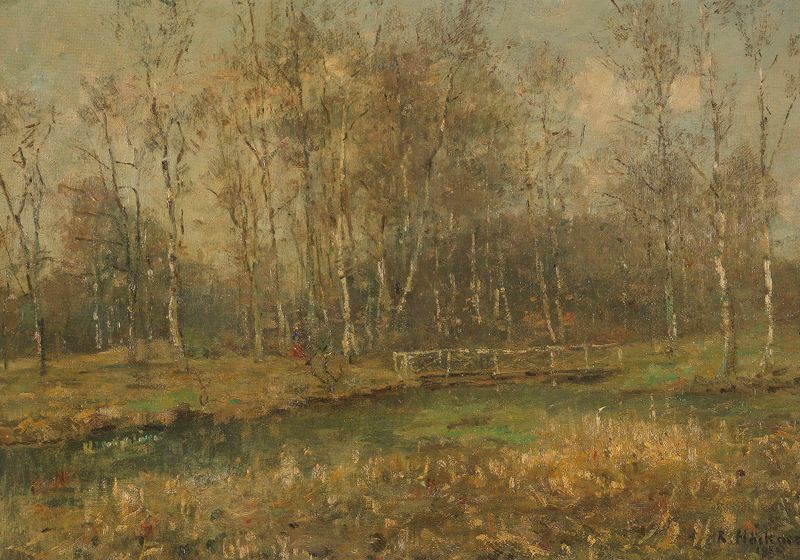
Vorfrühling im Park
Rudolf Höckner

Landschaft mit kleinen Gestalten
Rudolf Höckner
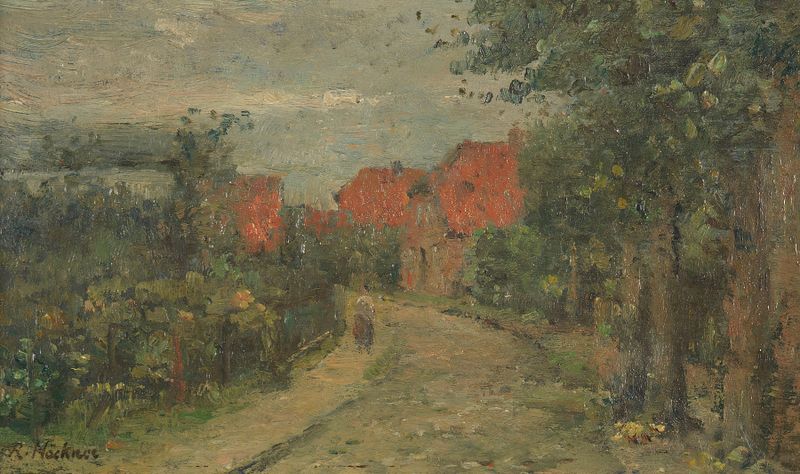
Dorfstraße
Rudolf Höckner

Der letzte Schnee
Rudolf Höckner

Wedeler Au
Rudolf Höckner





