
Der letzte Schnee — History & Facts
Could beauty survive in a century of chaos? In Der letzte Schnee, the fragile beauty of winter clings to life, embodying a poignant reminder of mortality amid the relentless march of time. Look to the left to find the remnants of snow, pure and untouched, draping over an unseen landscape. The soft white contrasts sharply against the emerging earth tones of brown and gray, as if nature is exhaling its last breath of winter. Notice how the artist captures the delicate interplay of light — faint rays seem to dance over the snow, illuminating each flake with an ethereal glow.
The horizon blurs between the crispness of snowy peaks and the softening lines of a thawing world, inviting the viewer to ponder the transience of beauty. The tension between the snow and the earth suggests a transient state; one cannot exist without the other. As the snow melts, it signifies the inevitability of change and the cycle of life. Small details, such as the crackling ice along the edge of the snow, evoke a sense of fragility, hinting at the struggles that come with transformation.
This play of opposites — purity versus decay, life versus death — resonates deeply, urging the observer to reflect on their own mortality and the beauty that can be found even in endings. In 1920, Rudolf Höckner painted Der letzte Schnee during a tumultuous period in Europe, just after World War I. His experiences in a world of upheaval undoubtedly influenced his perspective on beauty and fragility. Amidst the chaos, Höckner's work captures a moment of quiet reflection, a pause before the inevitable renewal of spring, mirroring both the artist's personal journey and the broader societal shift.
More Artworks by Rudolf Höckner
Browse all →
Am Stintmarkt in Lüneburg
Rudolf Höckner
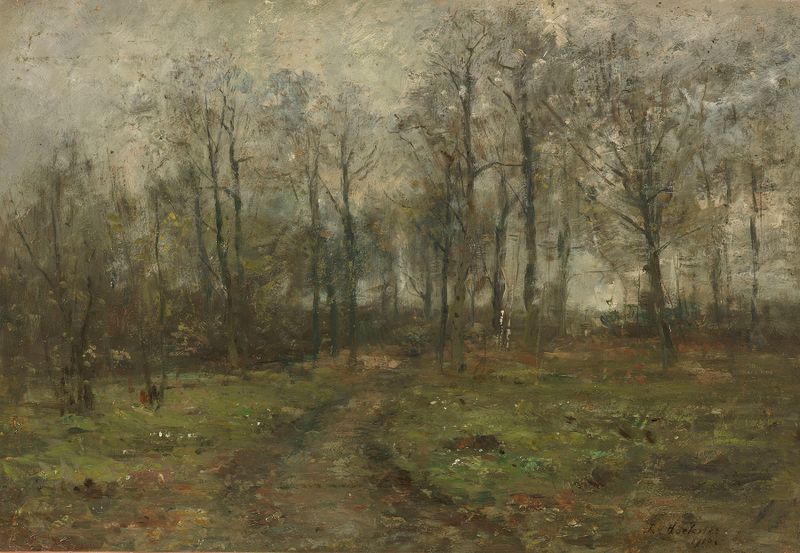
Weg im Gehölz
Rudolf Höckner

Marschlandschaft mit Weidenallee und Reiter
Rudolf Höckner

Winterlandschaft mit Gehöft
Rudolf Höckner

Ansicht von Wedel
Rudolf Höckner

Bauerngehöft mit Teich
Rudolf Höckner
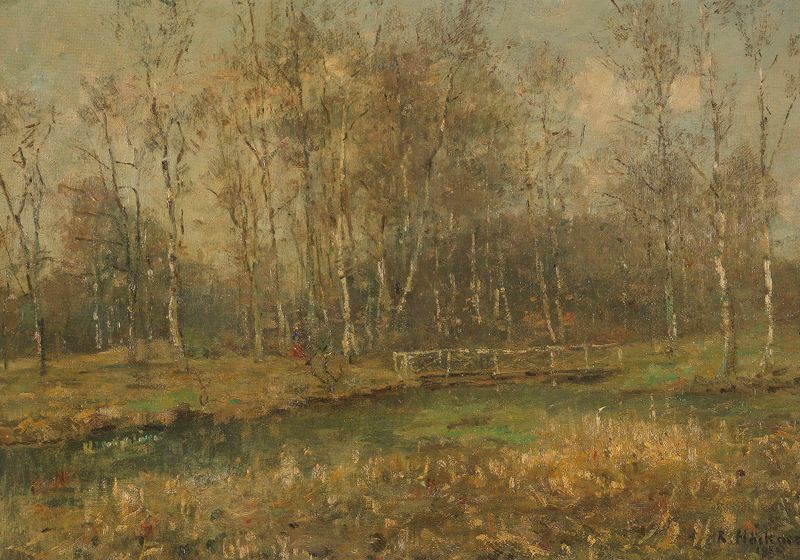
Vorfrühling im Park
Rudolf Höckner

Landschaft mit kleinen Gestalten
Rudolf Höckner
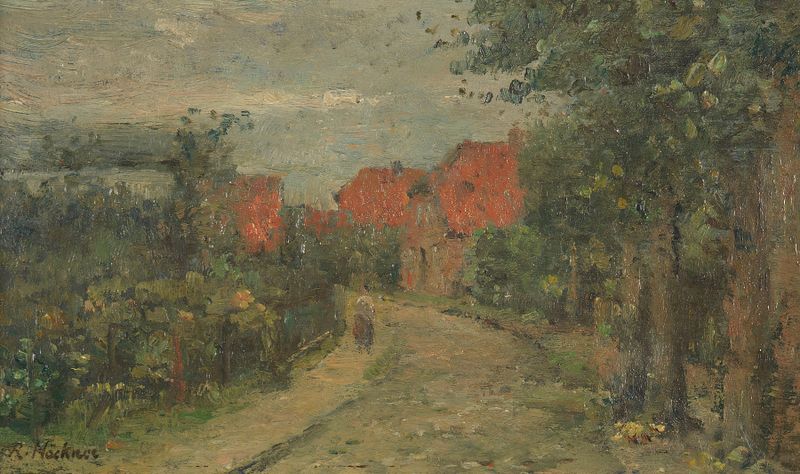
Dorfstraße
Rudolf Höckner

Wedeler Au
Rudolf Höckner





