
West Indian Creole woman, with her Black Servant — History & Facts
What first catches the eye is the poised confidence of the central figure, her white dress billowing with crisp red stripes and her head wrapped in a turban that echoes the same bold palette. She glances sideways, chin lifted, her hand gathering her skirts as if to step forward or perhaps to display the fine fabric—an unmistakable signal of status. Behind her, a Black woman balances a tray of folded linens with practiced ease, her own attire simpler but dignified.
The sunlight falls evenly, picking out the textures of cotton and the subtle gleam of jewelry, while the landscape recedes into soft blue mountains, giving the scene a sense of openness and calm. Every detail is deliberate: the servant’s upright bearing, the gold earring glinting at the Creole woman's ear, the two figures in the background—one standing, one seated—who draw the viewer’s gaze deeper into the world of the painting. Painted around 1780, this work belongs to a period when European artists like Agostino Brunias were commissioned to record the layered societies of the Caribbean colonies. Such paintings served both as souvenirs for colonial elites and as visual arguments for the supposed order and civility of plantation life.
The contrast between the richly dressed Creole woman and her servant is not incidental; it reflects the rigid social hierarchies of the time, shaped by race, class, and colonial power. Little is recorded about the journey of this particular canvas, now held in the collection bgFMfjfqxkiXpQ, but its survival invites us to look closely at the ways art both reveals and conceals the realities of its era. The longer you study their expressions and postures, the more the silent negotiations of status and identity come to the surface.
More Artworks by Agostino Brunias
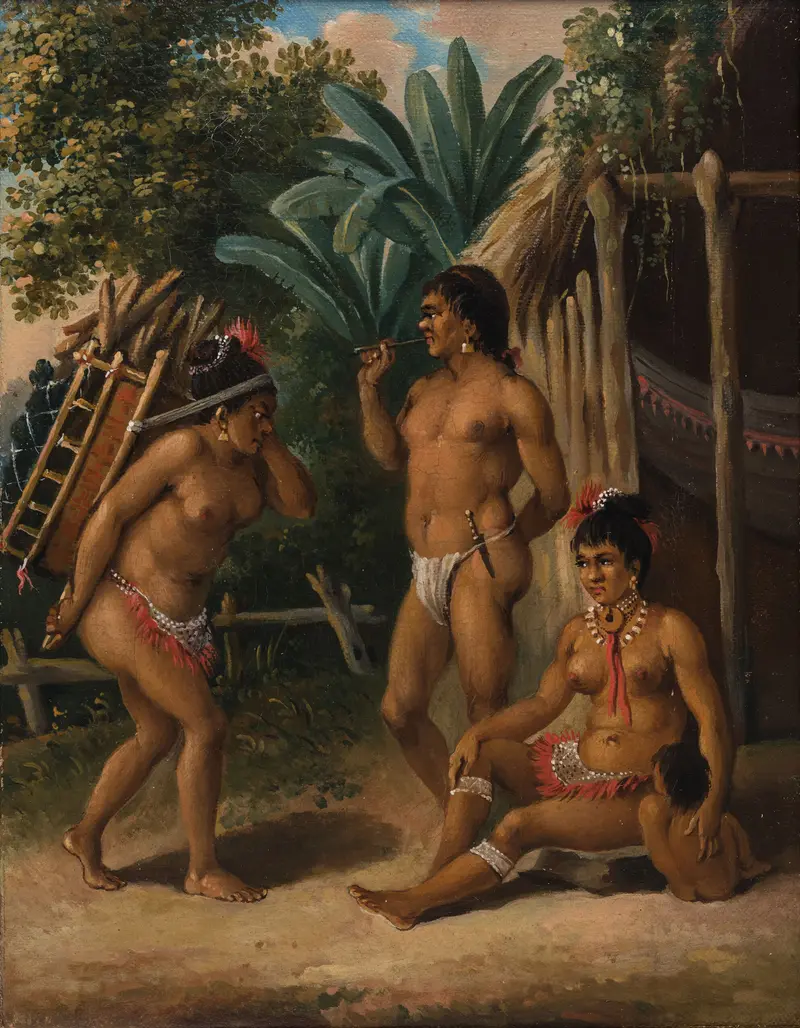
Indigenous Kalinago of St. Vincent [Aboriginal Caraibs of St. Vincents]
Agostino Brunias
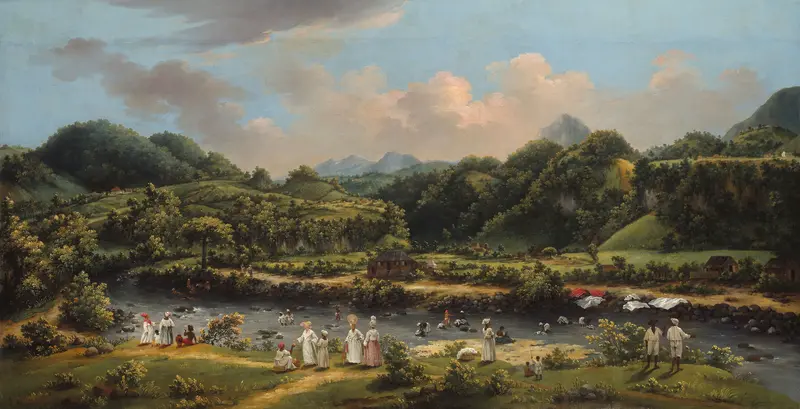
View on the River Roseau, Dominica
Agostino Brunias
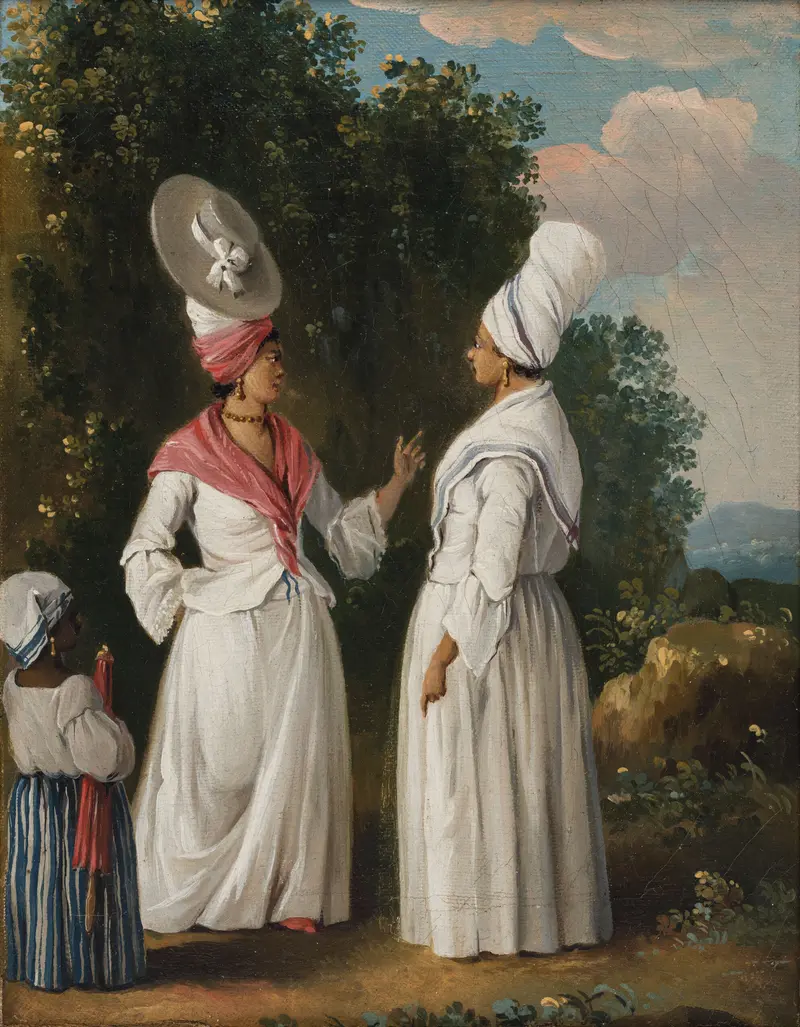
Francophone Women of Color and a Young Attendant, Dominica [French Mulatresses of Dominica in their Proper Dress]
Agostino Brunias
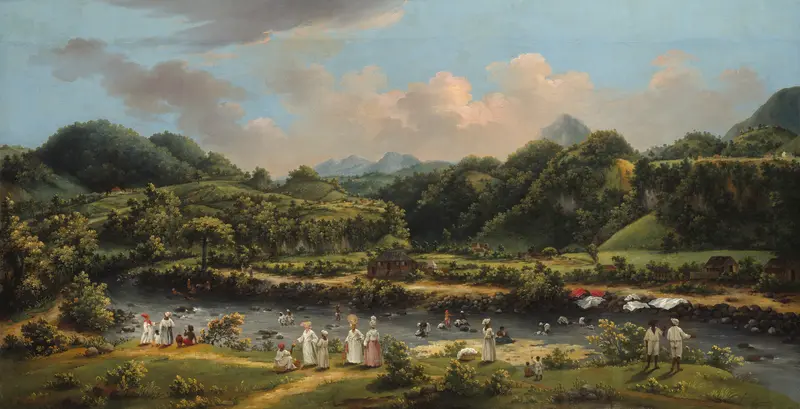
View on the River Roseau, Dominica
Agostino Brunias
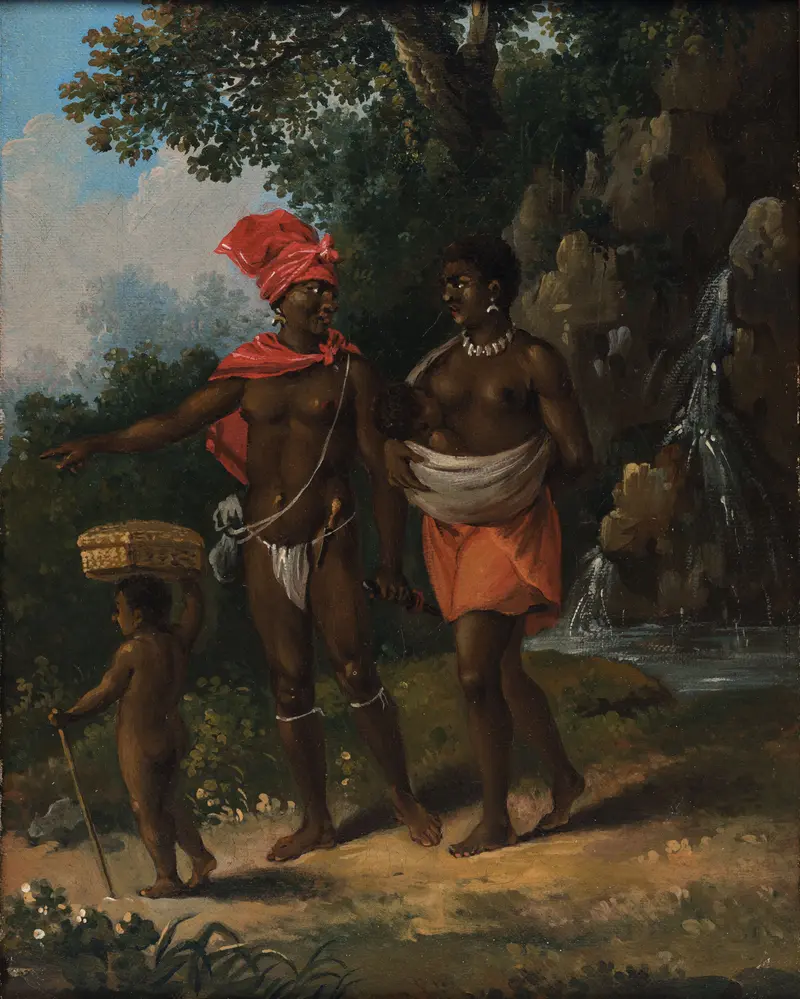
Garifuna Peoples of St. Vincent [Caraibs of St. Vincents]
Agostino Brunias
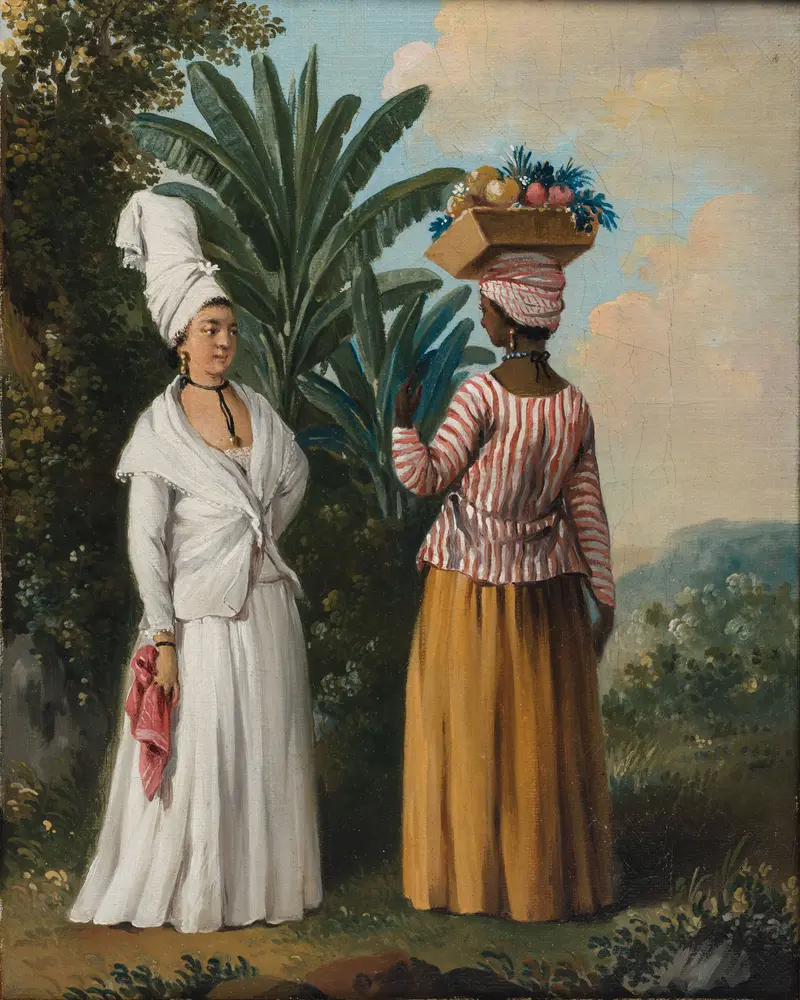
Two Women of Color, Dominica [French Mulatress of Dominica and a Negro Woman in their Proper Dress]
Agostino Brunias

Purchasing Fruit [A French Mulatress Purchasing Fruit from a Negro Wench]
Agostino Brunias

Women of Color Bathing and a Voyeur [Mulatresses and Negro Woman Bathing]
Agostino Brunias
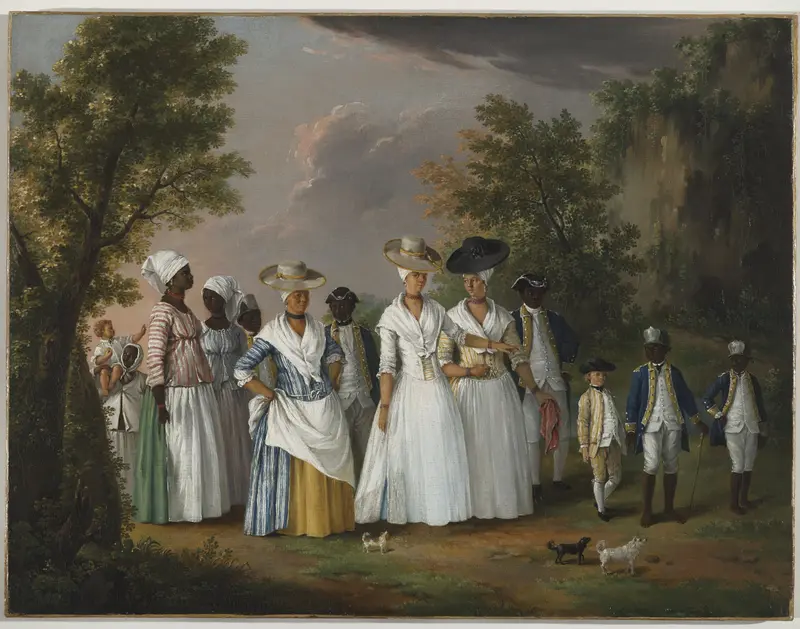
Free Women of Color with their Children and Servants in a Landscape
Agostino Brunias
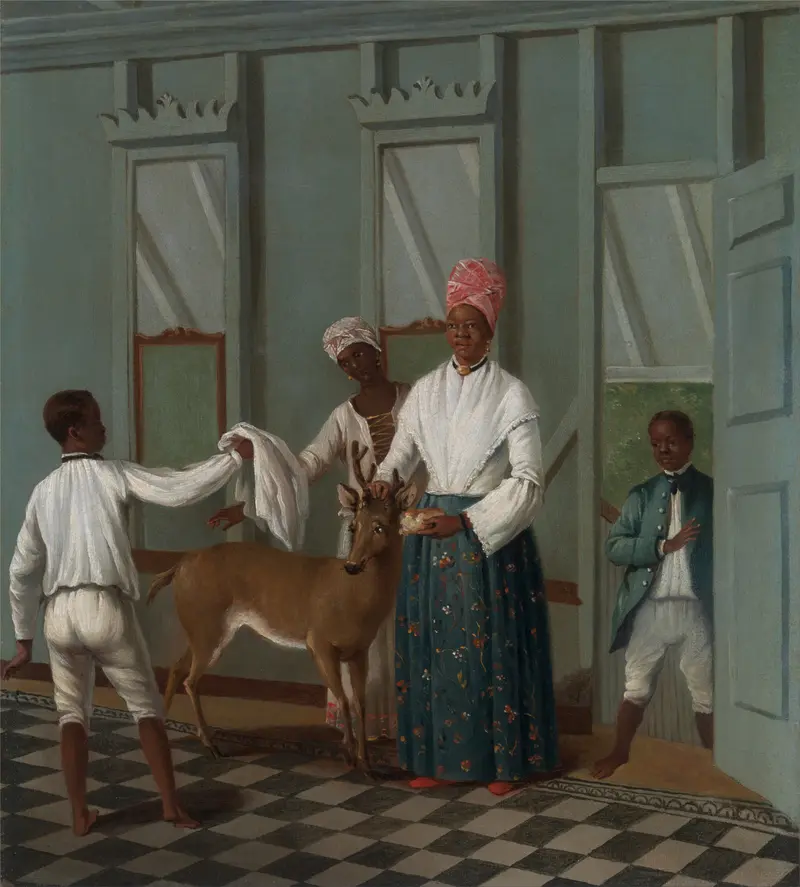
Servants Washing a Deer
Agostino Brunias
More Genre Scene Art

Banquet of the Officers of the St George Civic Guard
Frans Hals

Rembrandt and Saskia in the Scene of the Prodigal Son
Rembrandt van Rijn

Bal du moulin de la Galette
Pierre-Auguste Renoir

Quadrille at the Moulin Rouge
Henri de Toulouse-Lautrec

A Burial at Ornans
Gustave Courbet

When Will You Marry?
Paul Gauguin