
West Indian Man of Color, Directing Two Carib Women with a Child — History & Facts
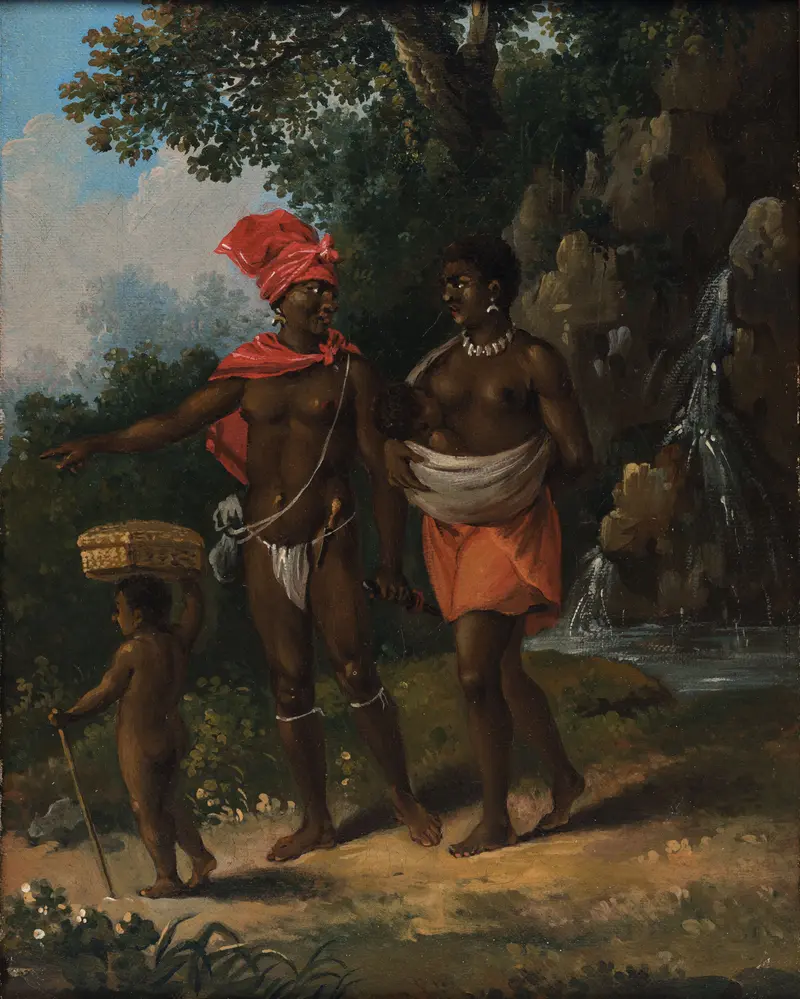
What first catches the eye is the crisp contrast between the white-clad figure at right and the earthy tones of the women and child to his left, a deliberate division that sets the stage for a charged encounter. The man’s outstretched arm commands attention, his gesture both directional and authoritative, while the women, burdened and bare-chested, move forward with a wary glance. The child, clutching a slender stick, mirrors the adults’ motion but seems caught between worlds—one of labor and one of play.
The lush foliage frames the scene, but the open sky and the man’s feathered hat suggest a wider world beyond this path, a world of hierarchy and movement. Every detail—the basket’s careful weave, the red sashes, the glint of the man’s sword—signals a social order in flux, and the viewer is invited to read the silent negotiations of power and identity written across these bodies. Painted around 1780, this work stands at the intersection of colonial Caribbean society and the European gaze. Pictures like this, often produced for colonial officials or European collectors, offered a curated vision of life in the West Indies, blending documentary intent with the conventions of genre painting.
Agostino Brunias became known for such scenes, which both recorded and romanticized the complex realities of race, labor, and status in the islands. The painting’s presence today in a digital collection reminds us how little is preserved of the daily lives it hints at, and how much is shaped by the artist’s—and his patrons’—perspective. Look again at the meeting of eyes and gestures: the painting’s story is not only in what is shown, but in what is left unsaid.
More Artworks by Agostino Brunias
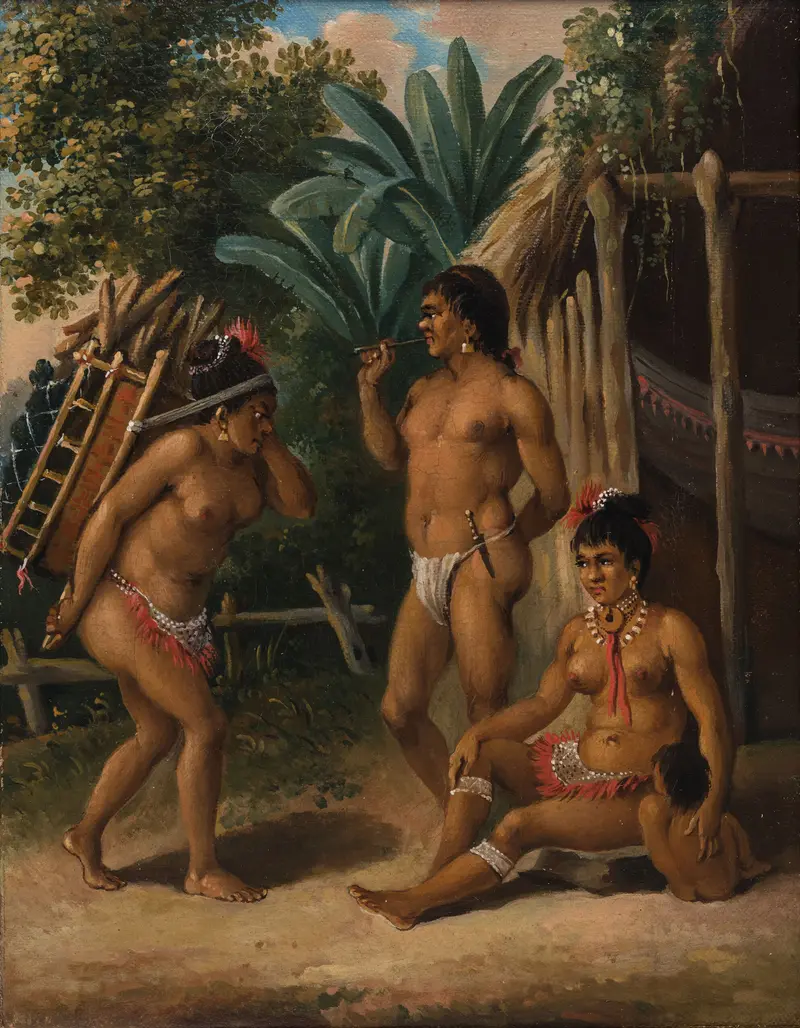
Indigenous Kalinago of St. Vincent [Aboriginal Caraibs of St. Vincents]
Agostino Brunias
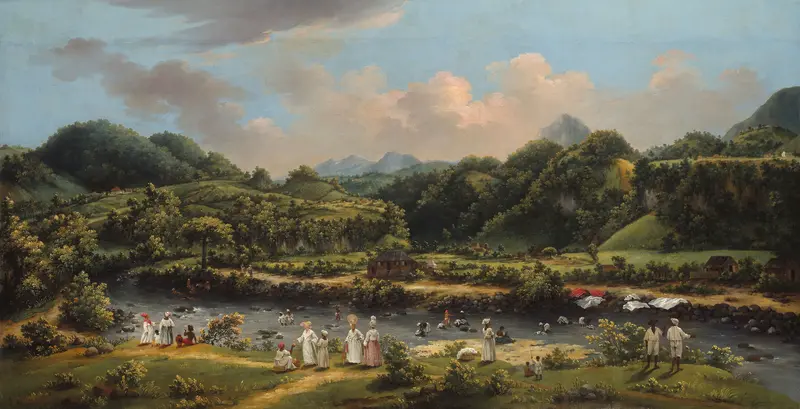
View on the River Roseau, Dominica
Agostino Brunias
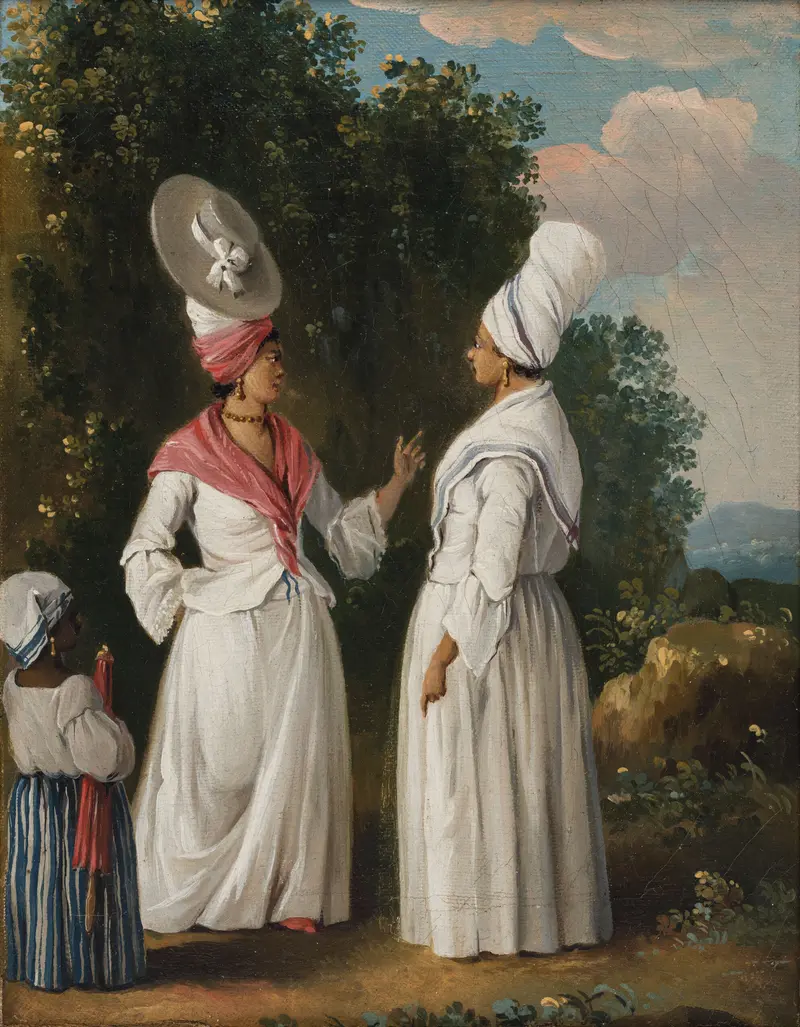
Francophone Women of Color and a Young Attendant, Dominica [French Mulatresses of Dominica in their Proper Dress]
Agostino Brunias
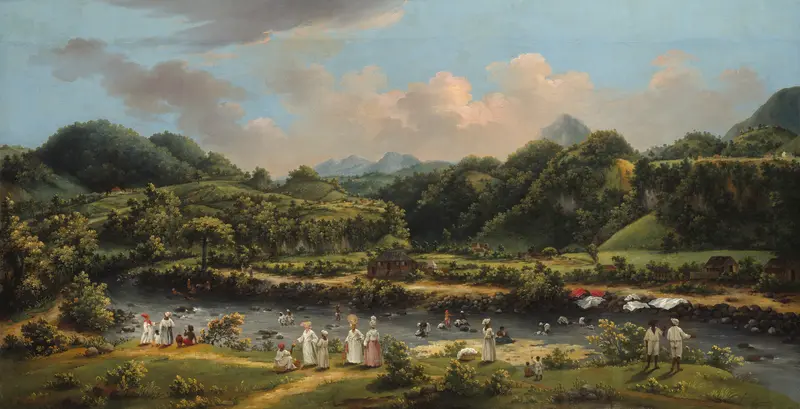
View on the River Roseau, Dominica
Agostino Brunias
Garifuna Peoples of St. Vincent [Caraibs of St. Vincents]
Agostino Brunias
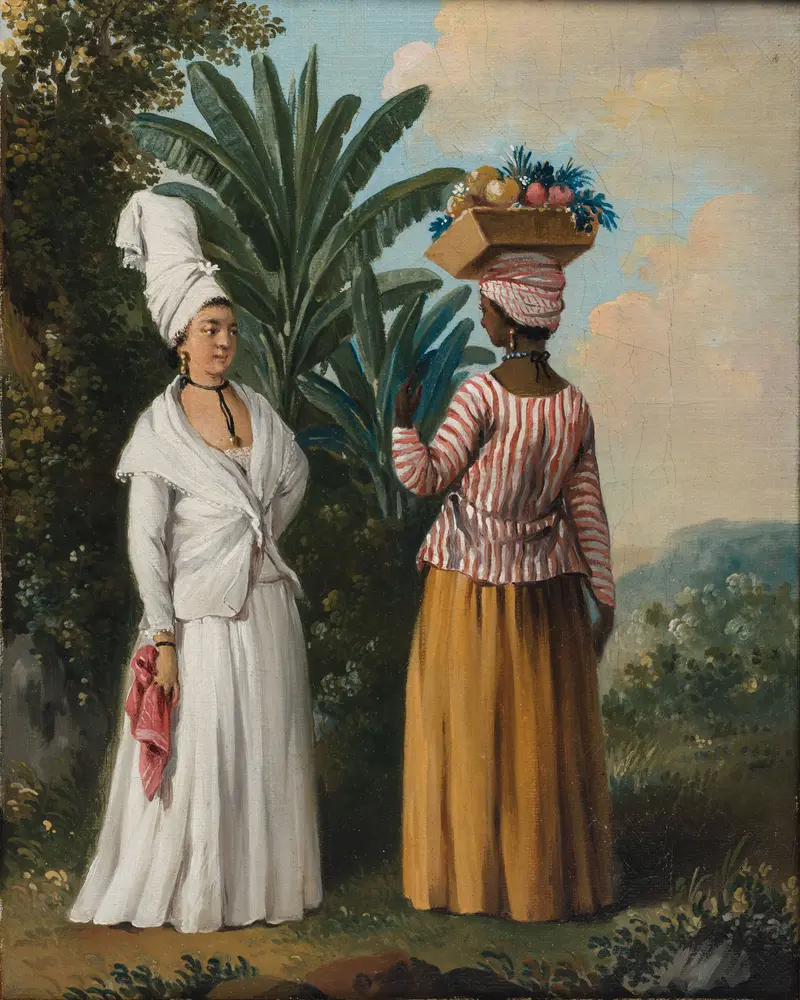
Two Women of Color, Dominica [French Mulatress of Dominica and a Negro Woman in their Proper Dress]
Agostino Brunias

Purchasing Fruit [A French Mulatress Purchasing Fruit from a Negro Wench]
Agostino Brunias

Women of Color Bathing and a Voyeur [Mulatresses and Negro Woman Bathing]
Agostino Brunias
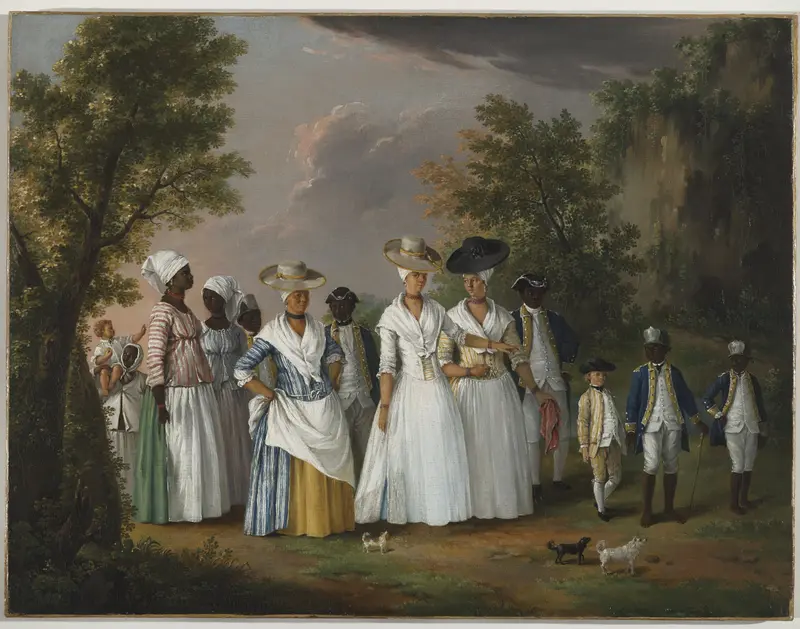
Free Women of Color with their Children and Servants in a Landscape
Agostino Brunias
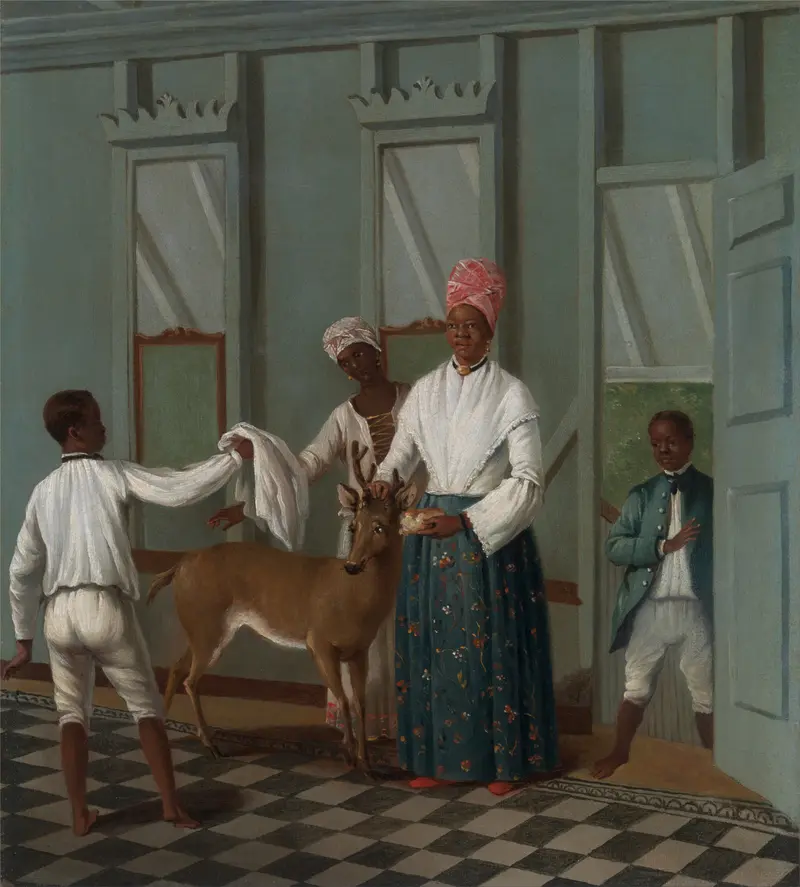
Servants Washing a Deer
Agostino Brunias
More Genre Scene Art

Banquet of the Officers of the St George Civic Guard
Frans Hals

Rembrandt and Saskia in the Scene of the Prodigal Son
Rembrandt van Rijn

Bal du moulin de la Galette
Pierre-Auguste Renoir

Quadrille at the Moulin Rouge
Henri de Toulouse-Lautrec

A Burial at Ornans
Gustave Courbet

When Will You Marry?
Paul Gauguin