
West Indian Women of Color, with a Child and Black Servant — History & Facts
What first catches the eye in West Indian Women of Color, with a Child and Black Servant is the sense of encounter: three adults and a child, each with a distinct bearing, gathered at the edge of a lush, sunlit landscape. The woman on the left gestures outward, her open hand and calm gaze suggesting conversation or instruction, while the central figure stands with hand on hip, her red headwrap and jewelry signaling confidence and status. The child peeks from behind a skirt, half-hidden, as if caught between worlds, while the man to the right, basket in hand, waits with a quiet steadiness.
The palette is warm and earthy, with white garments catching the Caribbean light, drawing the viewer’s attention to the figures’ faces and postures. Every detail—the jewelry, the fabrics, the bare feet—invites questions about identity, hierarchy, and daily life in a colonial world. Painted around 1780, this work stands within the tradition of colonial portraiture and genre scenes, which flourished as European artists recorded the complex societies of the Caribbean. Such paintings were often commissioned by colonial elites or merchants eager to display the variety and supposed harmony of their world, yet they also reveal the strict social codes and racial hierarchies that shaped daily existence.
Agostino Brunias became known for these images, which both document and idealize the diversity of West Indian society under British rule. While little is recorded about the specific journey of this painting, its survival in a digital collection today hints at the ongoing fascination—and discomfort—with the realities it quietly encodes. Return to the painting and notice how each figure’s stance and dress speak to both individuality and the rigid roles of their time.
More Artworks by Agostino Brunias
Indigenous Kalinago of St. Vincent [Aboriginal Caraibs of St. Vincents]
Agostino Brunias
View on the River Roseau, Dominica
Agostino Brunias
Francophone Women of Color and a Young Attendant, Dominica [French Mulatresses of Dominica in their Proper Dress]
Agostino Brunias
View on the River Roseau, Dominica
Agostino Brunias
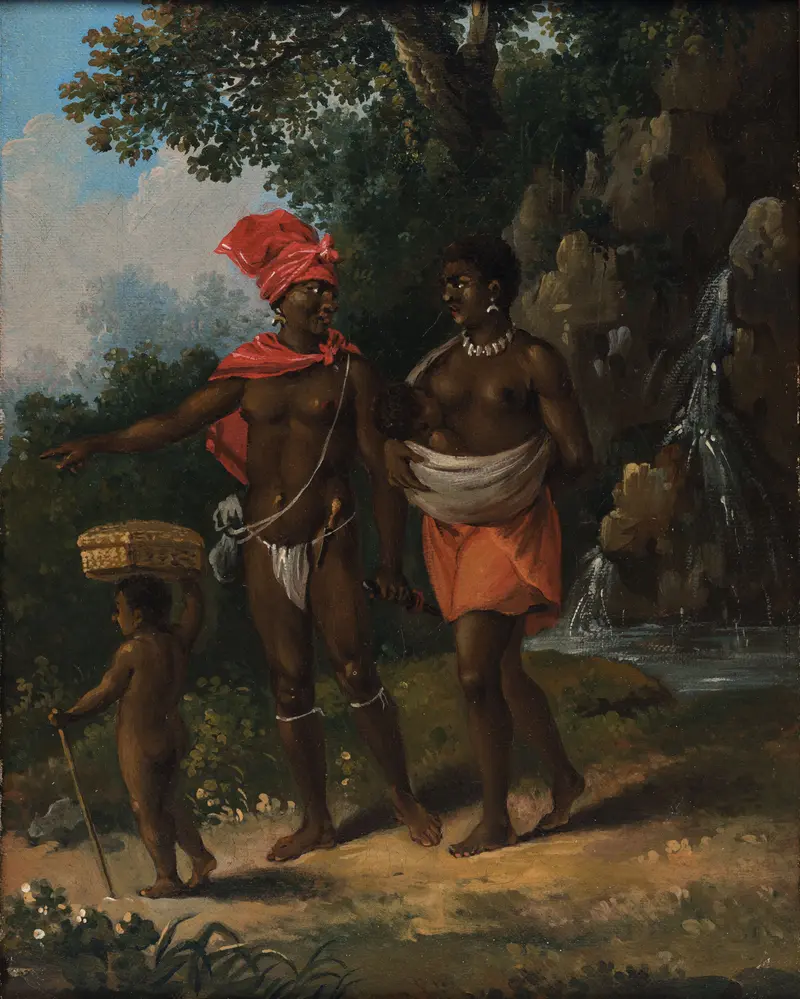
Garifuna Peoples of St. Vincent [Caraibs of St. Vincents]
Agostino Brunias
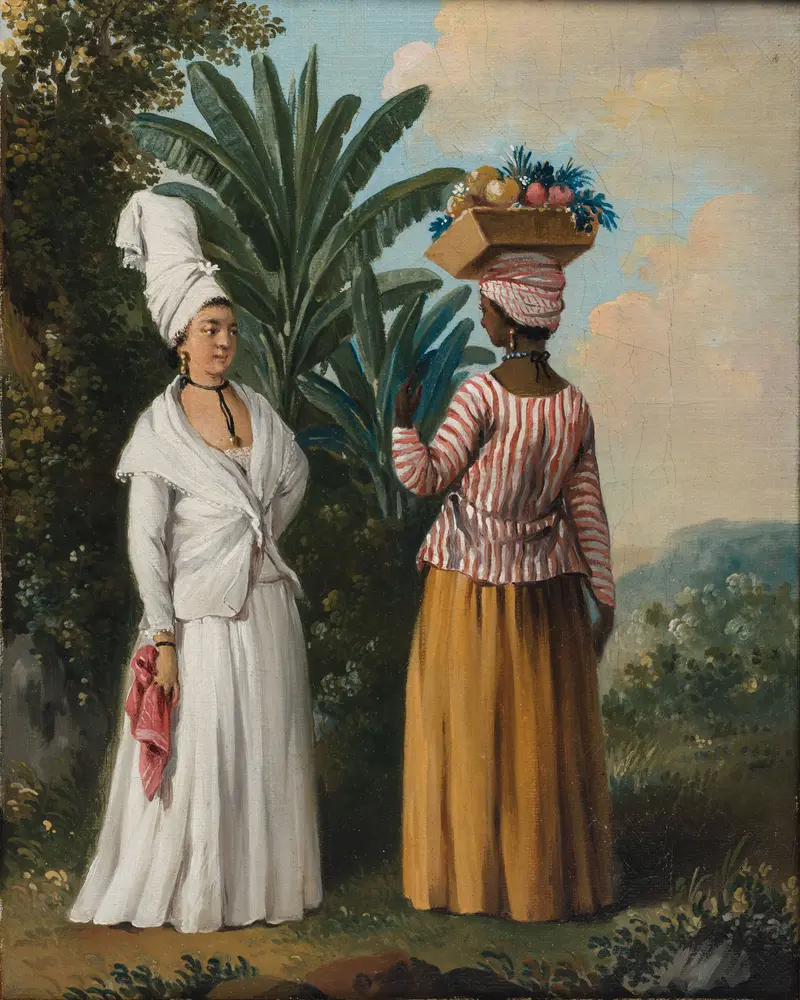
Two Women of Color, Dominica [French Mulatress of Dominica and a Negro Woman in their Proper Dress]
Agostino Brunias

Purchasing Fruit [A French Mulatress Purchasing Fruit from a Negro Wench]
Agostino Brunias

Women of Color Bathing and a Voyeur [Mulatresses and Negro Woman Bathing]
Agostino Brunias
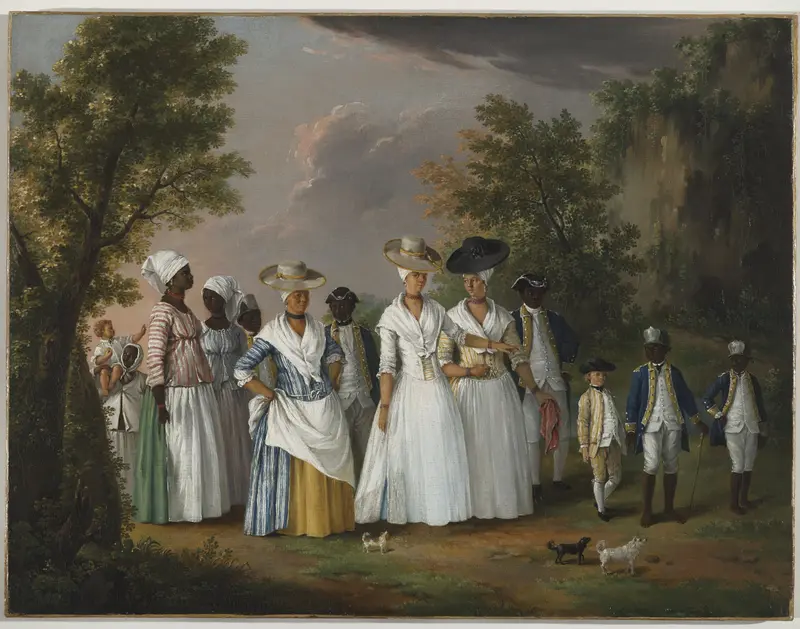
Free Women of Color with their Children and Servants in a Landscape
Agostino Brunias
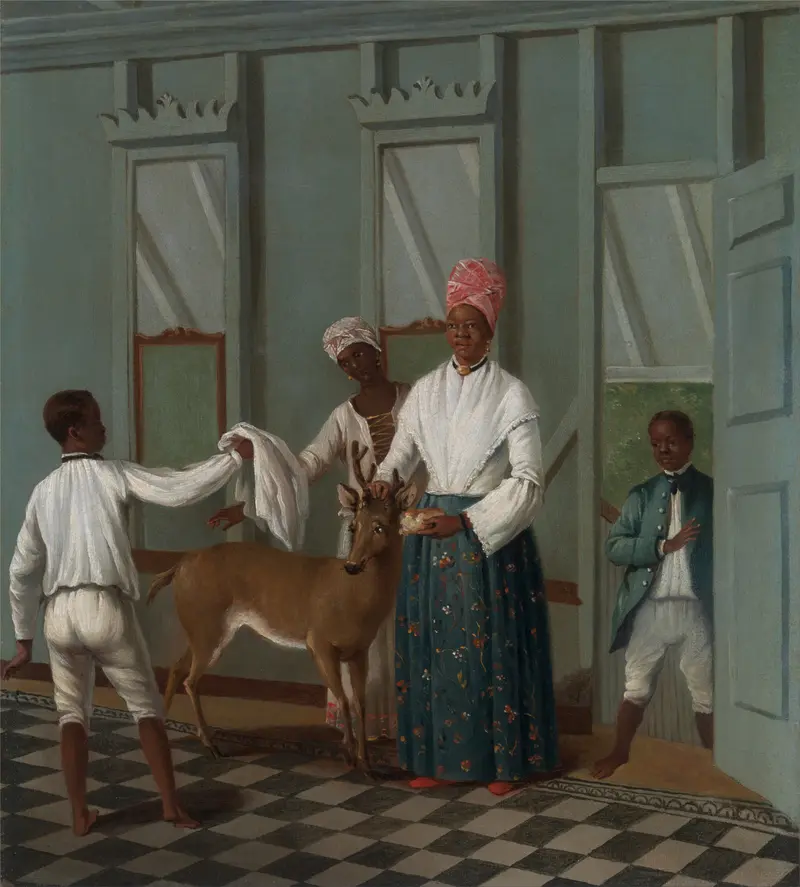
Servants Washing a Deer
Agostino Brunias
More Genre Scene Art

Banquet of the Officers of the St George Civic Guard
Frans Hals

Rembrandt and Saskia in the Scene of the Prodigal Son
Rembrandt van Rijn

Bal du moulin de la Galette
Pierre-Auguste Renoir

Quadrille at the Moulin Rouge
Henri de Toulouse-Lautrec

A Burial at Ornans
Gustave Courbet

When Will You Marry?
Paul Gauguin