
When The Trout Rise — History & Facts
Who listens when art speaks of silence? In When The Trout Rise, a tranquil moment unfurls, inviting us to contemplate the longing that resides in stillness. Look to the left at the gentle ripples of the water, where subtle brushstrokes create a shimmering surface. The artist employs a palette of soft blues and greens, reflecting an early morning light that casts a serene glow over the scene. Notice how the distant trees, rendered in muted hues, frame the composition, drawing your eye toward the central focus—a solitary angler poised in quiet anticipation.
His posture, a delicate balance of tension and ease, speaks volumes about the connection between man and nature. Deeper insights emerge in the contrast between the calm water's surface and the unseen life within. The act of fishing becomes a metaphor for yearning, illustrating the delicate relationship between desire and patience. The almost palpable silence invites introspection, suggesting that what is unsaid often carries the heaviest weight.
In this moment, the air is thick with unfulfilled hopes as the trout rise just beneath the surface, symbolizing elusive dreams. Alfred de Bréanski painted this piece during a period of personal exploration, likely in the late 19th or early 20th century. Working primarily in England, he immersed himself in the natural beauty surrounding him, reflecting the era's fascination with landscapes. This work captures a contemplative spirit, characteristic of his body of work, as he sought to evoke emotion through the serene and often overlooked moments of life.
More Artworks by Alfred de Bréanski
Browse all →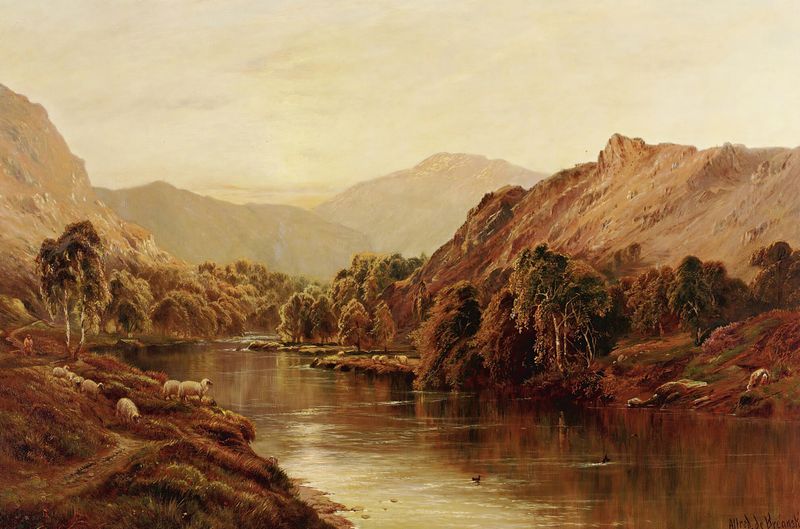
The Dee Near Balmoral
Alfred de Bréanski
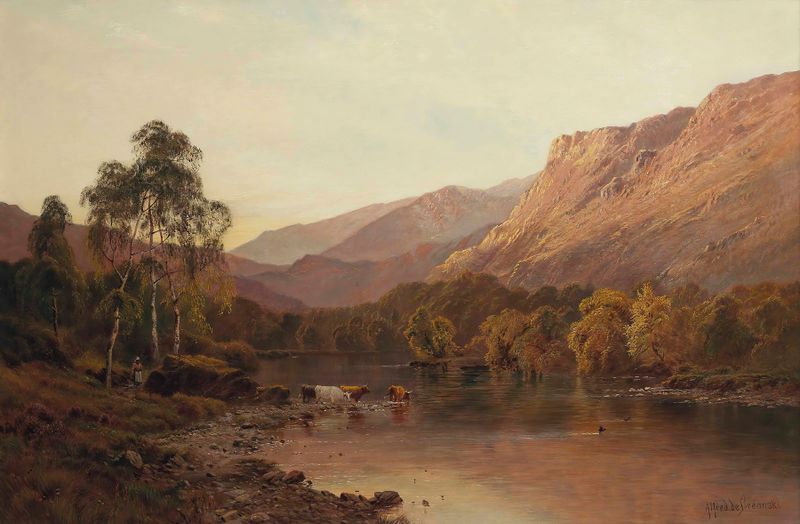
The Valley Of Borrowdale
Alfred de Bréanski
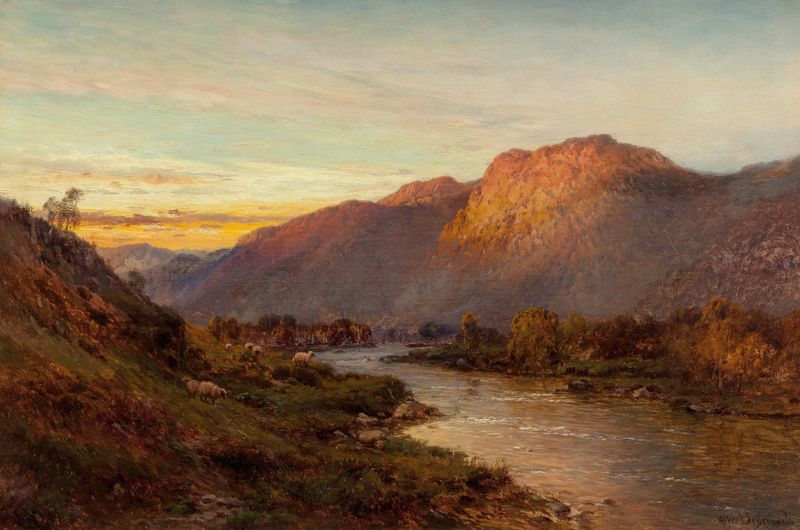
Below the Falls of Glenfinlas, Scotland
Alfred de Bréanski
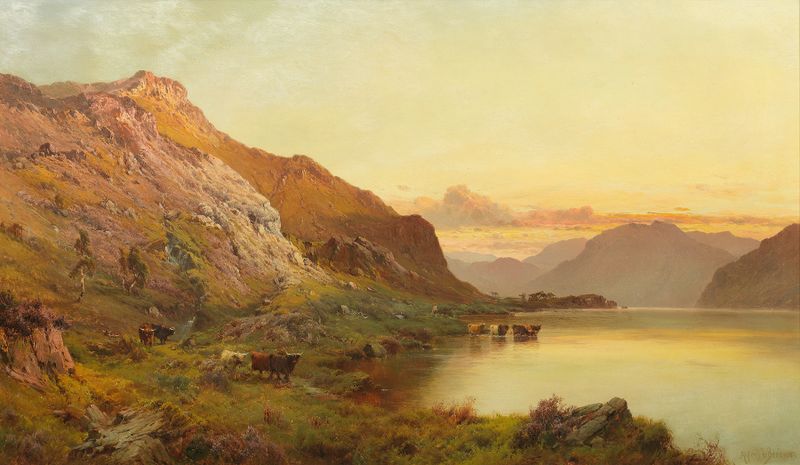
At the foot of Ben Nevis, N.B.
Alfred de Bréanski
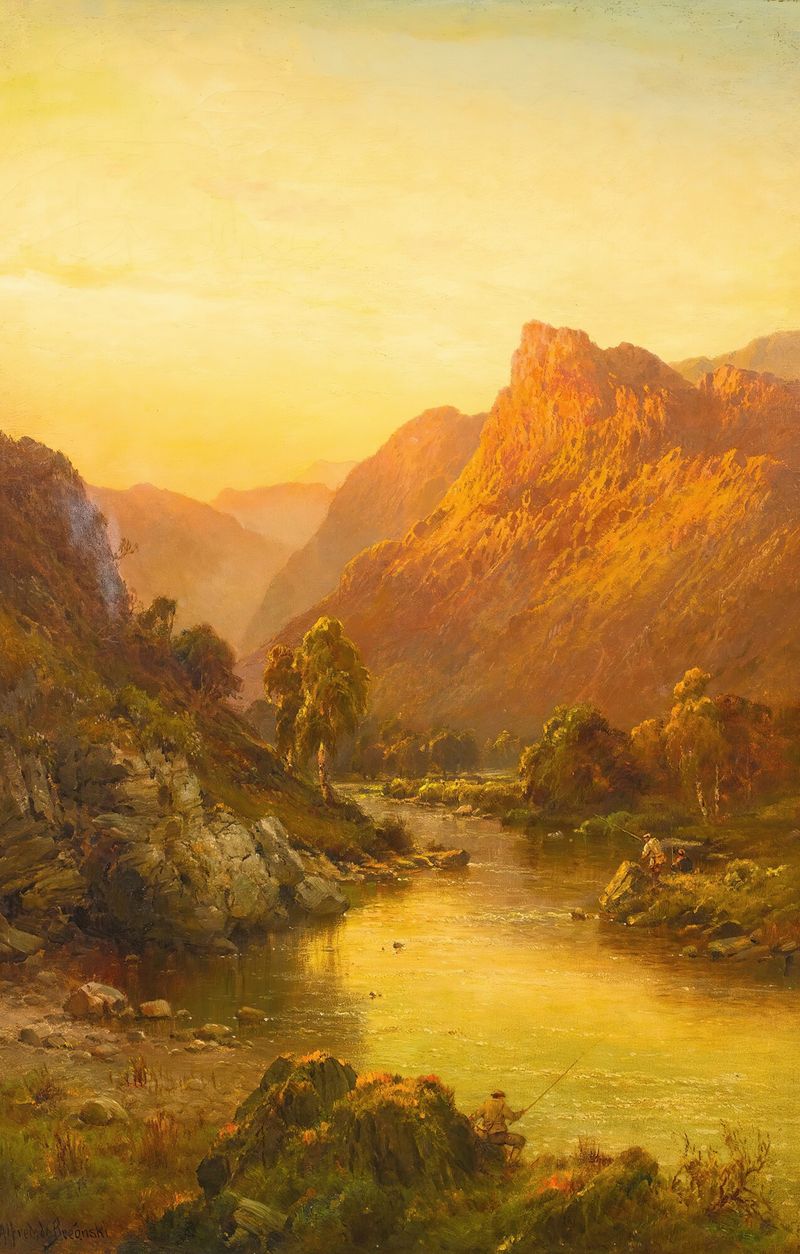
The Vale of Ben-Lawers
Alfred de Bréanski

Ben Lomond
Alfred de Bréanski
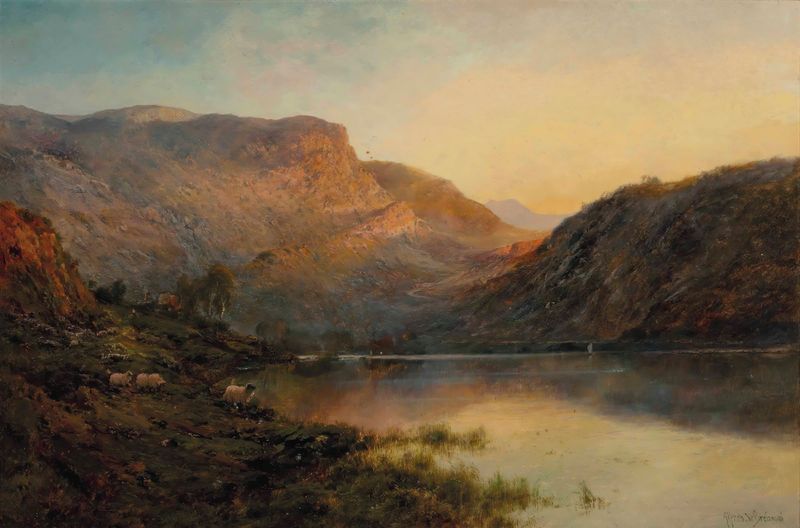
The Evening Glow, Vale Of Eagle, Loch Lomond
Alfred de Bréanski
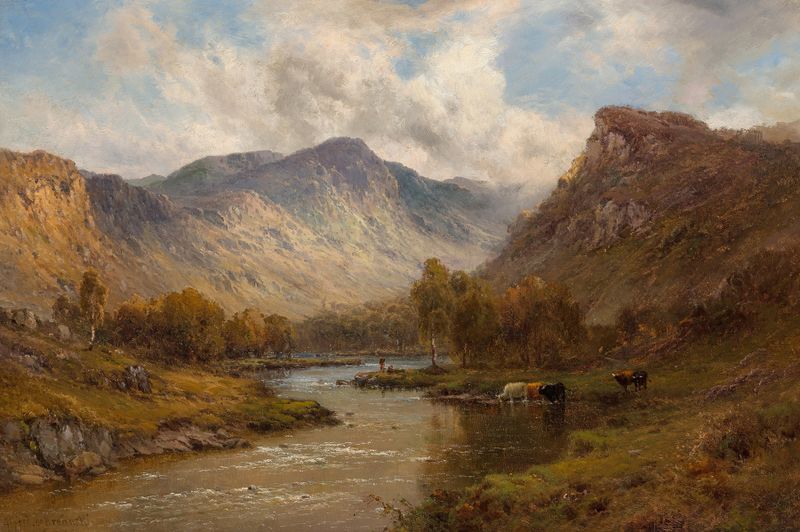
The Tay near Dunkeld, Scotland
Alfred de Bréanski

The Dee at Balmoral
Alfred de Bréanski

Highland landscape
Alfred de Bréanski





