
White House – Pamunkey River — History & Facts
Fear often lingers beneath the surface of serene landscapes, revealing the deeper anxieties of human existence. Look closely at the foreground, where the gentle flow of the Pamunkey River merges with the verdant banks. Notice how the artist employs soft greens and browns to create a sense of tranquility, yet the subtle ripples in the water suggest an unsettling undercurrent. The delicate brushwork captures the natural beauty of the scene while hinting at the turbulence that lurks just beyond the viewer's perception. Beneath its idyllic façade, this painting speaks to a complex juxtaposition—nature's peace contrasting with a palpable tension.
The quiet, unoccupied white house stands as a ghostly reminder of absence or loss, while the looming clouds overhead cast an ominous shadow, evoking feelings of foreboding. Each element in this landscape participates in a dialogue about fragility and fear, compelling the viewer to ponder what has transpired in this serene yet haunting setting. In 1864, William McIlvaine painted this work during a tumultuous period in American history, marked by the Civil War. Living in Virginia, he found himself amidst conflict and strife, which influenced his artistic vision.
The landscape reflects not only his personal experiences but also the broader societal fears of displacement and uncertainty that permeated the time.
More Artworks by William McIlvaine
Browse all →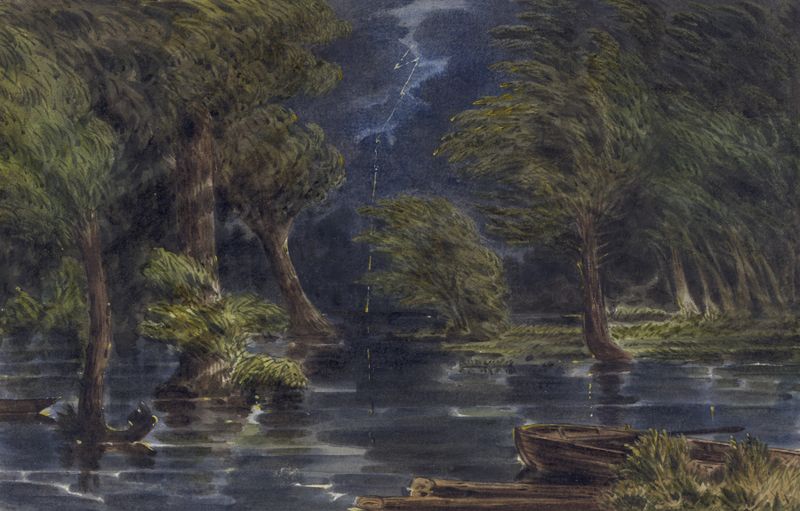
The Chickahominy Swamp
William McIlvaine
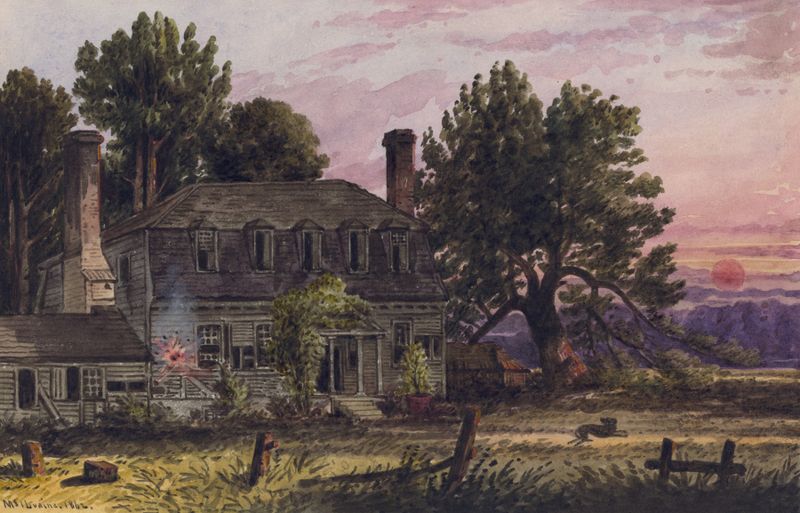
The Moore House near Yorktown, Va. (Front)
William McIlvaine
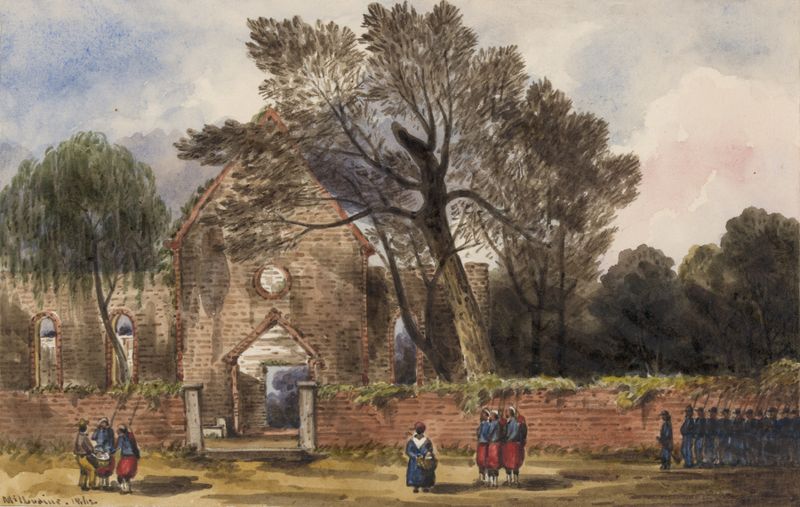
Ruins of church at Hampton, Va.
William McIlvaine

The Moore House near Yorktown, Va. (Rear)
William McIlvaine
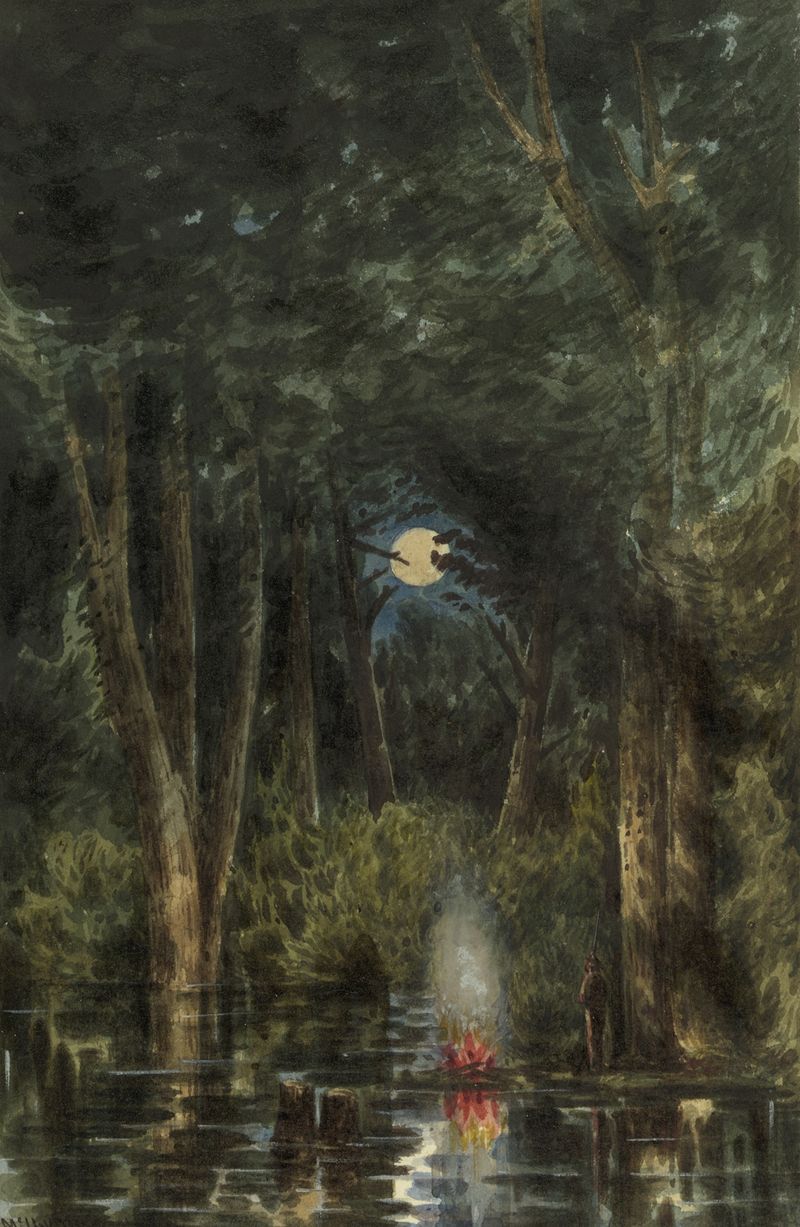
View in the Chickahominy Swamp
William McIlvaine
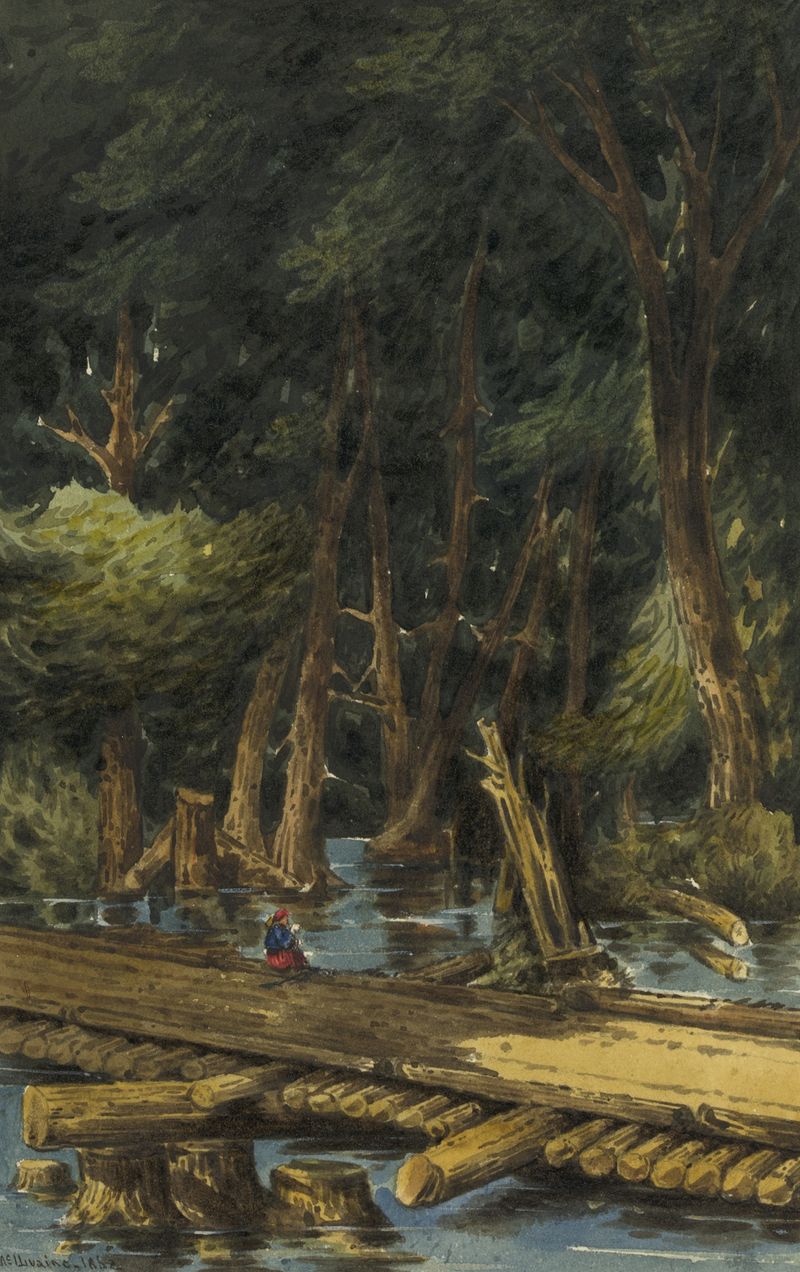
The Chickahominy – Alexanders Bridge
William McIlvaine
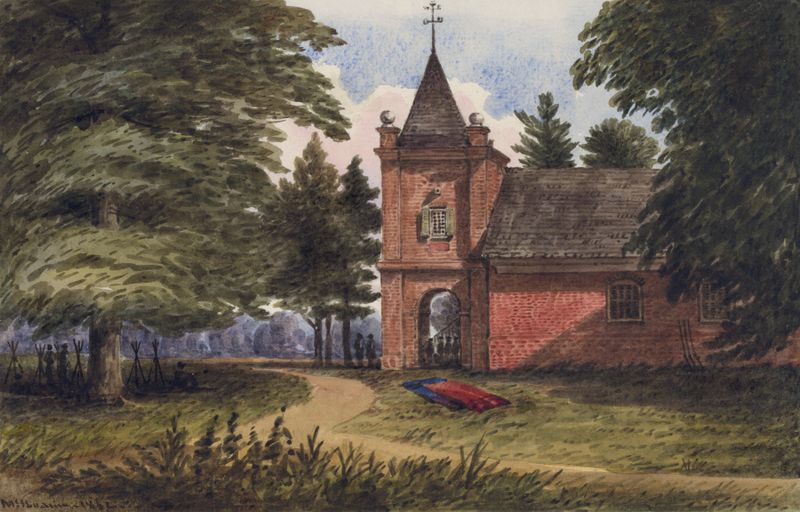
St. Peters Church, near White House, Va.
William McIlvaine

St. Peter’s Church interior
William McIlvaine
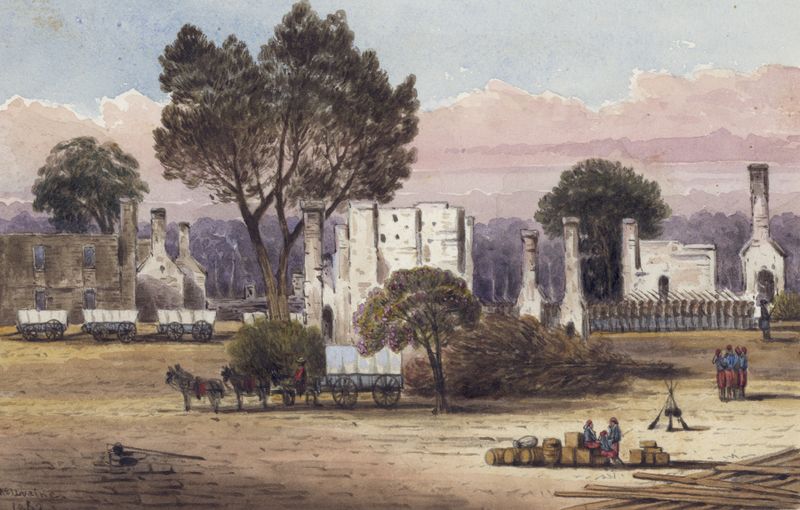
The ruins of Hampton, Va.
William McIlvaine

The Chickahominy – Sumners Upper Bridge
William McIlvaine





