
Wide River Landscape with Castle and Village — History & Facts
A hush settles over the wide river as the last light of day stretches across the water, catching the sails of distant boats and the backs of grazing cattle. The eye is drawn first to the luminous sky—an expanse of gold and blue-gray that dominates the scene, its shifting clouds hinting at the changing weather so familiar to the Dutch lowlands. Along the left bank, a castle rises above a cluster of village rooftops, its silhouette softened by trees and the gentle haze of evening.
Figures linger at the water’s edge, some walking, others seated, all dwarfed by the grandeur of land and sky. Every detail, from the reflections in the river to the careful placement of boats, seems chosen to invite the viewer into a moment of quiet observation. Painted in 1670 by Aert van der Neer, this landscape belongs to a flourishing Dutch tradition that transformed everyday scenery into subjects worthy of contemplation and pride. In the seventeenth century, such works were prized by a new class of collectors—merchants, shipowners, and townsfolk who saw their own world reflected in these serene vistas.
The low horizon and expansive sky are hallmarks of the period, signaling both the painter’s technical skill and the era’s fascination with nature’s moods. While history has kept few traces of this particular canvas beyond its presence in a modern collection, it stands as a testament to a time when the Dutch landscape, with its rivers, castles, and bustling waterways, became a source of national identity. Let your gaze drift across the water, and the world of the painting opens up, as vivid now as it was centuries ago.
More Artworks by Aert van der Neer

A Moonlit River Landscape With Figures Standing By A Gate, A Village Beyond
Aert van der Neer
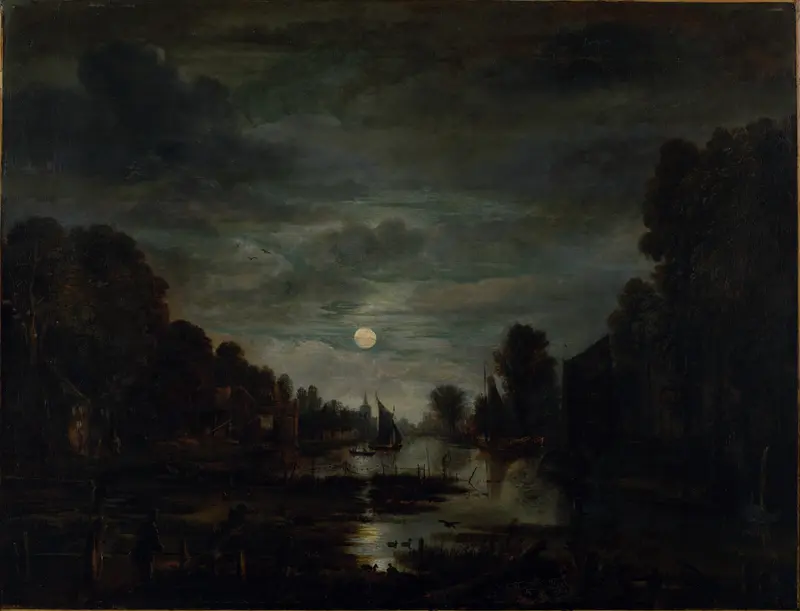
River Landscape in Moonlight
Aert van der Neer
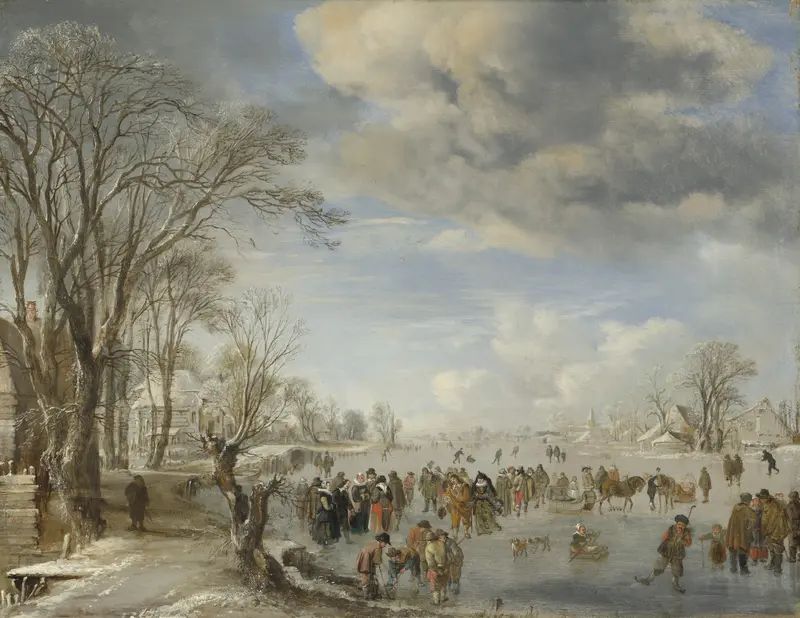
Winter in Holland – Skating Scene
Aert van der Neer

River Landscape
Aert van der Neer
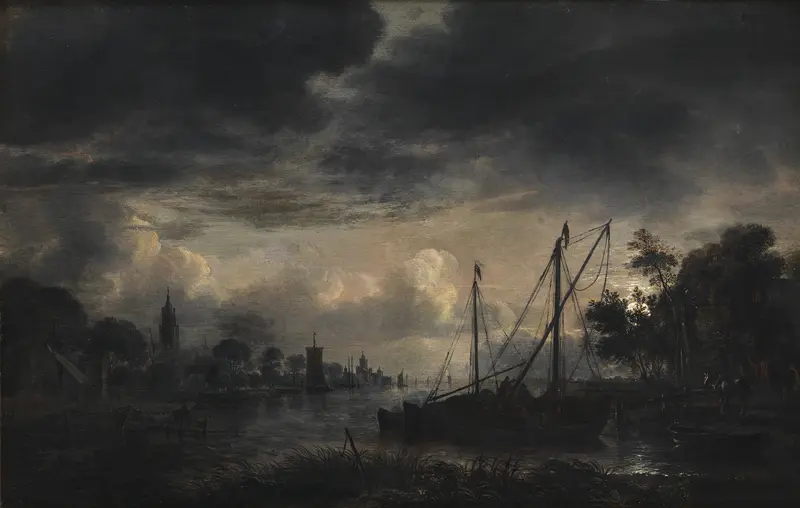
River Landscape in Moonlight
Aert van der Neer
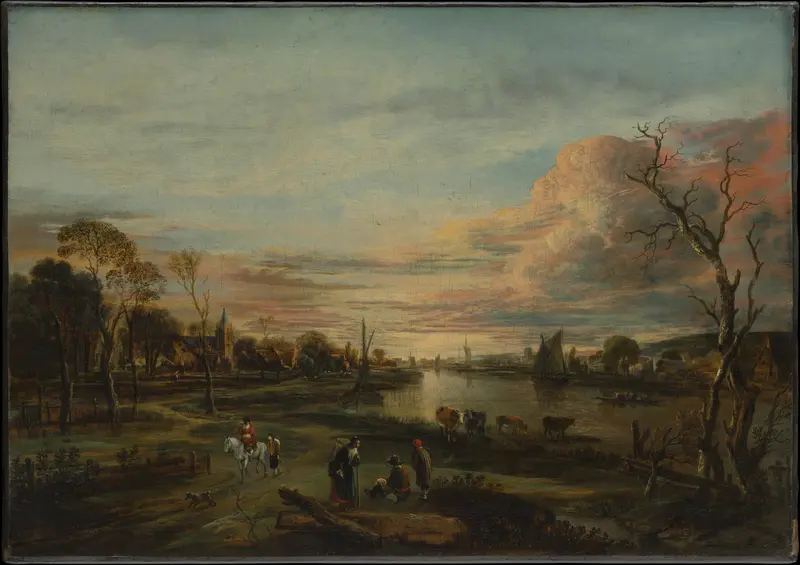
Landscape at Sunset
Aert van der Neer
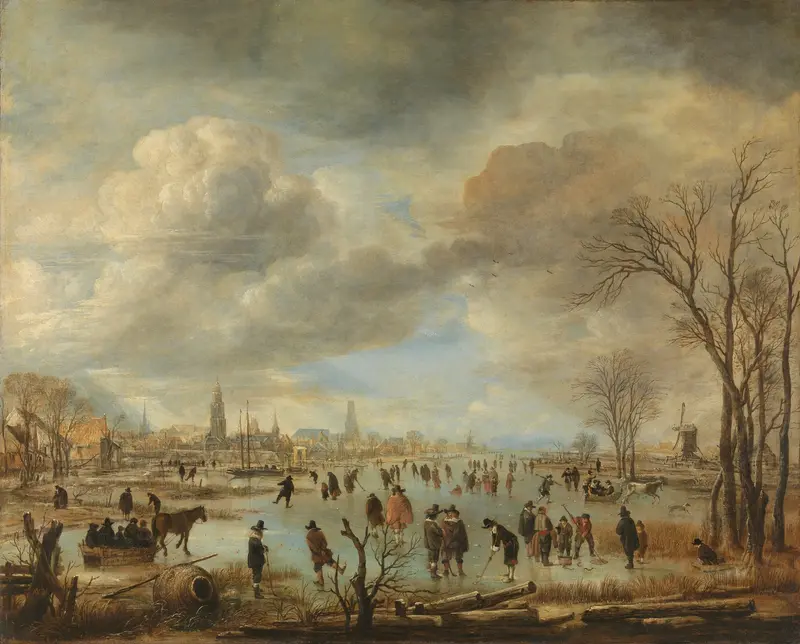
Winter Landscape near a Town with Kolf Players and Horse-Drawn Sleighs
Aert van der Neer

Winter Landscape with Skaters on a Frozen River
Aert van der Neer
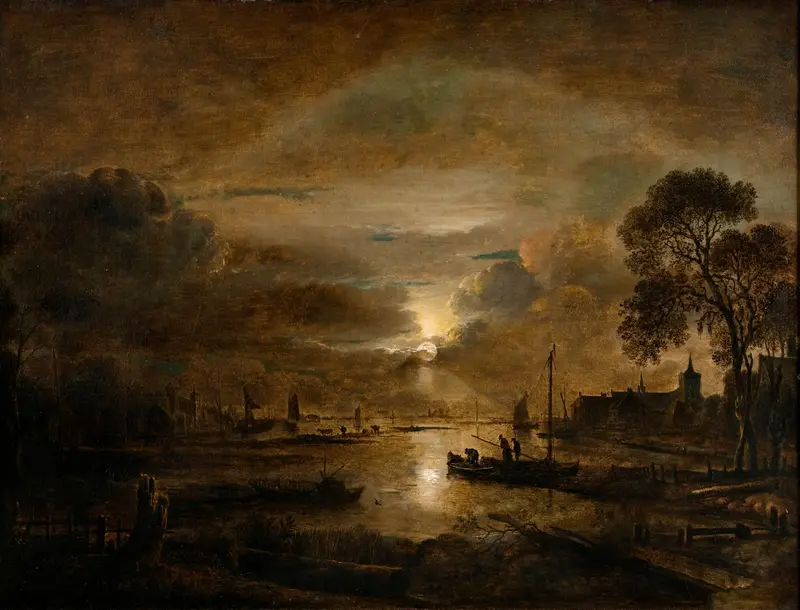
Moonlight at a Dutch River
Aert van der Neer
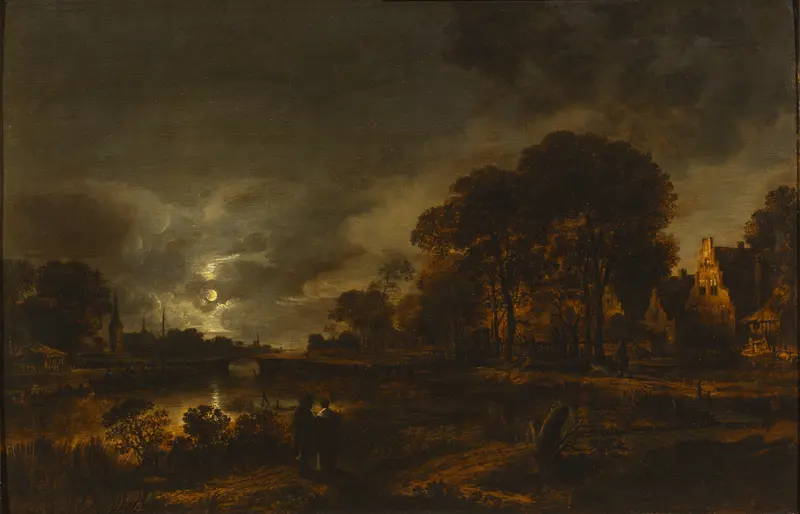
Moonlight Landscape
Aert van der Neer
More Landscape Art

The Starry Night
Vincent van Gogh

View of Delft
Johannes Vermeer

Water Lilies
Claude Monet

The Grand Canal, Venice, looking north-west from the Ca' Corner to the Ca' Contarini degli Scrigni, with the campanile of Santa Maria della Carità
Canaletto

Windsor Castle
Canaletto

The Grand Canal looking North-East from the Palazzo Dolfin-Manin to the Rialto Bridge
Canaletto