
Windsor Castle from Datchet Lane on a rejoicing night, 1768 — History & Facts
Who listens when art speaks of silence? In the gentle hush of twilight, where shadows intertwine with the lingering light, grief finds its voice amidst the celebration. Look to the left at the imposing silhouette of Windsor Castle, framed against a deepening azure sky. The stone facade absorbs the fading light, while the reflections on the water flicker as if the very essence of the night dances across its surface. The tranquil colors—blues, purples, and flickers of warmth—contrast sharply with the serene yet somber presence of the castle, inviting the viewer to explore the duality of joy and melancholy in this moment. Within the scene, notice the delicate balance between revelry and solitude.
The small figures in the foreground, perhaps engaged in laughter, contrast with the weight of the castle's grandeur, which looms silently behind them. This juxtaposition evokes an emotional tension, suggesting that even in jubilant times, an undercurrent of loss may lurk, reminding us that joy is often tinged with the shadows of grief. In 1768, Paul Sandby painted this work during a pivotal moment in his life, as he emerged as a prominent figure in the landscape tradition of British art. The world around him was shifting; the institution of the monarchy was undergoing scrutiny, and the Romantic movement was just stirring.
This piece reflects both a personal celebration of the royal landscape and a broader commentary on the complexities of human emotion in a rapidly changing society.
More Artworks by Paul Sandby
Browse all →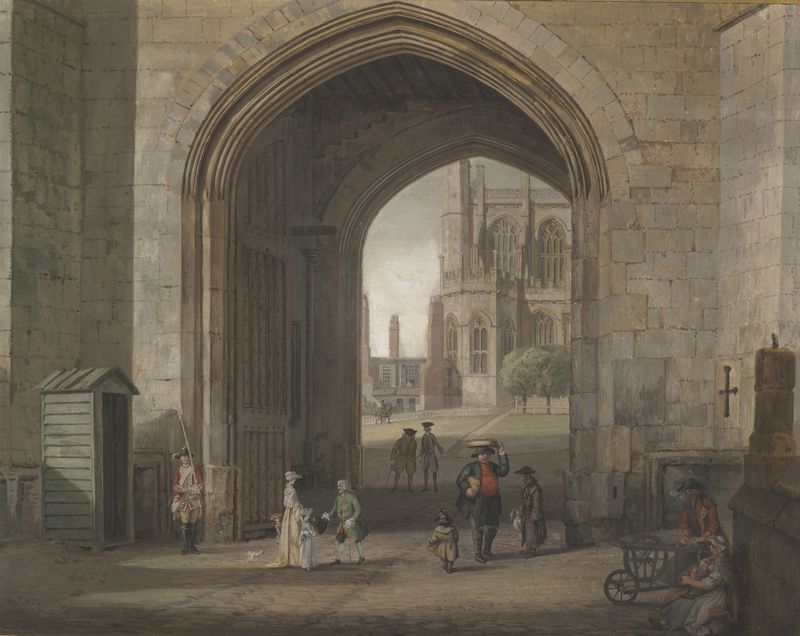
The Tower Gate at Windsor Castle
Paul Sandby

A Distant View of Maidstone, from Lower Bell Inn, Boxley Hill
Paul Sandby
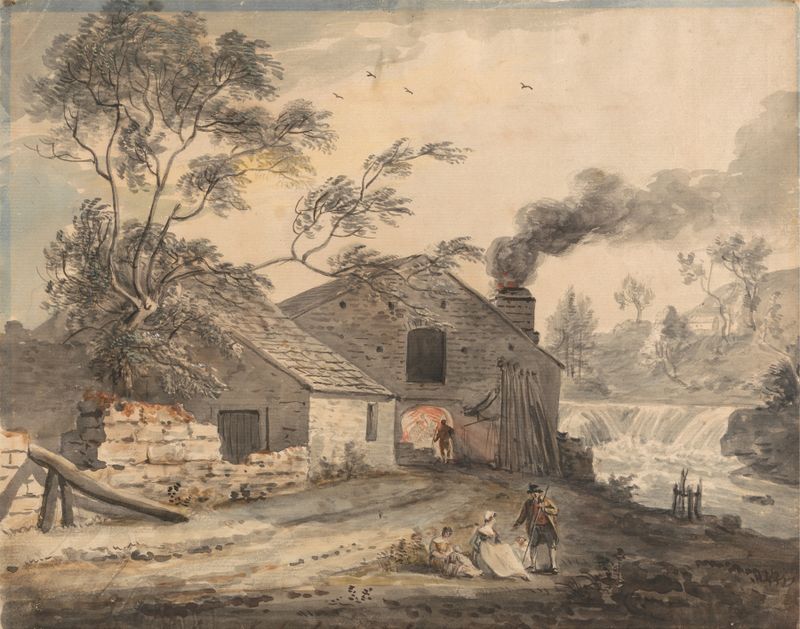
Iron Forge on the River Kent, Westmorland
Paul Sandby
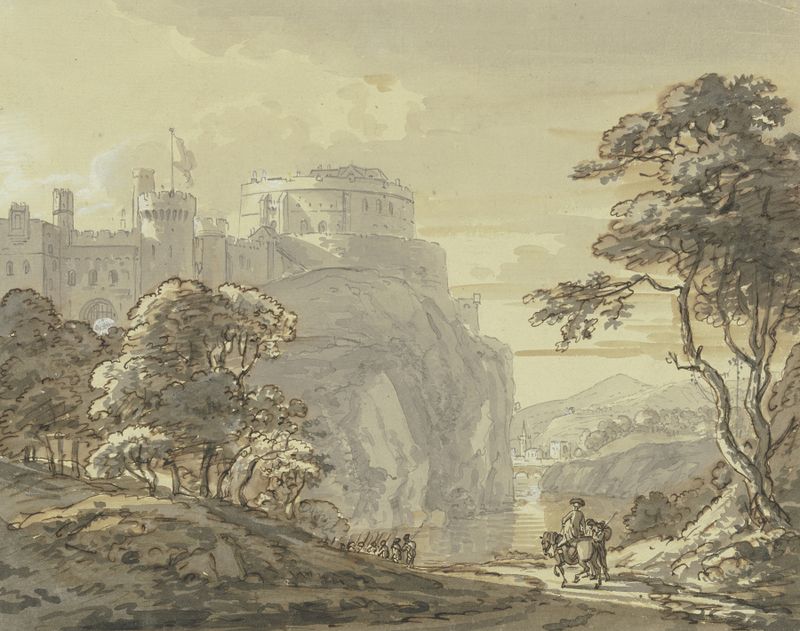
View of Windsor Castle
Paul Sandby

Hackwood Park, Hampshire
Paul Sandby

Roslin Castle, Midlothian
Paul Sandby
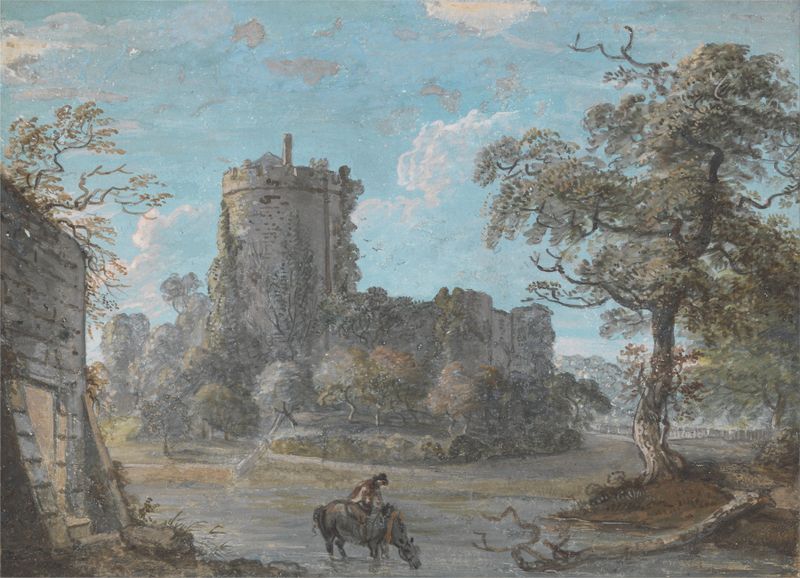
The Entrance to Chepstow Castle
Paul Sandby
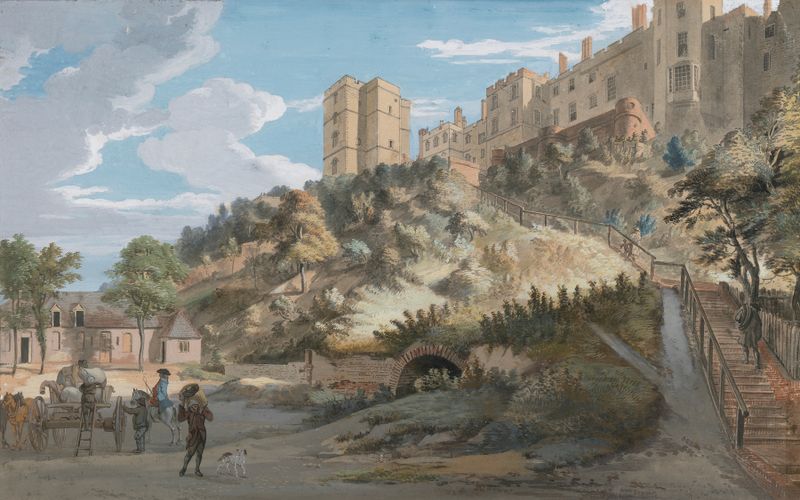
The Hundred Steps and Winchester Tower, Windsor Castle, Berkshire
Paul Sandby

Brook End, Essex
Paul Sandby
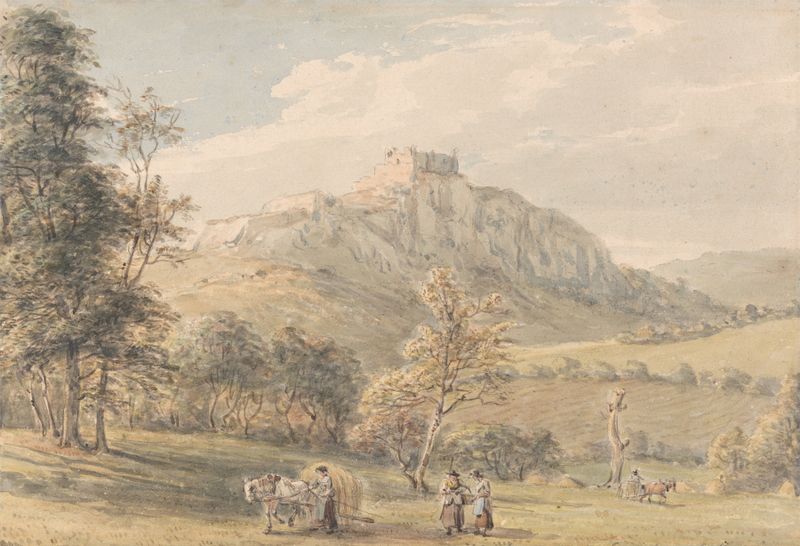
Carreg Cennen Castle
Paul Sandby





