
Winter at the Sognefjord — History & Facts
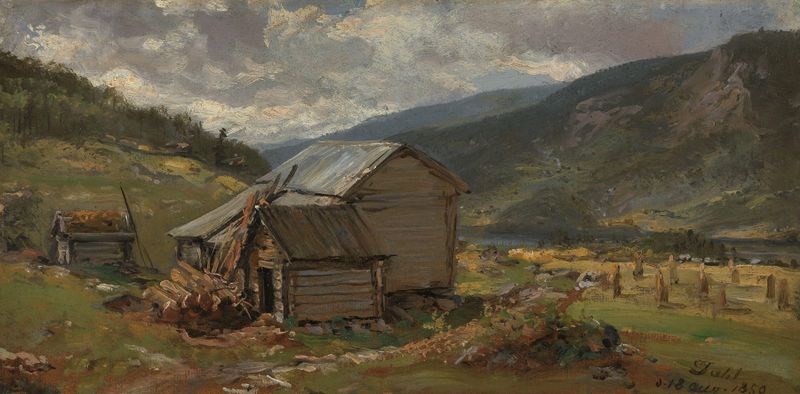
Is this a mirror — or a memory? The landscape unfolds before us, a serene yet haunting reflection of nature’s quiet majesty, captured in a moment that feels both fleeting and eternal. Look to the right at the towering cliffs, their jagged edges softened by a blanket of snow, while the icy waters of the Sognefjord lie still, like glass reflecting the cloud-dappled sky. Notice how the cool blues and whites dominate the palette, creating an atmosphere of chill and contemplation, yet hints of warmth emerge where the sun breaks through, illuminating the distant horizon. The meticulous brushwork guides the viewer's gaze through the layered textures of snow and rock, allowing a sense of depth that pulls us into the scene. Beneath this tranquil surface, emotional contrasts pulse quietly—between the harshness of nature and the serene beauty it offers, between isolation and the feeling of connectedness to the vast world.
The shadow cast by the cliffs suggests an unseen presence, a reminder of the weight of history and memory that looms over the landscape. This duality invites introspection, prompting us to consider the passage of time and our place within it. In 1827, while residing in Dresden, the artist created this piece during a time of profound exploration in Romanticism, a movement that sought to bridge humanity with the sublime forces of nature. Dahl aimed to evoke emotions through his landscapes, often reflecting the grandeur of Norway’s terrain as it echoed the turbulent sentiments of the era.
At this point in his career, he was gaining recognition for his ability to transform the ordinary into something extraordinary, able to capture the soul of the environment around him.
More Artworks by Johan Christian Dahl
Browse all →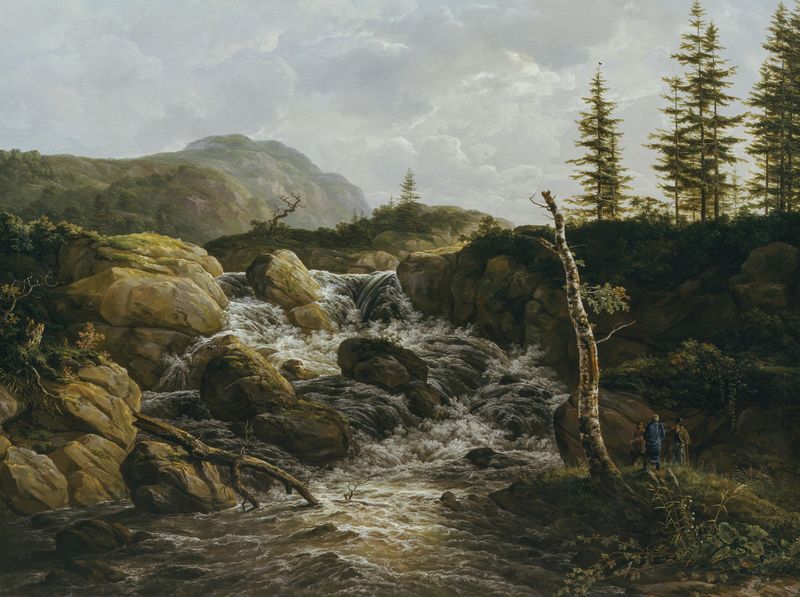
Mountainous Landscape with a Waterfall, Norway
Johan Christian Dahl
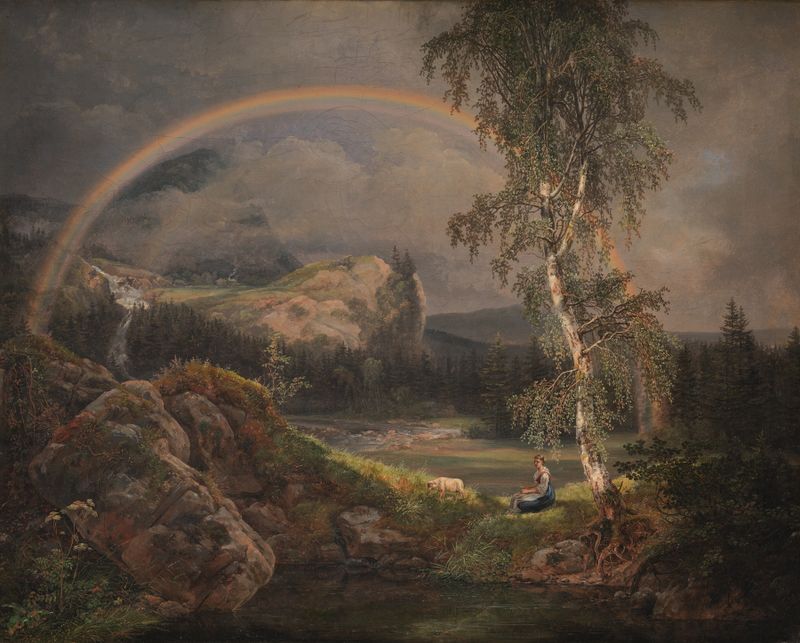
Norwegian Landscape with a Rainbow
Johan Christian Dahl
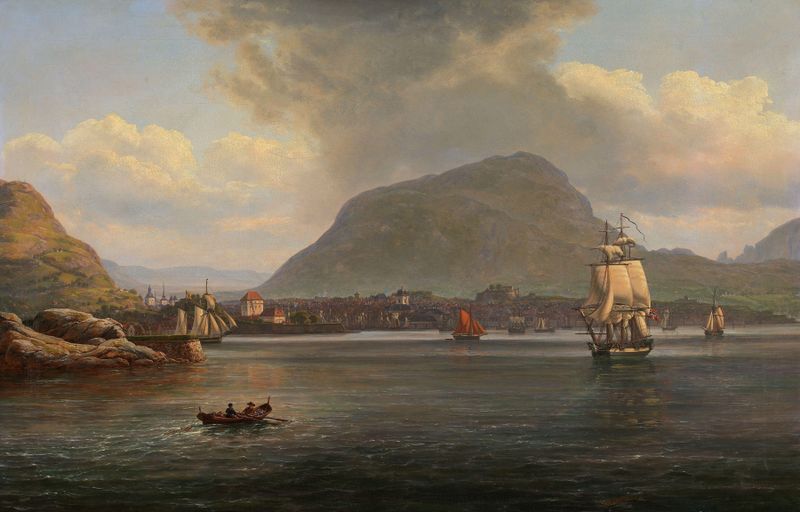
Bergen seen from the northern Inlet
Johan Christian Dahl
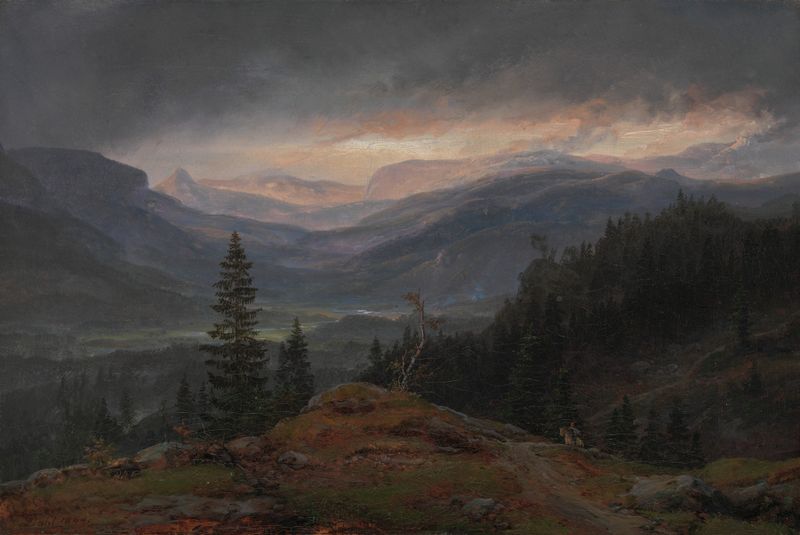
View over Hallingdal
Johan Christian Dahl
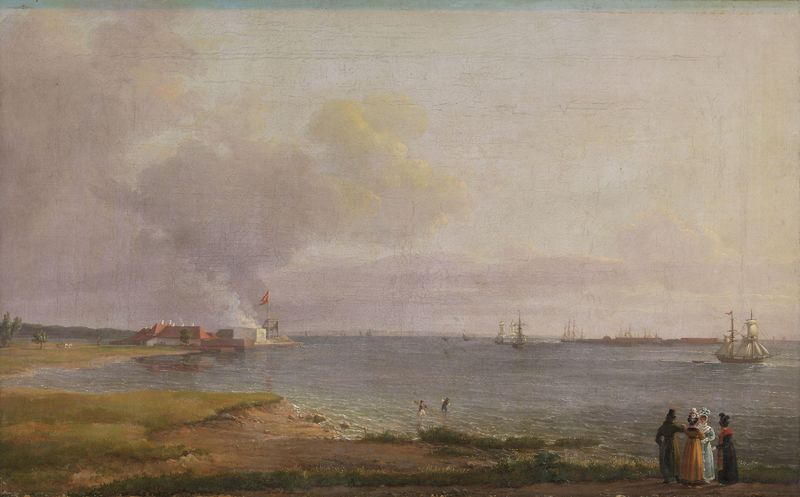
View over Øresund near the Lime Works
Johan Christian Dahl
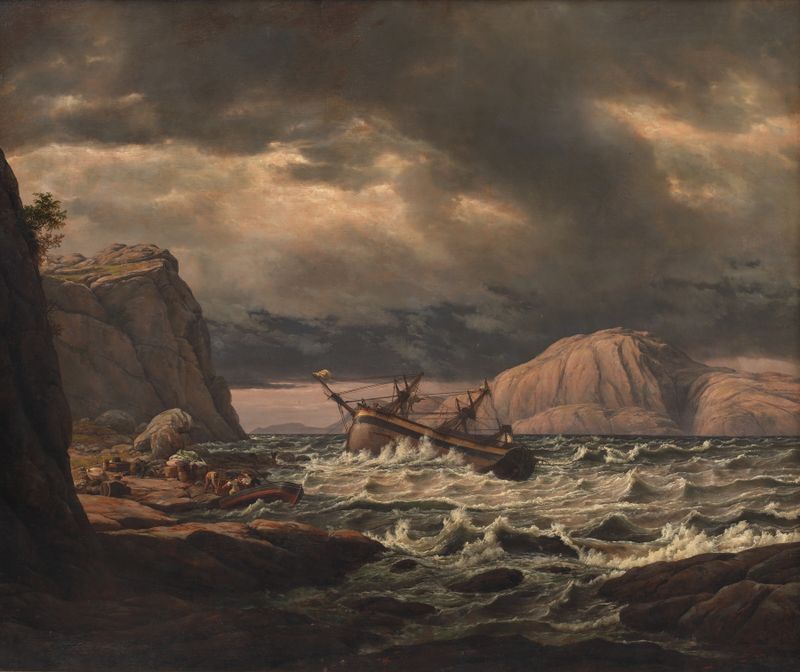
A Shipwreck on the Coast of Norway
Johan Christian Dahl
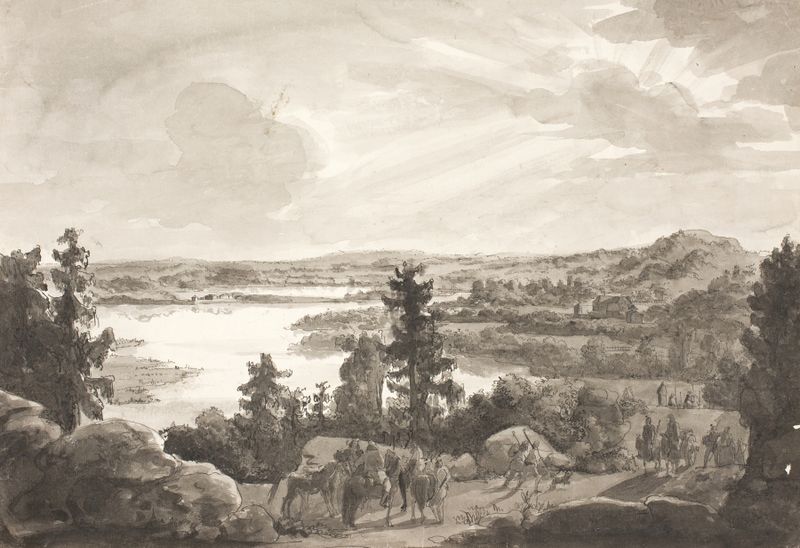
View of a Lake, Norway
Johan Christian Dahl
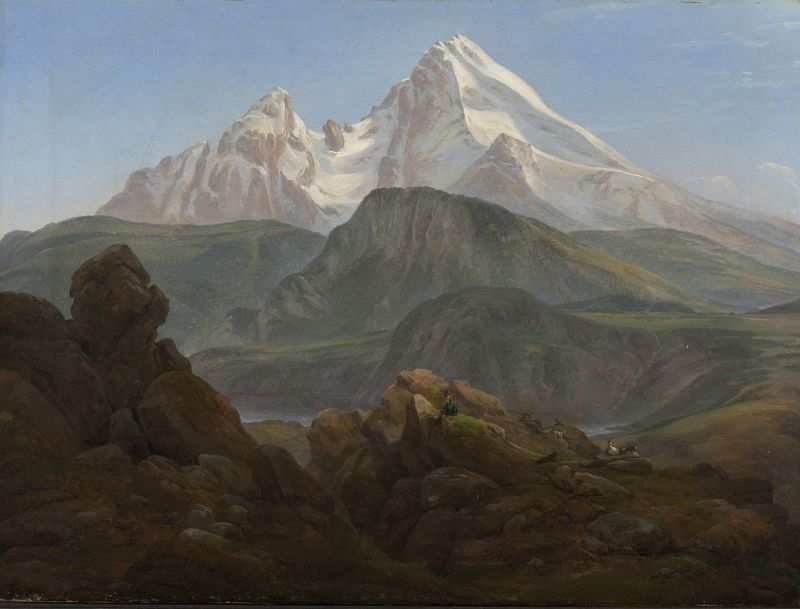
The Watzmann
Johan Christian Dahl
View of Hjelle in Valdres
Johan Christian Dahl

View At Skjolden In Lyster
Johan Christian Dahl





