
Winter Landscape — History & Facts
Where does light end, and longing begin? In the embrace of Winter Landscape, a sublime dialogue unfolds between nature's chill and a warmth that resonates deep within the soul. Look to the left at the gentle rise of snow-covered hills, where the soft blues and whites mingle to evoke a serene atmosphere. The delicate brushstrokes depict trees, their bare branches tracing intricate patterns against the sky, while the horizon shifts subtly from icy tones to the pale blush of dawn. Notice how the light falls upon the untouched snow, its shimmering quality capturing the ethereal essence of a winter's day. Yet, beneath this tranquil surface lies an undercurrent of emotional tension.
The stillness of the landscape suggests isolation, perhaps a fleeting moment of introspection amidst nature's vastness. The stark contrast between the luminous white snow and the dark silhouettes of the trees speaks of solitude, while the faint hint of sunlight breaking through evokes a sense of hope — a divinity that suggests life even in the coldest of seasons. In 1915, during a turbulent period marked by World War I, the artist was residing in Poland, where the serene beauty of his homeland became a refuge. As modernism began to take hold in the artistic community, he sought solace in traditional landscapes that encapsulated both the beauty and melancholy of nature.
This work reflects not only his personal journey but also a collective yearning for peace during chaotic times.
More Artworks by Julian Falat
Browse all →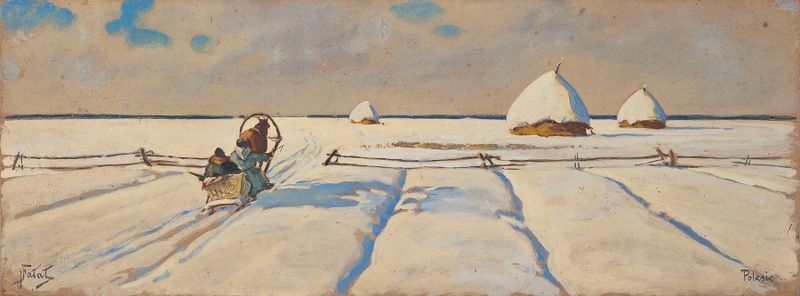
Sleigh in a snowy field – Polesia
Julian Falat
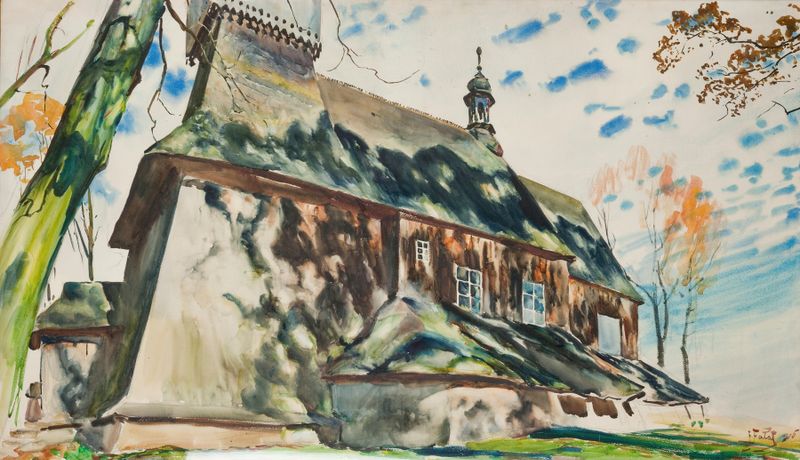
Church in Osiek
Julian Falat
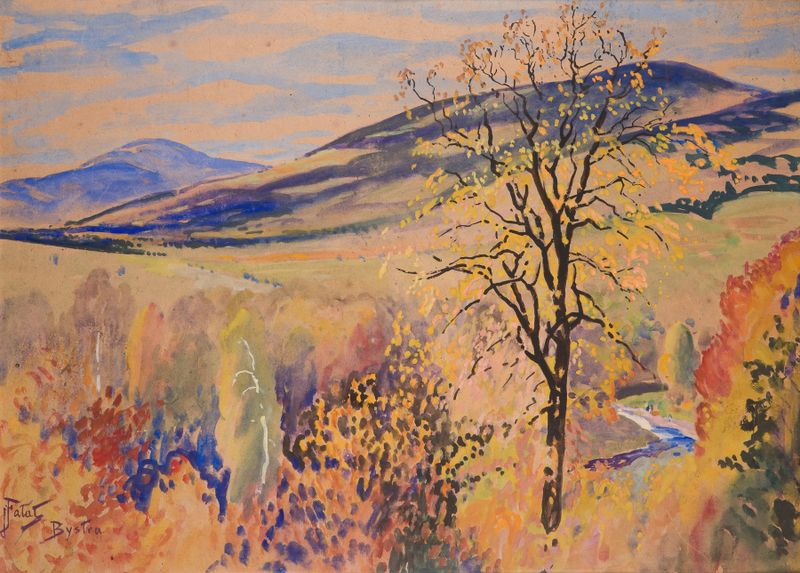
Pejzaż jesienny z Bystrej
Julian Falat
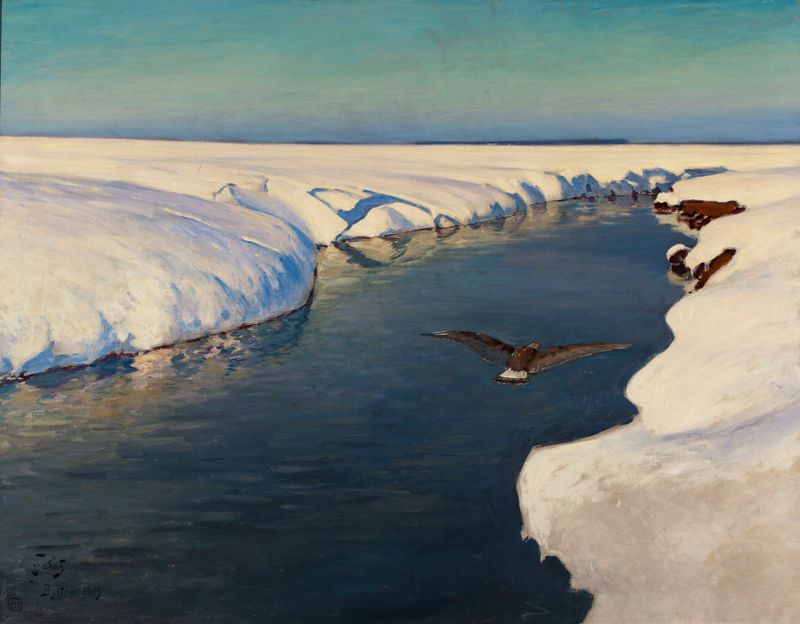
Winter landscape with a river and a bird
Julian Falat
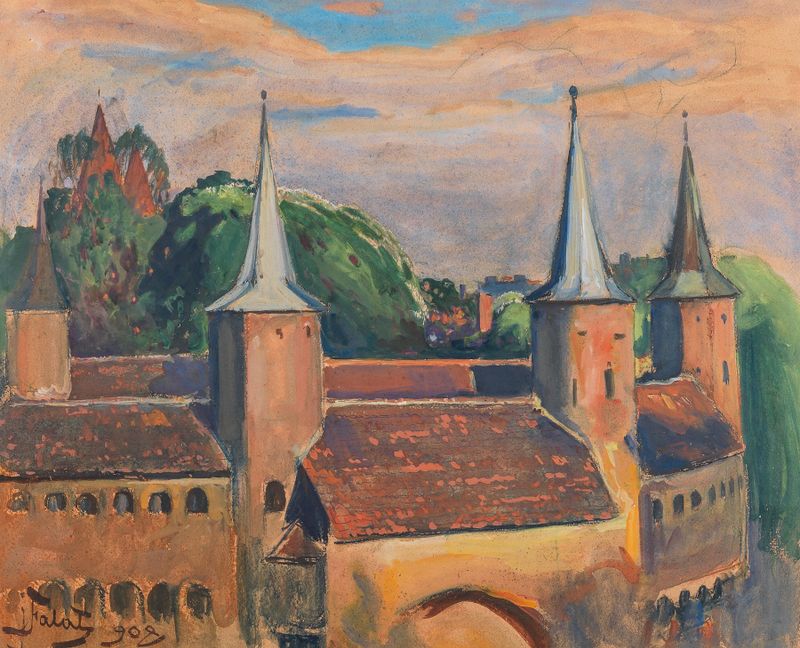
The Kraków Barbican
Julian Falat
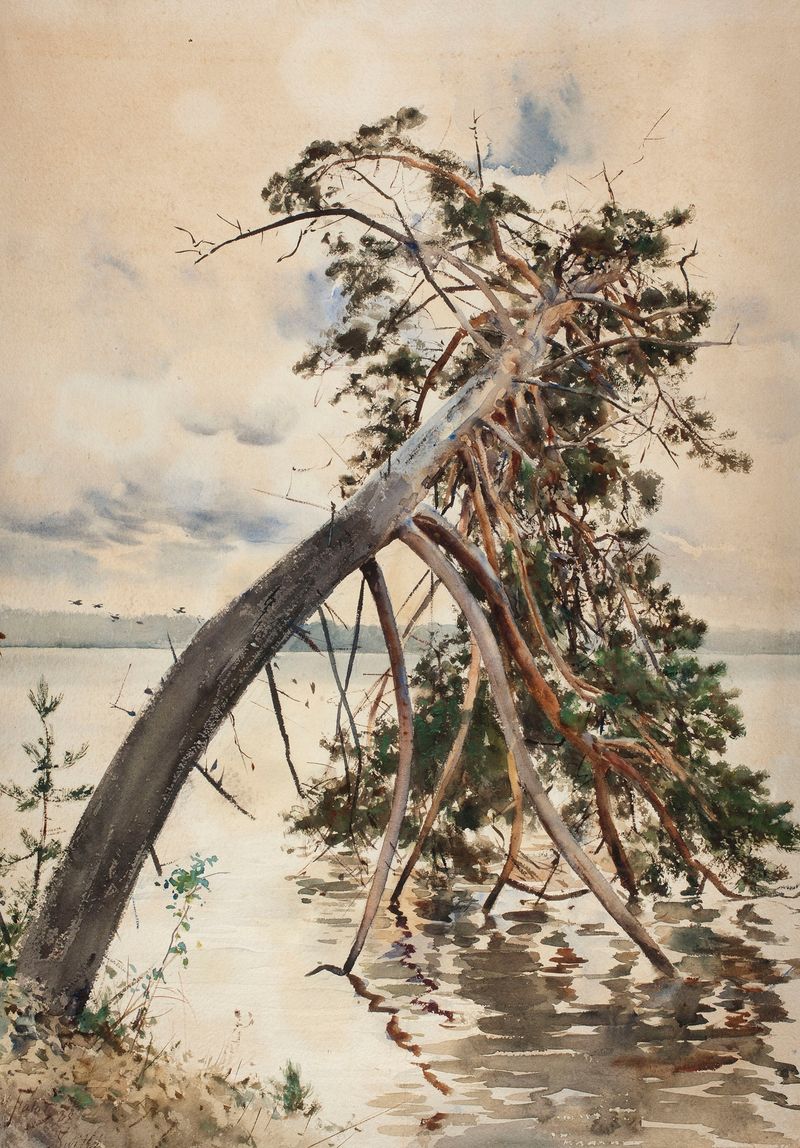
Świteź
Julian Falat
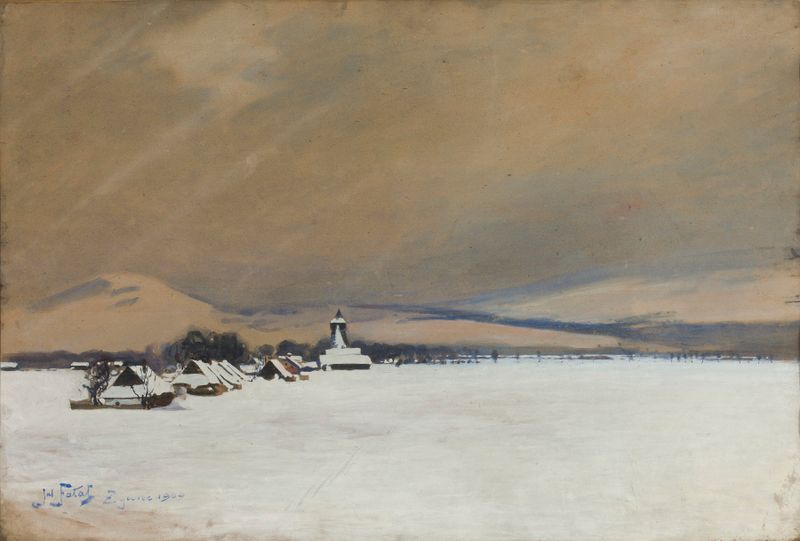
Winter landscape from Żywiec
Julian Falat
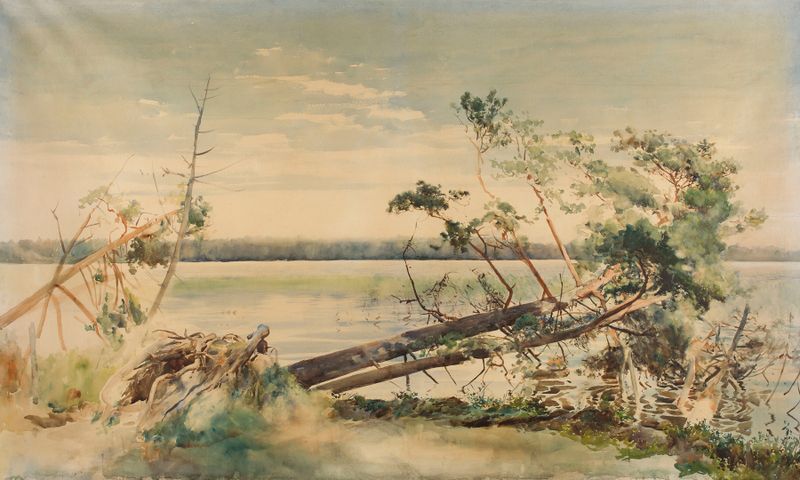
Świteź
Julian Falat
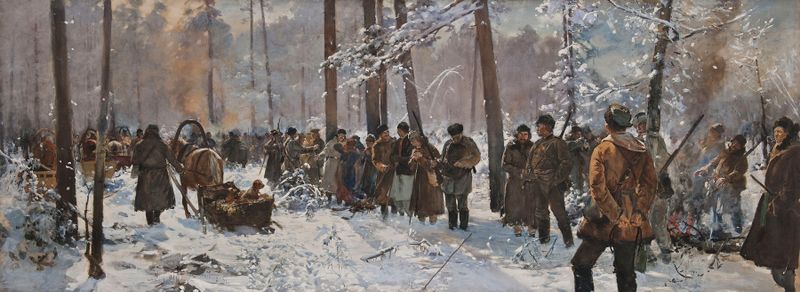
Battue at a hunt in Nieśwież
Julian Falat
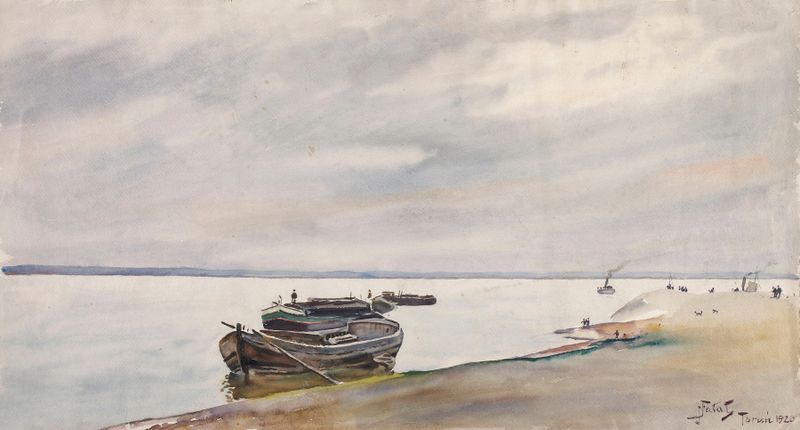
Boats and steamship on the Vistula near Toruń
Julian Falat





