
Winter landscape at sunset — History & Facts
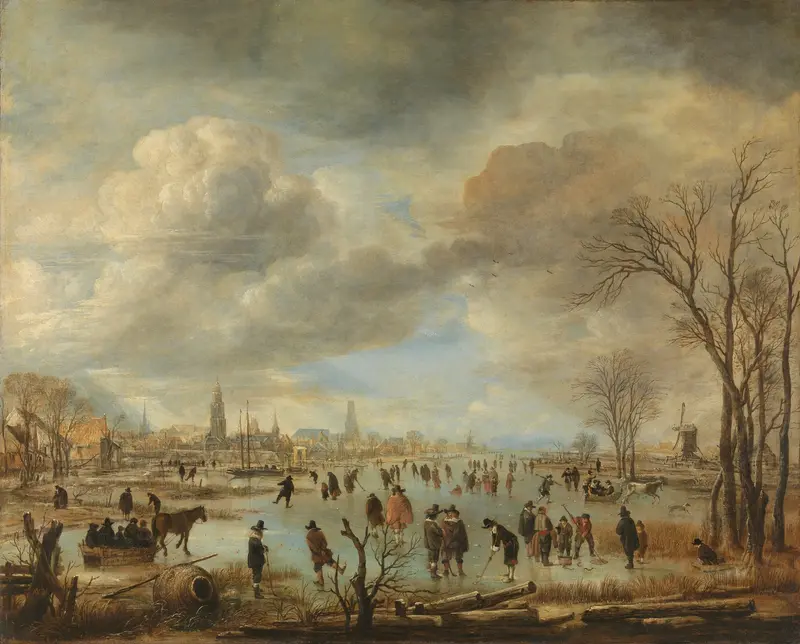
What draws the eye first is the golden glow breaking through heavy winter clouds, a quiet drama staged by the low sun as it slips behind the horizon. The ice, glassy and uncertain, becomes a stage for villagers who skate, stumble, and gather in small knots, their dark figures etched sharply against the luminous sky. Every detail feels chosen to guide you: the church spire anchoring the distant village, the windmill’s silhouette, the careful placement of boats and fences that lead the gaze deeper into the scene.
The palette is restrained, dominated by browns, greys, and the fleeting warmth of sunlight—enough to suggest the cold without ever needing to show frostbite or shivering. Here, the mood is not of hardship but of community, as if the whole village has come out to claim a brief, shared joy before night falls. Painted in 1655, this Winter landscape at sunset by Aert van der Neer belongs to a world where Dutch artists found endless fascination in the changing moods of sky and water. The mid-seventeenth century saw a flourishing of winter scenes, prized by collectors who delighted in the familiar yet ever-surprising spectacle of their own land transformed by ice.
These paintings were not grand commissions for royalty, but rather intimate works for the homes of prosperous burghers, celebrating both the beauty and the resilience of daily life. Now in the collection of the Staatliche Museen zu Berlin, this painting stands as a quiet witness to the tastes and rhythms of a society that found meaning in the ordinary and the fleeting. Let your gaze linger on the horizon, and imagine the last warmth of the day touching every figure on the ice.
More Artworks by Aert van der Neer

A Moonlit River Landscape With Figures Standing By A Gate, A Village Beyond
Aert van der Neer
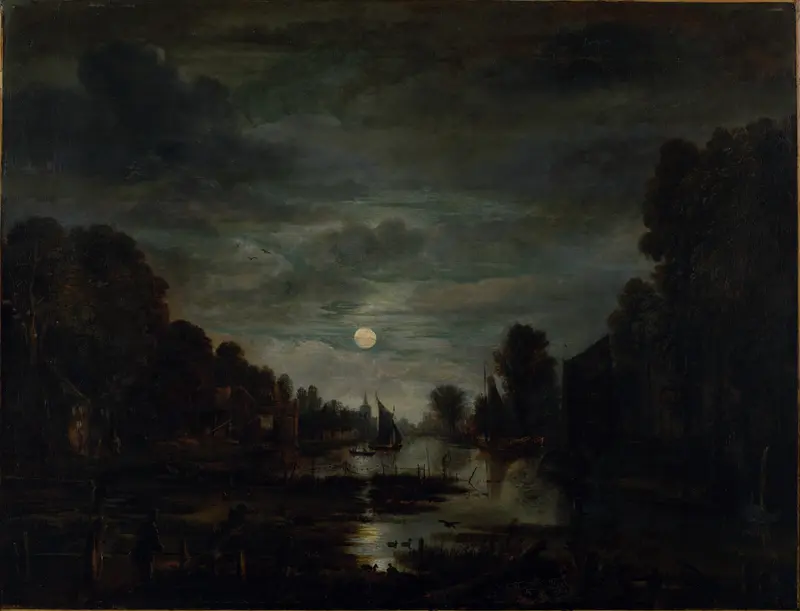
River Landscape in Moonlight
Aert van der Neer
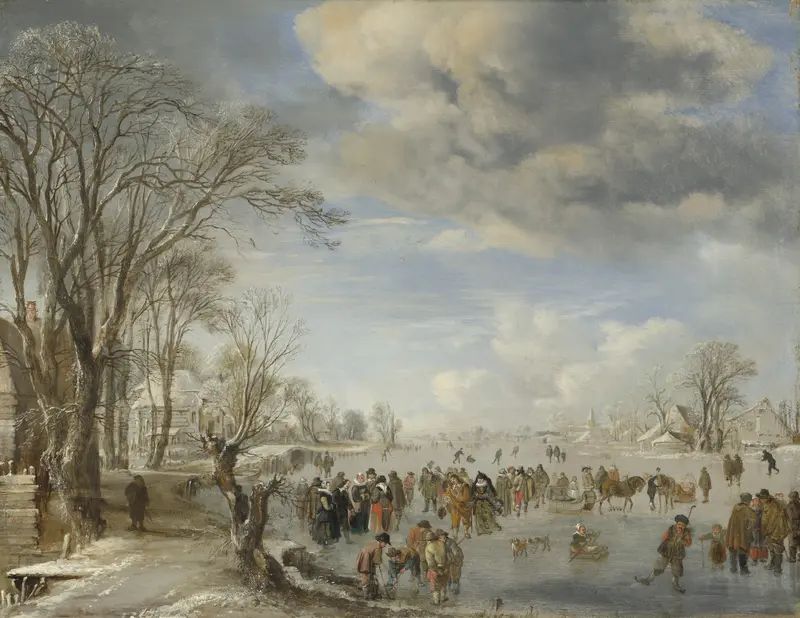
Winter in Holland – Skating Scene
Aert van der Neer

River Landscape
Aert van der Neer
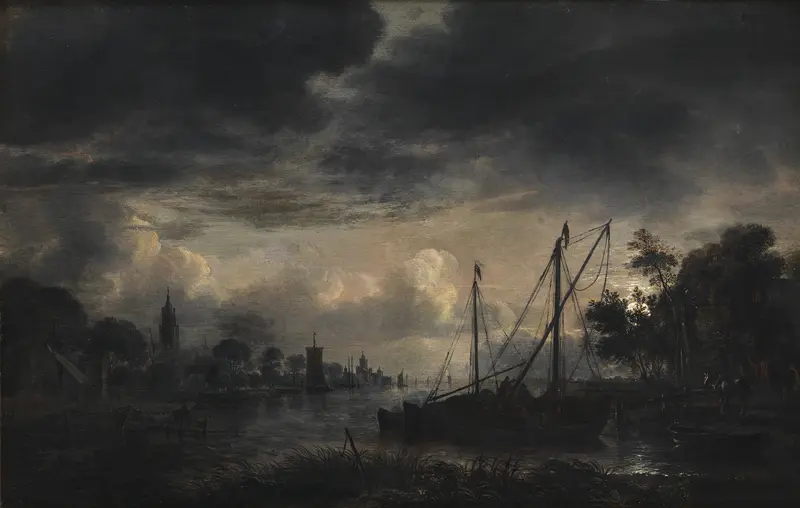
River Landscape in Moonlight
Aert van der Neer
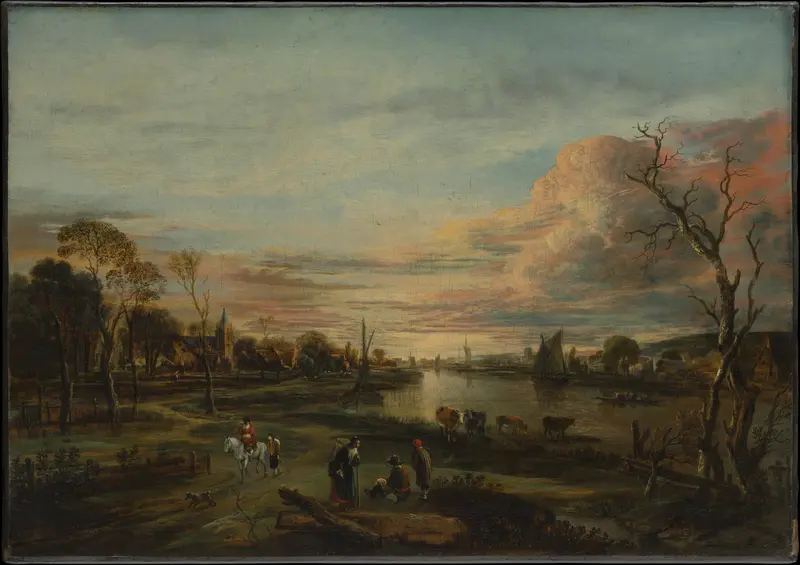
Landscape at Sunset
Aert van der Neer
Winter Landscape near a Town with Kolf Players and Horse-Drawn Sleighs
Aert van der Neer

Winter Landscape with Skaters on a Frozen River
Aert van der Neer
Moonlight at a Dutch River
Aert van der Neer
Moonlight Landscape
Aert van der Neer
More Landscape Art

The Starry Night
Vincent van Gogh

View of Delft
Johannes Vermeer

Water Lilies
Claude Monet

The Grand Canal, Venice, looking north-west from the Ca' Corner to the Ca' Contarini degli Scrigni, with the campanile of Santa Maria della Carità
Canaletto

Windsor Castle
Canaletto

The Grand Canal looking North-East from the Palazzo Dolfin-Manin to the Rialto Bridge
Canaletto