
Winter Landscape with Kolf Players — History & Facts
What first draws the eye in Winter Landscape with Kolf Players is not the sweep of the frozen river or the distant windmill, but the sheer animation of the figures scattered across the ice. Each group seems caught mid-action: a man steadies himself after a slip, children huddle in a sled, and a cluster of men lean into their game of kolf, the wooden clubs and balls signaling a winter pastime unique to the Dutch Golden Age. The bare, arching trees on the left frame the scene like a proscenium, their delicate tracery leading the viewer’s gaze across the glassy surface toward the bustling village and the pale, wintry sky.
The palette is cool and restrained, the whites and ochres lending a crispness that makes the cold almost palpable, while the orange glow of brick and the curling smoke hint at warmth and life within. This is a world shaped by the rhythms of the Little Ice Age, when Dutch rivers and canals froze reliably each winter, turning the landscape into a communal playground. Between 1655 and 1660, when this work was painted, scenes like these were a favorite subject for collectors eager to celebrate the pleasures and peculiarities of their own climate. Artists such as Aert van der Neer became known for these panoramic winter views, capturing not only the look of the season but the social rituals it inspired: games, gossip, commerce, and courtship all played out on the ice.
History has kept few traces of this particular painting’s early journey, but its survival offers a window onto a time when winter was not a hardship to be endured, but a stage for everyday Dutch life. Every detail invites you to linger, to imagine the laughter and shouts echoing across the frozen expanse.
More Artworks by Aert van der Neer

A Moonlit River Landscape With Figures Standing By A Gate, A Village Beyond
Aert van der Neer
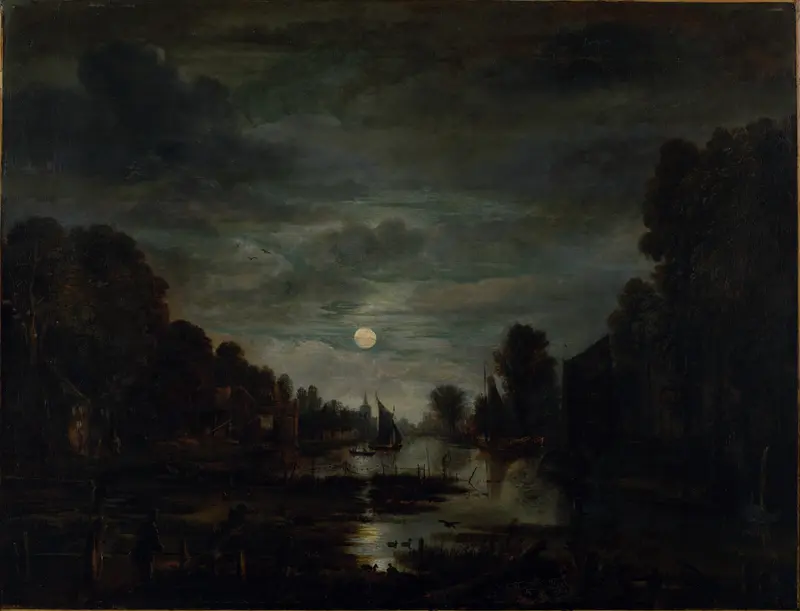
River Landscape in Moonlight
Aert van der Neer
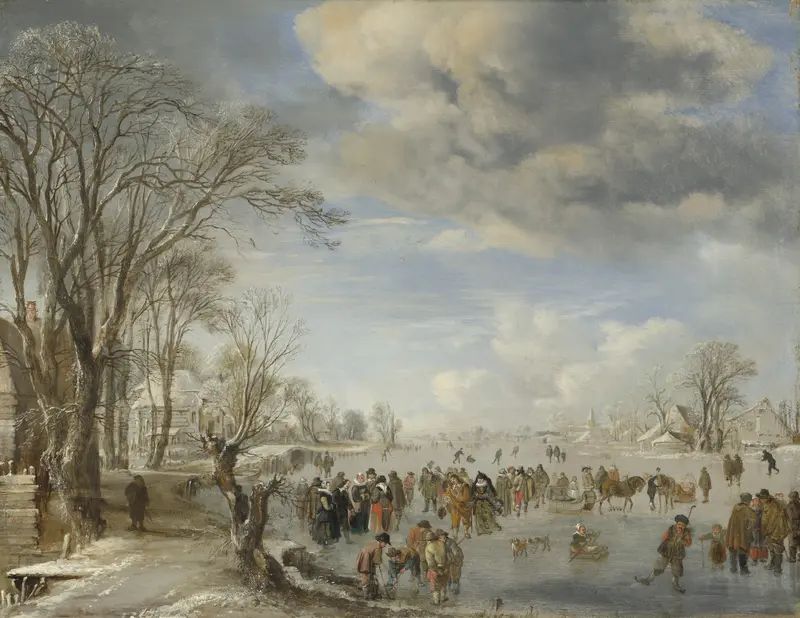
Winter in Holland – Skating Scene
Aert van der Neer

River Landscape
Aert van der Neer
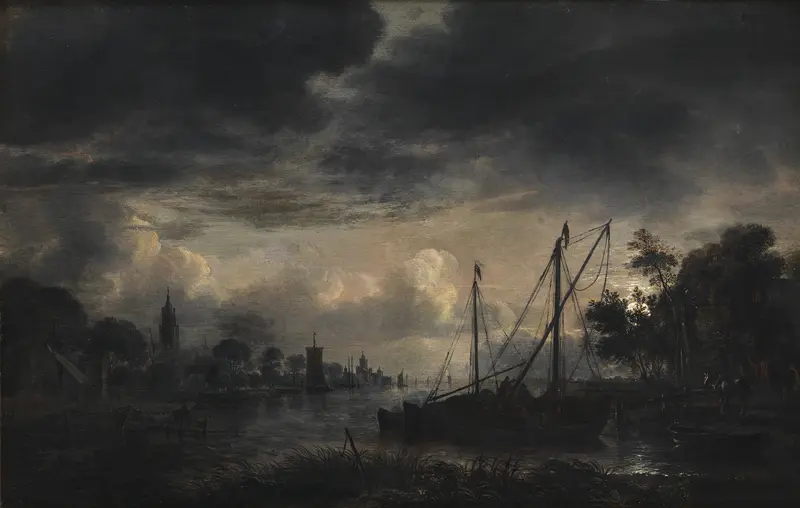
River Landscape in Moonlight
Aert van der Neer
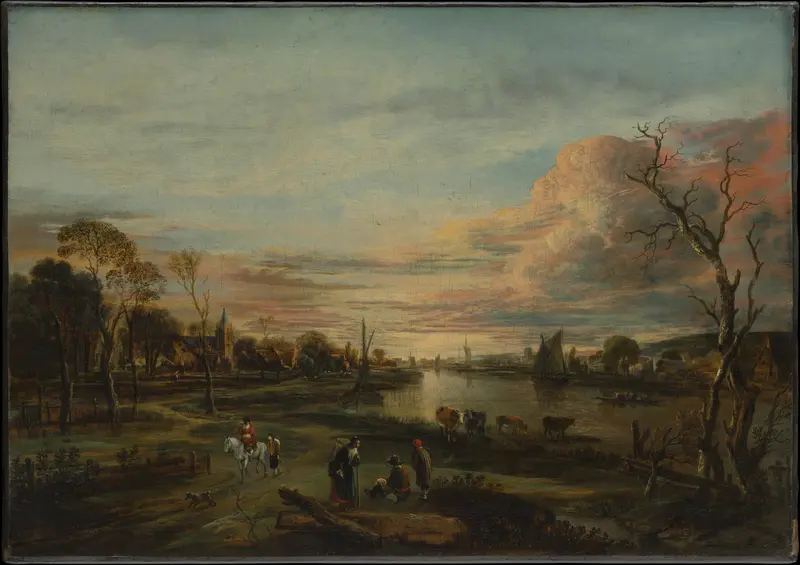
Landscape at Sunset
Aert van der Neer
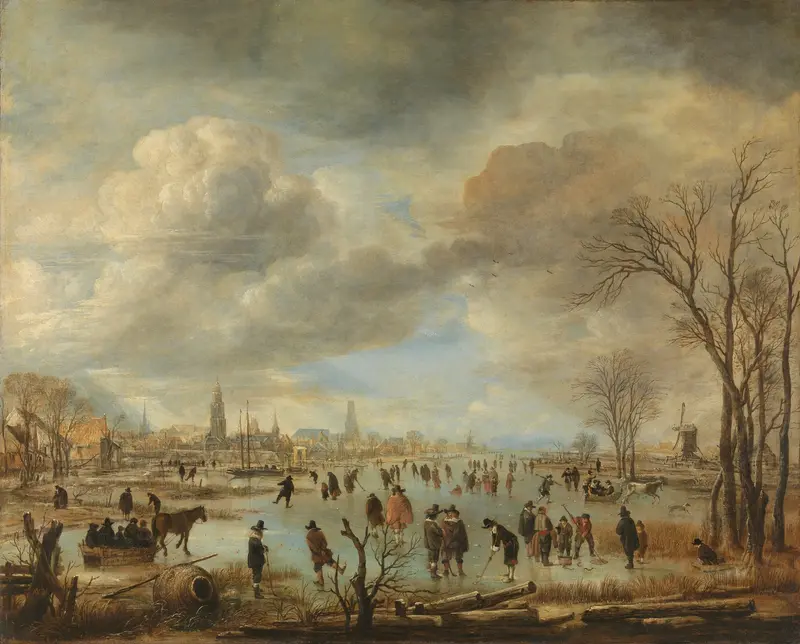
Winter Landscape near a Town with Kolf Players and Horse-Drawn Sleighs
Aert van der Neer

Winter Landscape with Skaters on a Frozen River
Aert van der Neer
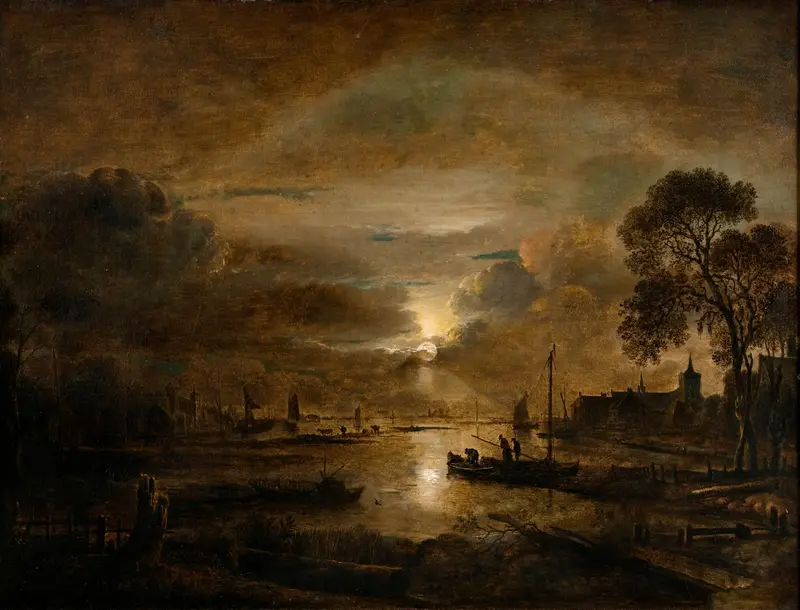
Moonlight at a Dutch River
Aert van der Neer
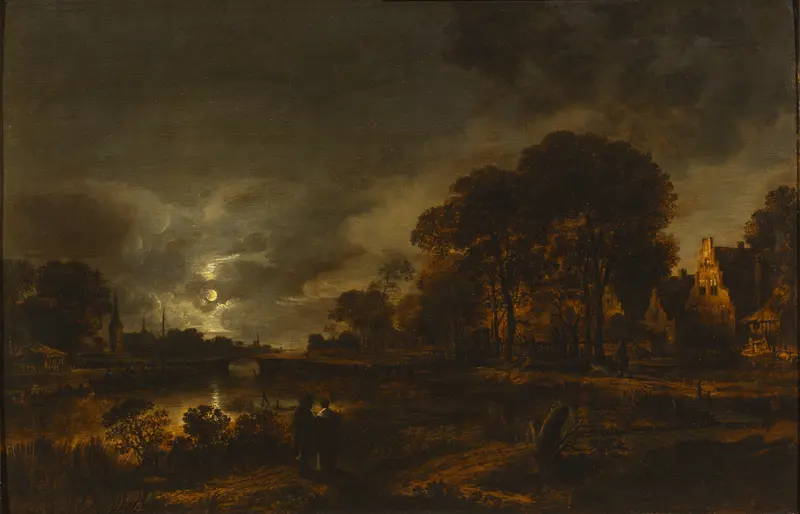
Moonlight Landscape
Aert van der Neer
More Landscape Art

The Starry Night
Vincent van Gogh

View of Delft
Johannes Vermeer

Water Lilies
Claude Monet

The Grand Canal, Venice, looking north-west from the Ca' Corner to the Ca' Contarini degli Scrigni, with the campanile of Santa Maria della Carità
Canaletto

Windsor Castle
Canaletto

The Grand Canal looking North-East from the Palazzo Dolfin-Manin to the Rialto Bridge
Canaletto