
Winter Landscape with Reed Cutters — History & Facts
A low winter sun glances across the frozen Dutch landscape, catching on the bundled reeds and the backs of men bent to their work. The eye is drawn first to the activity at the water’s edge, where figures in dark coats harvest the tall, golden reeds, their gestures purposeful and rhythmic. Beyond, a crowd of skaters glides across the glassy ice, their movement a lively counterpoint to the labor in the foreground.
The sky, vast and heavy with layered clouds, presses down on the scene, its muted pinks and greys echoing the chill that binds the land. Every detail—the bundled reeds, the distant church spire, the careful placement of cottages—works to anchor the viewer in a very particular moment of winter, where work and leisure share the same frozen stage. Painted in the 1670s by Aert van der Neer, this scene belongs to a tradition that flourished in the Dutch Golden Age, when landscapes became both a celebration of local life and a subtle display of national pride. Such works were often commissioned by prosperous townsfolk who saw in these scenes a reflection of their own world: industrious, communal, and shaped by the rhythms of nature.
The painting now resides in the collection of Rijksmuseum Twenthe, a testament to the enduring appeal of these winter vistas. History has kept few traces of this specific canvas’s early journey, but its quiet vitality invites us to linger, searching for stories in the ice and sky.
More Artworks by Aert van der Neer

A Moonlit River Landscape With Figures Standing By A Gate, A Village Beyond
Aert van der Neer
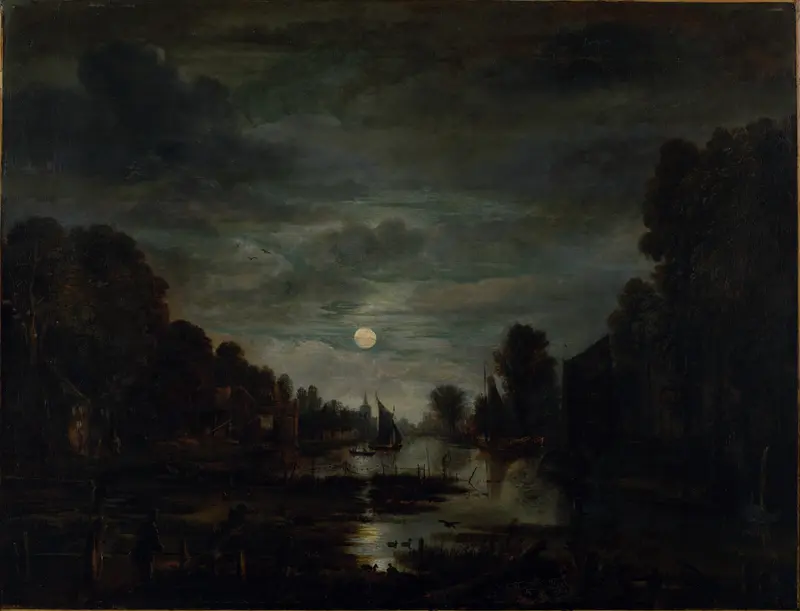
River Landscape in Moonlight
Aert van der Neer
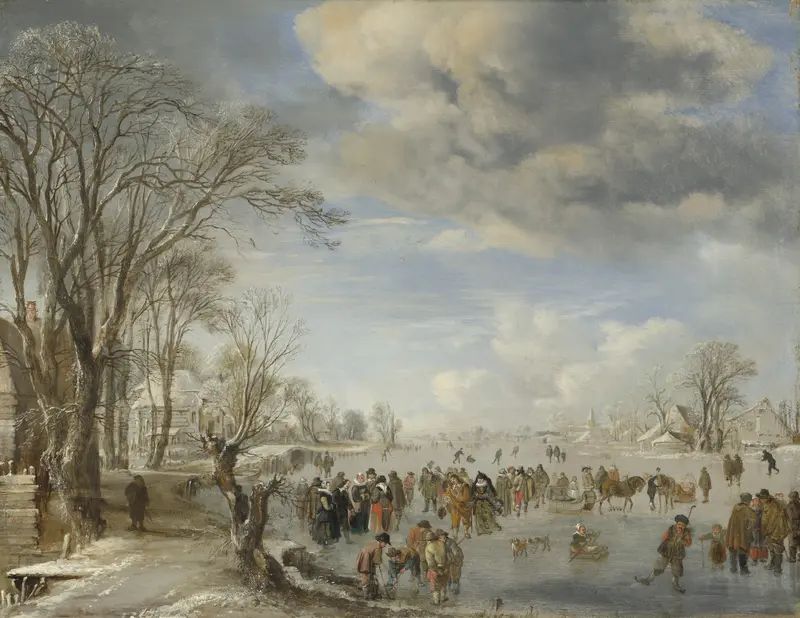
Winter in Holland – Skating Scene
Aert van der Neer

River Landscape
Aert van der Neer
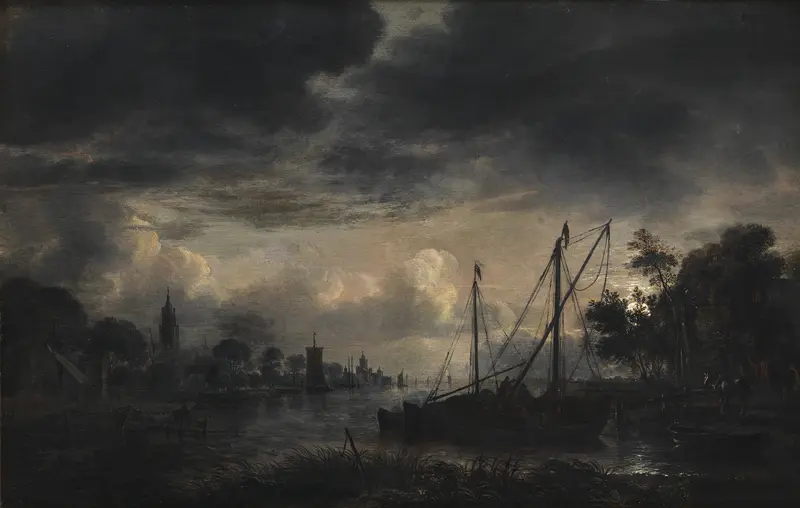
River Landscape in Moonlight
Aert van der Neer
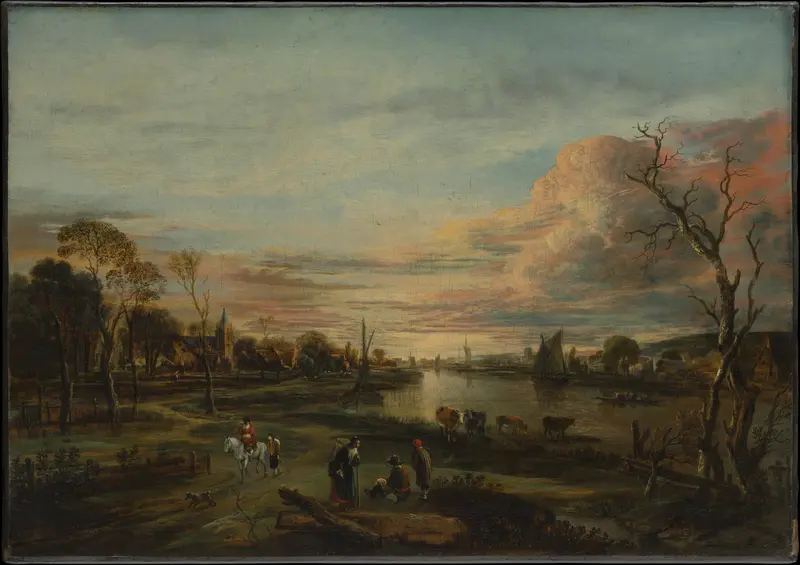
Landscape at Sunset
Aert van der Neer
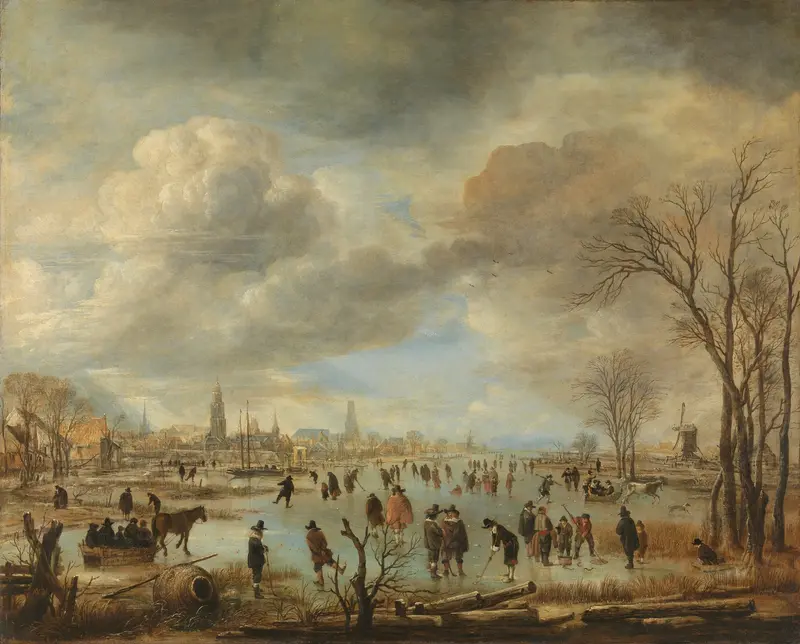
Winter Landscape near a Town with Kolf Players and Horse-Drawn Sleighs
Aert van der Neer

Winter Landscape with Skaters on a Frozen River
Aert van der Neer
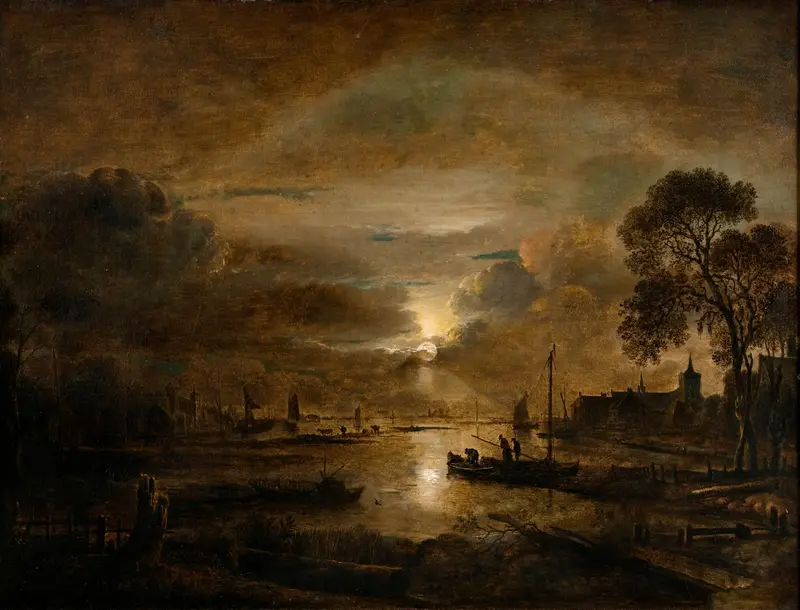
Moonlight at a Dutch River
Aert van der Neer
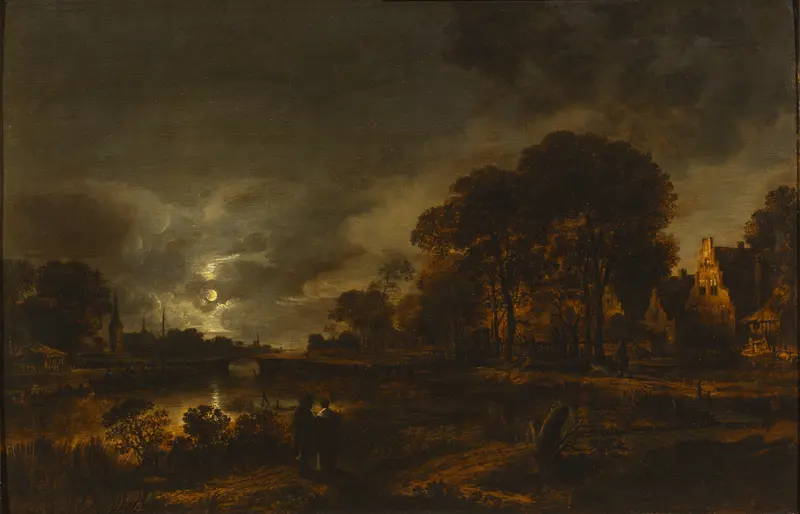
Moonlight Landscape
Aert van der Neer
More Landscape Art

The Starry Night
Vincent van Gogh

View of Delft
Johannes Vermeer

Water Lilies
Claude Monet

The Grand Canal, Venice, looking north-west from the Ca' Corner to the Ca' Contarini degli Scrigni, with the campanile of Santa Maria della Carità
Canaletto

Windsor Castle
Canaletto

The Grand Canal looking North-East from the Palazzo Dolfin-Manin to the Rialto Bridge
Canaletto