
Winter Landscape with Skaters at Sunset — History & Facts
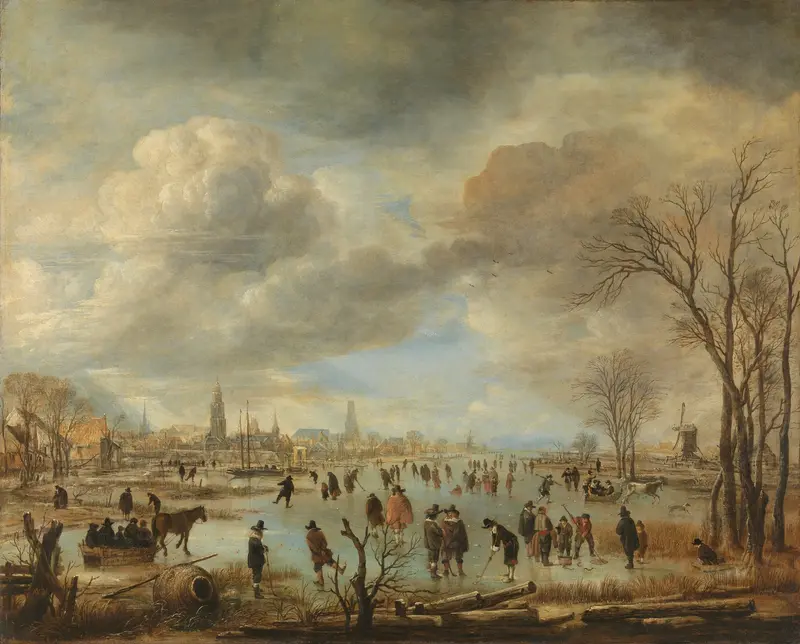
What first draws the eye in Winter Landscape with Skaters at Sunset is the drama of the sky—a sweep of cloud and fading light that seems to hold the entire frozen world in suspense. The sun, low on the horizon, glows through a break in the clouds, casting a golden-pink reflection across the ice and illuminating the distant silhouettes of windmills and church towers. Figures scatter across the frozen water, some gliding, others gathered in conversation or bent to their tasks, their dark shapes animated against the pale surface.
The careful placement of snow-laden banks and bare trees in the foreground draws us into the scene, while the winding fence lines and distant village pull our gaze ever deeper into the Dutch countryside. Every gesture and detail—the bundled coats, the attentive dog, the solitary figure seated by the fence—serves to anchor this winter day in the routines and pleasures of ordinary life. Painted in 1665, this work belongs to a world where the Dutch landscape was both a source of national pride and a subject of endless fascination for artists and collectors alike. Scenes of winter skating were especially popular in the seventeenth century, capturing not only the harshness of the season but also its communal joys; such paintings often hung in the homes of prosperous burghers, reminders of both the beauty and resilience of their land.
Aert van der Neer was one of the era’s most dedicated chroniclers of winter’s light and atmosphere, and works like this—now in the Hohenbuchau Collection—are prized for their ability to conjure both a specific time of day and a broader sense of place. The world that produced this painting has largely vanished, but the invitation remains: to follow the meandering river, to join the skaters, and to lose oneself for a moment in the glow of a Dutch winter sunset.
More Artworks by Aert van der Neer

A Moonlit River Landscape With Figures Standing By A Gate, A Village Beyond
Aert van der Neer
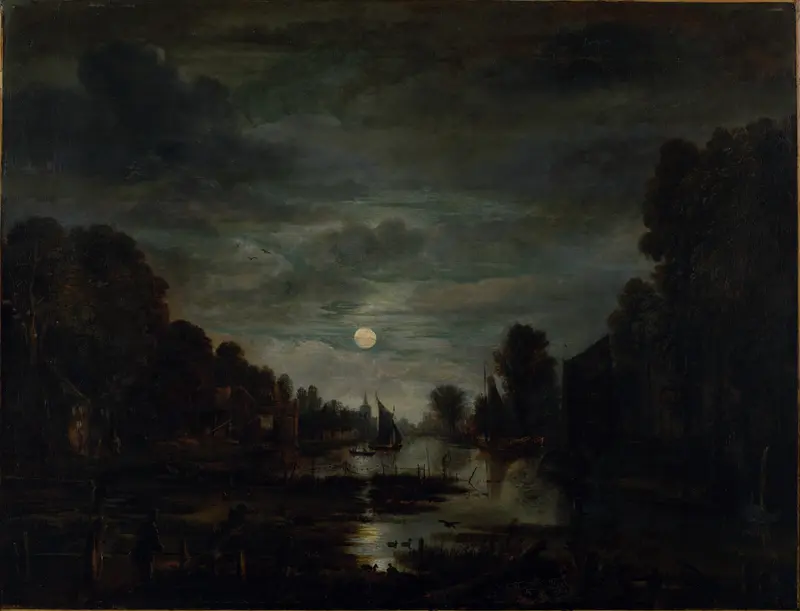
River Landscape in Moonlight
Aert van der Neer
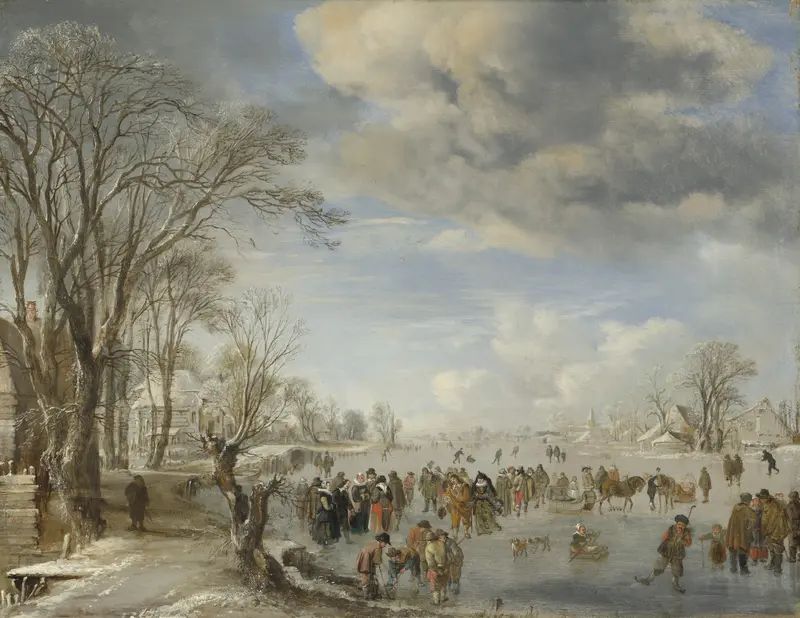
Winter in Holland – Skating Scene
Aert van der Neer

River Landscape
Aert van der Neer
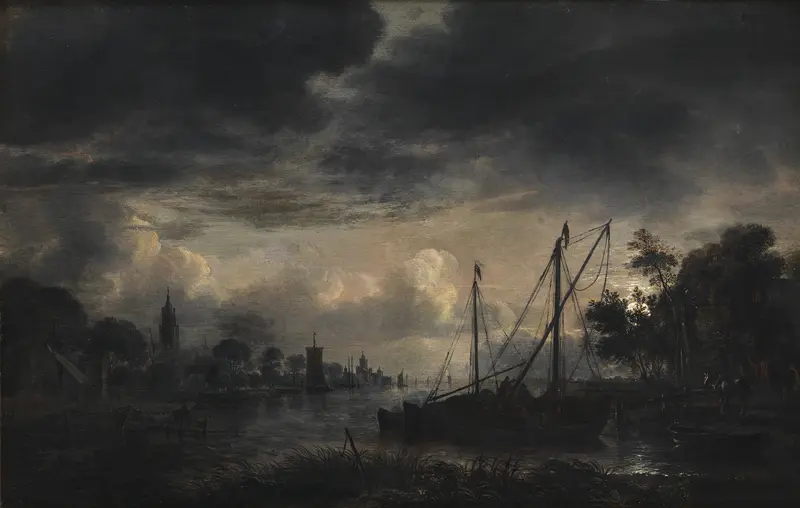
River Landscape in Moonlight
Aert van der Neer
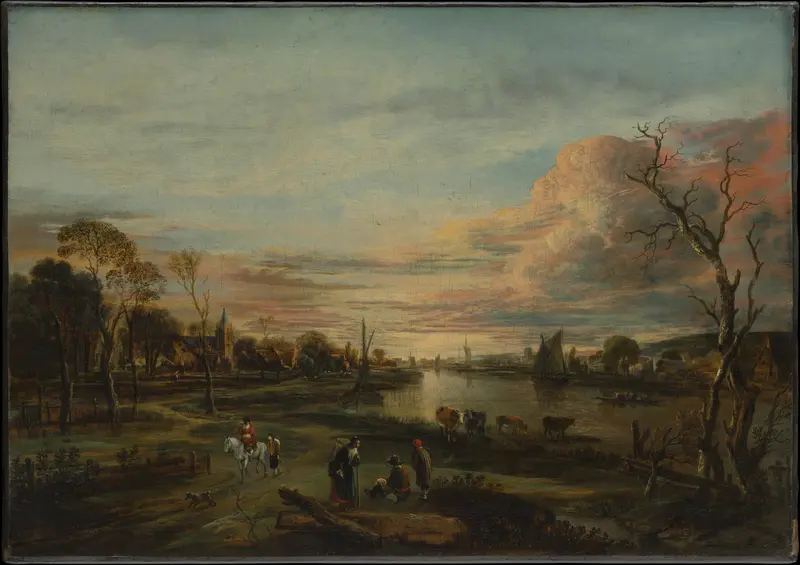
Landscape at Sunset
Aert van der Neer
Winter Landscape near a Town with Kolf Players and Horse-Drawn Sleighs
Aert van der Neer

Winter Landscape with Skaters on a Frozen River
Aert van der Neer
Moonlight at a Dutch River
Aert van der Neer
Moonlight Landscape
Aert van der Neer
More Landscape Art

The Starry Night
Vincent van Gogh

View of Delft
Johannes Vermeer

Water Lilies
Claude Monet

The Grand Canal, Venice, looking north-west from the Ca' Corner to the Ca' Contarini degli Scrigni, with the campanile of Santa Maria della Carità
Canaletto

Windsor Castle
Canaletto

The Grand Canal looking North-East from the Palazzo Dolfin-Manin to the Rialto Bridge
Canaletto