
Winter Pleasures — History & Facts
What draws the viewer in first is the sky: a swirl of heavy, winter clouds tinged with the last gold of afternoon, stretching above a frozen river alive with figures. The eye is pulled from the stark, twisting tree in the foreground—its bark dusted with snow, branches stripped bare—across a scene bustling with the quiet joys of winter. Skaters glide and stumble on the ice, bundled figures cluster in conversation, and dogs nose through the brittle grass at the river’s edge.
The church tower and the half-timbered house anchor the village, their roofs dusted with frost, while smoke drifts from chimneys, promising warmth within. The palette—slate blues, ochres, and the pale glow of winter sun—sets a mood at once brisk and inviting, a world where the cold is met with company and movement. Painted between circa 1665 and circa 1670, Winter Pleasures belongs to a tradition that flourished in the Dutch Golden Age, when scenes of everyday life—especially winter landscapes—were prized by a rising merchant class. Artists like Aert van der Neer specialized in capturing the fleeting effects of light and weather, turning the harshness of Dutch winters into something communal and celebratory.
Such works were not merely decoration; they spoke to national identity, resilience, and the pleasures found in ordinary days. Though little is recorded about the journey of this particular painting, its survival and inclusion in collections today allow us to step into a vanished world, where the ice holds, the sky looms, and the village gathers for a season’s delight.
More Artworks by Aert van der Neer

A Moonlit River Landscape With Figures Standing By A Gate, A Village Beyond
Aert van der Neer
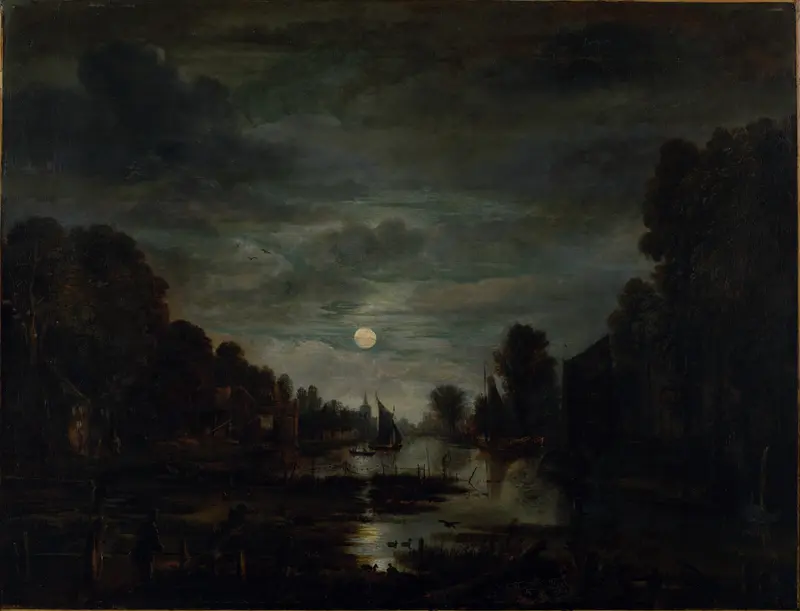
River Landscape in Moonlight
Aert van der Neer
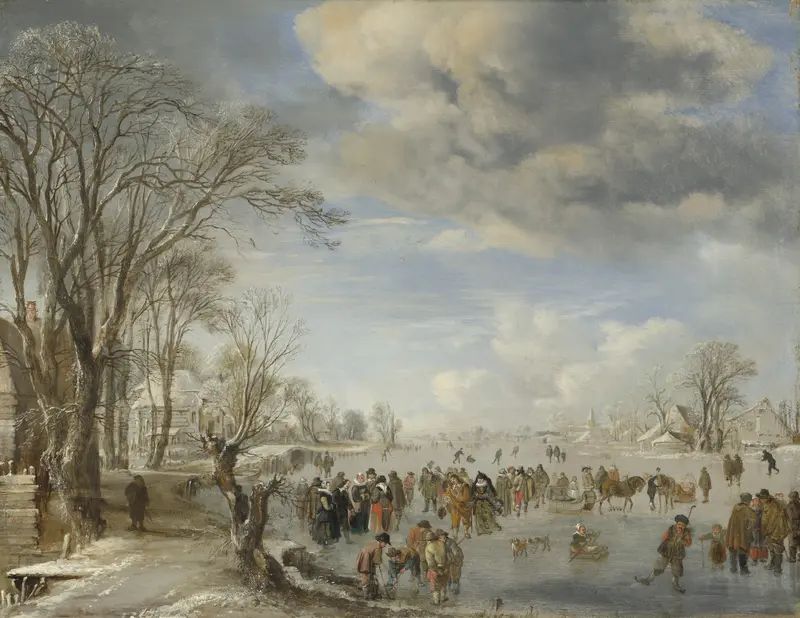
Winter in Holland – Skating Scene
Aert van der Neer

River Landscape
Aert van der Neer
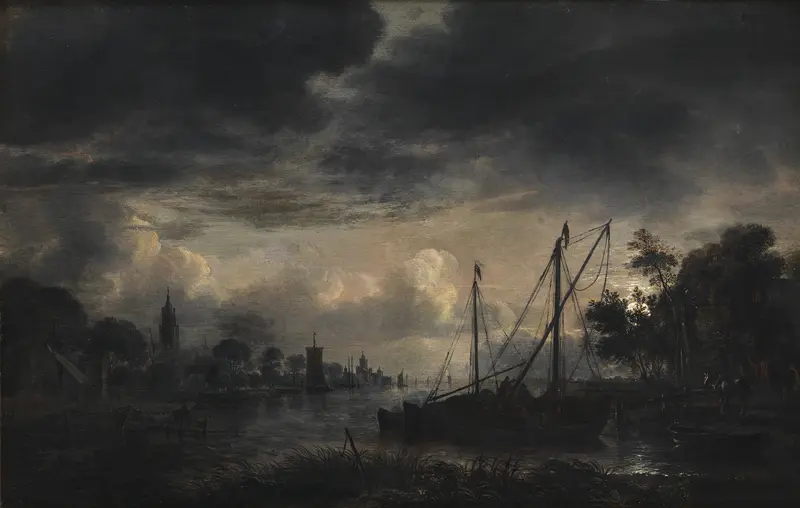
River Landscape in Moonlight
Aert van der Neer
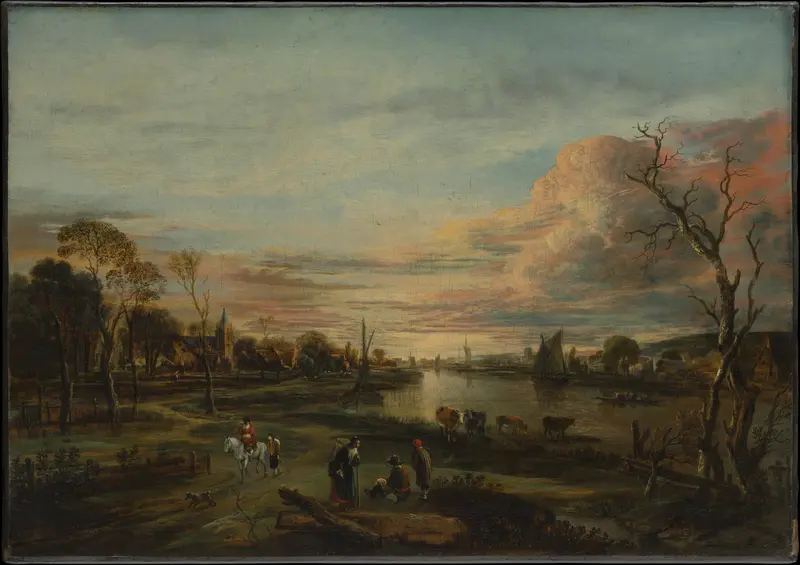
Landscape at Sunset
Aert van der Neer
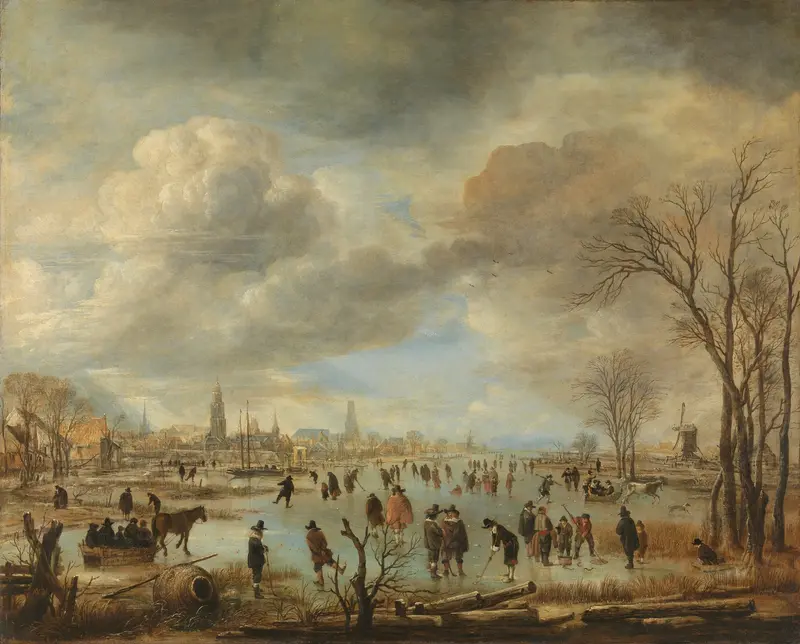
Winter Landscape near a Town with Kolf Players and Horse-Drawn Sleighs
Aert van der Neer

Winter Landscape with Skaters on a Frozen River
Aert van der Neer
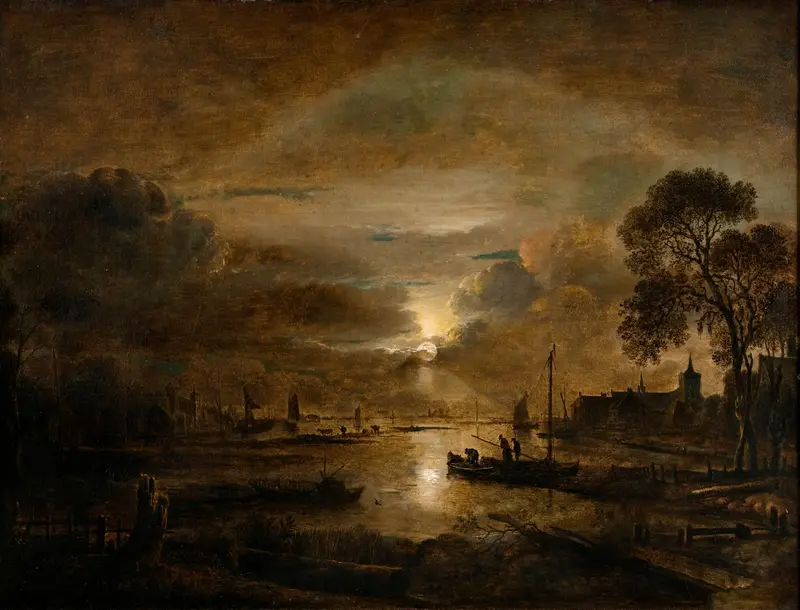
Moonlight at a Dutch River
Aert van der Neer
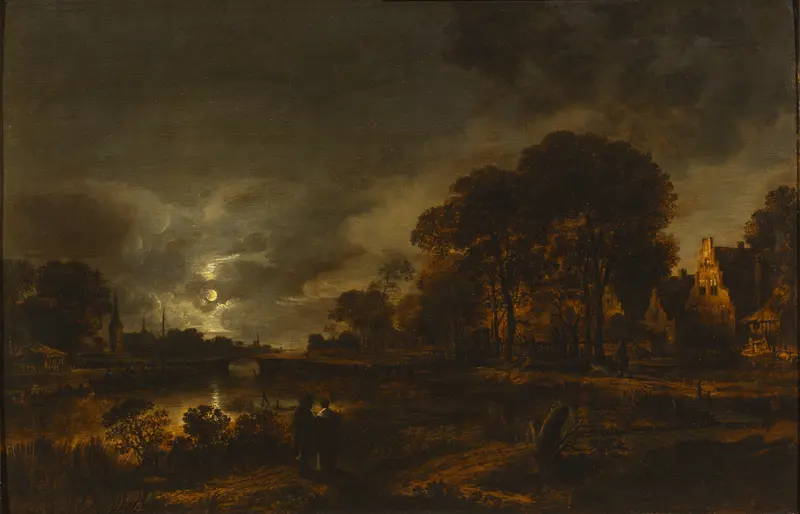
Moonlight Landscape
Aert van der Neer
More Landscape Art

The Starry Night
Vincent van Gogh

View of Delft
Johannes Vermeer

Water Lilies
Claude Monet

The Grand Canal, Venice, looking north-west from the Ca' Corner to the Ca' Contarini degli Scrigni, with the campanile of Santa Maria della Carità
Canaletto

Windsor Castle
Canaletto

The Grand Canal looking North-East from the Palazzo Dolfin-Manin to the Rialto Bridge
Canaletto