With heaty good wishes — History & Facts
It is the gaze of the puppies that first catches the eye—three young dogs, each with a different shade of fur, perched in and before a straw-lined basket, their expressions a mixture of curiosity, timidity, and gentle expectation. The artist, Carl Reichert, arranges them with a naturalism that feels almost theatrical: two lean over the basket’s edge, their paws dangling, while the third sits upright, looking straight out as if awaiting a response from the viewer. The basket itself is not just a prop but a message-bearer, with a hand-lettered note pinned to its front: “WITH HEATY GOOD WISHES!” Every detail, from the careful rendering of straw to the delicate pink bow and sprig of pussy willow on the floor, is chosen to amplify a sense of affectionate offering, as if these puppies themselves are a living gift. Painted by 1918, With heaty good wishes belongs to a genre that flourished in the late nineteenth and early twentieth centuries, when animal portraiture was cherished by the growing middle class as a symbol of domestic warmth and sentimental value.
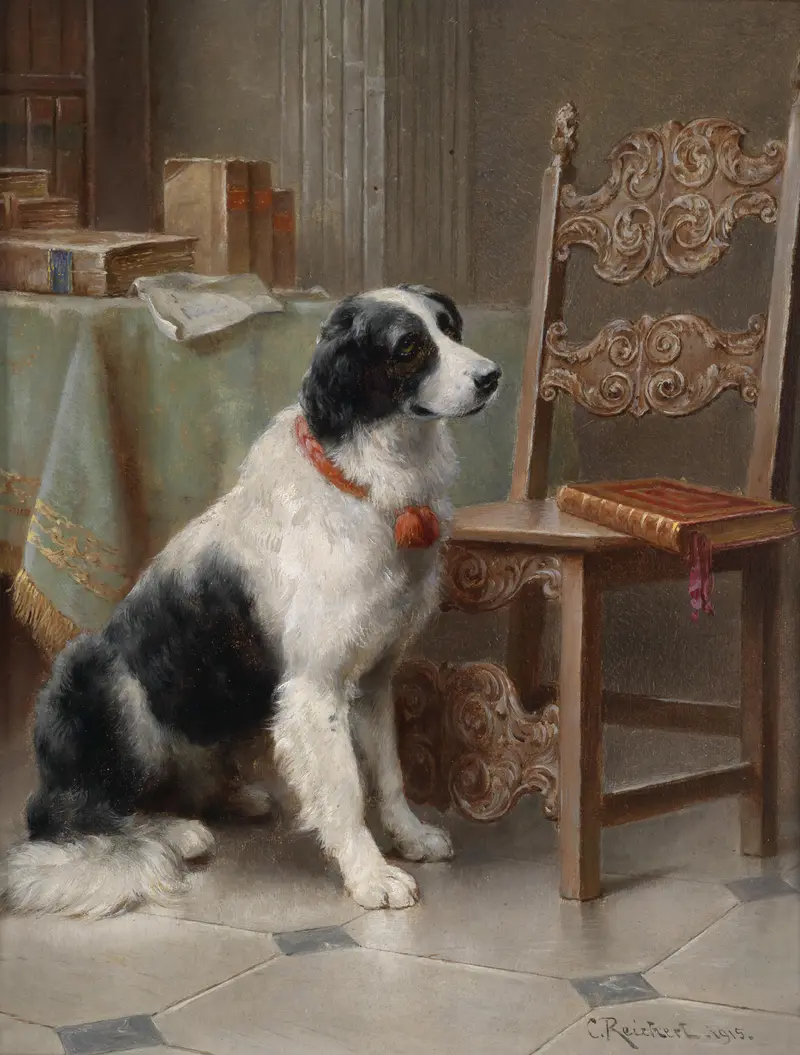
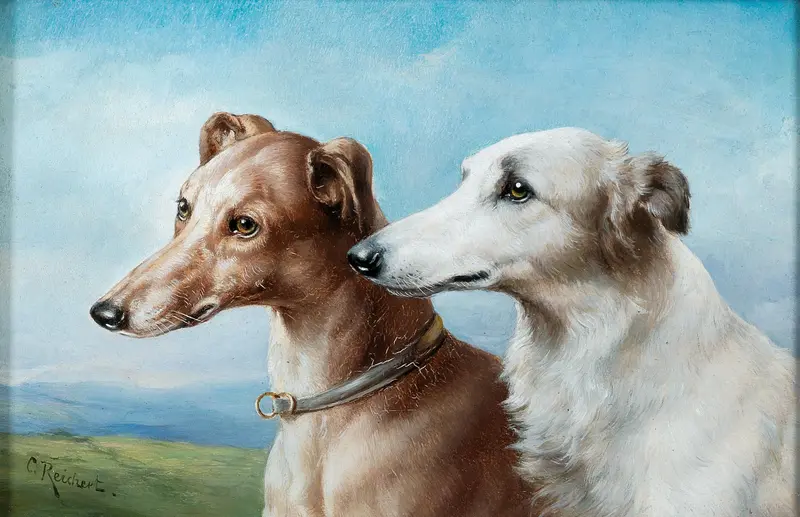
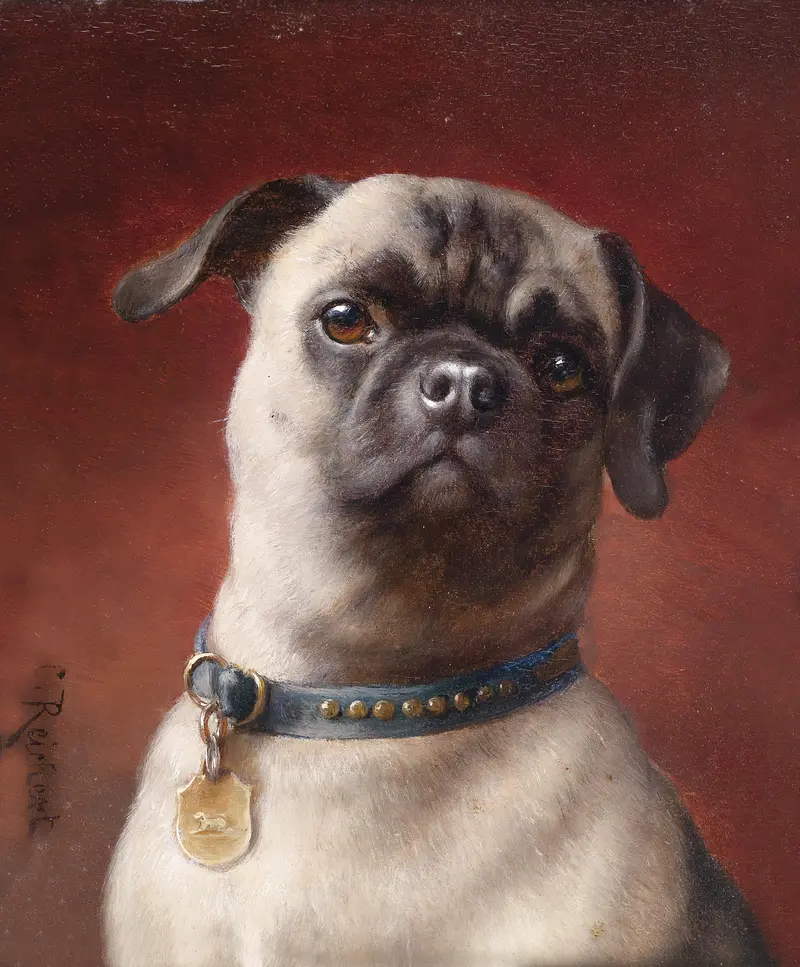
Works like this were often exchanged as tokens of affection, sometimes marking holidays or special occasions, and their appeal lay in the artist’s ability to capture both the individuality and innocence of their animal subjects. Carl Reichert was known for such intimate studies, and this painting, now in the Dorotheum collection, stands as a testament to a world where even the humblest creatures could be elevated to the status of cherished companions. The puppies’ soft fur and the handwritten wishes invite the viewer to linger, imagining the hands that once received such a scene with delight.