
Wniebowzięcie Najświętszej Marii Panny — History & Facts
When Jan Matejko unveiled Wniebowzięcie Najświętszej Marii Panny in 1875, it marked his first foray into a purely religious theme after years of painting Poland’s turbulent history. This shift surprised many in his circle, who knew him best for grand canvases of kings and battles. The painting’s debut was met with curiosity and debate: was Matejko, the chronicler of a nation, now seeking solace in the mysteries of faith? The work’s title refers to the Assumption of the Virgin Mary, a subject rarely tackled by Polish artists of the 19th century, making Matejko’s version a singular event in his oeuvre. At the heart of the painting, Mary is caught in the miraculous instant of her ascent to heaven, her figure radiant and lifted by a swirl of angels.
Matejko captures the awe of the apostles, gathered below, their faces a mixture of wonder and disbelief, hands outstretched as if grasping for the departing presence. The golden light enveloping Mary contrasts with the earthier shadows around the apostles, underscoring the divide between the divine and the mortal. The blue mantle and white robe she wears are traditional Marian symbols, while the scattering of roses at her feet recalls the legend that her tomb was found filled with flowers.
Unlike the tranquil serenity of Titian’s Assumption of the Virgin, Matejko’s scene pulses with energy, the figures almost tumbling into the viewer’s space. While the exact patron or original location of Wniebowzięcie Najświętszej Marii Panny is not fully documented, the painting stands as a testament to Matejko’s versatility during a period when Polish national identity was under threat. Its whereabouts over the decades remain somewhat obscure, though it is believed to have remained in Poland, passing through church collections and possibly private hands. The work’s religious theme set it apart from Matejko’s more famous historical cycles, and it is often cited as evidence of his deep personal faith.
Today, it is valued as a rare example of 19th-century Polish religious painting, bridging Western iconography with local tradition.
More Artworks by Jan Matejko
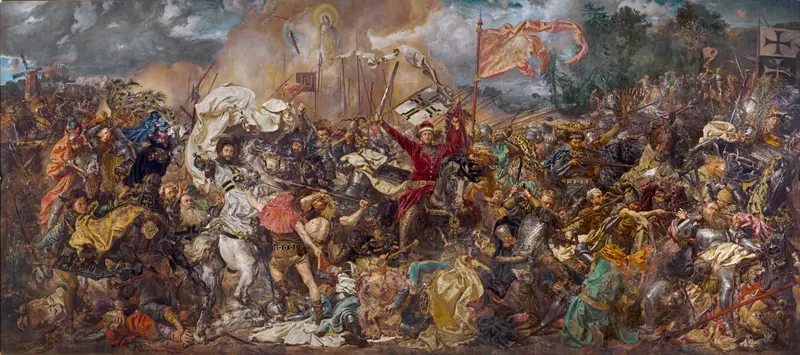
Battle of Grunwald
Jan Matejko

Stańczyk
Jan Matejko

Battle of Raclawice
Jan Matejko
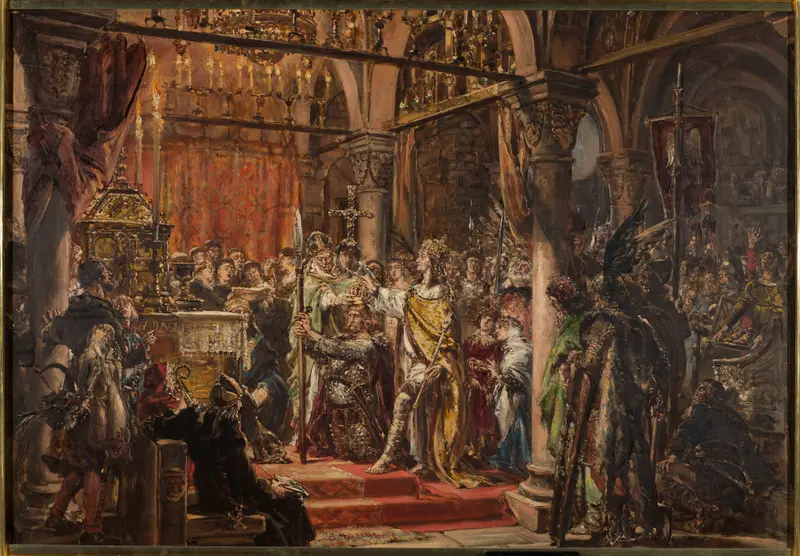
Coronation of the First King, 1001 AD, from the series “History of Civilization in Poland”
Jan Matejko
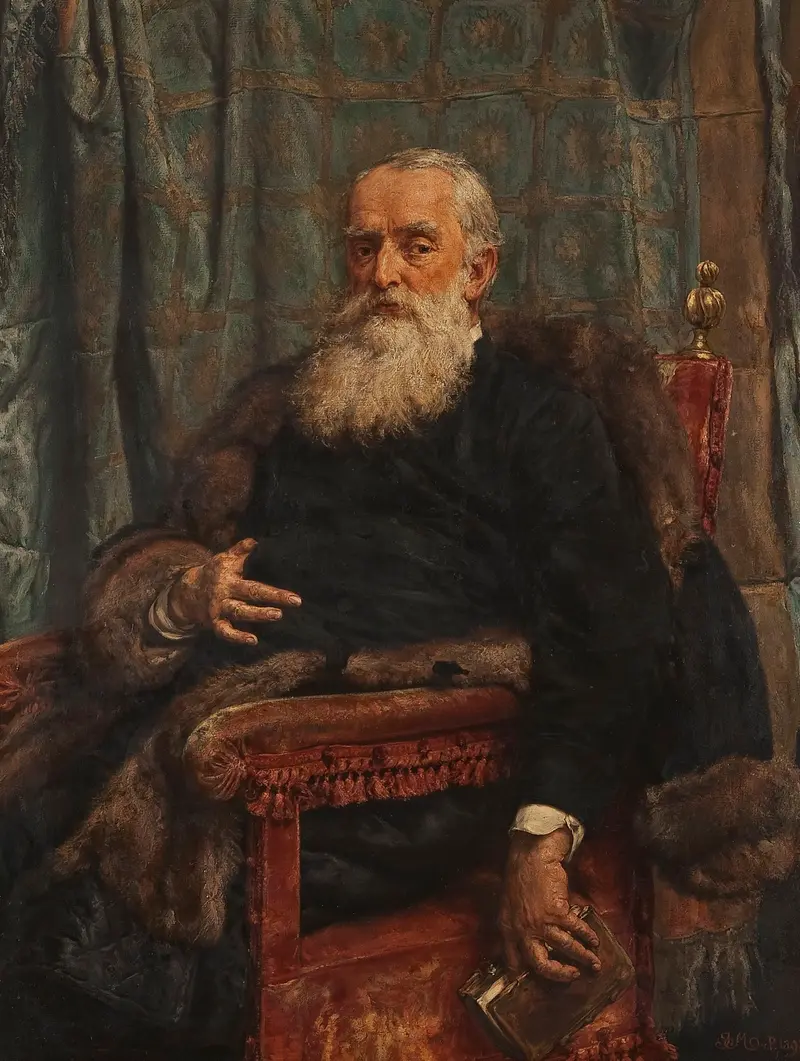
Portrait of Henryk Krajewski
Jan Matejko
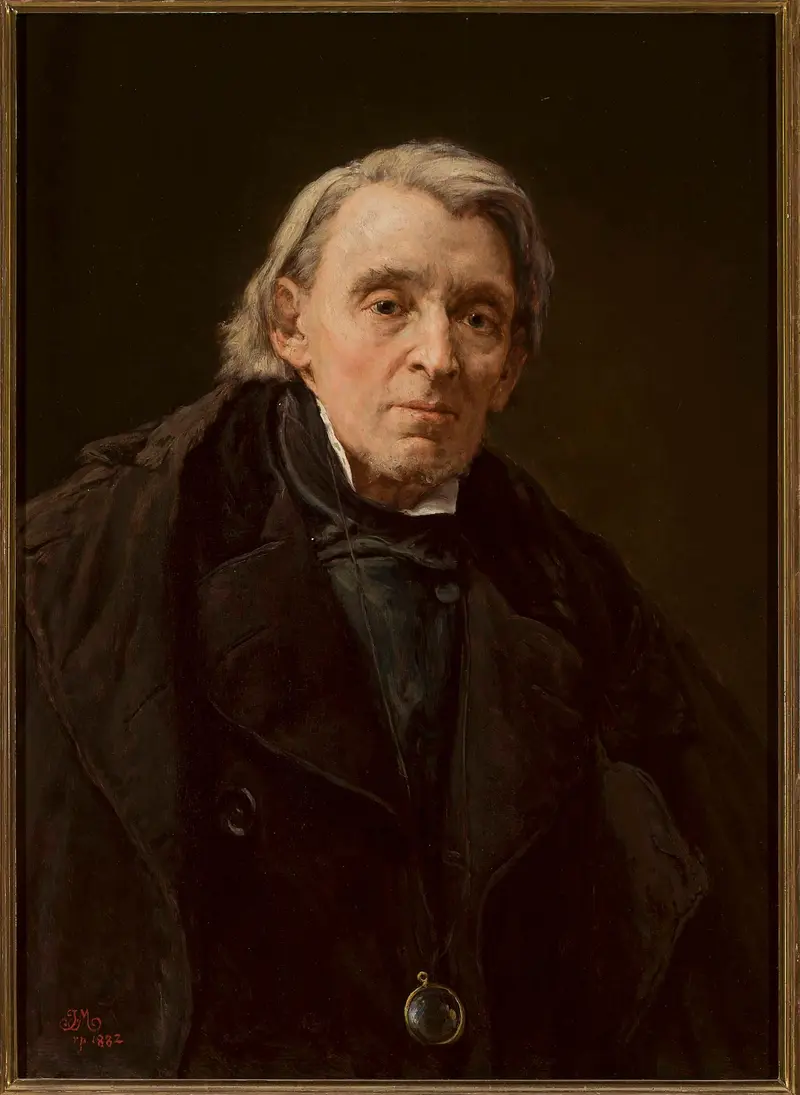
Portrait of Karol Podlewski
Jan Matejko
Portrait of Potocki and Poninski
Jan Matejko
Portrait of the artist's four children
Jan Matejko
Introduction of Christianity in Poland
Jan Matejko
Prussian Homage
Jan Matejko





