
Woman in Front of a Still Life by Cezanne — History & Facts
What if silence could speak through light? In Woman in Front of a Still Life, the soft interplay of hues invites the viewer into a contemplation of innocence, evoking a profound stillness. Look to the left at the figure of the woman, her gaze directed away from the viewer, lost in thought. The drapery of her gown flows with gentle curves, accentuated by the warm, earthy tones surrounding her. Notice how the light falls upon the still life to her right: the fruits and vase are rendered in vivid colors, yet they remain distinctly separate from her muted presence.
The brushwork is bold yet delicate, capturing the essence of both subject and objects while creating a palpable tension between stillness and vibrancy. The juxtaposition of the woman and the still life offers a rich narrative; her quiet demeanor complements the exuberance of the fruits, suggesting a dialogue between presence and absence. Is her innocence overshadowed by the surrounding vibrancy, or does she embody a deeper understanding of the transience of life? The painting subtly raises questions about perception and the boundaries of experience, where silence can indeed speak volumes through the interplay of light and shadow. In 1890, Gauguin painted this piece during a transformative period in his career, marked by a departure from Impressionism toward a more symbolic and expressive approach. Residing in Pont-Aven, France, he was exploring the nuances of color and form, seeking to capture emotional depth.
The art world was shifting, and Gauguin, pushing against the norms, was laying the groundwork for future movements, cementing his legacy in the evolution of modern art.
More Artworks by Paul Gauguin
Browse all →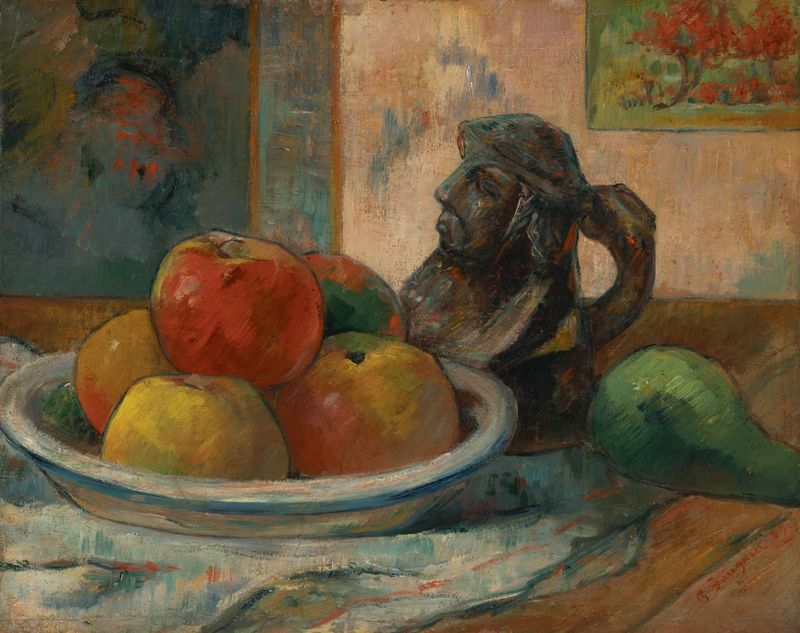
Still Life with Apples, a Pear, and a Ceramic Portrait Jug
Paul Gauguin
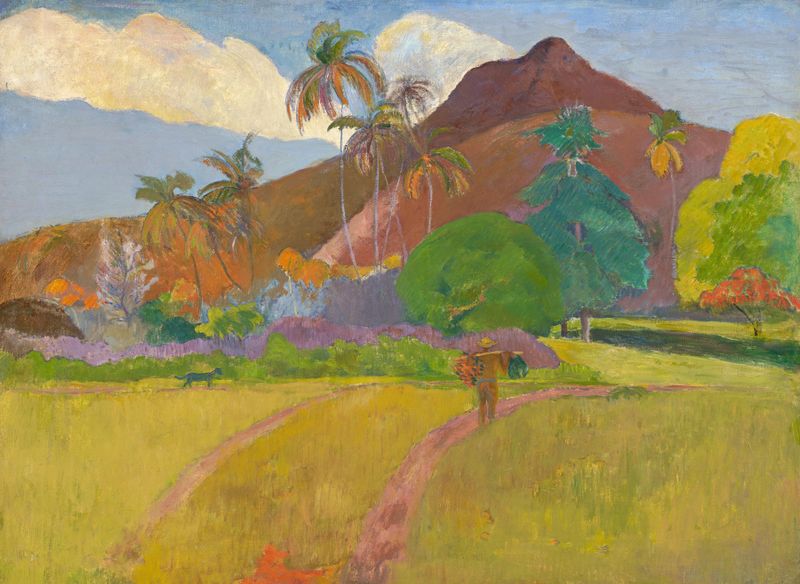
Tahitian Landscape
Paul Gauguin

Landscape near Pont-Aven
Paul Gauguin

No te aha oe riri (Why Are You Angry?)
Paul Gauguin
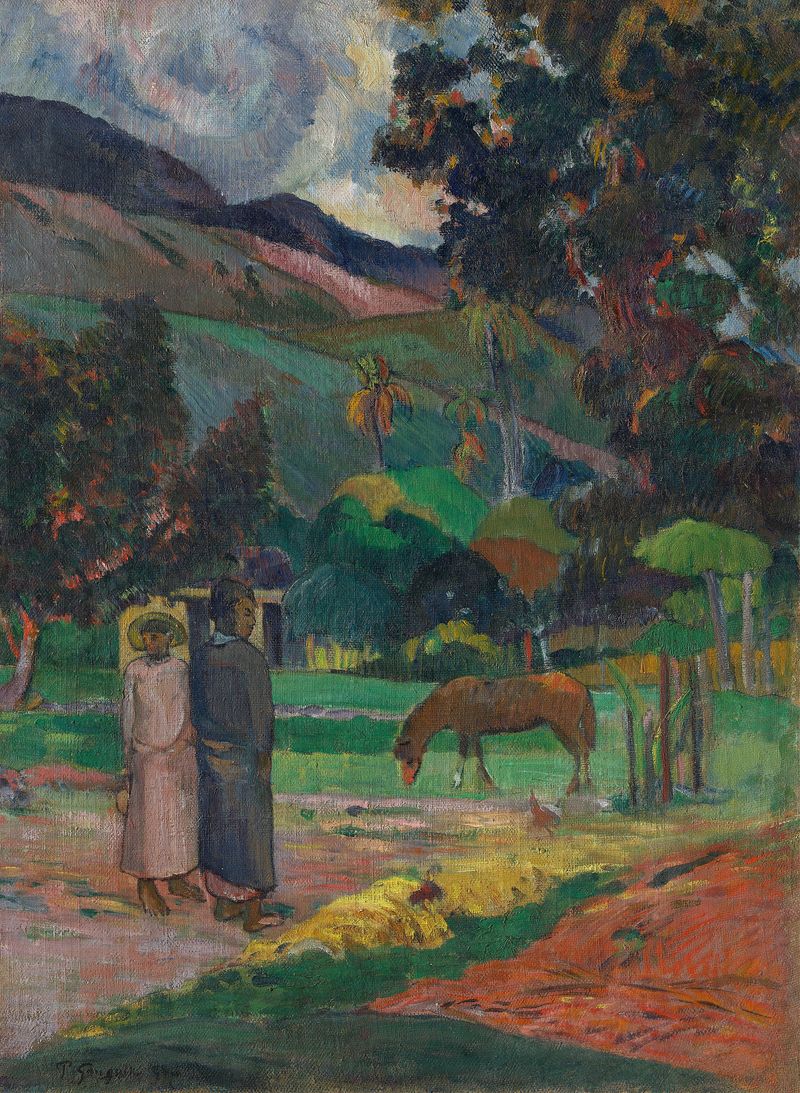
Tahitian Landscape
Paul Gauguin
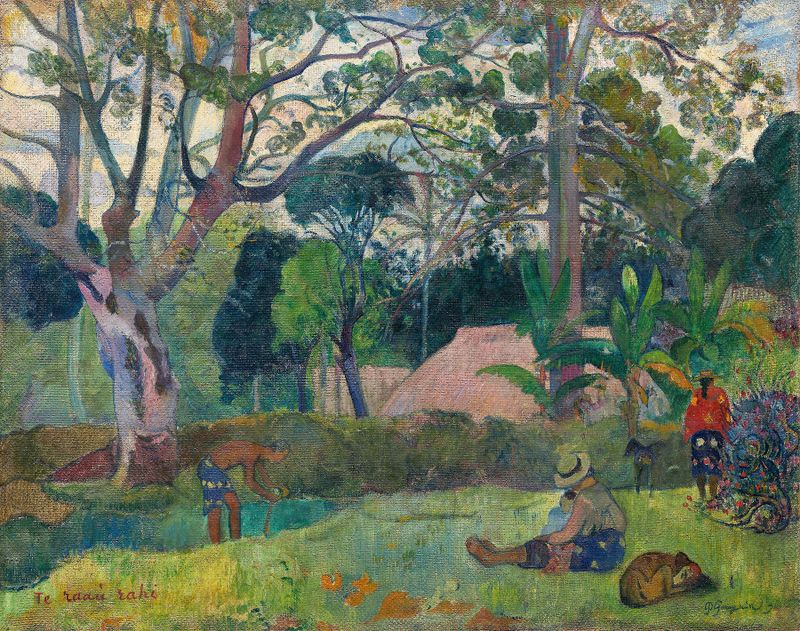
Te raau rahi (The Big Tree)
Paul Gauguin

Landscape at Le Pouldu
Paul Gauguin

Landscape of Brittany
Paul Gauguin

Poèmes Barbares
Paul Gauguin
Mahana no atua (Day of the God)
Paul Gauguin





