Wüsten-Räuber — History & Facts
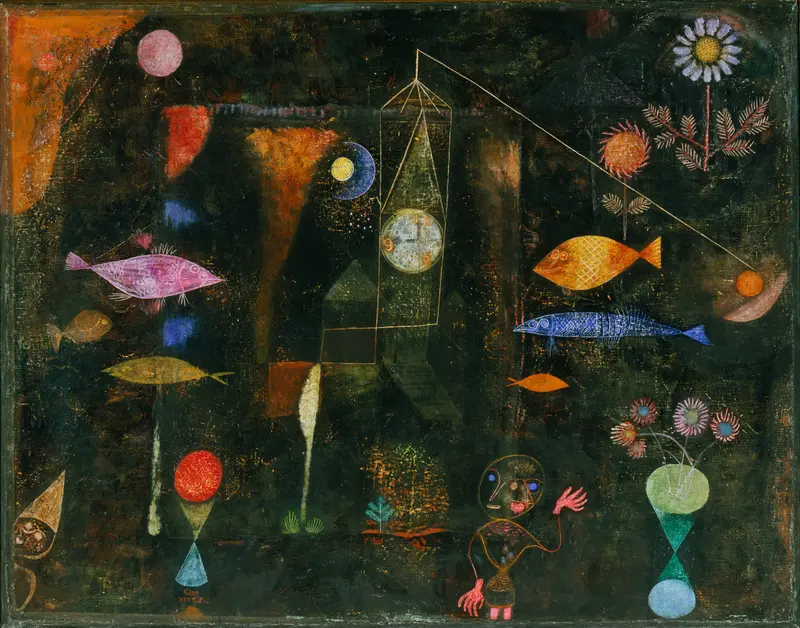
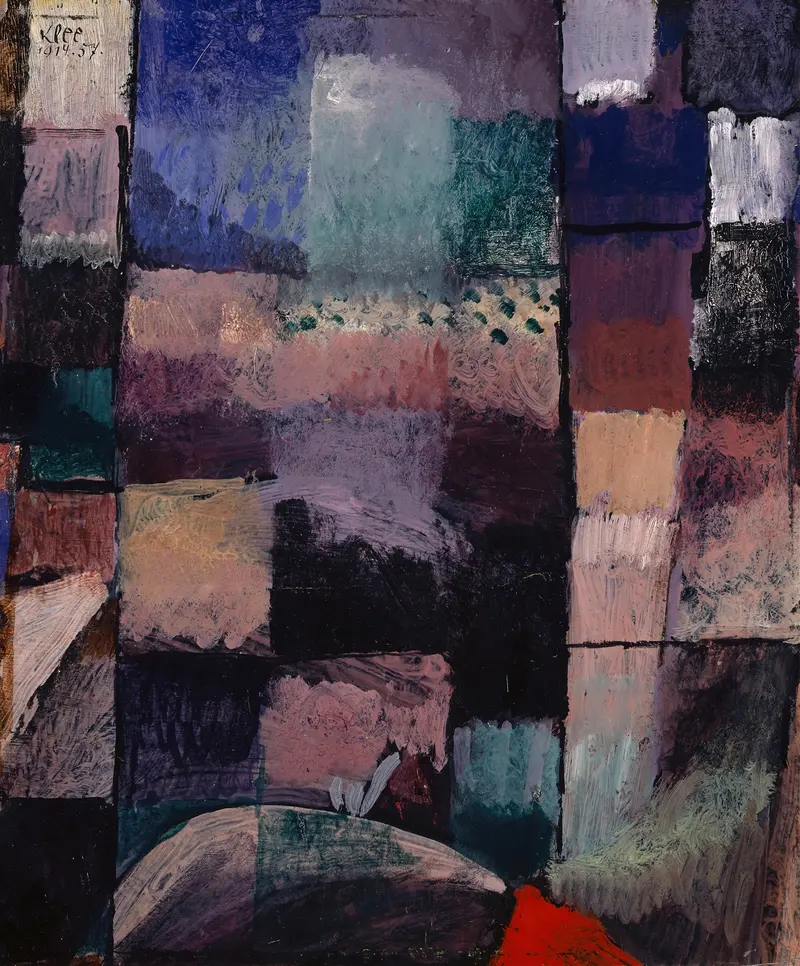
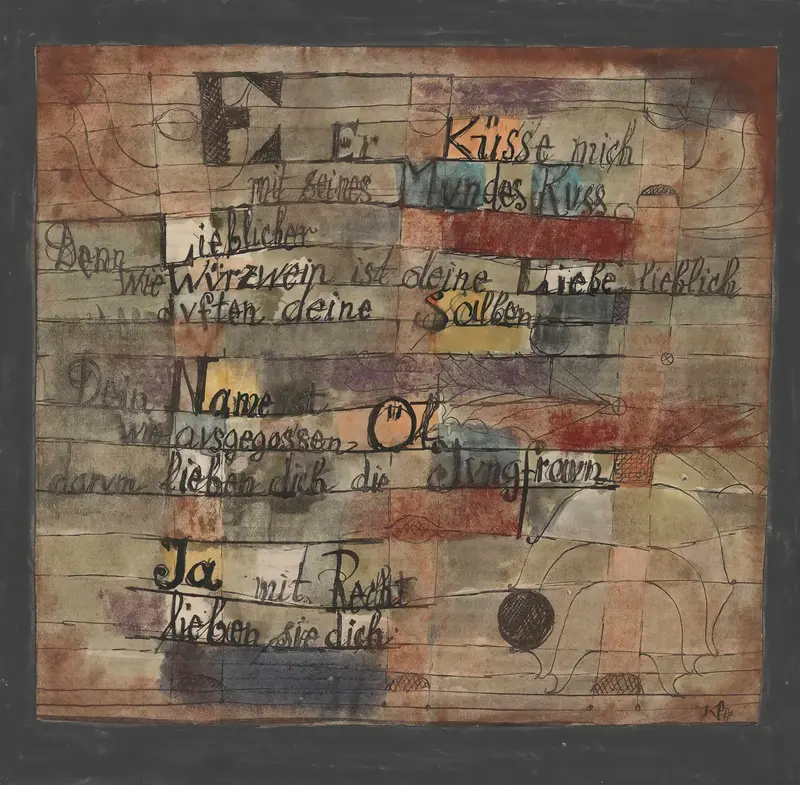
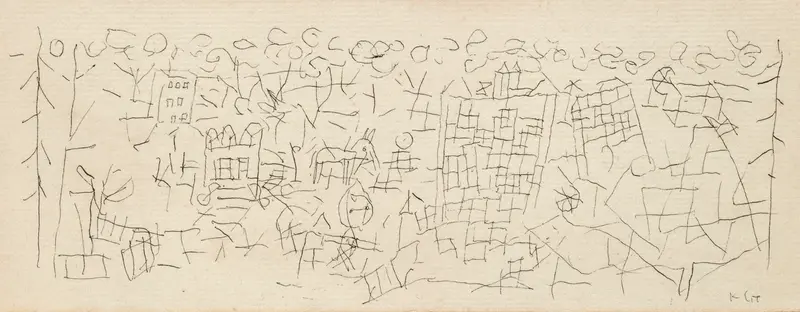
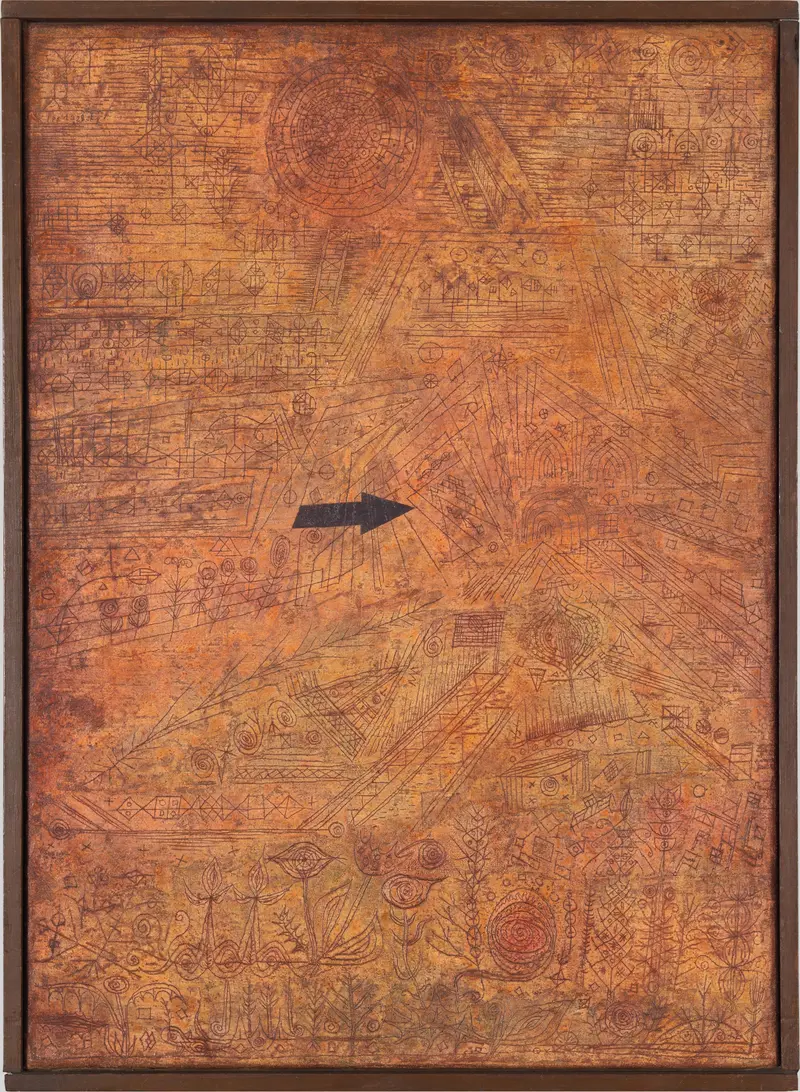
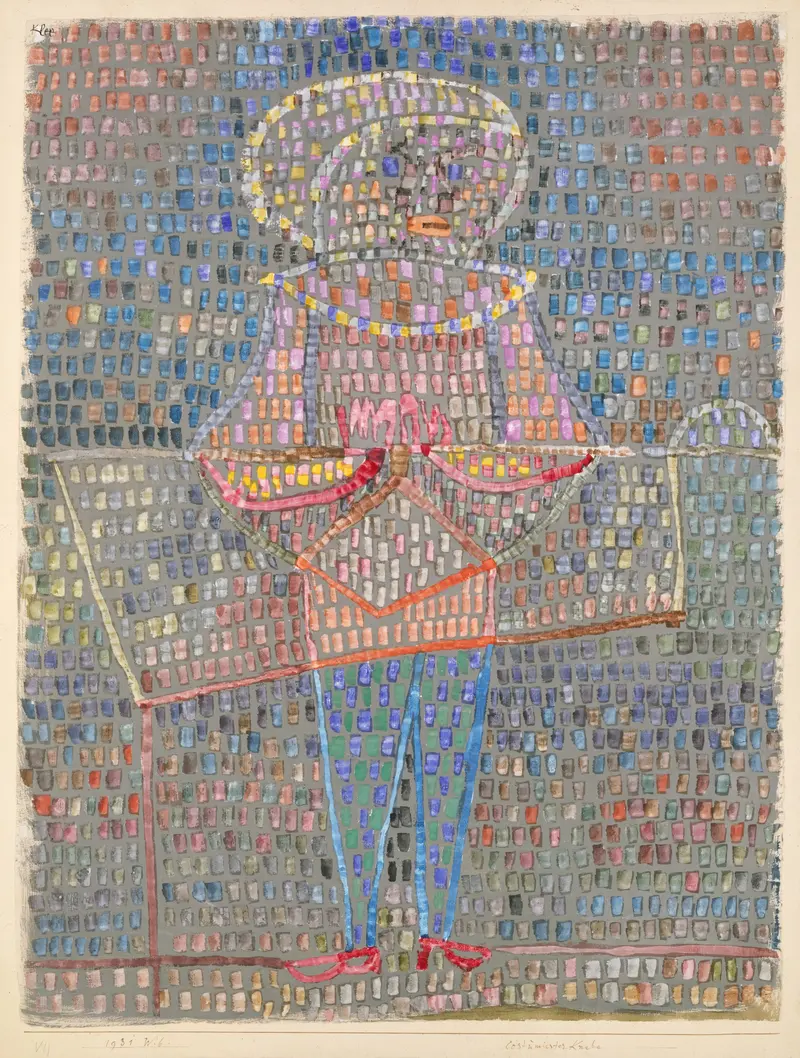
In Wüsten-Räuber, Paul Klee uses vibrant colors such as deep reds, yellows, and blues. The painting features abstract figures that seem to dance across the canvas. The setting appears to be a desert landscape, suggested by the warm tones and sparse forms.
The overall composition is dynamic, evoking a sense of movement and energy. The painting is characterized by Klee's unique style, which blends abstraction with figuration. The brushwork is expressive, with bold strokes that create texture and depth. Viewers can observe the interplay of colors and shapes, which is a hallmark of Klee's work.
This piece exemplifies the artist's exploration of form and color. Wüsten-Räuber was created during a period when Klee was deeply influenced by his travels and experiences in North Africa. This work reflects his fascination with the desert and its inhabitants. An interesting fact about this painting is that it showcases Klee's ability to merge reality with imagination, creating a dreamlike quality.
It remains a significant example of his contribution to expressionism.