
Yashmak of Transparent Muslin — History & Facts
What first catches the eye in Yashmak of Transparent Muslin is the way the sitter’s gaze meets our own—steady, neither inviting nor dismissive, but quietly aware. The yashmak, rendered in delicate strokes of white and gold, blurs the boundary between concealment and revelation; its sheer fabric softens the features beneath, yet leaves the eyes—dark, luminous, and direct—unmistakably present. The background, a field of rich rose, pushes the figure forward, bathing her in a light that seems to glow from within the canvas.
Every brushstroke of the muslin is purposeful, capturing both the material’s fragility and the sitter’s composure. The artist’s signature in the upper right corner is a final, purposeful mark, anchoring this fleeting moment in time. Works like this, produced between 1873 and 1909, belong to a world fascinated by the interplay of tradition and modernity, especially in the hands of painters drawn to the cultures of the Eastern Mediterranean. Such portraits were often painted for Western collectors, eager for glimpses of lives and customs far from their own, yet the sensitivity here resists easy exoticism.
Theodoros Ralli, known for his interest in Orientalist themes, brings a quiet dignity to his subject, reflecting a period when artists navigated the shifting boundaries of empire, gender, and representation. Little is recorded about the journey of this particular painting, but its survival in a collection today invites us to look again—past the veil, into the poised, unguarded humanity beneath.
More Artworks by Theodoros Ralli

The Sleeping Concubine
Theodoros Ralli
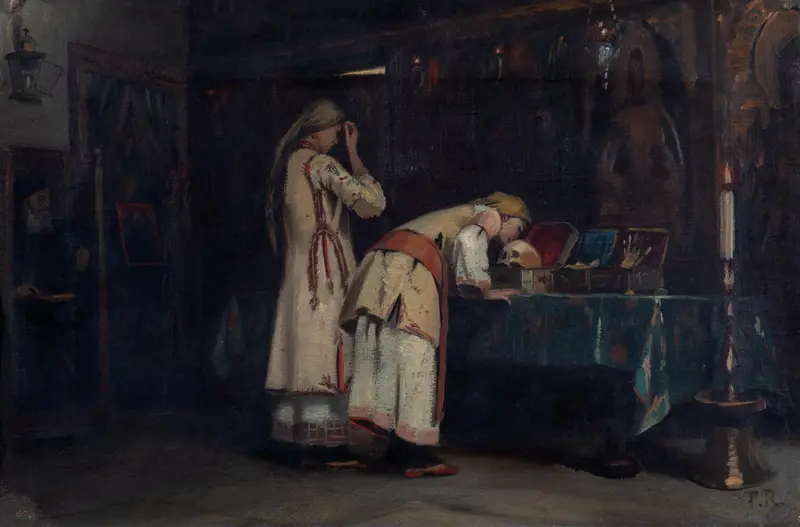
Holy Relics
Theodoros Ralli
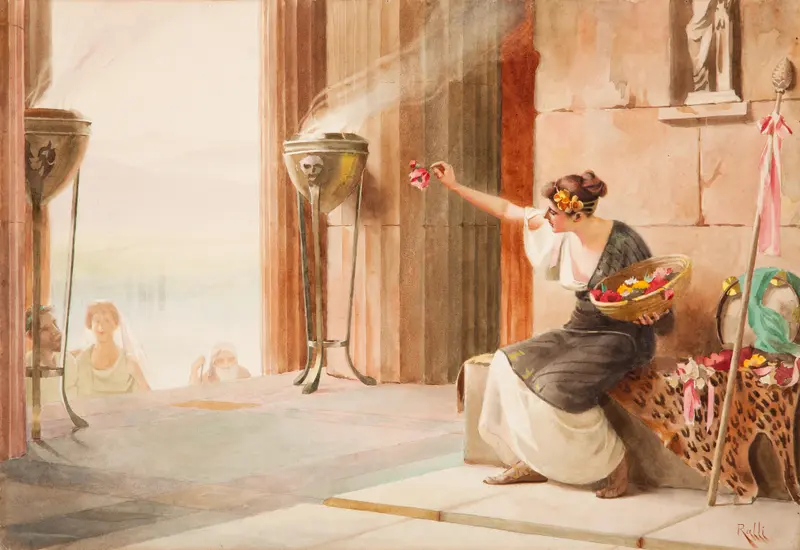
Flower Seller at the Parthenon
Theodoros Ralli
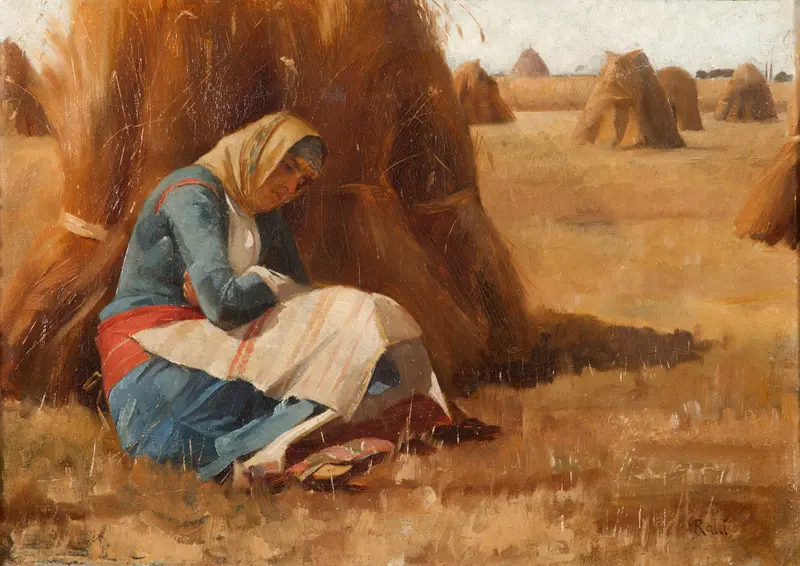
Resting by a Haystack
Theodoros Ralli
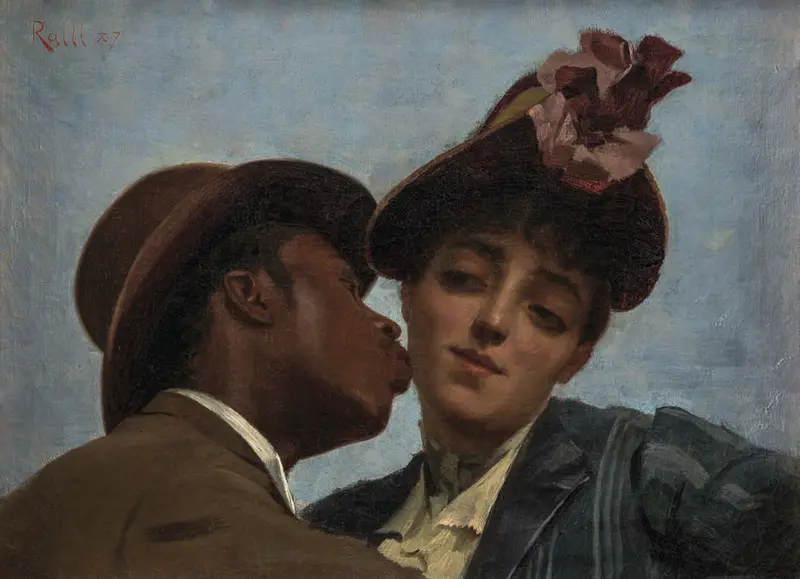
The Kiss (Ralli)
Theodoros Ralli
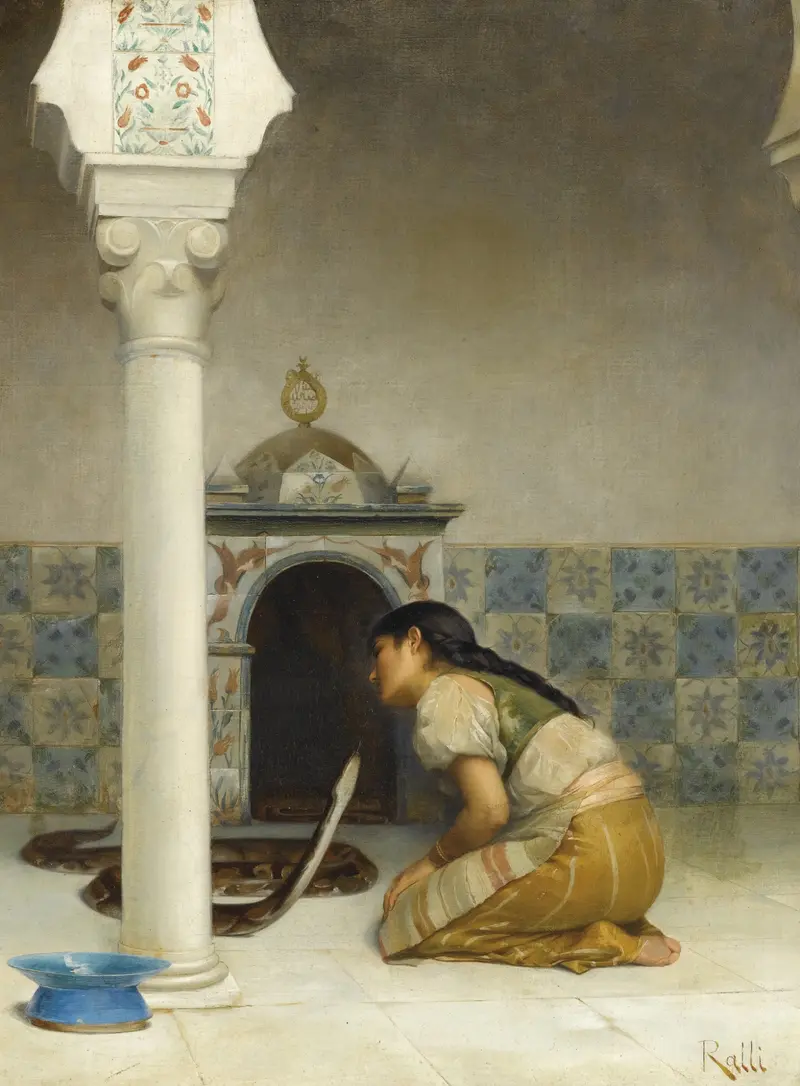
The Sacred Serpent
Theodoros Ralli
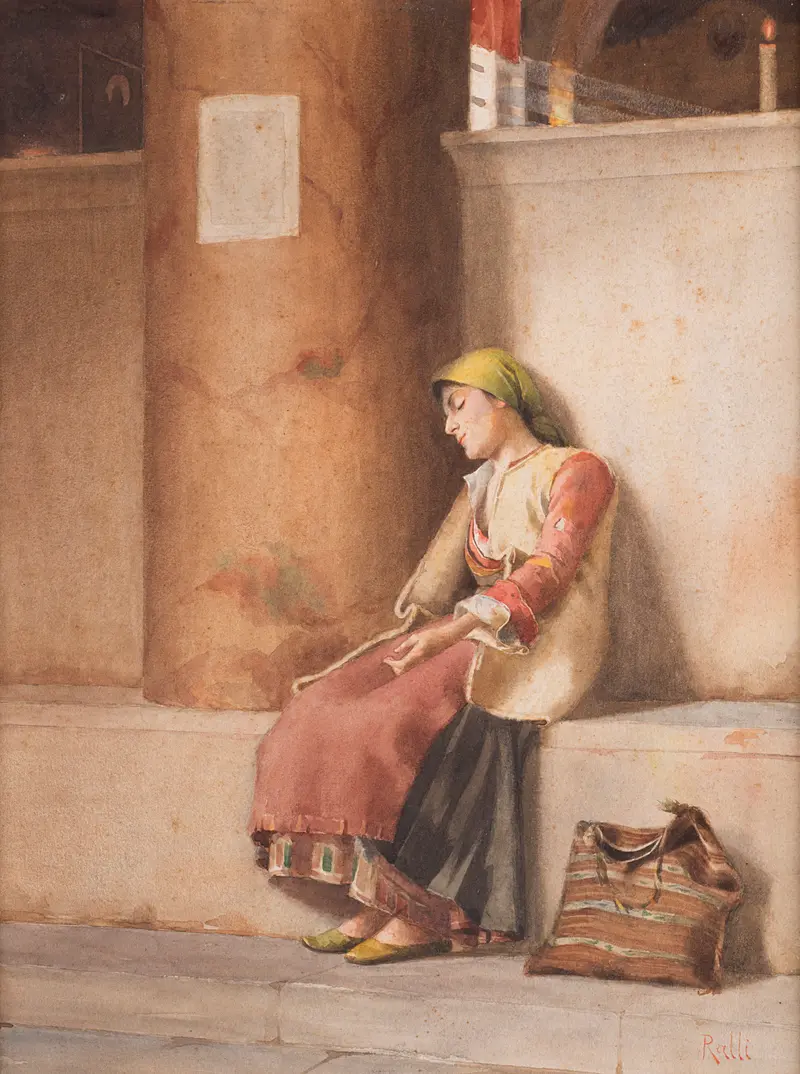
A Moment of Reflection
Theodoros Ralli
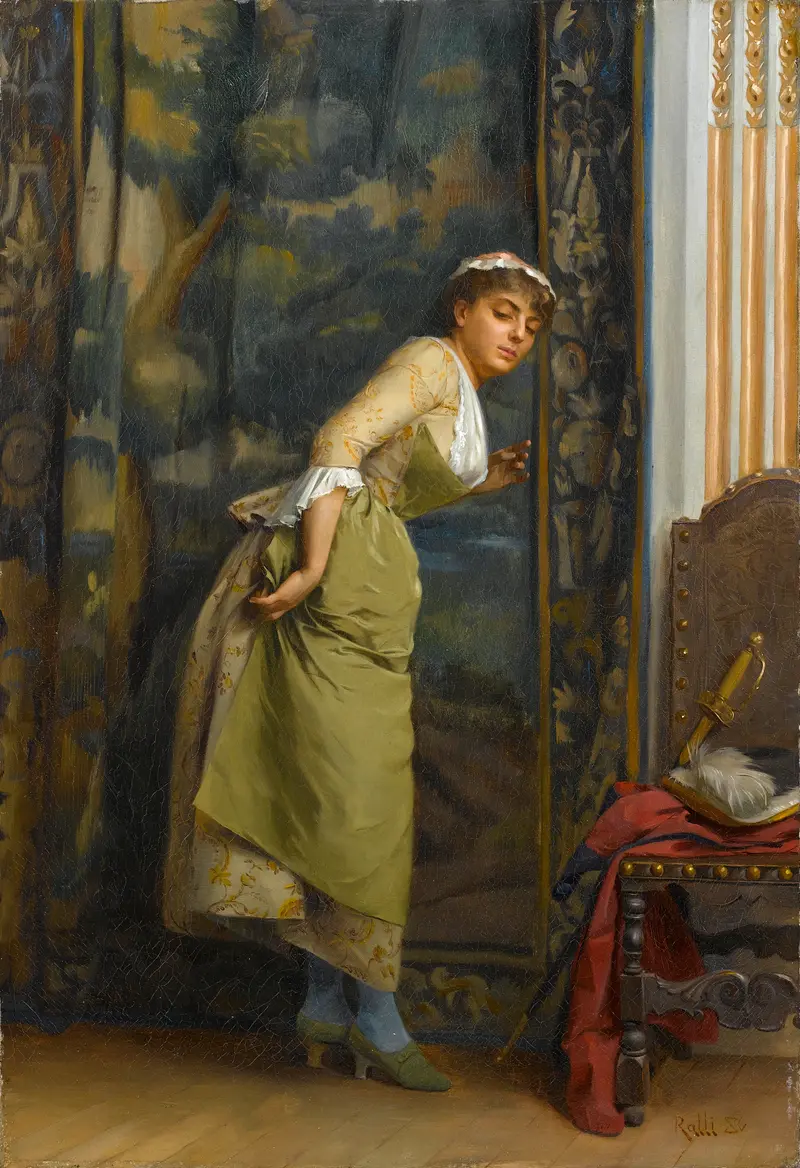
Eavesdropping (Ralli)
Theodoros Ralli
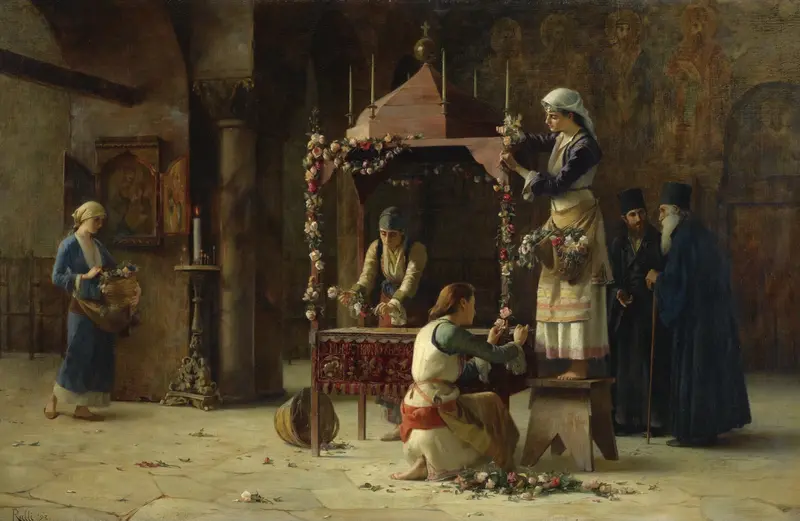
Holy Friday, Greece
Theodoros Ralli
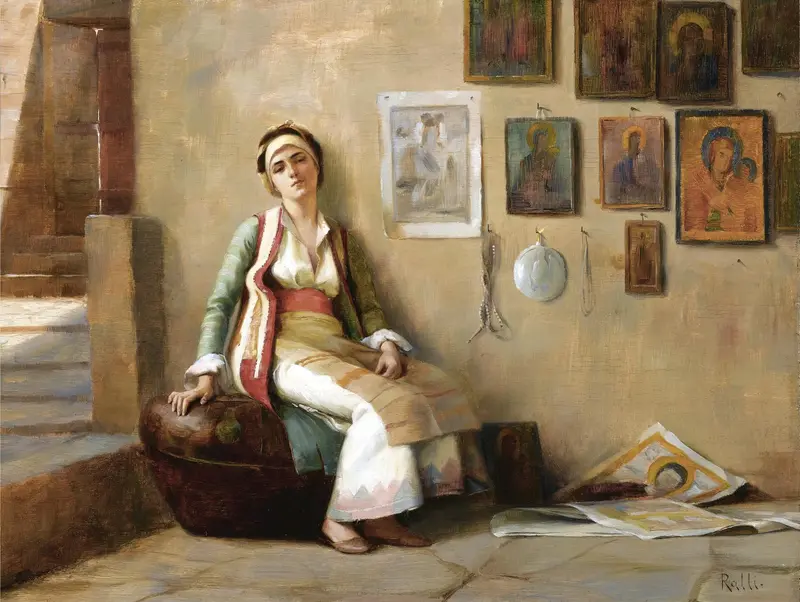
A Moment's Rest
Theodoros Ralli





