
Young Bedouin Girl — History & Facts
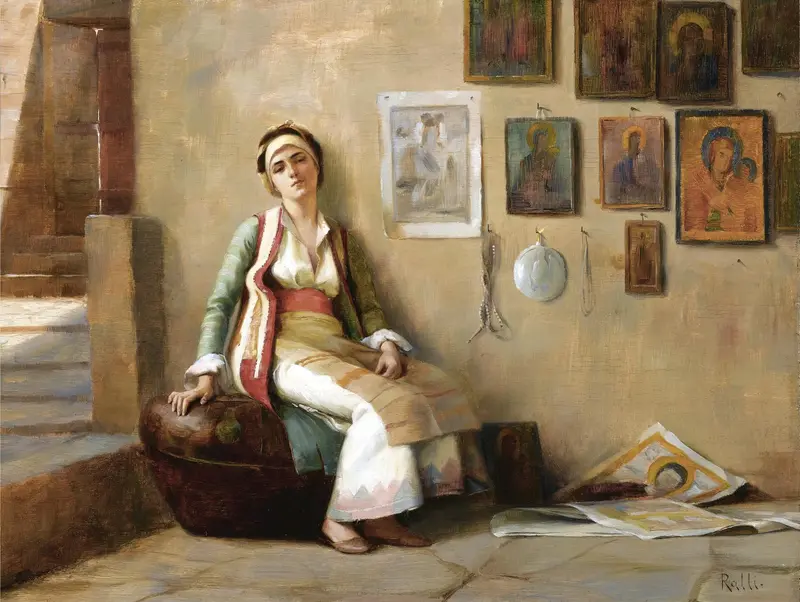
What first seizes the eye in Young Bedouin Girl is the quiet gravity of her gaze, turned away from us, fixed on something outside the frame. Her profile is sharply lit against a plain, unfinished ground, as if the painter wanted nothing to distract from the contours of her face and the thoughtful set of her mouth. The blue-grey garment she wears is rendered with broad, confident strokes, its folds and seams sketched rather than fussed over, while the headscarf, tied simply, frames her features and hints at a life shaped by sun and wind.
There is no ornament, no narrative clutter—just the dignity of a young person caught in a moment of stillness, her expression poised between childhood and the adult world. Painted in 1890, this work belongs to a period when European artists were fascinated by the cultures and peoples of North Africa and the Middle East, often traveling to capture their impressions firsthand. Theodoros Ralli was among those drawn to such subjects, working at a time when Orientalism shaped the tastes of collectors and the ambitions of painters. While history has kept few traces of this particular painting’s journey or its original purpose, its directness stands apart from the more theatrical scenes favored by many of Ralli’s contemporaries.
The result is a portrait that asks us to look again, not for spectacle, but for the quiet presence of an individual, preserved across the years.
More Artworks by Theodoros Ralli

The Sleeping Concubine
Theodoros Ralli
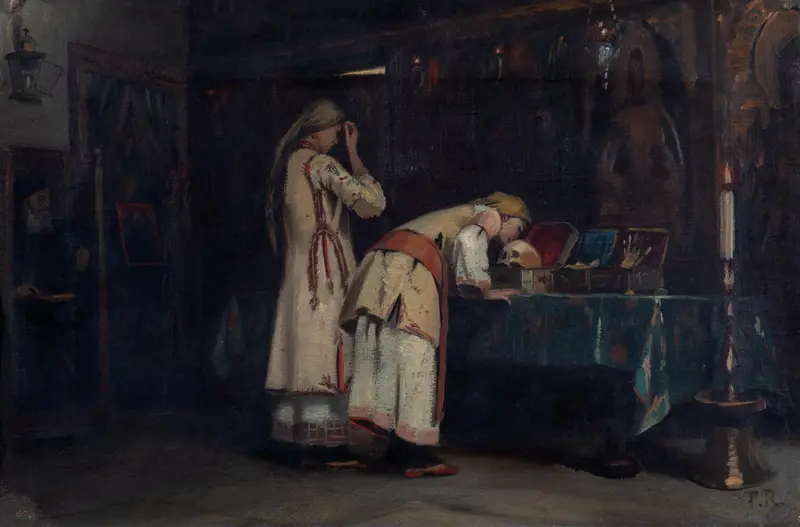
Holy Relics
Theodoros Ralli
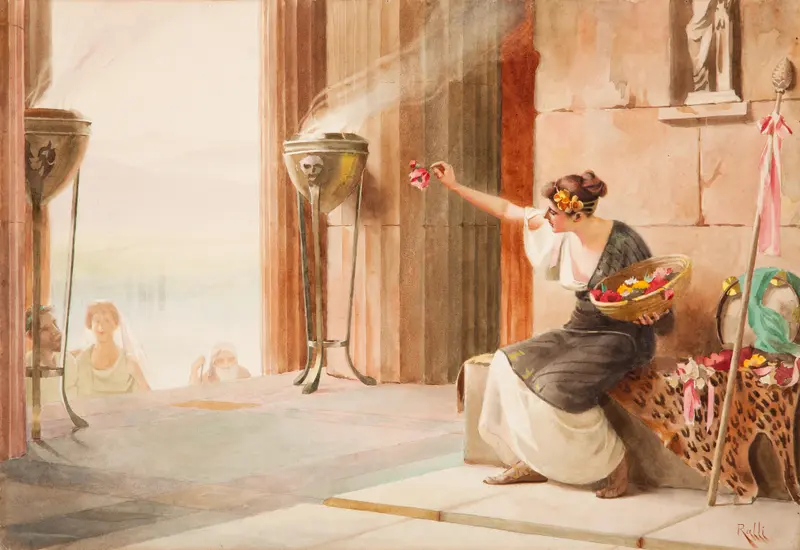
Flower Seller at the Parthenon
Theodoros Ralli
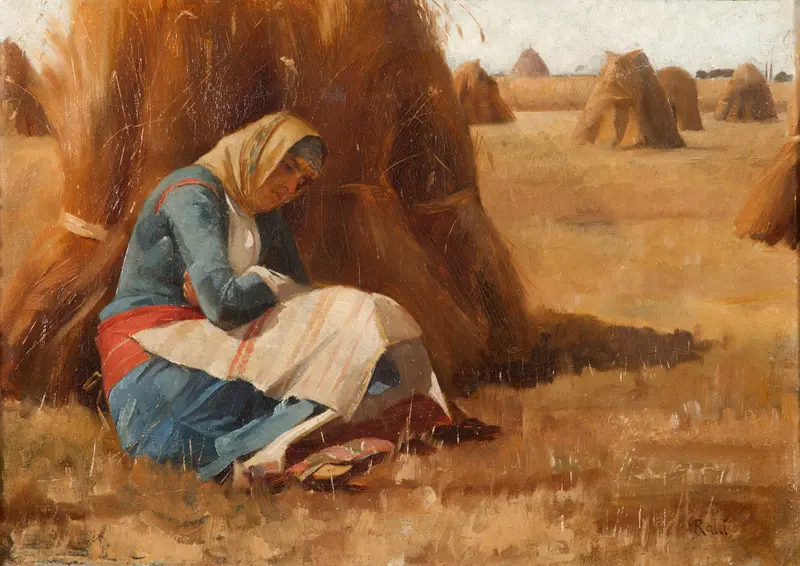
Resting by a Haystack
Theodoros Ralli
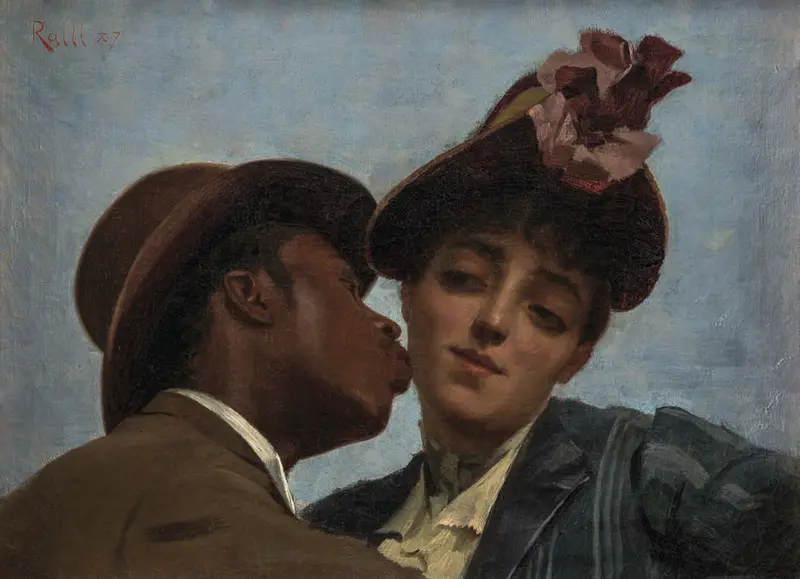
The Kiss (Ralli)
Theodoros Ralli
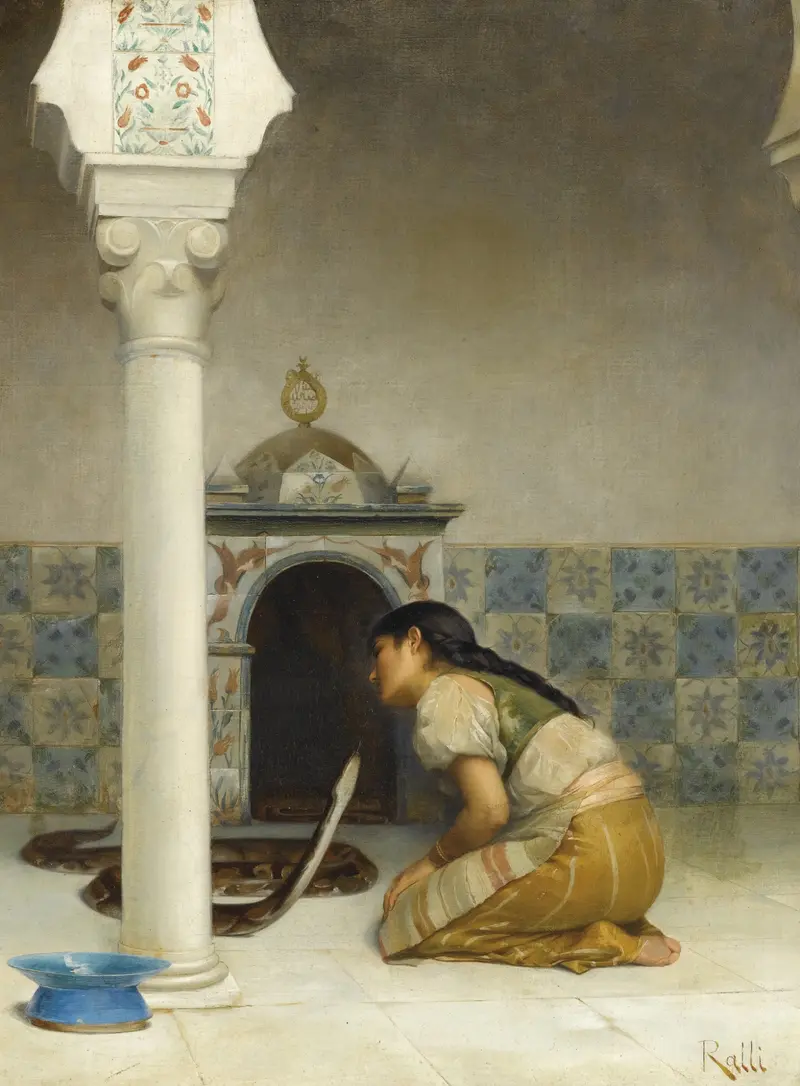
The Sacred Serpent
Theodoros Ralli
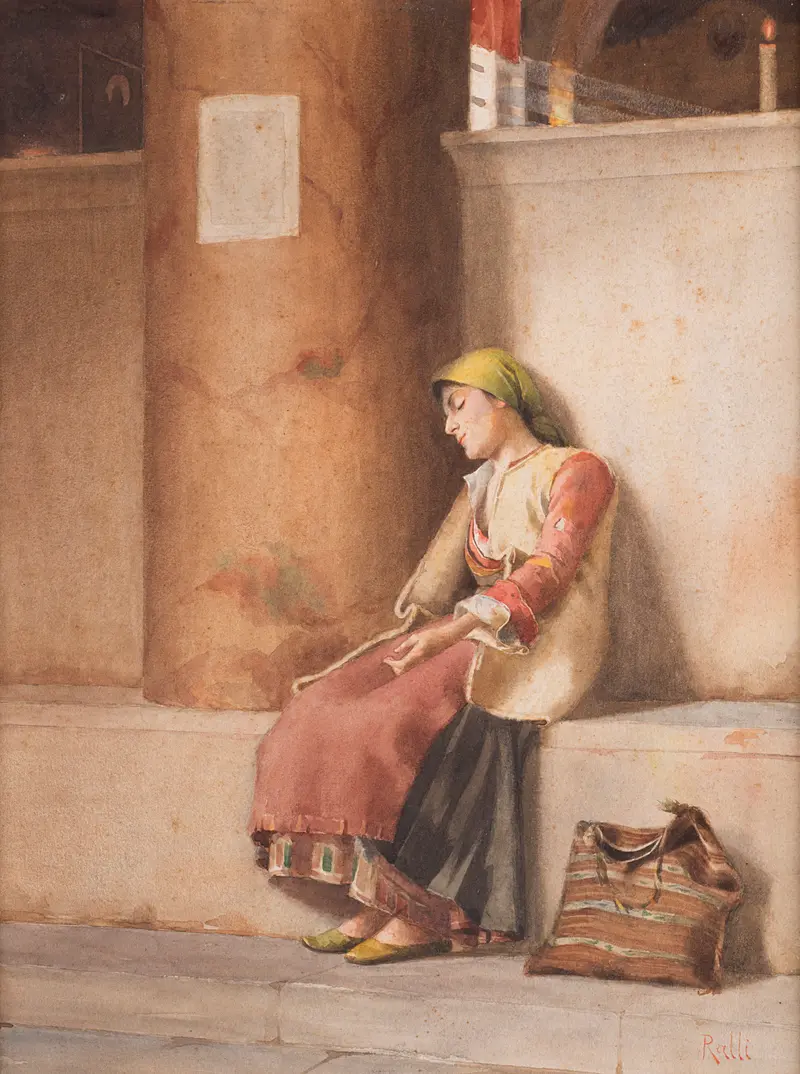
A Moment of Reflection
Theodoros Ralli
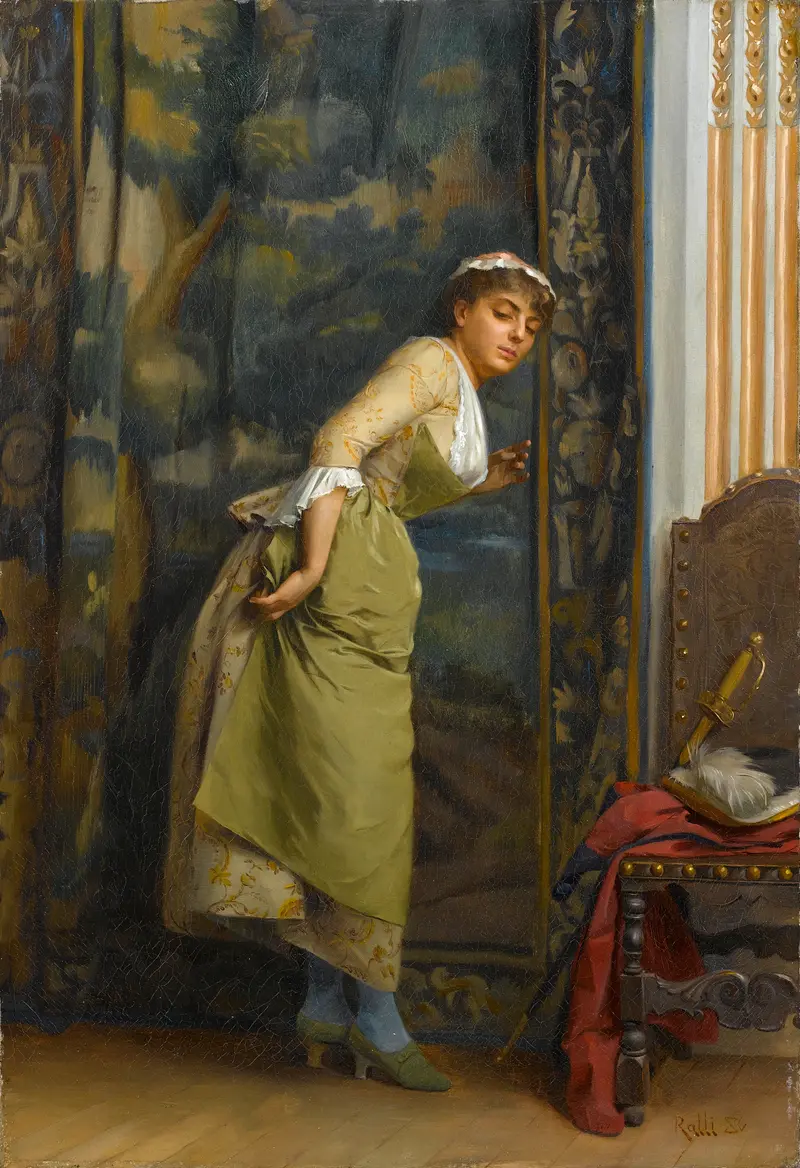
Eavesdropping (Ralli)
Theodoros Ralli
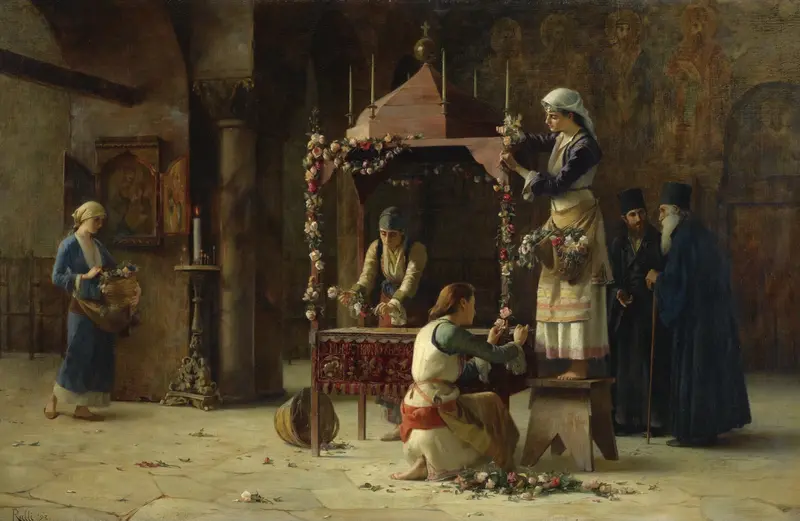
Holy Friday, Greece
Theodoros Ralli
A Moment's Rest
Theodoros Ralli





