
Young Woman in Blue (Giovane donna in azzurro) — History & Facts
When Amedeo Modigliani painted Young Woman in Blue (Giovane donna in azzurro) in 1919, he was living in Paris, already gravely ill but still working at a feverish pace. This portrait is one of the last he completed before his death at just 35, and its sitter remains unidentified—a mystery that has intrigued scholars and collectors alike. Some have speculated she was a friend or patron, while others suggest she was one of the many models who passed through Modigliani’s Montparnasse studio.
The painting stands as a testament to the artist’s enduring fascination with the human face, created in the final year of his short, tumultuous life. The woman sits upright, her elongated neck and almond-shaped eyes instantly recognizable as signatures of Modigliani’s late style. Her blue dress is rendered in broad, fluid strokes, the color echoing the melancholy that seems to settle over her gentle, mask-like features. Unlike the psychological intensity of Modigliani’s earlier nudes or the directness of his male portraits, here the mood is quieter, more introspective.
The sitter’s hands are folded neatly in her lap, her gaze slightly averted, inviting the viewer into a private moment. Compared to Renoir’s lush, lively women or the stark realism of Soutine, Modigliani offers a vision that is both stylized and deeply personal. After its creation in 1919, Young Woman in Blue passed through several private collections, reflecting the growing appreciation for Modigliani’s work in the decades following his death. The painting’s precise provenance is not fully documented, a common fate for many of his portraits, which were often sold directly from the artist’s studio or through Parisian dealers.
Today, it is recognized as a quintessential example of Modigliani’s late portraiture, capturing both the spirit of Montparnasse’s bohemian circles and the artist’s own search for beauty in simplicity. Its place in the canon of early twentieth-century art is secure, even as the identity of its enigmatic sitter remains an open question.
More Artworks by Amedeo Modigliani
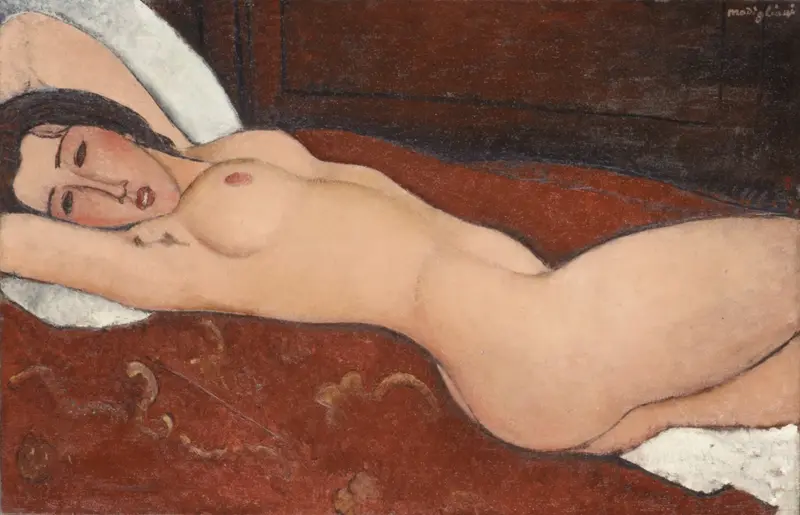
Reclining Nude
Amedeo Modigliani

Portrait Of Jeanne Hébuterne
Amedeo Modigliani

Jeanne Hébuterne
Amedeo Modigliani
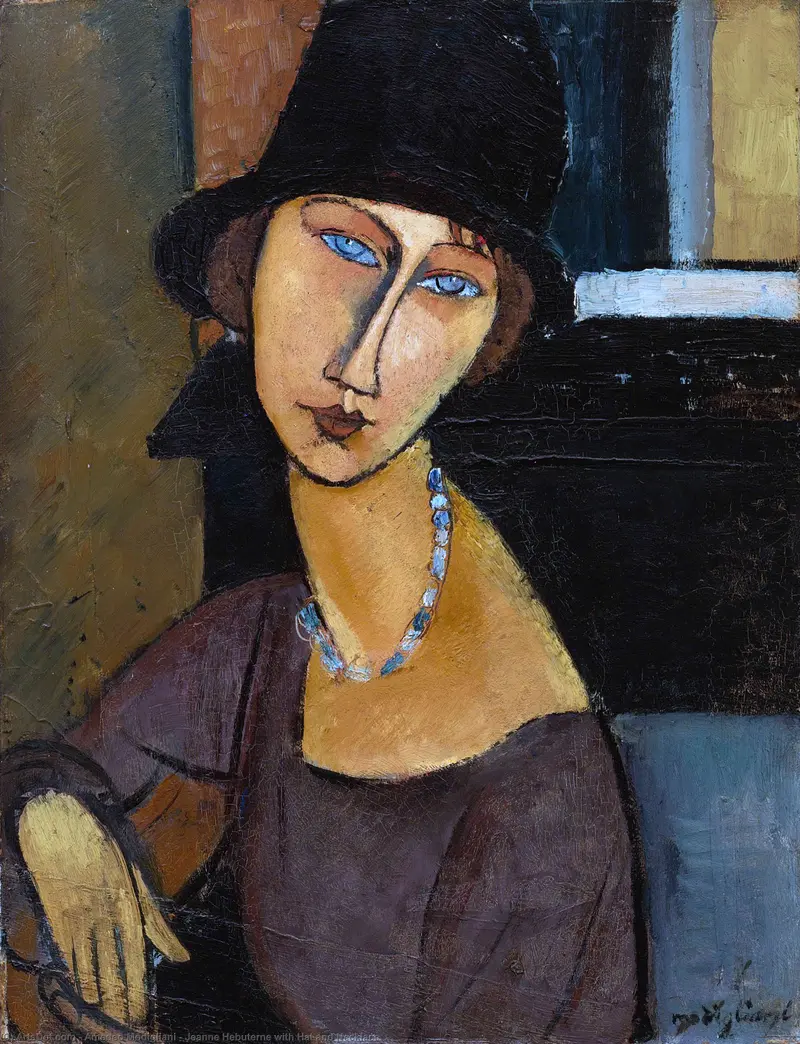
Jeanne Hébuterne with Hat and Necklace
Amedeo Modigliani
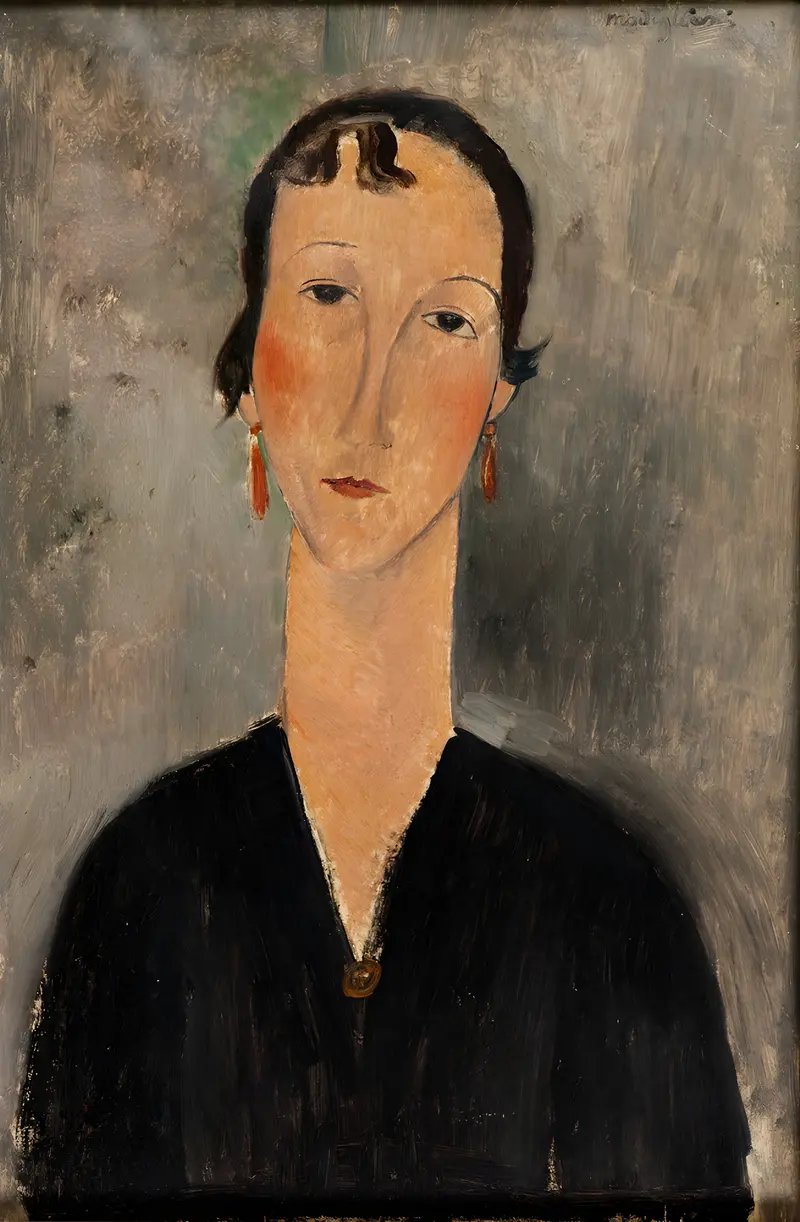
Femme aux boucles d'oreilles
Amedeo Modigliani
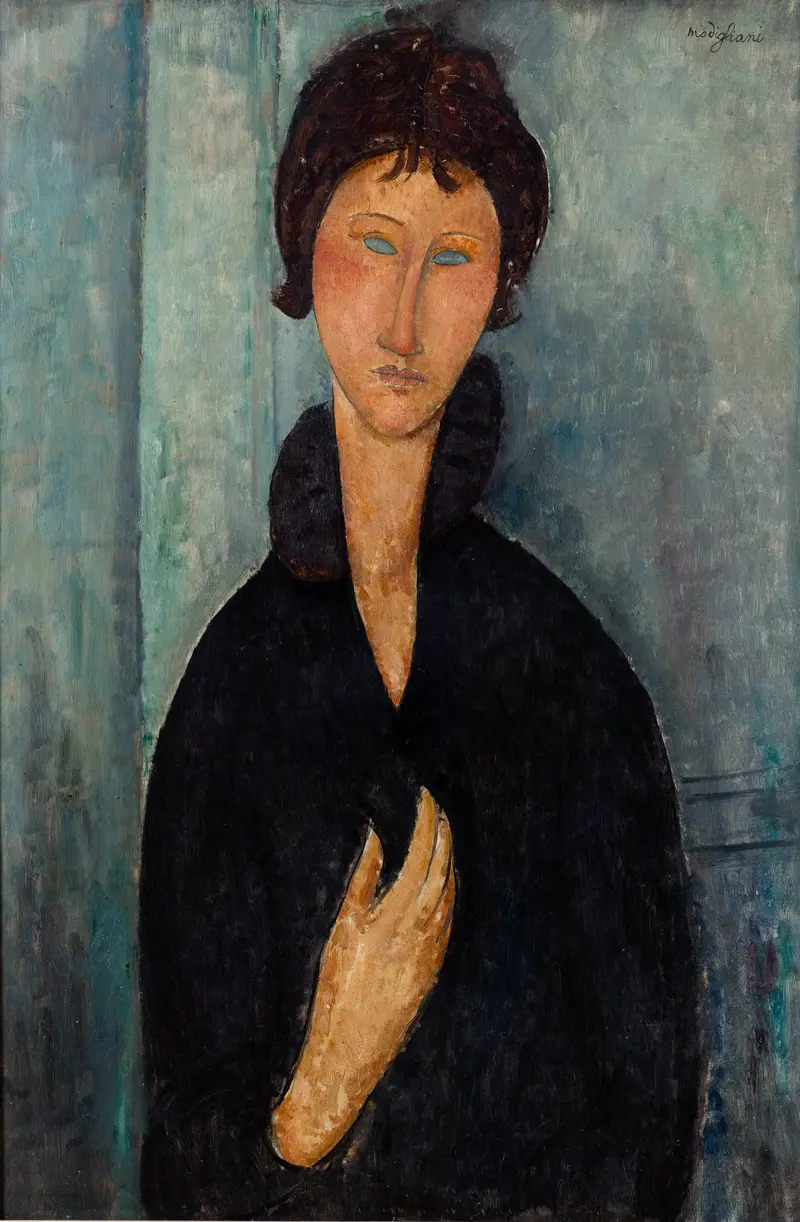
Femme aux yeux bleus
Amedeo Modigliani
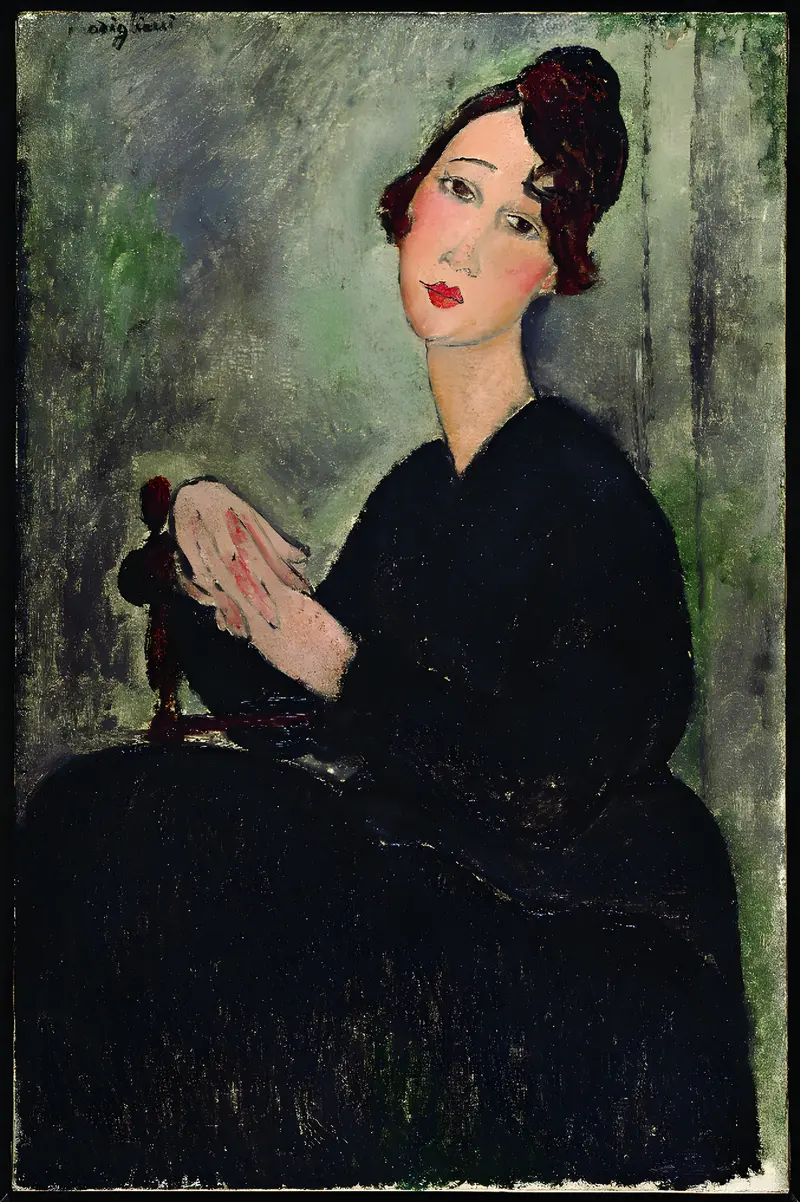
Portrait of Dedie
Amedeo Modigliani
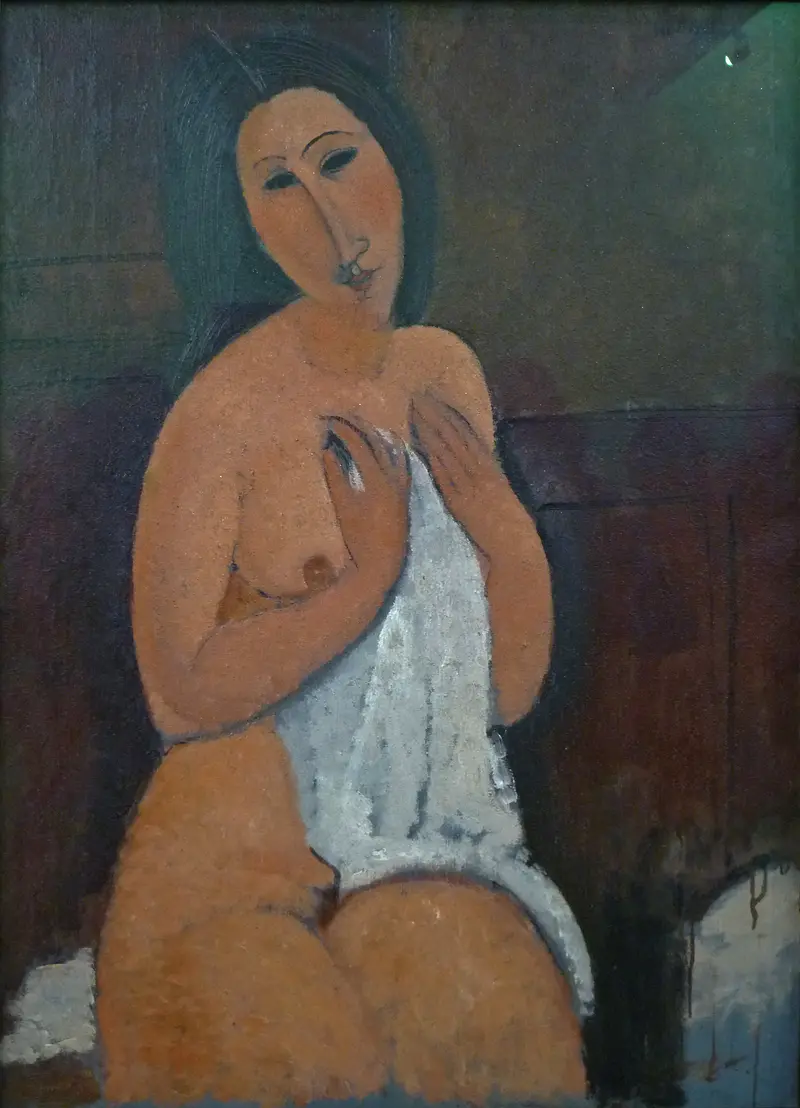
Seated nude with shirt
Amedeo Modigliani
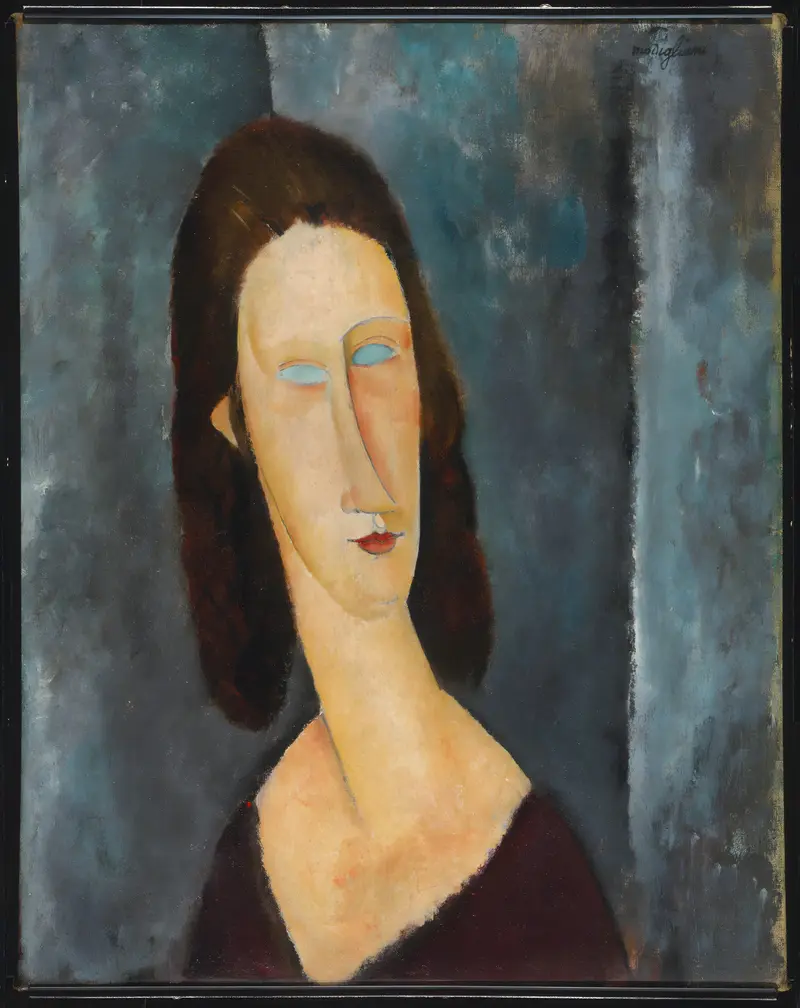
Blue Eyes (Portrait of Madame Jeanne Hébuterne)
Amedeo Modigliani
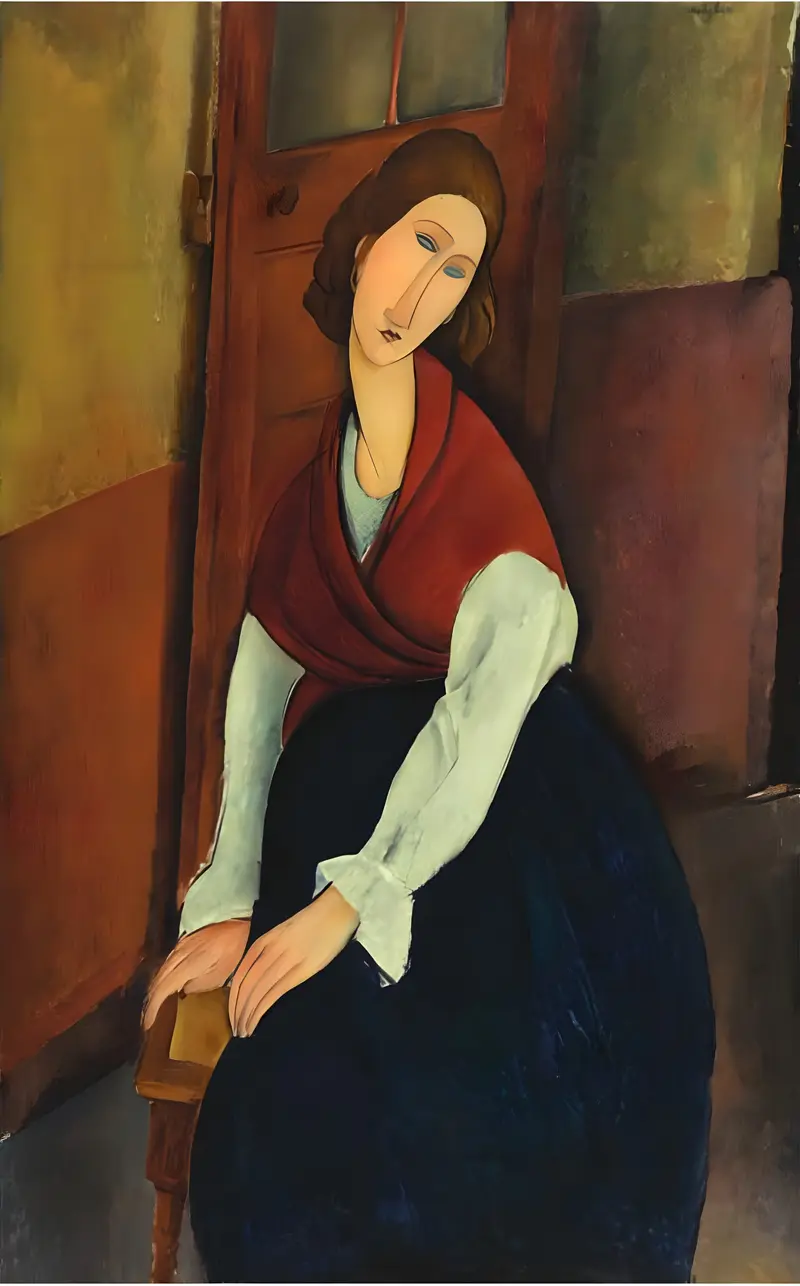
Jeanne Hebuterne in Red Shawl
Amedeo Modigliani





