
Ypres Remember — History & Facts
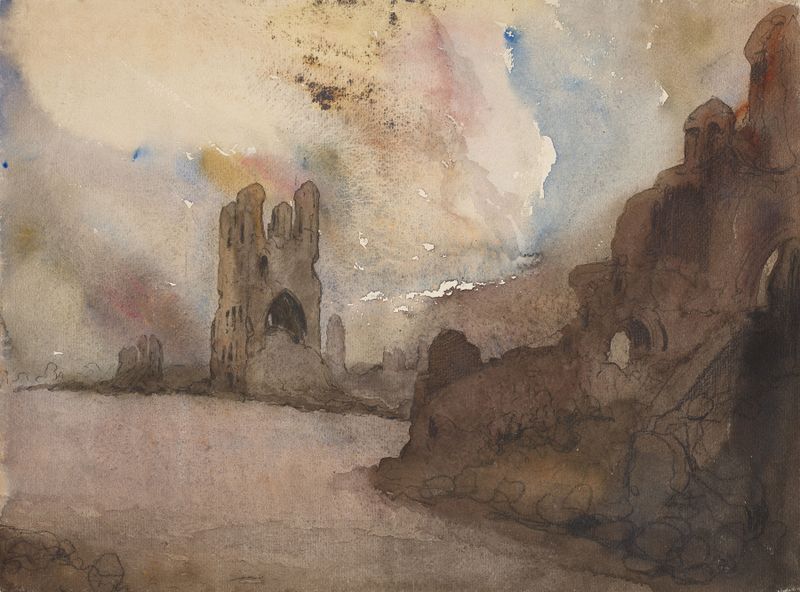
What secret hides in the quiet of the canvas? Beneath the surface of decay, the echoes of past lives linger, urging us to look deeper. Begin your exploration by directing your gaze to the left, where the ruins rise from the earth, skeletal and silent. The muted palette of browns and grays evokes a somber atmosphere, while a gentle light washes over the remnants, illuminating the fragile beauty of destruction. Notice how the brushstrokes convey not only shape but also texture, emphasizing the crumbling walls and disintegrating roofs that once sheltered vibrant life. Yet, within this portrayal of desolation lies profound emotional tension.
The stark contrasts between light and shadow suggest a struggle — a haunting reminder of what was lost amidst the chaos of war. Small details, like the delicate sprigs of grass pushing through the rubble, symbolize resilience and the possibility of rebirth; they remind us that life, even in decay, seeks to persist. This duality invites contemplation on the scars of history, revealing layers of grief interwoven with hope. In 1919, Alfred Ost created this poignant work against the backdrop of post-World War I Europe, a time when the scars of conflict were still fresh.
Having witnessed the devastation firsthand, the artist sought to capture the ruins of Ypres, a city that had seen relentless suffering. This piece reflects not only his personal experience but also the wider cultural shift in the art world as artists began to confront themes of loss and memory in the wake of tragedy.
More Artworks by Alfred Ost
Browse all →
Oostende in de mist
Alfred Ost

Ypres Remember
Alfred Ost
Ypres Remember
Alfred Ost
Ypres Remember
Alfred Ost

Bedevaarders op weg naar de Sint Salavtorkerk van Hakendover
Alfred Ost
‘België vrij. De nieuwe tijd.’
Alfred Ost

Vierkantshoeve
Alfred Ost

Huis met rieten dak in een veld
Alfred Ost

Italiaanse kerk en bomen
Alfred Ost

Sint-Salvatorkerk in Hakendover – zijaanzicht
Alfred Ost





