Záhrada s kozami Ján — History & Facts
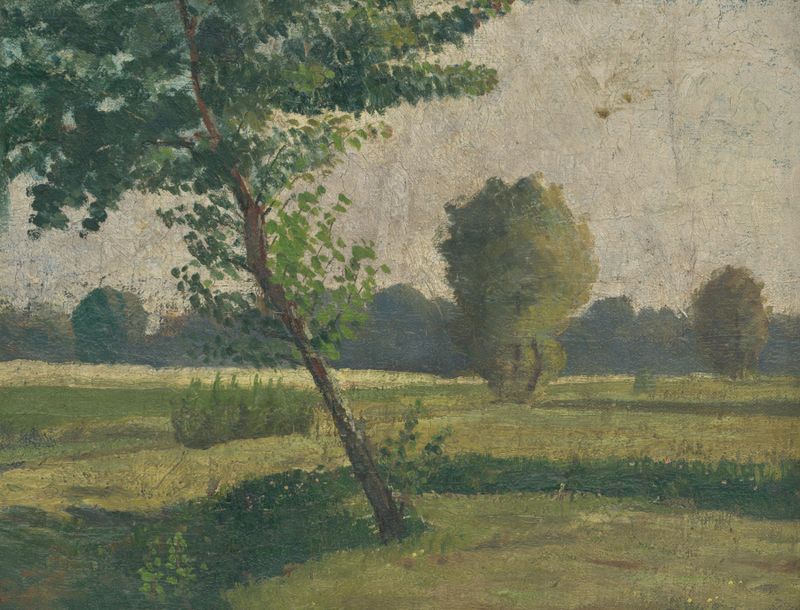
What if silence could speak through light? In the gentle embrace of a garden, shadows from the past stir softly, whispering memories of what once was. Look to the lush greenery that blankets the canvas; vibrant strokes of emerald and gold draw the eye first to the goats, their stillness embodying a serene vulnerability. Notice how the dappled sunlight filters through the leaves, casting intricate patterns on the ground, illuminating the tranquil scene while simultaneously hinting at a deeper longing. The balance of light and shadow creates a palpable tension, inviting you to breathe in the air thick with unspoken farewells. Within this pastoral setting, one can sense a contrast between life and loss.
The goats, symbols of innocence, graze obliviously, yet they inhabit a world steeped in silence—a silence that speaks volumes. The meticulous details, from the gentle sway of the grass to the soft contours of the animals, suggest that beneath the surface of quietude lies the weight of memories and the ache of absence, evoking an emotional depth that resonates long after the initial gaze. Created in 1907, the artist experienced both personal and artistic upheaval in Europe. Ján Thain, influenced by the changing tides of the art world, strived for authenticity in his work.
This piece reflects his connection to nature, as well as his confrontation with the emotional landscapes shaped by the era's tumult, providing a window into both his inner world and the collective experiences of loss during a time of transformation.