Zimná krajina — History & Facts
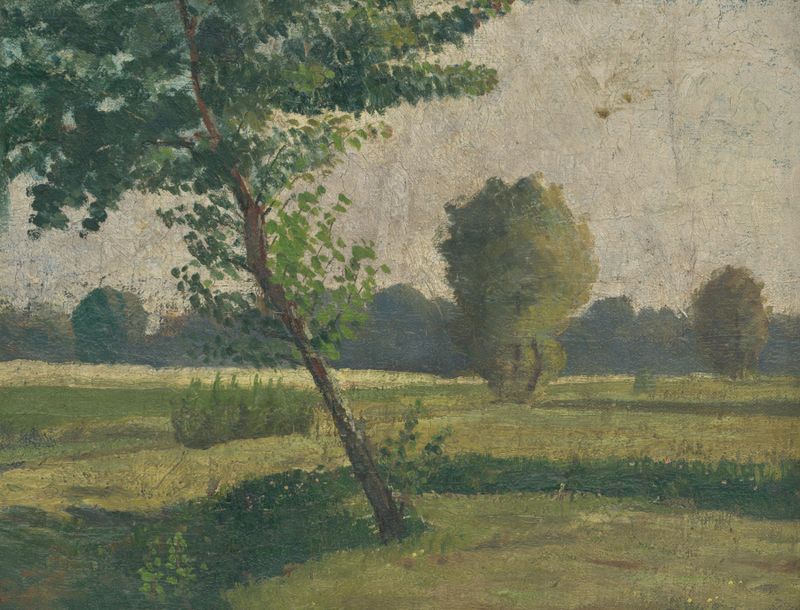
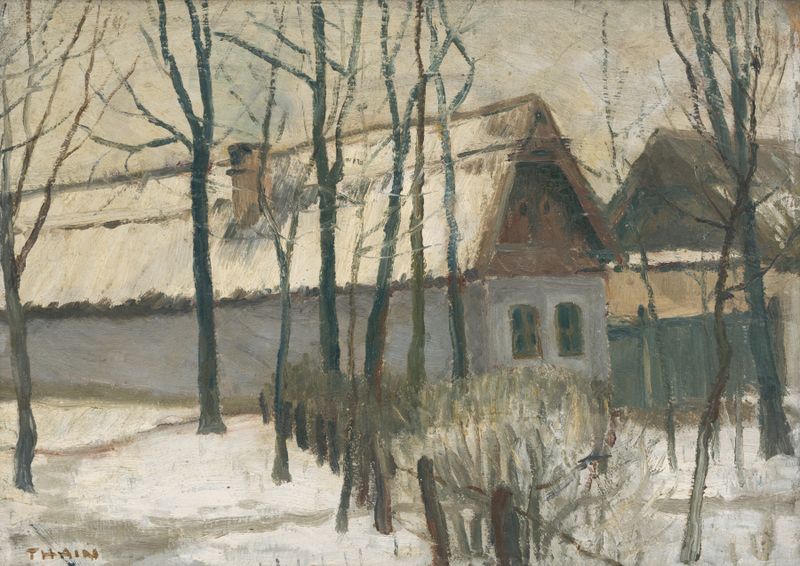
Could beauty survive in a century of chaos? In Zimná krajina, a hauntingly serene winter landscape invites contemplation, challenging us to seek solace in the depths of nature’s embrace. Look to the left where a cluster of bare trees stands resilient against the fallen snow, their dark silhouettes stark against the soft white blanket below. Notice how the cool blues and subtle grays of the sky blend seamlessly with the ground, creating an ethereal horizon that seems to whisper secrets of the season. The gentle brushstrokes convey a sense of stillness, while highlights of silver capture the fleeting light, drawing your gaze through the tranquil expanse. Beneath its icy surface lies an emotional tension.
The starkness of the landscape speaks to isolation and longing, reflecting a world caught in the throes of transformation. The balance of light and shadow reveals the duality of beauty and desolation, hinting at the artist's own obsession with capturing fleeting moments of grace amid chaos. The composition invites the viewer to explore not just what is seen, but what lingers in the heart. During the years he created this work, Ján Thain was deeply engaged with the evolving art movements of the early 20th century while living in Slovakia.
The years between 1915 and 1925 were marked by societal shifts and personal challenges, yet he found a profound connection to the landscapes around him. This period fostered a unique exploration of emotional landscapes, as Thain sought to find meaning and connection in a world often overshadowed by turmoil.