
Edvard Munch Paintings: 7 Famous Works You Should Know
Edvard Munch paintings capture the raw essence of human emotion through his unique use of color and form. As a pioneer of Expressionism and Symbolism, Munch's works delve into themes of love, despair, and existential anxiety. His ability to convey deep emotional resonance through visual art has made him one of the most influential artists of the 19th and 20th centuries. Join us as we explore some of Munch's famous paintings that continue to captivate audiences worldwide.
1. The Scream (1895)

One of the most iconic Munch famous paintings, The Scream, epitomizes the anxiety and existential dread that Munch so vividly portrayed. The central figure's distorted face and the swirling, vibrant sky create a powerful visual tension. The contrast between the sky's fiery reds and the water's cool blues enhances the emotional turmoil depicted. This painting remains a cornerstone of Expressionism, capturing the overwhelming feeling of despair and isolation.
2. The Day After (1894)

In The Day After, Munch explores the aftermath of emotional upheaval. The painting's deep blues and grays envelop the central figure in a somber atmosphere. The contrast between the figure's flushed face and the surrounding darkness highlights the lingering sorrow and introspection. This work is a testament to Munch's ability to use color as a vehicle for emotional expression, aligning with the ideals of Symbolism.
3. The Sick Child (1907)
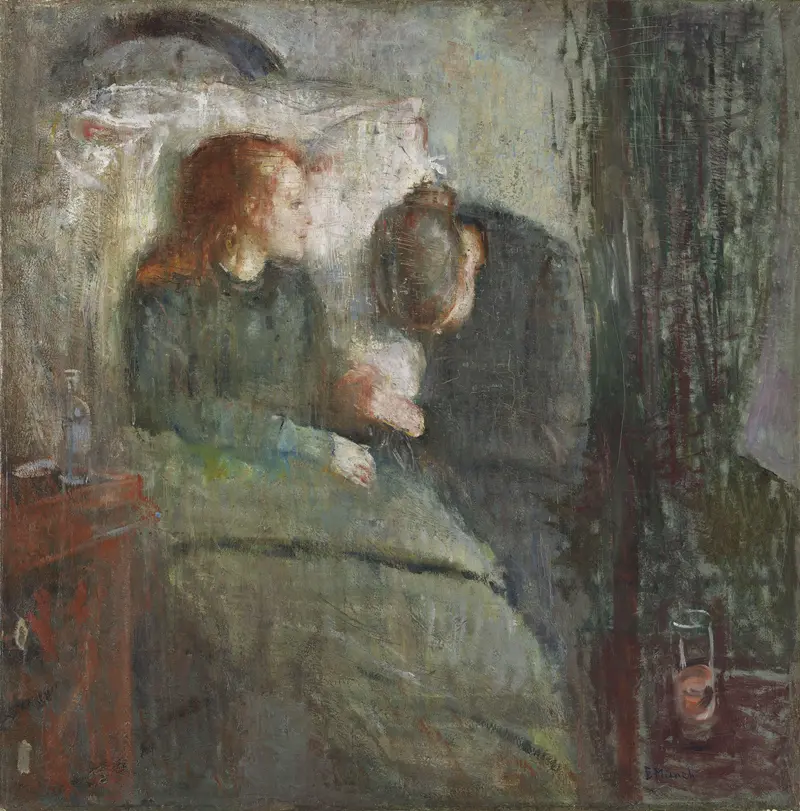
The Sick Child offers a poignant glimpse into vulnerability and hope amidst suffering. Munch's use of pale skin tones and distorted features conveys the fragile state of the child at the center of the composition. The interplay of dim lighting and contrasting colors adds depth to the emotional weight of the scene, reflecting the profound impact of illness on both the child and the figures surrounding her.
4. Despair (1894)

Despair captures the raw emotion of a solitary figure enveloped in shadow. The stark contrast of dark and ethereal colors creates a visceral tension that draws viewers into the depths of human experience. Munch's brushstrokes evoke a sense of vulnerability, inviting contemplation of the beauty and pain intertwined in moments of profound emotional turmoil.
5. Moonlight (1895)
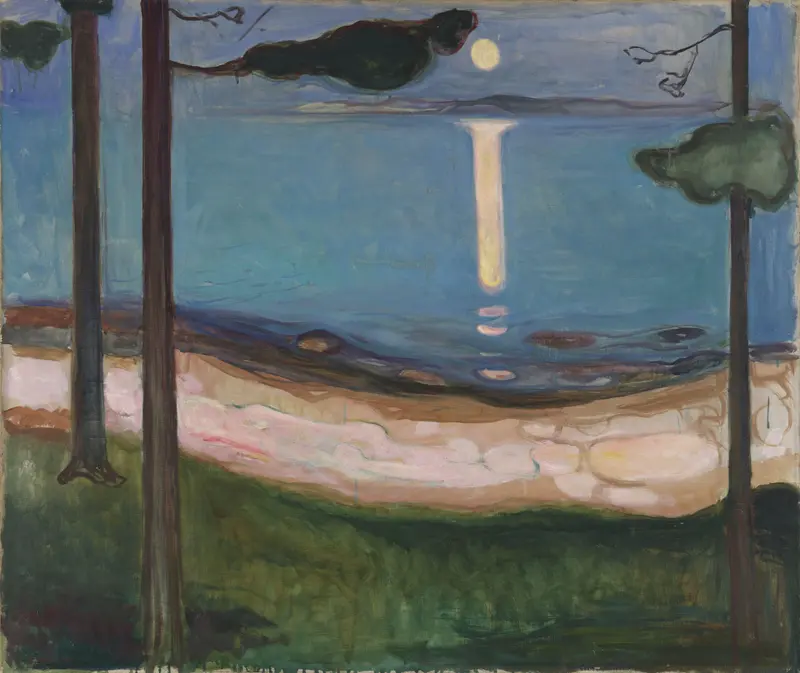
Moonlight presents a serene yet melancholic landscape where light and shadow play across the scene. The luminous moonlight reflects on the water, creating a haunting atmosphere. The dark silhouettes of trees add to the sense of longing and introspection, characteristic of Munch's exploration of emotional depth through Symbolism.
6. The Kiss (1892)
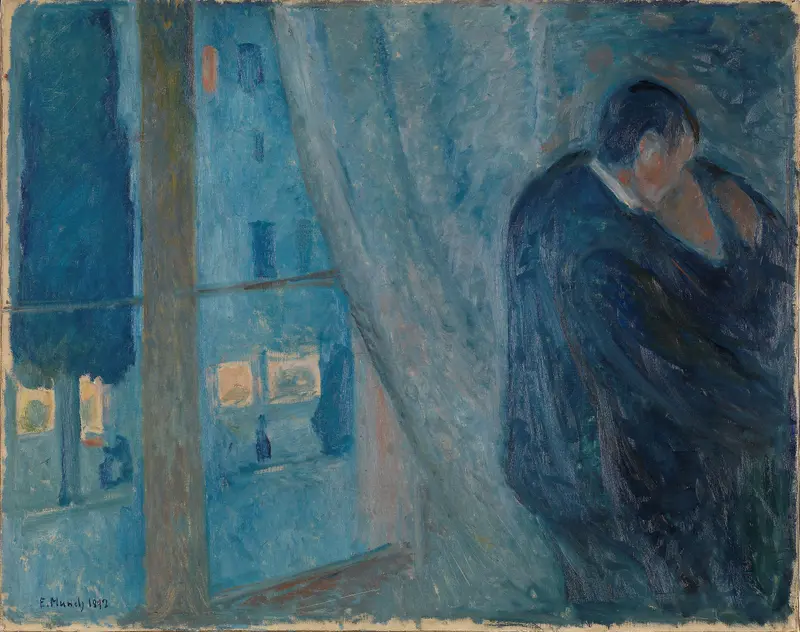
In The Kiss, Munch captures an intimate moment between two figures. Their faces and bodies merge in a tender embrace, surrounded by a muted palette that enhances the emotional weight of their connection. The swirling lines of color blur the boundaries between the figures, inviting viewers to experience the complexity of love and desire.
7. Winter Landscape by Moonlight (c. 1910)

Winter Landscape by Moonlight depicts a serene winter scene bathed in the ethereal glow of moonlight. The soft blues and whites blend seamlessly, creating a tranquil atmosphere. The silhouetted trees stand stark against the luminescence, enhancing the sense of solitude and reflection that permeates the landscape.
Edvard Munch's paintings continue to captivate with their profound exploration of human emotion. These works offer a unique window into the artist's psyche, blending color and form to evoke feelings of love, despair, and introspection. Visit FineArtFree to download these and other Edvard Munch paintings in high resolution, free of charge.